



Osteoarthritis is the most common form of arthritis, affecting millions globally and leading to pain, functional disability, and reduced quality of life. Its pathology involves not only the progressive degradation of articular cartilage but also synovitis, subchondral bone sclerosis, and osteophyte formation. The current therapeutic arsenal, ranging from non-steroidal anti-inflammatory drugs (NSAIDs) to intra-articular injections and joint replacement surgery, is often inadequate, focusing on symptom management rather than disease modification and frequently accompanied by side effects.
Low-Level Laser Therapy (LLLT), now more precisely termed Photobiomodulation (PBM) therapy, offers a novel, non-pharmacological, and non-invasive approach. Utilizing non-thermal, low-intensity light to elicit photochemical reactions within cells, PBM has demonstrated efficacy in promoting wound healing, reducing inflammation, and alleviating pain. The fundamental question in applying PBM to deep-seated joints like the knee or hip is: which laser wavelength can most effectively deliver photonic energy to the target tissues to achieve a therapeutic outcome?

Theoretical Foundation: Laser Wavelength and Photobiology
The biological effects of PBM are primarily governed by the physical interaction between light and tissue.
Wavelength, Penetration Depth, and Absorption: The wavelength, measured in nanometers (nm), determines the photon's energy and its interaction with specific cellular chromophores. Crucially, it dictates penetration depth. Skin, fat, and muscle scatter and absorb light differently across the spectrum. The concept of the "therapeutic optical window" (approximately 600-1300 nm) is vital; within this range, the absorption by hemoglobin (in blood) and water is minimized, allowing for deeper light penetration into tissues.
Primary Chromophore: The leading scientific consensus identifies cytochrome c oxidase (CCO), a key enzyme in the mitochondrial respiratory chain, as the primary photoreceptor. The absorption of photons by CCO leads to a cascade of events, including enhanced adenosine triphosphate (ATP) synthesis, modulation of reactive oxygen species (ROS), and the induction of transcription factors.
Mechanisms of Action in OA:
Cellular Level:
Chondrocyte Proliferation and Matrix Synthesis: By boosting ATP, PBM enhances the metabolic activity of chondrocytes, promoting the synthesis of essential extracellular matrix components like type II collagen and proteoglycans.
Anti-Inflammatory Effects: PBM can suppress pro-inflammatory signaling pathways (e.g., NF-κB), leading to a marked reduction in the production of cytokines such as TNF-α, IL-1β, and IL-6.
Anti-Apoptotic and Antioxidant Effects: It reduces oxidative stress and protects chondrocytes from programmed cell death.
Tissue Level:
Analgesia: PBM modulates neuronal activity and reduces inflammation and edema, leading to significant pain relief.
Improved Microcirculation: It promotes angiogenesis and increases local blood flow, improving oxygen and nutrient supply.
Modulation of Bone Remodeling: PBM may inhibit excessive osteoclast activity, slowing abnormal subchondral bone remodeling.
Analysis of Laser Wavelengths for OA Therapy
1. Red Light Spectrum (600 – 700 nm)
Representative Wavelengths: 630 nm, 635 nm, 650 nm.
Characteristics & Advantages: This spectrum is highly effective for superficial tissues, offering potent anti-inflammatory and circulatory-enhancing effects.
Limitations: Its relatively shallow penetration depth makes it more suitable for superficial joints (e.g., finger joints) or for targeting synovial inflammation in conjunction with deeper-penetrating wavelengths.
2. Near-Infrared Spectrum (780 – 950 nm)
Representative Wavelengths: 808 nm, 810 nm, 830 nm, 904 nm.
Characteristics & Advantages: This is the most extensively studied and utilized spectrum for OA treatment, particularly for large, deep joints.
Deep Tissue Penetration: NIR light experiences less scattering and absorption in tissue, allowing it to reach the articular cartilage and subchondral bone of knees and hips effectively.
Efficient Energy Transfer: Wavelengths like 808 nm are strongly absorbed by CCO, making them highly efficient at initiating photobiomodulation at depth.
Clinical Evidence: Numerous randomized controlled trials (RCTs) and meta-analyses have demonstrated the efficacy of 808 nm and 904 nm lasers in significantly reducing pain, decreasing stiffness, and improving physical function in patients with knee OA.
3. Other Wavelengths and Combinations
Mid- and Far-Infrared wavelengths are primarily used for their thermal effects in high-intensity laser therapy (HILT), which operates on a different principle than PBM.
Multi-Wavelength Approaches: Combining wavelengths (e.g., 650 nm red with 808 nm NIR) is an emerging strategy to simultaneously address multiple pathological aspects-superficial inflammation and deep cartilage degeneration-potentially yielding synergistic effects.

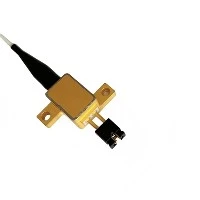
We can provide laser products with a wavelength range of 375nm~1920nm. Product types include: laser diodes, fiber laser diodes, laser modules, fiber-coupled laser systems, collimated laser modules, RGB white light lasers, etc.

Core Principle: Photobiological Regulation
LLLT/PBM does not utilize the thermal effect of lasers to cut or burn tissue (like surgical lasers). Instead, it uses low-energy photons absorbed by cells to trigger a series of beneficial physiological and biochemical reactions:
Increasing Cellular Energy (ATP): Photons are absorbed by pigments in the mitochondria (mainly cytochrome c oxidase), promoting the synthesis of adenosine triphosphate (ATP), providing more energy to the cell.
Improving Microcirculation: Promotes vasodilation, increases blood flow, and delivers more oxygen and nutrients to damaged tissues.
Anti-inflammatory Effect: Reduces the production of pro-inflammatory factors such as prostaglandins and tumor necrosis factor-α.
Analgesic Effect: Stimulates the release of endorphins and regulates the transmission of pain signals.
Promoting Tissue Repair: Stimulates the proliferation of fibroblasts, chondrocytes, etc., promoting the repair of cartilage and connective tissue.
Synergistic Optimization: Wavelength and Treatment Parameters
Wavelength selection is only one component of an effective PBM protocol. A parametric approach is essential:
Power Density and Energy Density (Dosage): The delivered energy (Joules) and power (Watts) per unit area (cm²) are critical. An optimal dose is biphasic (Arndt-Schulz law), meaning too little or too much energy can be ineffective or even inhibitory.
Treatment Protocol: The duration of each session, treatment frequency, and total number of sessions are vital for cumulative therapeutic effects.
Continuous vs. Pulsed Wave: Pulsed emission modes may offer advantages, such as deeper penetration and specific neuro-modulatory effects, which are not achievable with continuous waves.
Near-infrared wavelengths, specifically within the 800-900 nm range, stand as the most effective and evidence-based choice for treating osteoarthritis, particularly for deep joints. Their superior tissue penetration allows them to target the pathological core of OA-the chondrocytes and subchondral bone. PBM operates through a multifaceted mechanism, promoting anabolic processes, suppressing inflammation, and alleviating pain. For PBM to become a mainstream OA treatment, future efforts must focus on standardizing protocols, validating personalized dosing strategies, and integrating it into multimodal treatment paradigms. The potential of light as a precise, non-invasive tool to modify the course of osteoarthritis is immense and warrants continued rigorous investigation.
Contact information:
If you have any ideas, feel free to talk to us. No matter where our customers are and what our requirements are, we will follow our goal to provide our customers with high quality, low prices, and the best service.
 Email:info@loshield.com; laser@loshield.com
 Tel:0086-18092277517; 0086-17392801246
 Fax: 86-29-81323155
 Wechat:0086-18092277517; 0086-17392801246


