



As one of the advanced optical technologies, laser has been widely applied in diverse industrial and scientific scenarios. Among various laser devices, the Omega Laser has attracted extensive attention due to its differentiated energy grades and versatile application scenarios. From peaceful medical treatment and scientific exploration to military research, different types of Omega Laser exhibit distinct working principles and energy characteristics. While bringing great convenience and technological breakthroughs to human society, high-energy Omega Laser also carries potential radiation and impact hazards. This paper systematically introduces the classification and working features of Omega Laser, analyzes its potential damage to human bodies, equipment and the environment, and summarizes targeted protection measures, aiming to provide a clear and comprehensive scientific reference for the safe application of Omega Laser.
1. What Is an Omega Laser?
The term Omega Laser refers to multiple types of laser systems with different functions in scientific research, industrial, medical and military fields. It is not a single fixed laser model, and the mainstream Omega Lasers in application are divided into three core categories, with distinct performance characteristics:
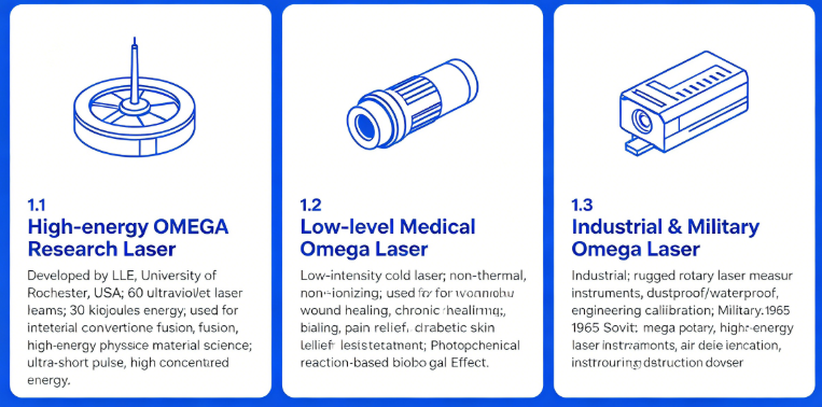
1.1 High-energy OMEGA Research Laser
Developed by the Laboratory for Laser Energetics (LLE) at the University of Rochester, USA, this is one of the most famous Omega Laser systems. It is a high-power ultraviolet laser equipped with 60 laser beams, which can release up to 30 kilojoules of energy. It is mainly used for inertial confinement fusion experiments, high-energy physics research and extreme material science tests. This laser features ultra-short pulse and high concentrated energy, and is a core experimental device for human fusion energy research.
1.2 Low-level Medical Omega Laser
This kind of low-intensity cold laser belongs to safe therapeutic laser equipment. It adopts non-thermal and non-ionizing light radiation, without high-temperature burning effect. It is widely used in medical rehabilitation for wound healing, chronic pain relief and auxiliary treatment of diabetic skin lesions. Its light intensity is low, and the biological effect is realized through photochemical reaction rather than thermal damage to human tissues.
1.3 Industrial & Military Omega Laser
In the industrial field, Omega Laser includes rugged rotary laser measuring instruments, which are dustproof and waterproof for engineering calibration operations. In military research, the former Soviet Union launched the Omega military laser program in 1965, committed to developing high-energy laser weapons for air defense interception, which has strong destructive power.
2. Potential Damages Caused by Omega Laser
Different types of Omega Lasers vary greatly in hazard levels. High-energy research lasers and military Omega lasers have strong destructive risks, while medical and civil industrial lasers have low harm under standardized use. The main damages are summarized as follows:
2.1 Human Tissue Damage
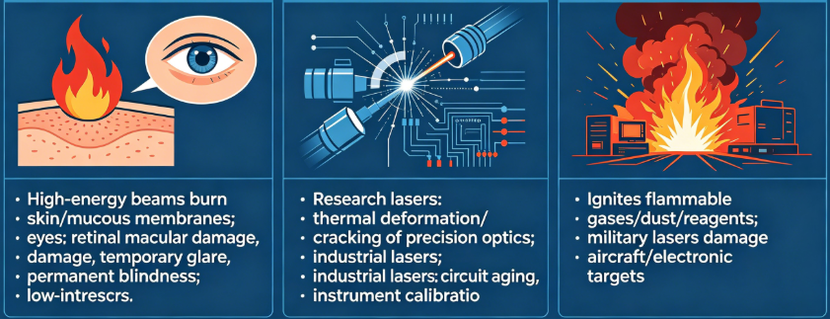
High-energy Omega laser beams can instantly burn human skin and mucous membranes, leaving irreversible burns. The eyes are the most vulnerable part: laser light will focus on the retina, causing macular damage, temporary glare, and even permanent blindness. Long-term exposure to low-intensity medical lasers may also cause eye fatigue and mild retinal irritation without protection.
2.2 Equipment & Material Damage
The ultra-high energy of research-grade Omega Laser will cause thermal deformation, cracking and optical performance attenuation of precision optical components. For industrial equipment, long-term laser radiation will accelerate the aging of circuit components and damage the precision calibration structure of instruments.
2.3 Environmental & Hidden Safety Hazards
High-energy laser irradiation may ignite flammable gases, dust and chemical reagents in the laboratory, triggering fire and explosion accidents. Military Omega laser weapons can damage aircraft, electronic equipment and other targets, with strong offensive destructive power.
3. Effective Protection Measures Against Omega Laser Damage
Targeted protection schemes are formulated according to different Omega Laser grades, covering personal protection, equipment protection and environmental management to eliminate or reduce laser damage risks:
3.1 Personal Safety Protection
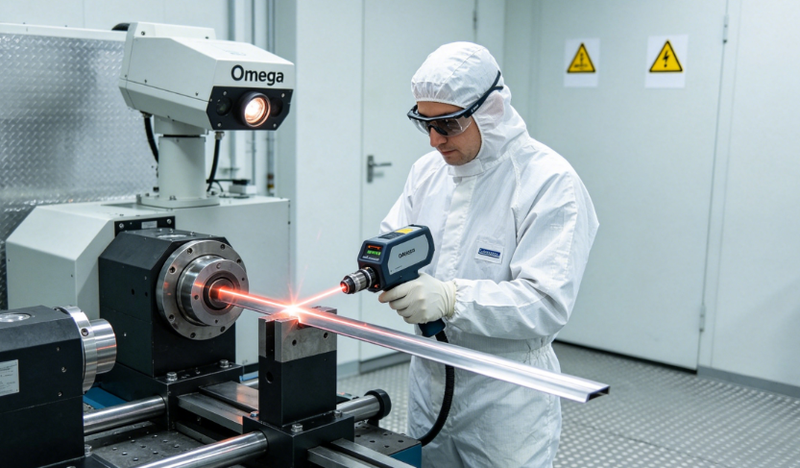
1. Wear professional laser protective equipment: Operators must wear laser goggles that meet EN207 international standards. The goggles are customized according to the laser wavelength to filter harmful laser beams and block ultraviolet and visible laser radiation. For high-energy laser operation, wear heat-resistant and radiation-proof protective clothing to avoid skin exposure.
2. Standardize operation posture: Never look directly at the laser beam and its reflection. Keep a safe operating distance, and avoid body parts crossing the laser emission path.
3.2 Equipment & Technical Protection
1. Install optical filtering devices: Add laser rejection filters and beam shielding components to Omega laser equipment to eliminate stray light and scattered light, reduce unnecessary radiation leakage, and protect internal precision optical parts.
2. Set up safety interlock devices: High-energy laser experimental equipment is equipped with automatic power-off switches. The laser will stop emitting light immediately when the protective cover is opened to prevent accidental radiation.
3.3 Environmental & Management Protection
1. Isolate the working area: Place high-energy Omega Laser in a closed laser laboratory with light-shielding walls to prevent laser leakage. Mark obvious laser hazard warning signs around the working area to restrict irrelevant personnel from entering.
2. Strictly implement operating specifications: Conduct professional training for operators to be familiar with laser performance and emergency disposal methods. Regularly inspect equipment aging parts to avoid damage caused by equipment failure.
3. Classify management of different lasers: Medical low-intensity Omega lasers shall control treatment time and radiation area to avoid excessive irradiation; military and experimental high-energy lasers shall implement hierarchical access management to ensure closed-loop supervision of the whole process.
4. Conclusion
Omega Laser is a multi-functional laser system covering low-intensity medical treatment to high-energy scientific research. Its damage risk is positively correlated with energy intensity. With the continuous development of laser technology, Omega Laser plays an irreplaceable role in energy research, medical rehabilitation and industrial manufacturing. Through standardized operation, professional protective equipment and scientific environmental management, humans can effectively avoid laser damage and maximize the application value of Omega Laser in various fields.