



1. Introduction: The Critical Role of Wavelength
Light Detection and Ranging (LiDAR) has emerged as a cornerstone sensor for autonomous vehicles, creating high-resolution, three-dimensional maps of the environment by measuring the time-of-flight (ToF) or phase shift of reflected laser pulses. At the heart of this technology lies a critical, yet often overlooked, choice: the laser's wavelength.
Positioned within the infrared spectrum, invisible to the human eye, the selected wavelength is not arbitrary. It serves as the primary determinant of a LiDAR system's eye safety, maximum detection range, resilience to environmental interference, and ultimately, its cost and scalability.

2. Deep Dive into Predominant Technological Pathways
2.1 905 nm Wavelength: The Incumbent and Mature Choice
The 905 nm wavelength has been the workhorse of the automotive LiDAR industry, primarily due to its foundation in mature semiconductor technology.
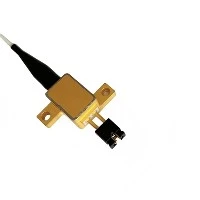
Technical Principle: It leverages Gallium Arsenide (GaAs) laser diodes and highly sensitive Silicon (Si) avalanche photodiodes (APDs) for detection. The silicon semiconductor industry's maturity makes these components readily available and cost-effective.
Core Advantages:
Cost-Effectiveness: The established supply chain for GaAs lasers and Si-based detectors results in significantly lower component costs, facilitating mass production and adoption in consumer vehicles.
Proven Maturity: Years of development have yielded robust engineering solutions and extensive real-world validation data.
System Integration: The components are relatively compact, allowing for smaller form factors that are easier to integrate into vehicle designs.
Key Challenges and Limitations:
Eye Safety: The 905 nm wavelength falls within the "retinal hazard region," where the human eye's lens focuses the light onto the retina. To meet stringent laser safety standards (IEC 60825-1), the per-pulse peak power must be severely limited.
Detection Range: This power limitation directly constrains the maximum achievable detection range, making it challenging to reliably identify low-reflectivity objects at distances beyond 150-200 meters.
Solar Interference: The solar spectrum has significant background noise at 905 nm, which can degrade the signal-to-noise ratio (SNR), particularly in bright sunlight.

2.2 1550 nm Wavelength: The High-Performance Contender
The 1550 nm wavelength represents a performance-oriented approach, addressing several key limitations of its 905 nm counterpart.
Technical Principle: This wavelength typically employs fiber lasers, which use Erbium-doped fiber amplifiers and require Indium Gallium Arsenide (InGaAs) detectors.
Core Advantages:
Superior Eye Safety: Located in the "corneal hazard region," 1550 nm light is largely absorbed by the eye's cornea and vitreous fluid before reaching the retina. This biological safety margin permits the use of peak power levels 10 to 40 times higher than those allowed for 905 nm systems.
Longer Detection Range: The high permissible power directly translates to a dramatically extended range, reliably detecting objects at 250 meters and beyond, with some systems capable of 300-500 meters. This provides critical extra reaction time for high-speed autonomous driving.
Enhanced Environmental Resilience: The solar background radiation is considerably lower at 1550 nm, leading to a superior SNR. Furthermore, this longer wavelength exhibits slightly better penetration through atmospheric obscurants like fog, mist, and dust.
Key Challenges and Limitations:
Higher Cost: Both the fiber lasers and the InGaAs detectors are more complex and expensive to manufacture than their Si-based counterparts, impacting the overall system cost.
System Complexity and Size: Fiber laser-based systems have historically been bulkier and consumed more power, posing challenges for seamless automotive integration, though miniaturization efforts are ongoing.

3. Key Performance Dimensions: A Comparative Analysis
| Performance Dimension | 905 nm LiDAR | 1550 nm LiDAR | Analysis |
|---|---|---|---|
| Eye Safety & Range | Power-constrained, moderate range | High-power capable, long range | 1550nm achieves a superior balance, enabling long-range within safe limits. |
| Environmental Adaptability | Susceptible to solar glare; moderate precipitation penetration | Excellent solar immunity; slightly better precipitation penetration | 1550nm offers more consistent performance across diverse conditions. |
| Cost & Supply Chain | Low cost, mature and stable supply chain | High cost, developing supply chain | 905nm holds a decisive advantage in cost and manufacturability. |
| System Size & Power | Compact, lower power consumption | Larger, higher power consumption |
905nm is currently more favorable for compact vehicle integration. |
4. Wavelength Synergy with Cutting-Edge LiDAR Architectures
The choice of wavelength is increasingly intertwined with the underlying LiDAR technology.
Frequency-Modulated Continuous Wave (FMCW) LiDAR:
Inherent Dependency: FMCW technology, which measures velocity instantly via the Doppler effect and provides exceptional range resolution, requires lasers with long coherence lengths. This is a natural property of the fiber lasers used for 1550 nm systems.
Synergistic Advantage: The FMCW + 1550 nm combination is a powerhouse, delivering unparalleled performance: immunity to interference from other LiDARs and sunlight, direct velocity measurement, and extreme accuracy, positioning it as the gold standard for next-generation perception.
Solid-State and Optical Phased Arrays (OPA):
Material Constraints: The most advanced silicon photonics platforms for solid-state OPA scanning are primarily optimized for wavelengths around 905 nm or 1300 nm. Developing high-performance, cost-effective OPA systems at 1550 nm on a silicon platform remains a significant research and engineering challenge.
Future Outlook: The convergence of pure solid-state scanning (for reliability) with an optimal wavelength is a key battleground for future LiDAR development.
Other Wavelengths Under Investigation:
1350-1400 nm Band: This region is being explored as a potential "sweet spot," offering better eye safety than 905 nm while potentially leveraging more cost-effective detector technologies than 1550 nm.
Short-Wave Infrared (SWIR): Broader SWIR bands are utilized in specialized (e.g., military, industrial) applications but have yet to see widespread automotive adoption due to cost.
5. Application Scenarios and Market Positioning
The optimal wavelength choice is often dictated by the target application.
Passenger Vehicle ADAS (L2+/L3):
Mainstream Choice: 905 nm LiDARs currently dominate this segment, striking a balance between performance and cost-effectiveness required for volume production.
Premium & High-Performance Vehicles: Leading-edge models are beginning to adopt 1550 nm technology as a key differentiator, marketing its superior safety and long-range capabilities.
Robotaxi / Robobus (L4/L5):
Clear Trend: Most companies developing fully autonomous vehicles lean towards 1550 nm systems. The demanding requirements of complex urban environments and the critical need for maximum detection range justify the higher cost.
Commercial Vehicles (Trucks, Logistics):
Scenario-Dependent Choice: The decision hinges on the operational design domain (ODD). Long-haul trucks on highways may benefit from 1550 nm's long range, while lower-speed urban delivery vehicles might find 905 nm solutions more economically viable.
6. Conclusion and Future Perspective
In conclusion, the landscape of automotive LiDAR wavelength is defined by a clear dichotomy:
905 nm represents the "Pragmatic Incumbent," whose dominance is rooted in a mature, cost-effective supply chain, making widespread adoption in consumer vehicles a present-day reality.
1550 nm embodies the "Performance Vanguard," offering a compelling roadmap towards higher safety and superior performance, which is essential for achieving higher levels of autonomy.
Looking forward, the industry will not converge on a single wavelength. Instead, a diverse and coexisting ecosystem will emerge. As FMCW and solid-state scanning technologies mature, the cost premium associated with 1550 nm systems is expected to decrease, accelerating their adoption. Ultimately, regardless of the specific wavelength, the relentless pursuit of the industry remains the same: to deliver LiDAR systems that offer uncompromising safety, exceptional performance, unparalleled reliability, and accessible cost, thereby illuminating the path toward a fully autonomous future.
Contact information:
If you have any ideas, feel free to talk to us. No matter where our customers are and what our requirements are, we will follow our goal to provide our customers with high quality, low prices, and the best service.
 Email:info@loshield.com; laser@loshield.com
 Tel:0086-18092277517; 0086-17392801246
 Fax: 86-29-81323155
 Wechat:0086-18092277517; 0086-17392801246


