

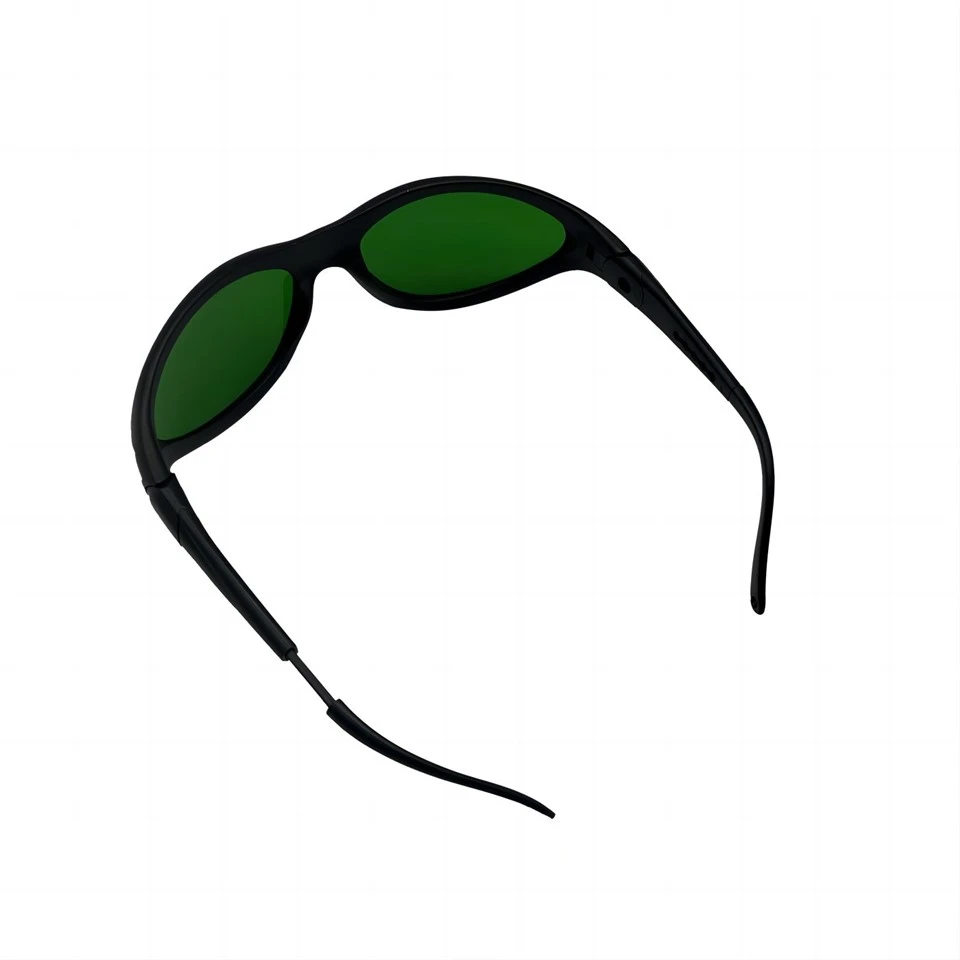
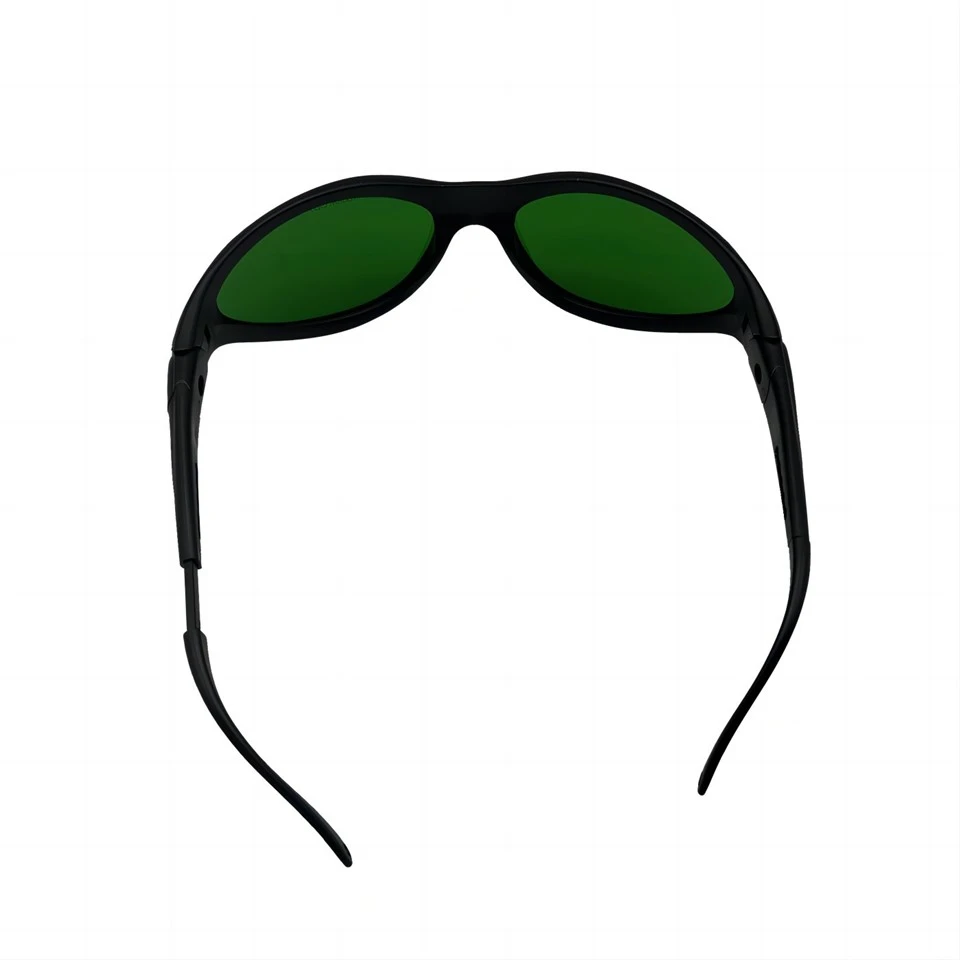
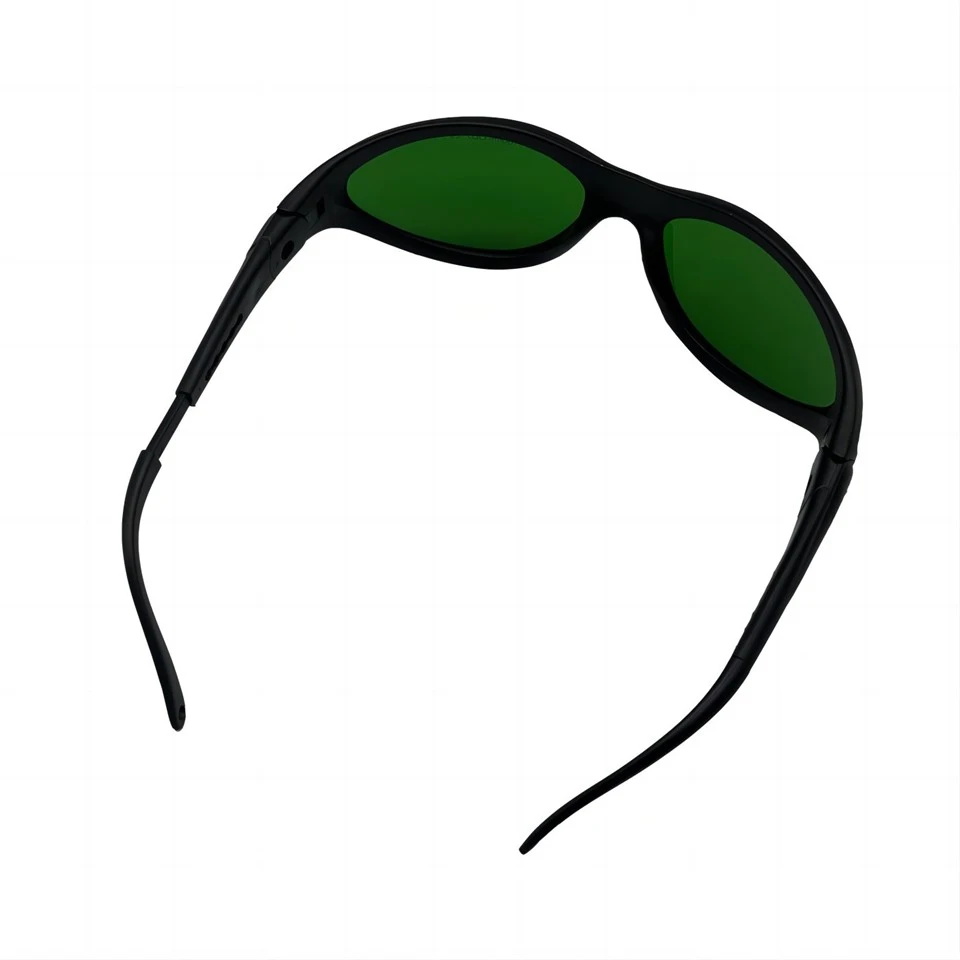
Products overview
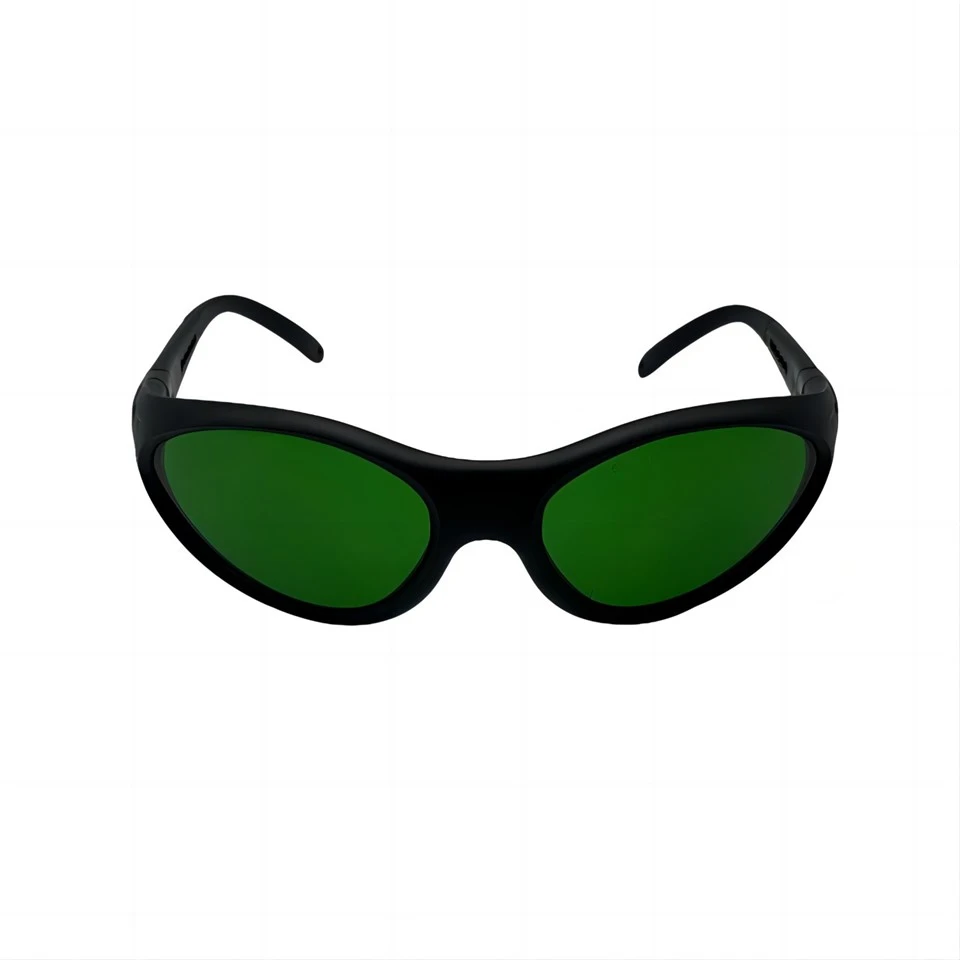
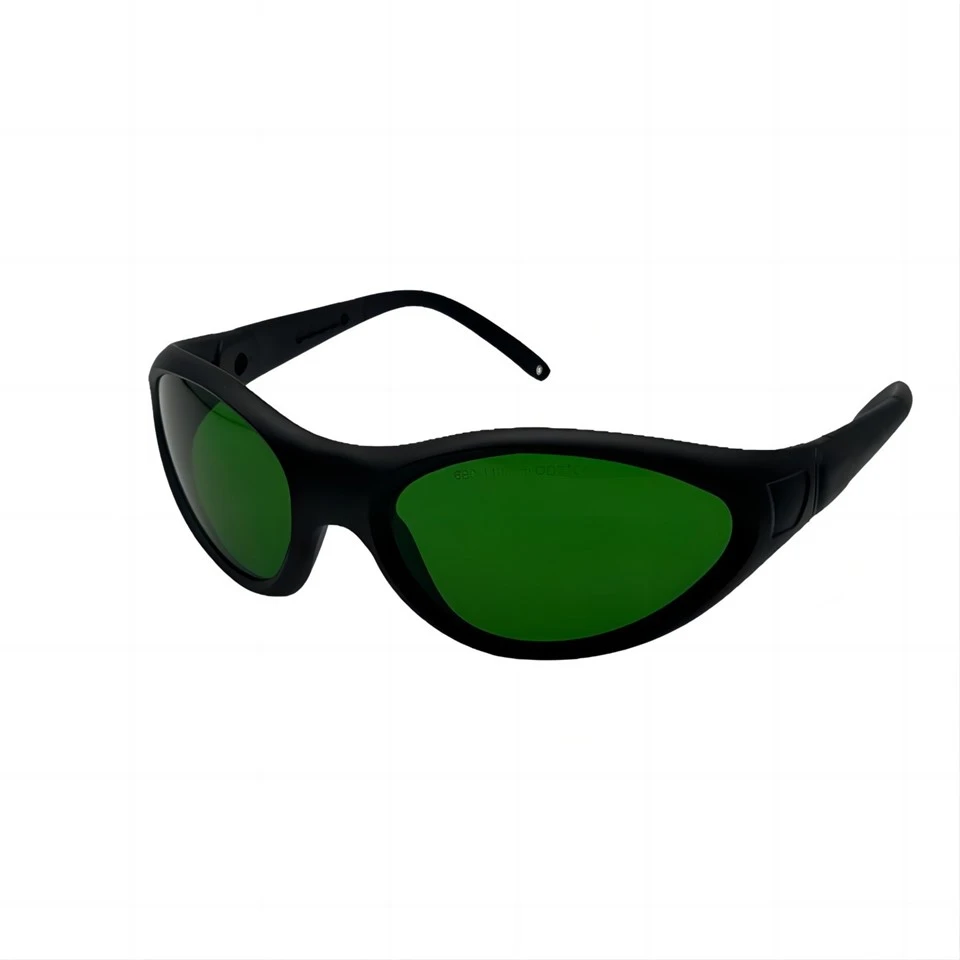
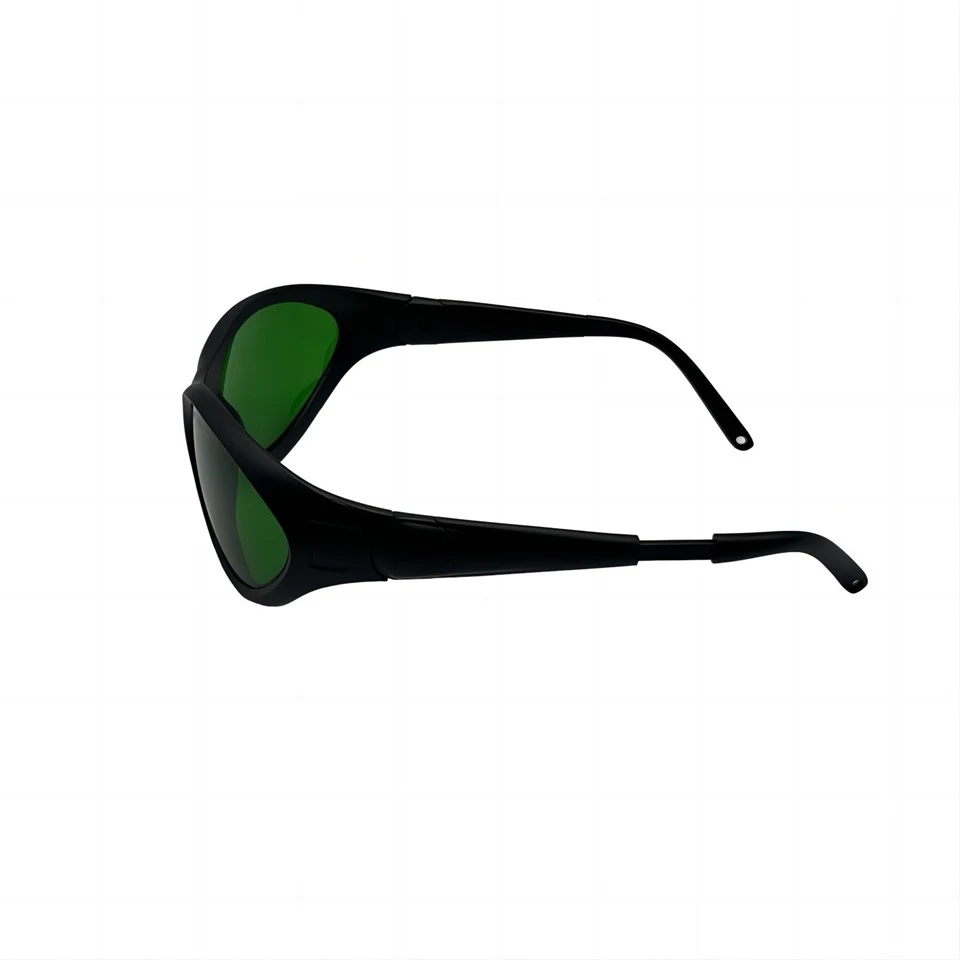
High-OD multi-wavelength laser safety eyewear designed for professional laser environments requiring OD7+ optical attenuation across the 680–1100nm wavelength range. The filter covers key near-infrared laser wavelengths including 755nm Alexandrite, 808nm diode and 1064nm Nd, providing a high-optical-density protection option for compatible laser systems.
With OD7+ laser protection and 20% visible light transmission (VLT), these 680–1100nm laser safety glasses are designed for professional users, laser equipment manufacturers, distributors and OEM projects where higher optical attenuation is required at the operating wavelength.

OD7+ Laser Protection Across 680–1100nm
These 680–1100nm OD7+ laser safety glasses are designed to provide high optical attenuation across the specified near-infrared protection range, covering key professional laser wavelengths including 755nm, 808nm and 1064nm.
The filter is particularly relevant to laser systems using 755nm Alexandrite, 808nm diode and 1064nm Nd wavelengths, providing OD7+ protection at these key operating wavelengths within the 680–1100nm range.
680–1100nm High-OD Protection Range
The 680–1100nm protection range covers a broad section of the near-infrared spectrum used by many professional laser systems.
Within this range, three important wavelengths are:
755nm → Alexandrite Laser
808nm → Diode Laser
1064nm → Nd Laser
For buyers sourcing high-OD laser safety eyewear, the protection range and optical density should be evaluated together. A wavelength range indicates where the filter provides protection, while the OD specification indicates the level of laser attenuation provided at the rated wavelength or range.
For this model:
| Wavelength | Laser Technology | Optical Density | Protection Range |
|---|---|---|---|
| 755nm | Alexandrite Laser | OD7+ | 680–1100nm |
| 808nm | Diode Laser | OD7+ | 680–1100nm |
| 1064nm | Nd Laser | OD7+ | 680–1100nm |
This combination positions the eyewear as a high-optical-density, multi-wavelength laser protection filter rather than a single-wavelength laser safety product.
OD7+ Protection at 755nm for Alexandrite Lasers
The 755nm wavelength falls within the specified 680–1100nm protection range and is commonly associated with Alexandrite laser systems.
At 755nm, this filter provides:
755nm → OD7+
For professional buyers evaluating 755nm OD7 laser safety glasses, the combination of wavelength coverage and optical density is the key technical consideration.
OD7 corresponds to an attenuation factor of at least 10⁷, meaning the filter provides high optical attenuation at the rated wavelength.
This makes the 755nm specification relevant for compatible Alexandrite laser equipment where the laser safety assessment requires high-OD protection.
For equipment manufacturers, distributors and professional laser facilities, the required optical density should always be confirmed against the actual operating parameters of the 755nm laser before eyewear selection.
OD7+ Protection at 808nm for Diode Lasers
The 808nm wavelength is also within the 680–1100nm protection range and is commonly used by professional diode laser systems.
At 808nm, this eyewear provides:
808nm → OD7+
For buyers sourcing 808nm OD7 laser safety glasses, this wavelength-specific protection is particularly relevant when a high optical density is required for the diode laser equipment being evaluated.
The OD7+ rating provides high attenuation at 808nm while the broader 680–1100nm laser protection range allows the same filter to cover additional compatible near-infrared wavelengths.
This makes the eyewear suitable for evaluation in professional environments using 808nm diode lasers alongside other laser technologies within the specified protection range.
OD7+ Protection at 1064nm for Nd Lasers
The 1064nm wavelength is one of the most important near-infrared wavelengths used by professional Nd laser systems.
1064nm falls within the upper section of this filter's 680–1100nm protection range.
At 1064nm, the filter provides:
1064nm → OD7+
For buyers comparing 1064nm OD7 laser safety glasses or Nd laser safety eyewear, the OD7+ specification provides a clearly defined high-optical-density protection option at the laser's operating wavelength.
Because OD7 represents at least 10⁷ attenuation at the rated wavelength, this filter is particularly relevant where the required protection level for a compatible 1064nm Nd laser calls for high optical attenuation.
As with 755nm and 808nm systems, the final eyewear selection should be based on the actual laser parameters and applicable laser safety requirements.
One OD7+ Filter Across Three Key Laser Wavelengths
The technical distinction of this model is the combination of:
680–1100nm wavelength coverage + OD7+ optical density + 755nm / 808nm / 1064nm compatibility
Rather than providing a different optical density at each of these three wavelengths, this filter provides a high-OD protection solution across key wavelengths used by Alexandrite, diode and Nd laser systems.
| Key Wavelength | Laser Type | Protection |
| 755nm | Alexandrite | OD7+ |
| 808nm | Diode | OD7+ |
| 1064nm | Nd | OD7+ |
For laser equipment manufacturers and professional buyers, this can be particularly useful when evaluating a multi-wavelength OD7+ laser safety eyewear solution across several compatible laser systems.
Verify OD7+ Across the Protection Spectrum
For professional laser safety procurement, the product title alone should not be used as evidence that a filter provides the same optical density at every wavelength.
The most useful way to verify 680–1100nm OD7+ laser protection is through the applicable technical documentation and spectral test data for the filter.
Where available, buyers should review:
- Optical density data across the 680–1100nm range
- Spectral transmission or OD curve
- Protection values at 755nm, 808nm and 1064nm
- Applicable test report
- Filter or lens identification
- Compliance documentation
A spectral OD curve can provide particularly useful evidence because it shows how the filter's optical density changes with wavelength instead of reducing the product specification to a single "OD7+" claim.
High-OD Protection Should Still Be Matched to the Laser
Although this 680–1100nm laser safety eyewear provides OD7+ protection at the specified wavelengths, OD alone does not determine whether the filter is appropriate for every laser operating at 755nm, 808nm or 1064nm.
Final selection should consider:
Operating Wavelength + Output Power / Pulse Energy + Pulse Characteristics + Exposure Conditions + Required OD + Applicable Laser Safety Requirements
For professional or OEM projects, provide the specifications of your 755nm Alexandrite, 808nm diode or 1064nm Nd laser system so the required protection can be evaluated against the technical data of the OD7+ filter.
High-OD vs Standard-OD Laser Safety Eyewear: Which Should You Choose?
Choosing between high-OD laser safety glasses and standard or wavelength-specific OD eyewear should be based on the protection requirements of the laser-not simply on which product has the highest optical density.
A standard-OD filter may be appropriate when the required protection level can be achieved while maintaining greater visible light transmission or other operational characteristics. A high-OD filter such as OD7+ is intended for applications where the laser safety assessment requires a higher level of optical attenuation at the operating wavelength.
The key question is therefore not:
"Is OD7+ better than OD4+, OD5+ or OD6+?"
It is:
"What optical density does my laser application actually require?"
OD7+ vs OD4+, OD5+ and OD6+
Optical Density (OD) uses a logarithmic scale. Each increase of one OD represents approximately a 10× reduction in transmitted laser radiation at the rated wavelength.
| Optical Density | Theoretical Transmission | Approx. Attenuation |
|---|---|---|
| OD4 | 0.01% | 10,000× |
| OD5 | 0.001% | 100,000× |
| OD6 | 0.0001% | 1,000,000× |
| OD7 | 0.00001% | 10,000,000× |
At a wavelength where the specified OD applies, OD7 provides approximately 10× greater attenuation than OD6, 100× greater attenuation than OD5 and 1,000× greater attenuation than OD4.
This difference makes OD7+ laser safety eyewear relevant when a higher optical density is required.
However, attenuation level is only one part of laser eyewear selection.
Standard-OD Eyewear: Protection Matched to the Wavelength
Standard or wavelength-specific laser safety eyewear is typically selected to provide the required optical density at particular operating wavelengths without unnecessarily increasing attenuation beyond the identified protection requirement.
For example, a multi-wavelength filter may provide different OD values at:
755nm Alexandrite
808nm Diode
1064nm Nd:YAG
This approach can be suitable when the priority is to balance:
Required Laser Protection + Visible Light Transmission + Practical Working Visibility
For professional aesthetic laser environments, wavelength-specific OD eyewear can therefore be a practical option when its protection ratings satisfy the requirements determined for the equipment.
High-OD Eyewear: When Higher Attenuation Is Required
High-OD laser safety glasses serve a different purchasing requirement.
This 680–1100nm OD7+ laser safety eyewear is positioned for compatible laser systems where a higher level of optical attenuation is required across the relevant operating wavelengths.
Its key technical characteristics are:
Protection Range → 680–1100nm
Optical Density → OD7+
Key Wavelengths → 755nm / 808nm / 1064nm
Laser Technologies → Alexandrite / Diode / Nd:YAG
Visible Light Transmission → 20%
For buyers specifically searching for OD7 laser safety glasses, the primary purchasing driver is therefore high optical density rather than simply broad wavelength coverage.
High-OD vs Standard-OD: Different Protection Strategies
The two types of eyewear should be viewed as different laser protection strategies rather than "basic" and "premium" versions of the same product.
| Selection Factor | Standard / Wavelength-Specific OD Eyewear | 680–1100nm OD7+ Eyewear |
|---|---|---|
| Primary Selection Goal | Match the required OD at specific wavelengths | Meet higher-OD protection requirements |
| Optical Density | May vary by wavelength | OD7+ at specified wavelengths/range |
| Protection Strategy | Protection and visibility balance | High optical attenuation |
| Key Consideration | Required OD + practical visibility | Required high OD + wavelength coverage |
| Typical Buyer Need | Routine wavelength-specific protection | Higher attenuation requirement |
| Multi-Wavelength Use | Depends on filter specification | 680–1100nm multi-wavelength coverage |
| Key Wavelengths | Depends on model | 755nm / 808nm / 1064nm |
| OEM Positioning | General equipment matching | High-OD equipment protection configuration |
Neither strategy is automatically better.
The appropriate choice depends on the laser system and the required protection level.
When Should You Choose OD7+ Laser Safety Glasses?
Consider OD7+ laser safety glasses when the laser safety assessment or equipment requirements indicate that high optical density is necessary at the operating wavelength.
This may include situations where:
- The required optical density is OD7 or higher
- The laser operates within the 680–1100nm protection range
- High attenuation is required at 755nm, 808nm or 1064nm
- The application requires high-OD Alexandrite laser protection
- The application requires high-OD diode laser protection
- The application requires high-OD Nd:YAG laser protection
- An OEM laser equipment project specifies a high-OD protective eyewear configuration
In these cases, this 680–1100nm OD7+ laser safety glasses model provides a high-optical-density option for evaluation against the laser's technical requirements.
When May Standard-OD Eyewear Be More Appropriate?
OD7+ is not automatically the correct choice for every 755nm, 808nm or 1064nm laser.
A standard or wavelength-specific OD filter may be more appropriate when:
- The calculated required OD is lower than OD7
- The application places greater importance on visible light transmission
- The laser operates at a wavelength requiring a different filter
- The applicable laser safety requirement specifies another protection level
- A different filter provides a better balance between required attenuation and working visibility
This is particularly important for professional buyers comparing OD5 vs OD7 laser safety glasses or OD6 vs OD7 laser safety glasses.
The higher OD number should not be used as the only purchasing criterion.
OD7+ vs OD6+: Is Higher OD Always Safer?
At the rated wavelength, OD7 provides approximately 10× greater attenuation than OD6.
But this does not mean that every laser requiring OD6 should automatically use OD7 eyewear.
Laser protective eyewear must still allow the user to perform the intended task safely and effectively. Factors such as visible light transmission, filter color, working environment and the applicable laser safety requirements remain relevant.
If OD6 satisfies the determined protection requirement, OD7 may provide additional attenuation, but that alone does not make it the more appropriate eyewear for every application.
Conversely, when OD7 is required, an OD6 filter should not be selected simply because it provides greater visible light transmission.
Select by Required OD, Not by the Highest OD Available
For B2B laser safety eyewear procurement, the most reliable selection process is:
1. Identify the laser wavelength
For example: 755nm Alexandrite, 808nm diode or 1064nm Nd:YAG.
2. Review the laser operating parameters
Including power or pulse energy, pulse duration, repetition rate and relevant beam characteristics.
3. Determine the required protection level
Establish the required OD and applicable laser safety rating for the operating conditions.
4. Match the required OD to the filter
Compare the requirement with the filter's wavelength-specific technical data.
5. Evaluate VLT and operational requirements
Confirm that the eyewear provides appropriate working visibility while meeting the required protection level.
The result may be a standard-OD filter or a high-OD OD7+ laser safety filter depending on the actual laser system.
The appropriate laser safety glasses are not the eyewear with the highest available OD-they are the eyewear that provides the required protection at the operating wavelength while remaining suitable for the intended working environment.
Need High-OD Protection or a Standard-OD Filter?
For laser equipment manufacturers, distributors and professional laser facilities, we can evaluate eyewear options according to the technical requirements of the laser system.
Provide your:
Laser wavelength → Power / pulse energy → Pulse characteristics → Required OD or applicable safety requirement
For systems operating at 755nm, 808nm or 1064nm, we can help determine whether this 680–1100nm OD7+ laser safety eyewear or another wavelength-specific filter is the more appropriate option for evaluation.
High-OD OEM Laser Eyewear, Compliance & Test Support
For laser equipment manufacturers, distributors and OEM/ODM buyers, selecting laser safety eyewear involves more than matching a wavelength range. The eyewear must be evaluated against the laser system, required optical density and available technical documentation before it is integrated into an equipment package.
Our 680–1100nm OD7+ laser safety glasses are designed for high-OD protection requirements across compatible near-infrared laser systems, including 755nm Alexandrite, 808nm diode and 1064nm Nd lasers.
From Laser Equipment to the Right OD7+ Filter
For OEM laser safety eyewear projects, we use an equipment-based matching process:
Laser Equipment → Operating Wavelength → Required OD → Filter Selection → Technical Verification → OEM Packaging
Provide the laser wavelength and relevant operating parameters for your equipment. We can then evaluate whether the 680–1100nm OD7+ filter matches the required protection level.
This approach is particularly useful for manufacturers supplying:
- 755nm Alexandrite laser equipment
- 808nm diode laser systems
- 1064nm Nd lasers
- Multi-wavelength professional laser equipment
Rather than selecting protective eyewear as a generic accessory, OEM buyers can match the laser safety glasses to the technical requirements of the equipment.
Technical Evidence for OD7+ Laser Protection
For professional B2B procurement, an OD7+ specification should be supported by verifiable technical information.
Available documentation for this laser safety filter may include:
CE Documentation - compliance information associated with the product and applicable standard.
Spectral OD Data - optical density performance across the specified 680–1100nm wavelength range.
Spectral Curve - wavelength-dependent protection data showing filter performance, including key wavelengths such as 755nm, 808nm and 1064nm.
Test Report - available test documentation supporting the stated protection specifications.
Filter Identification - product/filter model information that allows the eyewear to be matched with its technical documentation.
For OEM and distributor projects, these materials can be reviewed before sample approval or bulk purchasing.
Quality Control & Product Identification
Consistent product identification is important when high-OD laser safety eyewear is supplied with professional laser equipment.
Our QC process focuses on verifying that the correct filter, frame and product identification are used for the specified eyewear model before shipment.
Where applicable, product labeling can include relevant identification such as the filter model, protection wavelength and OD specification, helping OEM customers and distributors distinguish the correct laser eyewear within their product portfolio.
OEM / ODM Laser Safety Glasses for Equipment Packages
For laser equipment manufacturers and laser safety eyewear distributors, OEM/ODM support can be integrated after the filter specification has been confirmed.
Depending on project requirements, available customization may include:
- Private-label branding
- Product identification and labeling
- Customized packaging
- Equipment-kit packaging
- Bulk supply for distributors
- Technical documentation support
For manufacturers managing several compatible laser models, the 680–1100nm OD7+ laser safety eyewear can also be evaluated as a high-OD protection option across 755nm, 808nm and 1064nm equipment lines.
Verify Before OEM Production
Before confirming an OEM or bulk order, send us your:
Laser wavelength + operating parameters + required OD + equipment model + documentation requirements + packaging requirements
We can help evaluate the appropriate high-OD laser safety filter and provide available technical information for your B2B sourcing or OEM laser equipment project.
Hot Tags: High-OD multi-wavelength laser safety eyewear for 755/808/1064nm aesthetic laser systems, China, manufacturers, suppliers, factory, customized, wholesale, best, cheap, professional, for sale, near me, 10600nm CO2 Laser Safety Glasses, BGR Laser Blocking Goggles, IPL Hair Removal Safety Glasses, Laser Safety Glasses 450nm, ND YAG Laser Goggles, Safety Glasses For Green Laser


