

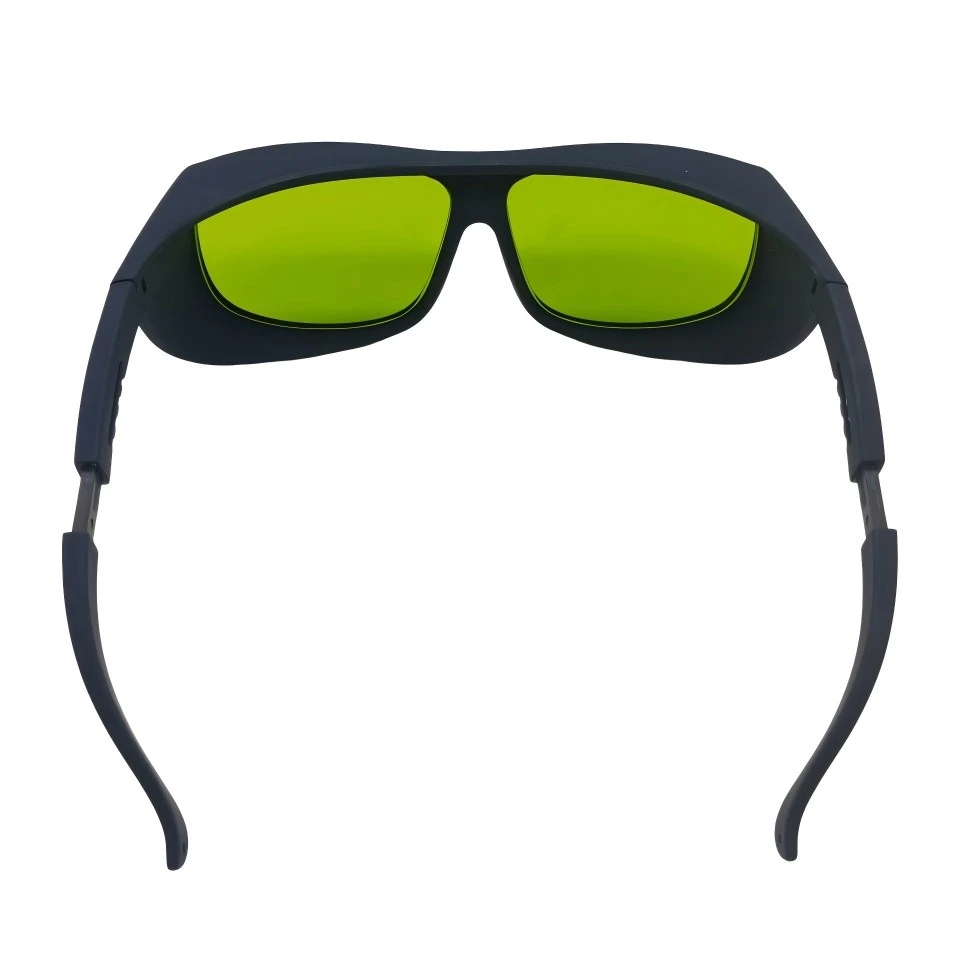
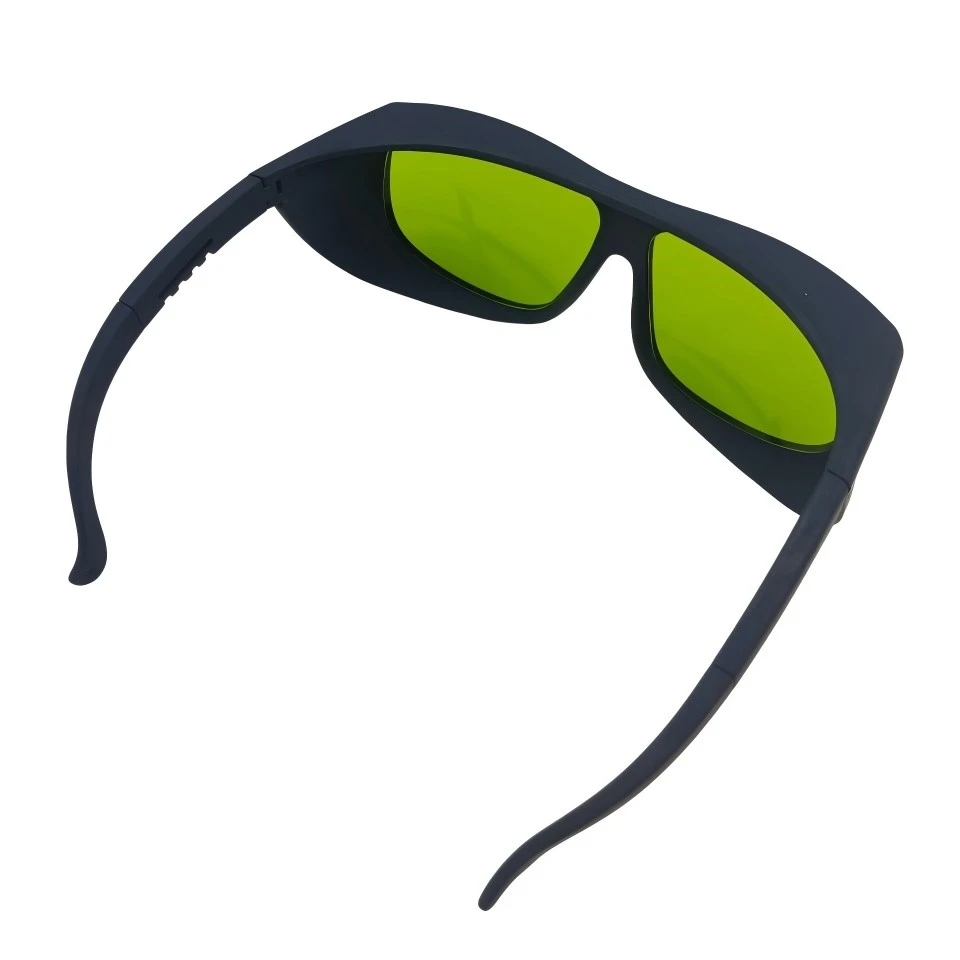
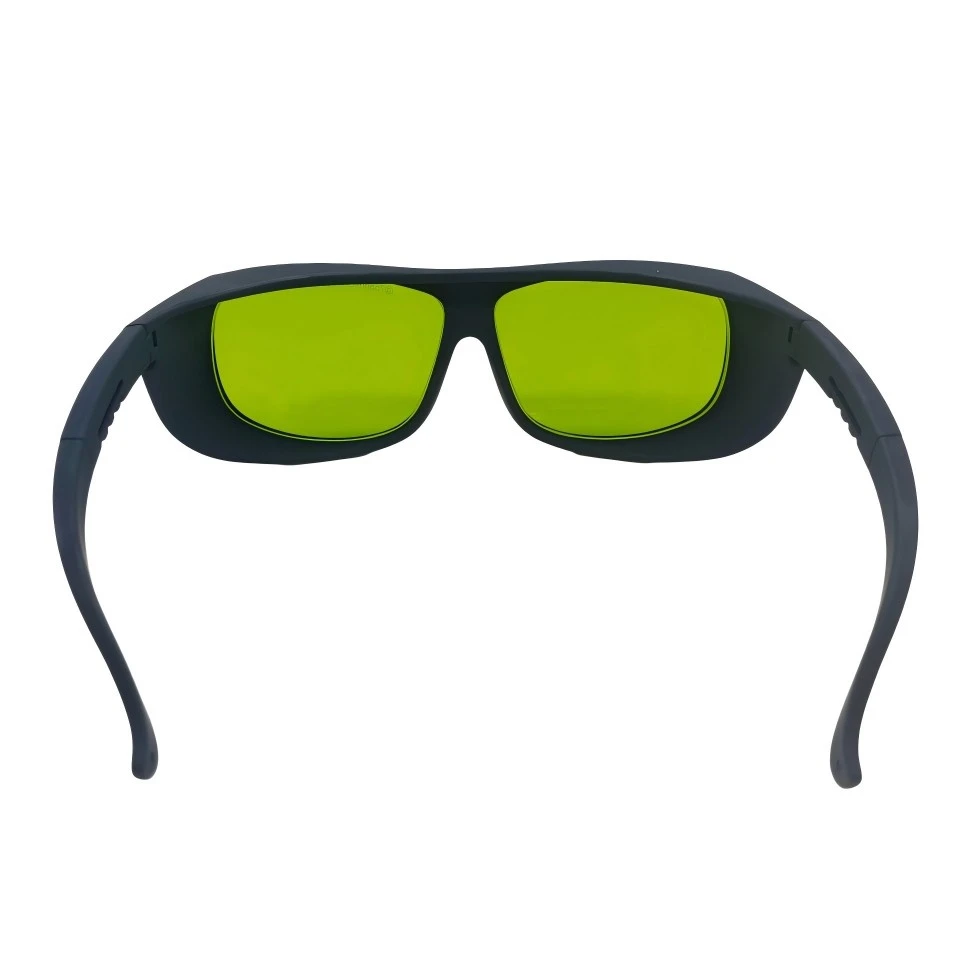
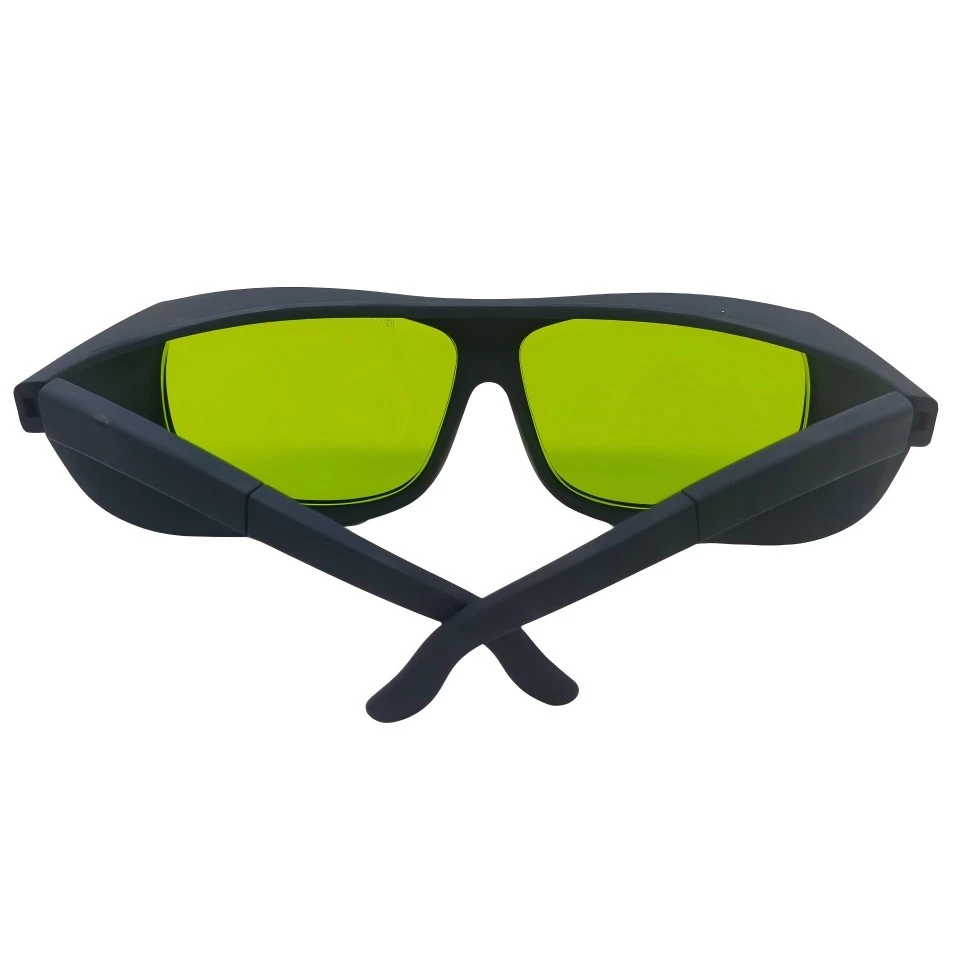
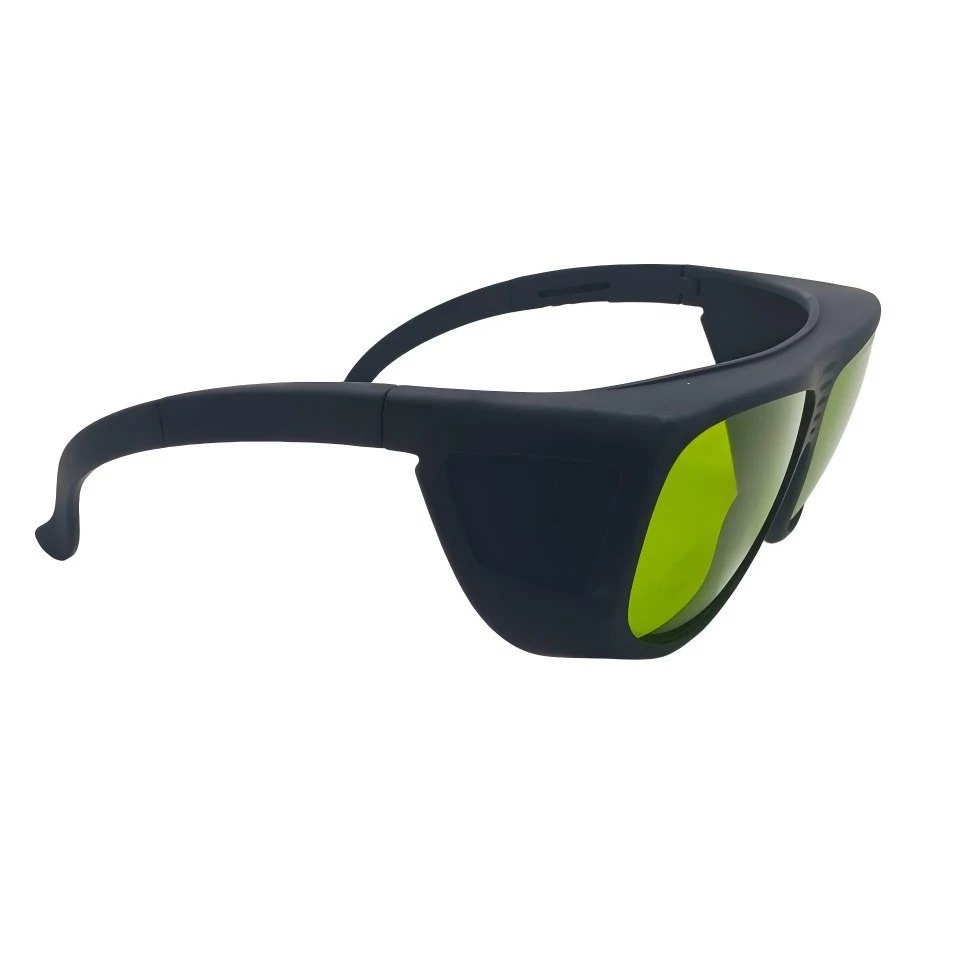
Products overview
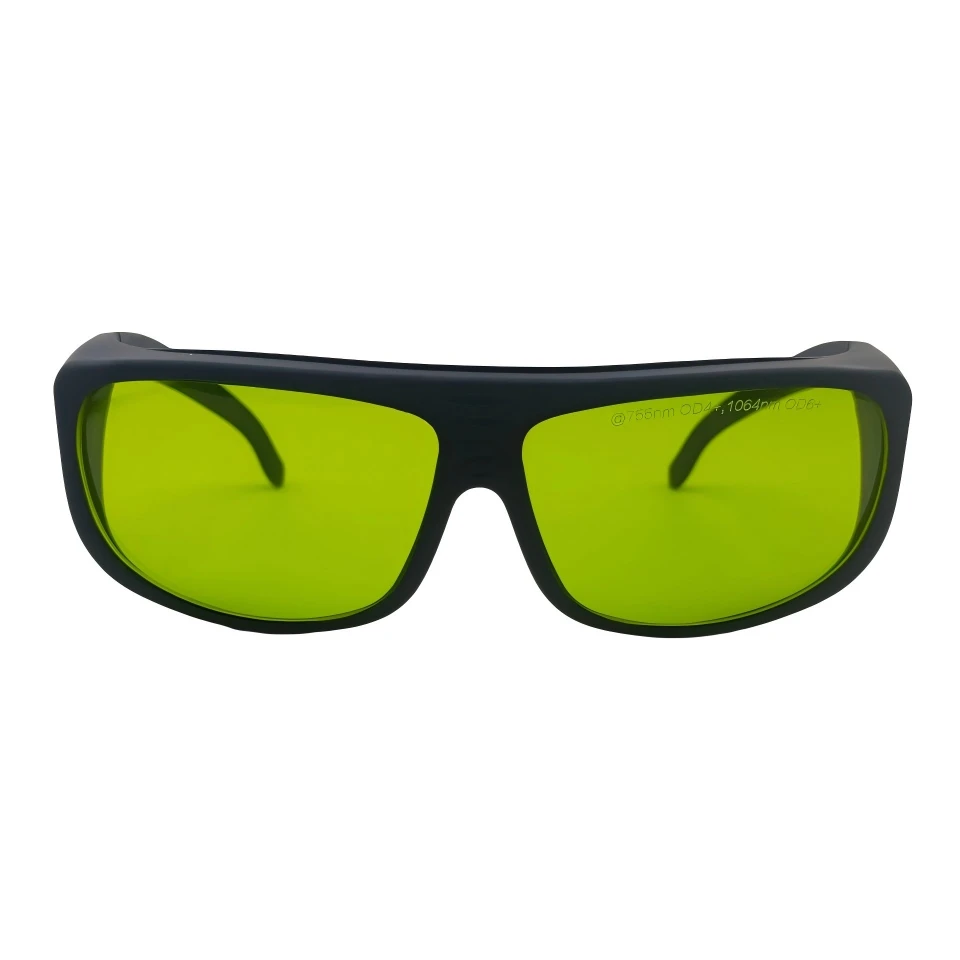
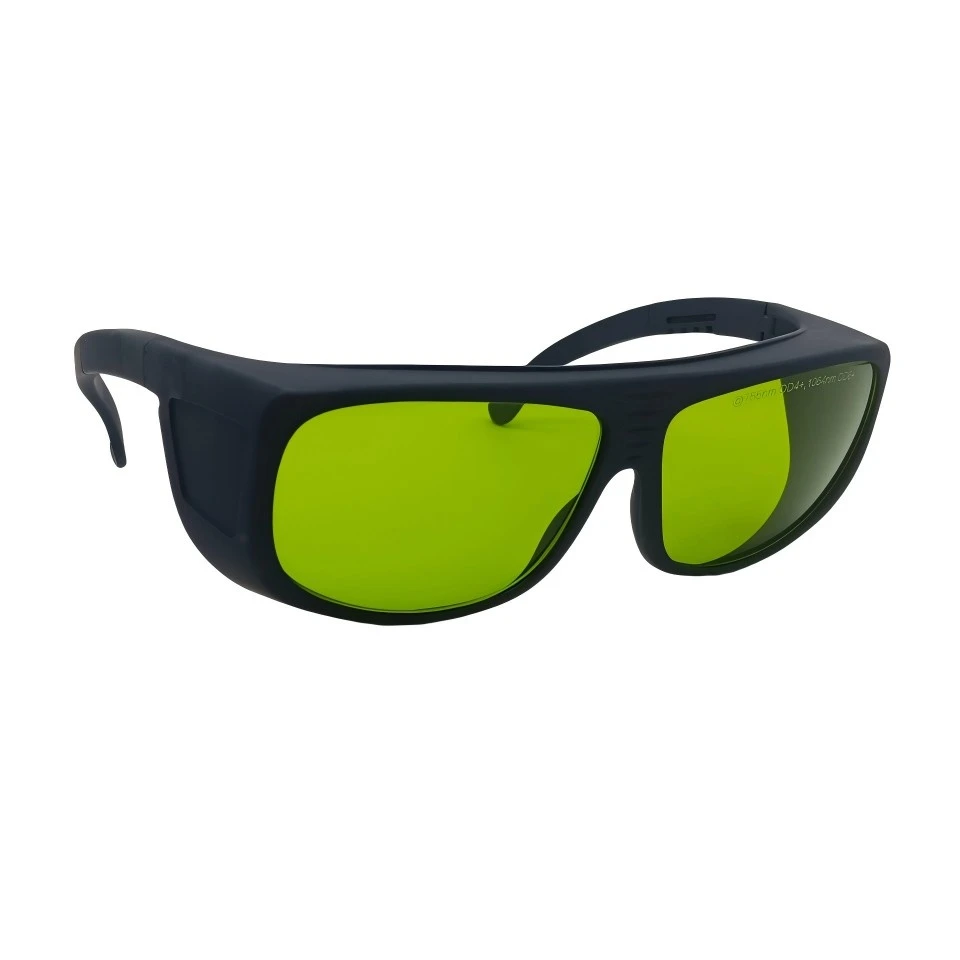
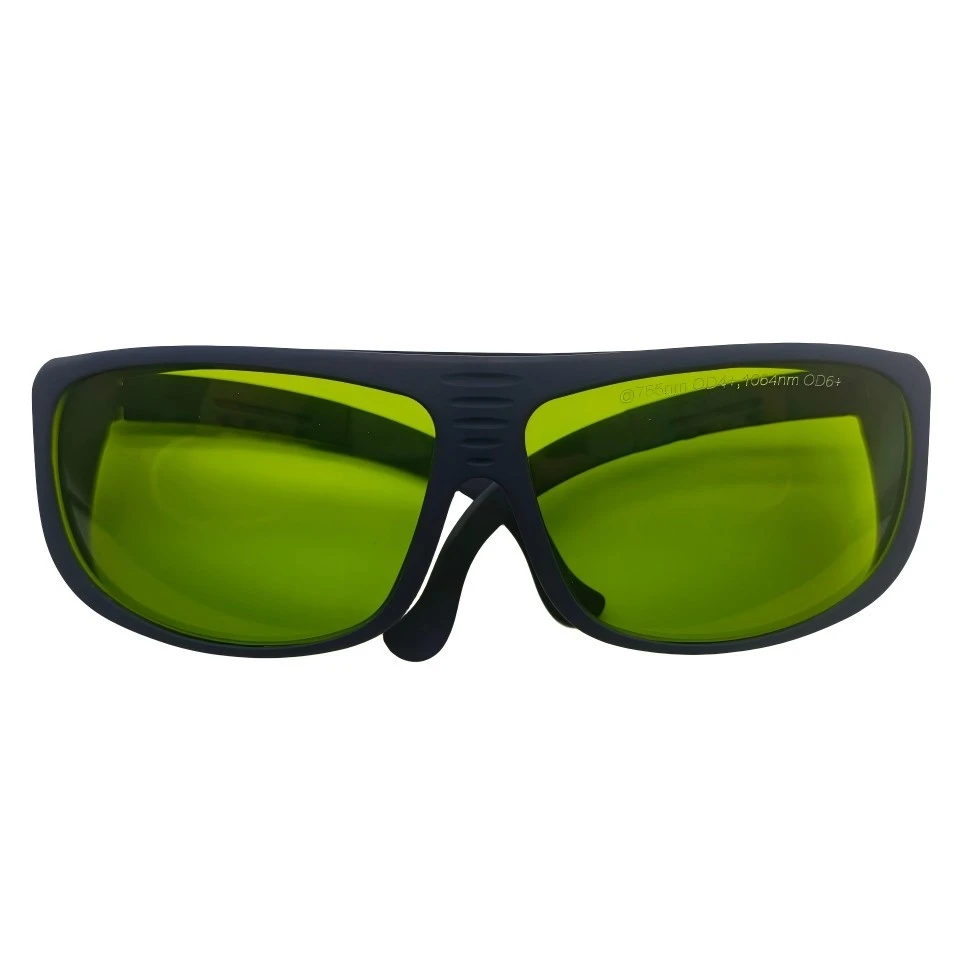
Designed for 755nm Alexandrite, 808nm Diode and 1064nm Nd laser systems, these 600–1100nm laser safety glasses provide multi-wavelength eye protection for aesthetic laser professionals, clinics and laser equipment operators.
With wavelength-specific protection of OD4+ at 755nm, OD5+ at 808nm and OD6+ at 1064nm, the eyewear combines laser attenuation with ≥20% visible light transmission (VLT) for applications such as laser hair removal and other aesthetic laser procedures.
Working regularly with aesthetic laser and IPL devices means prioritizing uncompromising eye safety without sacrificing operational clarity. Our 600–1100nm laser safety goggles are professionally calibrated for daily medical beauty and phototherapy use, designed to shield your eyes from harmful laser radiation during all common cosmetic procedures, delivering reliable all-day protection for salon practitioners and technicians.

600–1100nm Laser Protection Range
Our 600–1100nm laser safety glasses block hazardous laser radiation throughout the 600 to 1100nm spectrum. We set targeted optical density (OD) ratings for three mainstream wavelengths widely adopted in beauty and aesthetic laser machines: 755nm, 808nm and 1064nm.
| Laser Wavelength | Laser Type | Optical Density | Common Aesthetic Use Cases |
|---|---|---|---|
| 755nm | Alexandrite Laser | OD4+ | Professional laser hair removal |
| 808nm | Diode Laser | OD5+ | Diode laser hair removal |
| 1064nm | Nd:YAG Laser | OD6+ | Hair removal & general aesthetic laser treatments |
OD4+ Protection for 755nm Alexandrite Lasers
The embedded filter delivers stable OD4+ shielding against 755nm alexandrite laser output.
In practical terms, OD4 limits light transmittance to roughly 0.01% at the target wavelength. Under standard testing environments, incoming laser energy gets reduced by a factor of 10,000 or higher.
Plenty of professional beauty clinics rely on 755nm alexandrite laser devices for hair removal, which makes dedicated 755nm laser safety glasses essential gear for operators.
OD5+ Protection for 808nm Diode Lasers
When working with 808nm diode lasers, these safety eyewear achieve OD5+ laser protection.
An OD5 rating means maximum transmittance sits around 0.001%. The lenses cut down incoming laser power by no less than 100,000 times under relevant test conditions.
808nm remains the most popular wavelength for salon diode laser hair removal. When shopping for 808nm laser safety glasses, you must check the exact OD performance at this wavelength instead of relying only on broad spectrum descriptions.
OD6+ Protection for 1064nm Nd:YAG Lasers
For 1064nm Nd:YAG laser equipment, the filter offers reliable OD6+ laser protection.
OD6 restricts laser transmittance to approximately 0.0001%. Operators gain a minimum 1,000,000-fold reduction of harmful laser irradiation.
1064nm Nd:YAG lasers feature broadly in aesthetic equipment, covering hair removal and many other cosmetic laser procedures.
Understanding Optical Density Across Different Wavelengths
Optical density measures how effectively laser safety lenses weaken laser beams at a specific wavelength. Formula reference: OD = log₁₀ (Incident Power / Transmitted Power)
Simply put, higher OD numbers equal stronger laser attenuation at the tested wavelength.
For this 600–1100nm laser safety glass, confirmed protection standards are listed below:
755nm → OD4+
808nm → OD5+
1064nm → OD6+
It is critical to note optical density changes across the spectrum. Do not assume the whole 600–1100nm range carries the same OD level. Always check the OD value matching your laser's exact working wavelength.
How to Confirm If 600–1100nm Laser Safety Glasses Fit Your Device
Spectrum coverage alone cannot guarantee a pair of laser safety eyewear works safely with your laser unit.
Before purchase, cross-check these key parameters of your machine:
- Working laser wavelength
- Output power or pulse energy
- Continuous wave or pulsed mode
- Pulse width & repetition frequency
- Laser beam features
- Maximum permissible exposure level (MPE)
- Required optical density and safety grade
If your aesthetic laser runs on 755nm, 808nm or 1064nm, share your full laser specifications with our team. We will confirm whether this set of 600–1100nm laser safety glasses meets your on-site protection requirements.

Why 755nm, 808nm & 1064nm Matter in Aesthetic Laser Safety
755nm, 808nm and 1064nm are three wavelengths commonly used in professional aesthetic laser and laser hair removal systems. They are typically associated with Alexandrite lasers, diode lasers and Nd lasers, respectively.
For clinics, aesthetic laser operators and equipment suppliers working with multi-wavelength platforms, laser safety eyewear should be selected according to the actual operating wavelength and required protection level. Our 600–1100nm laser safety glasses provide wavelength-specific protection of OD4+ at 755nm, OD5+ at 808nm and OD6+ at 1064nm.
755nm Alexandrite Laser Protection
The 755nm wavelength is commonly associated with Alexandrite laser systems used in professional aesthetic treatments, particularly laser hair removal.
Because 755nm laser radiation falls within the protection range of this filter, the eyewear provides:
755nm → OD4+
For facilities operating Alexandrite equipment, the protection level at the actual 755nm wavelength is a key specification when evaluating 755nm laser safety glasses.
This makes the filter relevant for applications involving:
- 755nm Alexandrite laser systems
- Alexandrite laser hair removal equipment
- Professional aesthetic laser platforms
- Multi-wavelength aesthetic systems incorporating 755nm
When sourcing Alexandrite laser safety glasses, buyers should verify the specified optical density at 755nm rather than relying only on a broad wavelength-range statement.
808nm Diode Laser Protection
The 808nm diode laser is widely used in professional laser hair removal and aesthetic equipment.
For 808nm laser systems, this filter provides:
808nm → OD5+
The specified OD5+ rating makes the 808nm protection performance directly identifiable when evaluating 808nm diode laser safety glasses for professional aesthetic applications.
Typical equipment and applications include:
- 808nm diode laser hair removal systems
- Professional diode laser equipment
- Aesthetic laser treatment platforms
- Multi-wavelength diode laser systems
- Equipment combining 755nm, 808nm and 1064nm wavelengths
For buyers comparing 808nm laser safety eyewear, both the operating wavelength and required optical density should be checked against the specifications of the laser equipment.
1064nm Nd Laser Protection
The 1064nm wavelength is commonly produced by Nd laser systems and is widely used in professional aesthetic laser equipment.
At 1064nm, this filter provides:
1064nm → OD6+
This wavelength-specific specification is particularly important when selecting 1064nm Nd laser safety glasses, because protection should be evaluated at the actual laser wavelength rather than based solely on the overall filter range.
The 1064nm protection is relevant to:
- 1064nm Nd laser systems
- Nd aesthetic laser equipment
- Professional laser hair removal systems
- Multi-function aesthetic laser platforms
- 755nm / 808nm / 1064nm combined laser equipment
For Nd laser safety eyewear, the required OD should always be determined from the laser parameters and applicable safety requirements before use.
One Filter for 755nm, 808nm & 1064nm Laser Systems
Many professional aesthetic platforms use more than one laser wavelength. A system may incorporate 755nm Alexandrite, 808nm diode and 1064nm Nd wavelengths to support different treatment requirements.
For buyers operating or supplying these multi-wavelength systems, using a filter with protection at all three wavelengths can simplify eyewear selection.
This 600–1100nm laser safety eyewear provides:
| Wavelength | Laser Technology | Protection |
|---|---|---|
| 755nm | Alexandrite Laser | OD4+ |
| 808nm | Diode Laser | OD5+ |
| 1064nm | Nd Laser | OD6+ |
Instead of treating "600–1100nm" as a generic protection claim, buyers can evaluate the eyewear according to the specific wavelengths used by their aesthetic laser equipment.
For 755nm, 808nm and 1064nm laser systems, confirm the required optical density and applicable safety rating from the laser specifications before selecting protective eyewear.

One Eyewear Solution for Multi-Wavelength Aesthetic Laser Workstations
Aesthetic laser facilities and equipment suppliers often work with more than one laser wavelength. 755nm Alexandrite, 808nm diode and 1064nm Nd lasers may be installed as separate devices or integrated into a single multi-wavelength aesthetic laser platform.
For these environments, managing different protective eyewear for every laser can increase the number of safety eyewear SKUs, complicate equipment matching and make day-to-day eyewear management more difficult.
Our 600–1100nm laser safety glasses are designed as a multi-wavelength laser eyewear solution for applications involving 755nm, 808nm and 1064nm laser systems, providing wavelength-specific protection within one filter:
755nm Alexandrite → OD4+
808nm Diode → OD5+
1064nm Nd → OD6+
This makes the eyewear particularly suitable for aesthetic clinics, laser equipment manufacturers, distributors and OEM equipment packages that need to support multiple laser wavelengths with a more streamlined eyewear configuration.
One Pair for Multiple Aesthetic Laser Wavelengths
A clinic may operate a 755nm Alexandrite laser, an 808nm diode hair removal laser and a 1064nm Nd laser in the same treatment environment. Equipment manufacturers may also integrate these wavelengths into a single multi-wavelength hair removal platform.
Instead of selecting a separate eyewear model based only on each individual wavelength, this 600–1100nm laser protective eyewear provides specified protection at all three key aesthetic laser wavelengths.
| Aesthetic Laser System | Wavelength | Protection |
|---|---|---|
| Alexandrite Laser | 755nm | OD4+ |
| Diode Laser | 808nm | OD5+ |
| Nd Laser | 1064nm | OD6+ |
For appropriately matched laser systems, this multi-wavelength coverage can help simplify eyewear selection across different treatment rooms, devices and equipment configurations.
Reduce Laser Safety Eyewear SKU Complexity
For distributors, clinics and aesthetic equipment suppliers, every additional eyewear model creates another item that must be identified, stocked, supplied and matched with the correct laser equipment.
A 755nm / 808nm / 1064nm laser safety glasses solution can help consolidate eyewear requirements where the required protection specifications are covered by the same filter.
This can reduce the need to manage separate:
- 755nm Alexandrite laser safety glasses
- 808nm diode laser safety glasses
- 1064nm Nd laser safety glasses
Fewer eyewear SKUs can mean simpler product identification, inventory planning, equipment packaging and replacement eyewear management.
This is particularly useful for businesses managing multiple aesthetic laser models rather than purchasing protective eyewear for only one individual laser.
Simplify Eyewear Management in Multi-Device Clinics
Aesthetic clinics may operate different laser technologies across multiple treatment rooms. When protective eyewear looks similar but provides different wavelength coverage, staff must ensure that the correct eyewear is paired with the correct equipment.
Using a multi-wavelength laser safety eyewear model can simplify this process when its protection specifications meet the requirements of the laser systems being used.
For suitable 755nm, 808nm and 1064nm equipment, one clearly identified eyewear model can support more consistent:
- Equipment-to-eyewear matching - fewer models to distinguish between compatible laser systems.
- Internal inventory management - reduce unnecessary duplication of protective eyewear SKUs.
- Replacement management - make it easier to identify which eyewear should be reordered for compatible equipment.
- Staff equipment setup - simplify the selection of protective eyewear before operating supported aesthetic laser systems.
The result is not simply broader wavelength coverage, but a more practical way to manage laser protective eyewear across a multi-device aesthetic environment.
Built for OEM Aesthetic Laser Equipment Packages
For aesthetic laser equipment manufacturers and OEM suppliers, protective eyewear is often supplied as part of the complete equipment package.
A manufacturer offering separate 755nm, 808nm and 1064nm laser machines may otherwise need to source and manage different eyewear models for different equipment configurations.
This 600–1100nm laser safety eyewear provides a potential consolidated solution for compatible multi-wavelength product lines.
It can be considered for equipment packages involving:
- 755nm Alexandrite aesthetic laser systems
- 808nm diode laser hair removal machines
- 1064nm Nd aesthetic laser systems
- 755nm / 808nm / 1064nm multi-wavelength platforms
- Professional laser hair removal equipment
- Multi-function aesthetic laser workstations
For OEM projects, eyewear selection can be matched to the laser specifications before the equipment package is finalized.
A Practical Option for Laser Safety Eyewear Distributors
Laser safety eyewear distributors often need to cover multiple customer applications while controlling the number of models held in inventory.
A 600–1100nm multi-wavelength laser safety glasses model covering specified protection at 755nm, 808nm and 1064nm can serve multiple aesthetic laser applications where the protection requirements are compatible.
This gives distributors a product positioned around multi-wavelength application coverage, rather than another single-wavelength eyewear SKU.
For B2B sourcing, this can help simplify:
Product portfolio planning → Inventory → Customer wavelength matching → Reordering
while still allowing higher-OD or application-specific laser eyewear to be offered separately when the laser specification requires it.
Designed for Multi-Wavelength Aesthetic Laser Operations
The key difference of this model is not simply that its filter covers 600–1100nm.
It is designed around a specific operational need:
One laser safety eyewear model for aesthetic environments working across 755nm Alexandrite, 808nm diode and 1064nm Nd laser wavelengths.
For clinics, distributors and aesthetic equipment manufacturers, this provides a practical balance between multi-wavelength coverage, wavelength-specific optical density and simplified eyewear management.
It is especially relevant when the objective is to reduce unnecessary eyewear SKU complexity across compatible aesthetic laser systems rather than selecting a separate protective eyewear model for every wavelength.
For OEM equipment packages or multi-device clinics, send us your laser wavelengths and operating specifications. We can help evaluate whether this 600–1100nm filter is suitable across your equipment range.
OD & VLT Explained: Understanding Laser Safety Glasses Protection
When selecting laser safety glasses, wavelength range alone does not determine whether the eyewear is appropriate for a specific laser. Two important optical specifications are Optical Density (OD) and Visible Light Transmission (VLT).
OD indicates how strongly the filter attenuates laser radiation at a specified wavelength, while VLT indicates how much visible light passes through the lens. Both should be considered together with the laser wavelength, output characteristics and operating conditions when selecting laser protective eyewear.
What Is Optical Density (OD) in Laser Safety Glasses?
Optical Density (OD) is a logarithmic measure of how much laser radiation is attenuated by a laser safety filter at a specified wavelength.
In simplified terms:
OD = log₁₀ (Incident Laser Power / Transmitted Laser Power)
As the OD value increases, the amount of laser radiation transmitted through the filter decreases.
| Optical Density | Maximum Theoretical Transmission | Approx. Attenuation Factor |
|---|---|---|
| OD4 | 0.01% | 10,000× |
| OD5 | 0.001% | 100,000× |
| OD6 | 0.0001% | 1,000,000× |
An important point for buyers is that OD is wavelength-specific. A pair of laser safety glasses should not be assumed to provide the same optical density across its entire stated wavelength range unless the technical data supports that rating.
For this 600–1100nm laser safety eyewear, the specified protection at the key aesthetic laser wavelengths is:
755nm Alexandrite → OD4+
808nm Diode → OD5+
1064nm Nd:YAG → OD6+
What Does OD4+ Mean at 755nm?
For this filter, OD4+ at 755nm means the eyewear provides an optical density of at least 4 at the specified 755nm wavelength.
An OD4 filter theoretically allows no more than approximately 0.01% of incident laser radiation at the rated wavelength to pass through, corresponding to an attenuation factor of at least 10,000×.
The OD4+ specification is therefore particularly relevant when evaluating 755nm laser safety glasses for Alexandrite lasers.
However, OD4+ should not automatically be interpreted as suitable for every 755nm laser. The required protection depends on the specifications and operating conditions of the actual Alexandrite laser system.
What Does OD5+ Mean at 808nm?
At 808nm, this laser safety filter provides OD5+ protection.
OD5 corresponds to theoretical laser transmission of no more than approximately 0.001%, or an attenuation factor of at least 100,000× at the rated wavelength.
This wavelength-specific specification is important for buyers sourcing 808nm diode laser safety glasses, particularly for professional diode laser hair removal and aesthetic laser equipment.
When comparing 808nm laser protective eyewear, the OD rating should always be checked specifically at or across the operating wavelength of the laser.
What Does OD6+ Mean at 1064nm?
At 1064nm, the filter provides OD6+ laser protection.
OD6 corresponds to theoretical transmission of no more than approximately 0.0001% of incident laser radiation, equivalent to an attenuation factor of at least 1,000,000× at the specified wavelength.
This makes the OD6+ value an important technical specification when evaluating 1064nm Nd:YAG laser safety glasses.
As with any laser wavelength, OD6+ does not by itself determine whether the eyewear is suitable for a particular Nd:YAG laser. The required OD must be evaluated against the actual laser parameters and applicable laser safety requirements.
Why Does VLT Matter in Laser Safety Eyewear?
Visible Light Transmission (VLT) describes the percentage of visible light that passes through the laser safety lens.
While Optical Density describes attenuation at specific laser wavelengths, VLT relates to the user's ability to see the surrounding working environment through the protective filter.
These 600–1100nm laser safety glasses have a VLT of ≥20%, allowing at least 20% visible light transmission through the filter under the specified measurement conditions.
VLT can be particularly relevant in professional aesthetic laser environments where operators need to see:
- Treatment areas and skin surfaces
- Laser equipment controls and displays
- Instruments and accessories
- Other personnel in the treatment room
- The general working environment
A higher VLT can improve visual brightness, but higher VLT should never be considered more important than the required laser protection.
The objective is to select laser protective eyewear that provides the required wavelength-specific protection while maintaining an appropriate level of visible light transmission for the intended working environment.
OD vs. VLT: Two Different Specifications
OD and VLT describe different aspects of laser safety eyewear performance and should not be confused.
| Specification | What It Tells You | This Model |
|---|---|---|
| Protection Range | Wavelength range covered by the filter | 600–1100nm |
| Optical Density at 755nm | Laser attenuation at 755nm | OD4+ |
| Optical Density at 808nm | Laser attenuation at 808nm | OD5+ |
| Optical Density at 1064nm | Laser attenuation at 1064nm | OD6+ |
| VLT | Visible light passing through the lens | ≥20% |
For an aesthetic laser operator, clinic or equipment supplier, the objective is not simply to select the eyewear with the highest OD or highest VLT.
The appropriate laser safety eyewear should provide the required optical density at the laser's operating wavelength while also providing suitable visibility for the intended working environment.
How Should OD and VLT Be Evaluated?
When selecting 600–1100nm laser safety glasses or other laser protective eyewear, OD and VLT should be evaluated together with the laser's wavelength and operating parameters.
Relevant factors can include:
- Laser wavelength
- Continuous-wave or pulsed operation
- Output power or pulse energy
- Pulse duration
- Repetition rate
- Beam characteristics
- Exposure conditions
- Applicable laser safety standards
- Required optical density or protection rating
For example, knowing that a laser operates at 1064nm is essential, but wavelength alone does not establish that OD6+ is sufficient for every 1064nm Nd:YAG laser system.
Likewise, a high OD value should not automatically be considered "better" if it does not match the wavelength and protection requirements of the actual laser application.
OD and VLT should be evaluated together with the laser's wavelength and operating parameters.
For 755nm Alexandrite, 808nm diode or 1064nm Nd:YAG laser systems, provide us with your laser wavelength and operating specifications so the appropriate laser safety eyewear can be evaluated for your application.
Aesthetic Laser Applications
The 600–1100nm laser safety glasses are designed for professional aesthetic laser environments using 755nm Alexandrite, 808nm diode and 1064nm Nd laser systems. Two common application areas for these wavelengths are laser hair removal and laser pigmentation treatment.
For each application, laser protective eyewear should be selected according to the actual laser wavelength, operating parameters and required optical density.
Laser Hair Removal - 755nm Alexandrite, 808nm Diode & 1064nm Nd
Professional laser hair removal systems commonly operate at 755nm, 808nm or 1064nm, with each wavelength associated with a different laser technology.
This makes multi-wavelength protection particularly relevant for aesthetic clinics, hair removal centers and equipment suppliers operating several types of laser hair removal machines.
755nm Alexandrite Laser Hair Removal
The 755nm Alexandrite laser is widely used in professional laser hair removal equipment.
For aesthetic facilities operating at this wavelength, appropriate 755nm laser safety glasses are required to reduce exposure to laser radiation according to the protection requirements of the specific system.
This 600–1100nm filter provides:
755nm Alexandrite → OD4+
The wavelength-specific OD4+ rating makes the eyewear relevant for compatible 755nm Alexandrite laser hair removal systems, subject to verification against the operating parameters and required protection level of the equipment.
For clinics operating dedicated Alexandrite systems or multi-wavelength hair removal platforms incorporating 755nm, the protection rating at the actual 755nm operating wavelength should be checked before selecting the eyewear.
808nm Diode Laser Hair Removal
The 808nm diode laser is one of the commonly used technologies in professional laser hair removal systems.
Aesthetic clinics, beauty equipment distributors and laser hair removal machine manufacturers may use 808nm as a standalone wavelength or as part of a multi-wavelength diode laser platform.
For 808nm applications, this filter provides:
808nm Diode → OD5+
When sourcing 808nm diode laser safety glasses, buyers should verify that the optical density at 808nm meets the protection requirements determined for their laser equipment.
The combination of 808nm OD5+ protection and multi-wavelength coverage makes this eyewear particularly relevant to businesses managing diode laser hair removal equipment alongside other aesthetic laser technologies.
1064nm Nd Laser Hair Removal
The 1064nm Nd laser is also used in professional laser hair removal and aesthetic laser systems.
For equipment operating at 1064nm, this laser safety filter provides:
1064nm Nd → OD6+
The specified OD6+ protection at 1064nm is an important consideration when evaluating 1064nm Nd laser safety glasses for hair removal applications.
For clinics using multiple hair removal technologies, one facility may operate 755nm Alexandrite, 808nm diode and 1064nm Nd laser systems across different devices or treatment rooms.
Where the required protection levels are compatible with this filter, the 600–1100nm laser safety eyewear can provide a multi-wavelength option for these three major laser hair removal wavelengths.
Multi-Wavelength Laser Hair Removal Systems
Modern aesthetic laser equipment may combine 755nm + 808nm + 1064nm wavelengths within one multi-wavelength laser hair removal platform.
For equipment manufacturers, distributors and clinics using these systems, protective eyewear must be evaluated across all operating wavelengths rather than at only one wavelength.
This filter provides specified protection at all three:
| Hair Removal Wavelength | Laser Technology | Specified Protection |
|---|---|---|
| 755nm | Alexandrite Laser | OD4+ |
| 808nm | Diode Laser | OD5+ |
| 1064nm | Nd Laser | OD6+ |
This multi-wavelength configuration is one of the key reasons the eyewear is suited to aesthetic laser hair removal environments using 755nm, 808nm and 1064nm laser technologies, provided the specified protection levels meet the requirements determined for the equipment.
Laser Pigmentation Treatment - 755nm Alexandrite & 1064nm Nd
755nm Alexandrite and 1064nm Nd lasers can also be used in professional aesthetic applications involving pigmented targets.
For facilities performing laser pigmentation procedures, protective eyewear should be matched to the wavelength or wavelengths produced by the actual laser system.
This filter provides:
755nm Alexandrite → OD4+
1064nm Nd → OD6+
The 600–1100nm wavelength range therefore covers both of these specified wavelengths, making the eyewear relevant for compatible aesthetic laser environments using 755nm Alexandrite or 1064nm Nd systems for pigmentation-related procedures.
755nm Alexandrite Laser for Pigmented Targets
The 755nm Alexandrite wavelength is used in aesthetic laser systems for applications involving melanin and pigmented targets.
When operating a 755nm system, the relevant specification for protective eyewear is its protection at the actual laser wavelength.
These 755nm Alexandrite laser safety glasses provide:
OD4+ at 755nm
For aesthetic clinics using Alexandrite systems for both laser hair removal and pigmentation-related procedures, this allows the same 755nm protection specification to be evaluated across multiple applications of the laser platform.
1064nm Nd Laser for Pigmentation Applications
The 1064nm Nd wavelength is also used in professional aesthetic laser systems for pigmentation-related applications.
For 1064nm laser operation, this filter provides:
OD6+ at 1064nm
When selecting 1064nm Nd laser safety glasses, the required optical density should be determined from the specifications and operating conditions of the particular laser system.
For aesthetic facilities operating both 755nm Alexandrite and 1064nm Nd lasers, the multi-wavelength coverage of this filter can simplify eyewear management where its wavelength-specific OD ratings meet the required protection levels.
One Laser Safety Eyewear Solution Across Key Aesthetic Applications
The value of this 600–1100nm laser safety eyewear is not limited to one individual aesthetic procedure.
Its specified protection at 755nm, 808nm and 1064nm allows the same filter to be evaluated across two important professional aesthetic laser application groups:
Laser Hair Removal
755nm Alexandrite / 808nm Diode / 1064nm Nd
Pigmentation Treatment
755nm Alexandrite / 1064nm Nd
For aesthetic clinics, laser hair removal centers, equipment distributors and aesthetic laser machine manufacturers, this multi-wavelength approach can help reduce the need to manage separate eyewear models for every compatible laser application.
Final eyewear selection should always be based on the laser wavelength, output parameters, operating conditions and required protection level, rather than the treatment name alone.
Compliance, Technical Documentation & OEM Support
For professional laser safety eyewear procurement, product specifications are only part of the sourcing decision. Aesthetic laser equipment manufacturers, distributors and clinics may also need technical documentation to verify the eyewear model, wavelength coverage and protection specifications before purchase or equipment integration.
For this 600–1100nm laser safety eyewear, technical documentation can be provided to support product evaluation and B2B sourcing requirements.
CE Certified Laser Safety Eyewear
These 600–1100nm laser safety glasses are CE certified, with specified protection for key aesthetic laser wavelengths:
755nm Alexandrite → OD4+
808nm Diode → OD5+
1064nm Nd:YAG → OD6+
Visible Light Transmission → ≥20%
For B2B buyers, compliance information should be reviewed together with the technical specifications of the laser equipment rather than relying on a CE statement alone.
Upon request, available product documentation can be supplied for customer review before bulk purchasing or OEM project confirmation.
Technical Documents for B2B Product Verification
Aesthetic laser equipment companies and professional distributors often need documentation before adding a new laser safety glasses supplier or eyewear model to their purchasing system.
Depending on the project and documentation available for this model, we can support product verification with relevant materials such as:
- CE certification documentation
- Product technical datasheet
- Laser wavelength protection specifications
- Optical Density (OD) information
- Visible Light Transmission (VLT) data
- Product and filter identification
- Available test documentation
- Product labeling information
- Packaging specifications
This documentation helps purchasing teams compare the 600–1100nm laser protection range and the specified OD values against their laser equipment requirements before placing an order.
For OEM customers, the objective is to establish a clear link between the laser equipment specification, selected protective eyewear and supporting product documentation.
Documentation Support for 755nm, 808nm & 1064nm Laser Systems
For aesthetic laser equipment operating at multiple wavelengths, documentation should make it easy to identify the protection provided at each relevant wavelength.
For this model:
| Laser System | Wavelength | Eyewear Specification |
|---|---|---|
| Alexandrite Laser | 755nm | OD4+ |
| Diode Laser | 808nm | OD5+ |
| Nd:YAG Laser | 1064nm | OD6+ |
This wavelength-specific documentation is particularly useful for 755nm / 808nm / 1064nm multi-wavelength aesthetic laser equipment, where a buyer needs to evaluate one eyewear model against several operating wavelengths.
Instead of treating the product simply as generic "600–1100nm goggles," OEM buyers can evaluate the eyewear according to the actual wavelength configuration of their equipment.
OEM Laser Safety Glasses for Aesthetic Equipment Manufacturers
We support OEM laser safety glasses projects for aesthetic laser equipment manufacturers, brands and distributors that need protective eyewear supplied together with their laser systems.
This model is particularly relevant to OEM product lines involving:
- 755nm Alexandrite laser equipment
- 808nm diode laser hair removal machines
- 1064nm Nd:YAG aesthetic lasers
- 755nm / 808nm / 1064nm multi-wavelength platforms
- Professional laser hair removal systems
- Aesthetic laser workstations
For manufacturers offering several compatible laser models, using one multi-wavelength laser safety eyewear model can help simplify the protective eyewear configuration across the equipment range.
Rather than managing a separate eyewear SKU for every individual wavelength, OEM customers can evaluate whether this 600–1100nm filter meets the protection requirements of multiple equipment models.
Private Label & OEM Packaging Options
For distributors and aesthetic equipment brands, laser protective eyewear may need to fit into an existing product identity and equipment packaging system.
Depending on order requirements, OEM support can include available customization options for:
Branding - private-label logo and product identification options.
Packaging - customized packaging for distributor or equipment-brand requirements.
Product Labeling - model, wavelength and protection information for easier product identification.
Equipment Kit Integration - supply of laser safety eyewear as an accessory within compatible aesthetic laser equipment packages.
Bulk Supply - production support for distributors, equipment manufacturers and recurring B2B orders.
Available customization options, MOQ and lead time can be confirmed according to the specific OEM project.
OEM Eyewear Matching for Multi-Model Laser Product Lines
One of the challenges for an aesthetic laser equipment manufacturer is not simply sourcing protective eyewear, but determining which eyewear should be packaged with which laser machine.
For customers offering several laser models, we can evaluate eyewear requirements based on the equipment configuration.
A typical OEM matching process can include:
1. Provide the laser specifications
Send the operating wavelength, laser type and relevant output parameters for each equipment model.
2. Review the required protection
Evaluate the wavelength and required protection level for the intended laser system.
3. Match the appropriate laser safety filter
Determine whether this 600–1100nm laser safety glasses model is appropriate or whether another filter is required.
4. Confirm technical documentation
Review the available product specifications, compliance documentation and relevant technical information before production.
5. Configure the OEM equipment package
Confirm eyewear quantity, branding, labeling, packaging and bulk-order requirements.
This approach is particularly useful for manufacturers managing a portfolio of Alexandrite, diode and Nd:YAG aesthetic laser equipment, because eyewear selection can be handled at the equipment-platform level rather than as an isolated accessory purchase.
For Distributors: One Product, Multiple Customer Applications
For a laser safety glasses distributor, technical documentation and clear wavelength identification can also simplify product portfolio management.
This model can be positioned for compatible customer applications involving:
755nm Alexandrite laser protection
808nm diode laser protection
1064nm Nd:YAG laser protection
The multi-wavelength configuration gives distributors an eyewear option that can be evaluated for several aesthetic laser technologies instead of functioning only as a single-wavelength product.
Where customers require a different wavelength range, higher optical density or another protection specification, an alternative laser safety filter should be selected rather than assuming one eyewear model fits every laser.
From Laser Specification to OEM Eyewear Solution
For B2B projects, our goal is not simply to supply a pair of laser safety glasses. It is to help customers establish the correct relationship between:
Laser Equipment → Operating Wavelength → Required Protection → Eyewear Model → Technical Documentation → OEM Equipment Package
If you manufacture, distribute or source 755nm Alexandrite, 808nm diode or 1064nm Nd:YAG laser equipment, send us your laser specifications and OEM requirements.
We can help evaluate whether this 600–1100nm laser safety eyewear is appropriate for your equipment range and discuss available documentation, private-label and bulk-supply options.
Hot Tags: 600-1100nm laser safety goggles | ce certified eyewear for 755nm 808nm 1064nm aesthetic lasers, China, manufacturers, suppliers, factory, customized, wholesale, best, cheap, professional, for sale, near me, 10600nm CO2 Laser Safety Glasses, 1064nm Laser Safety Glasses, BGR Laser Blocking Goggles, Infrared Protection Goggles, ND YAG Laser Goggles, Red Laser Protection Glasses