

Products overview
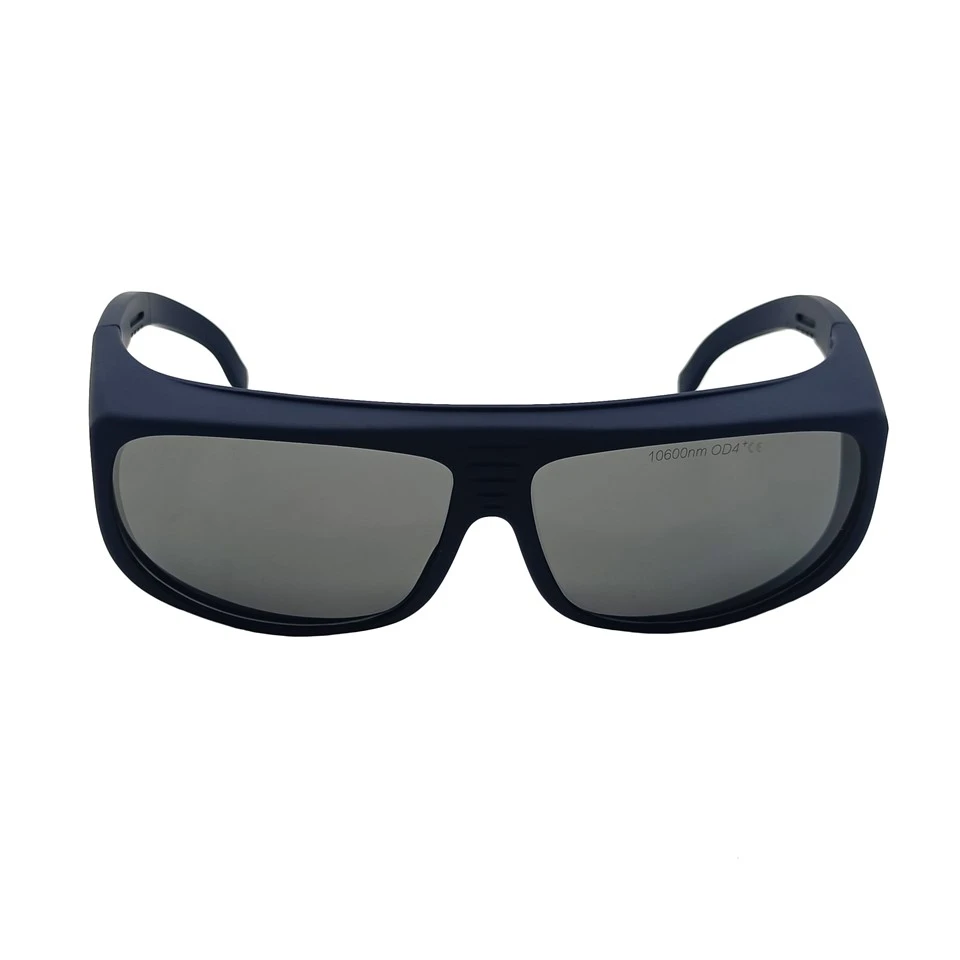
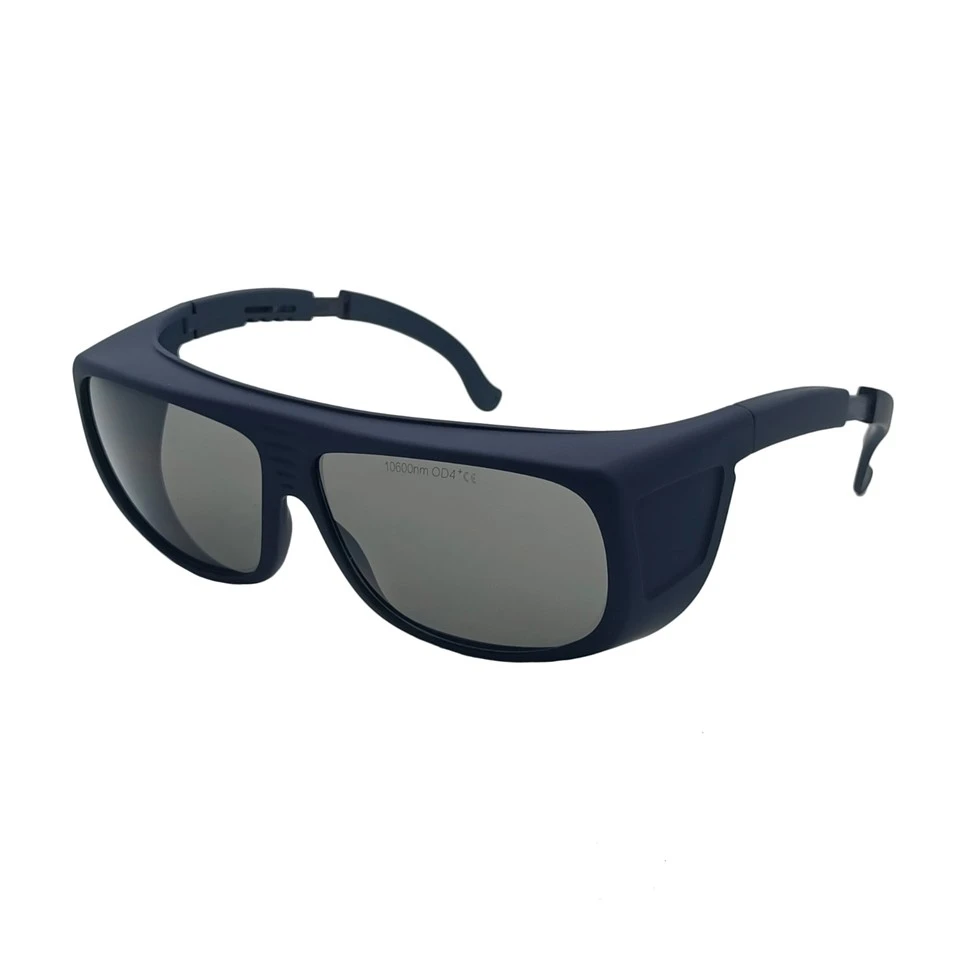
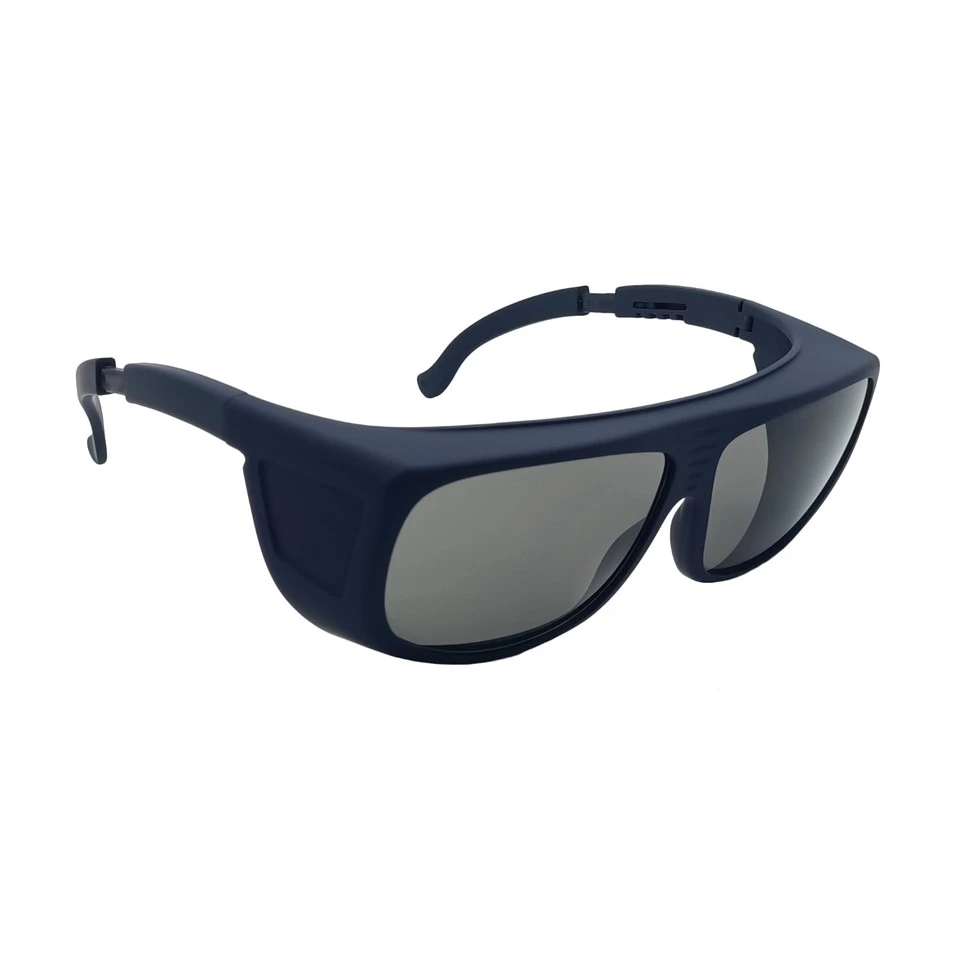
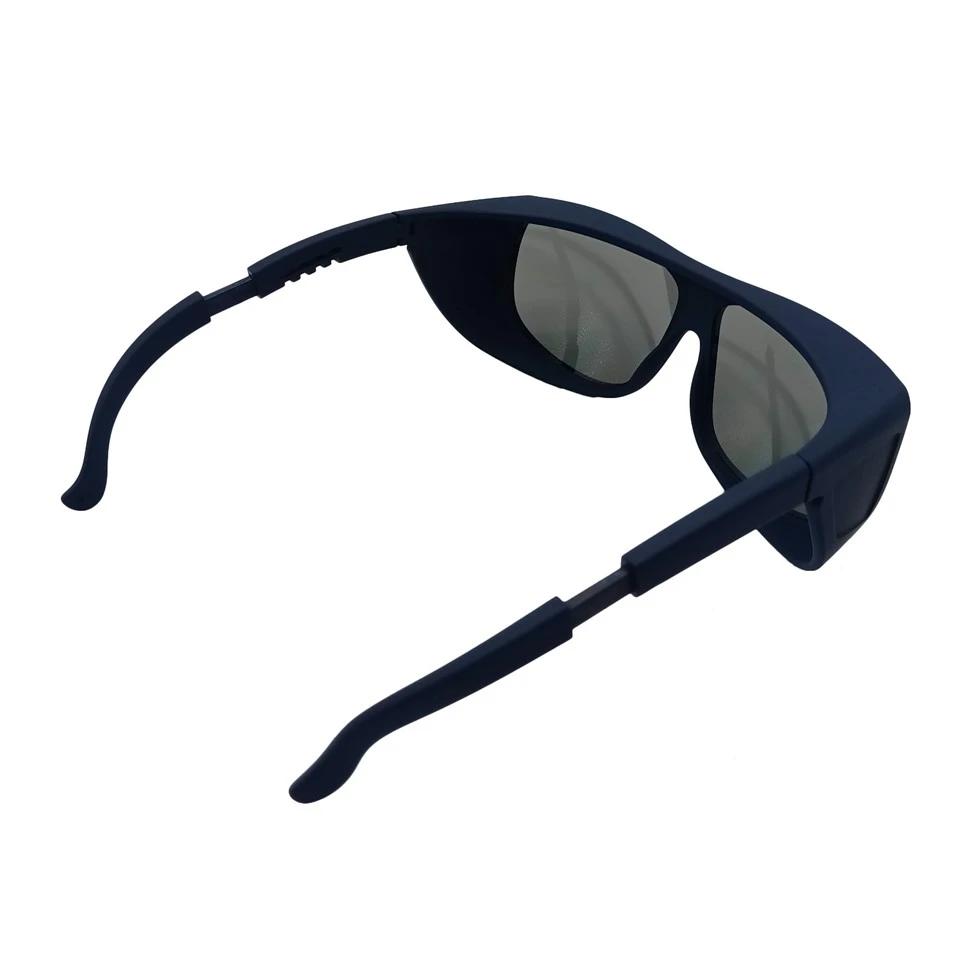
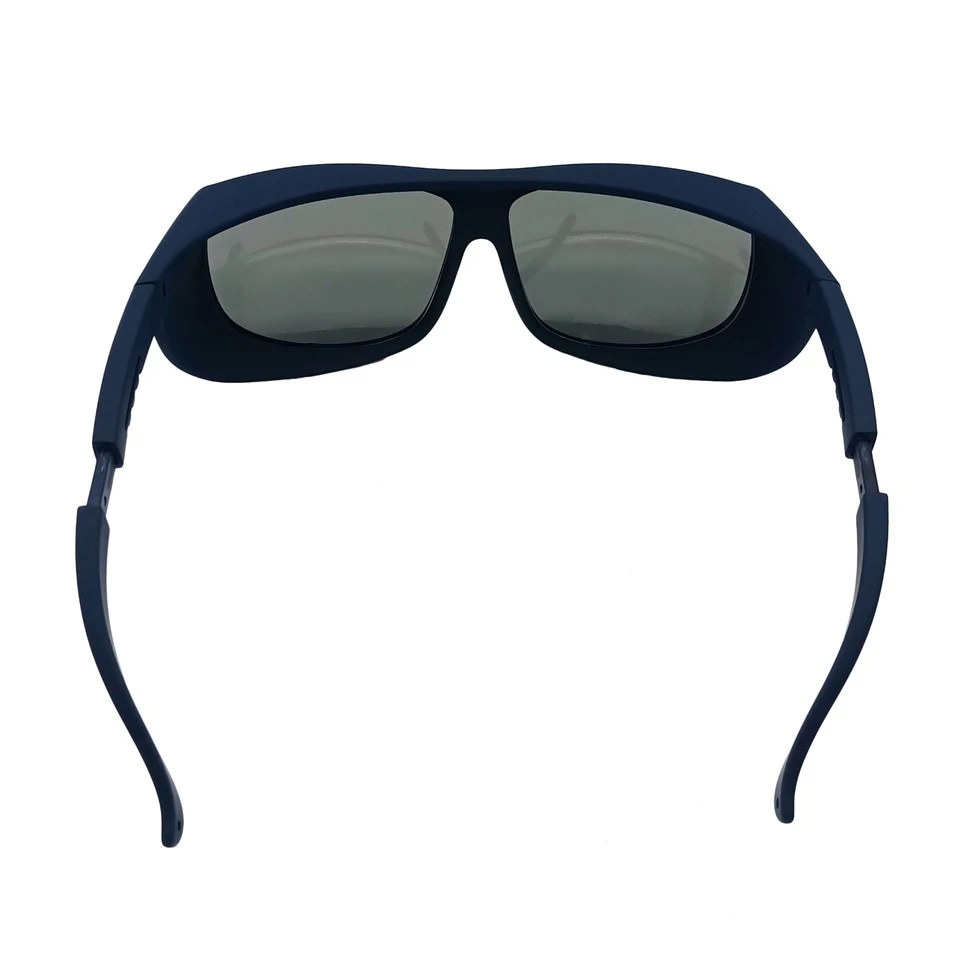
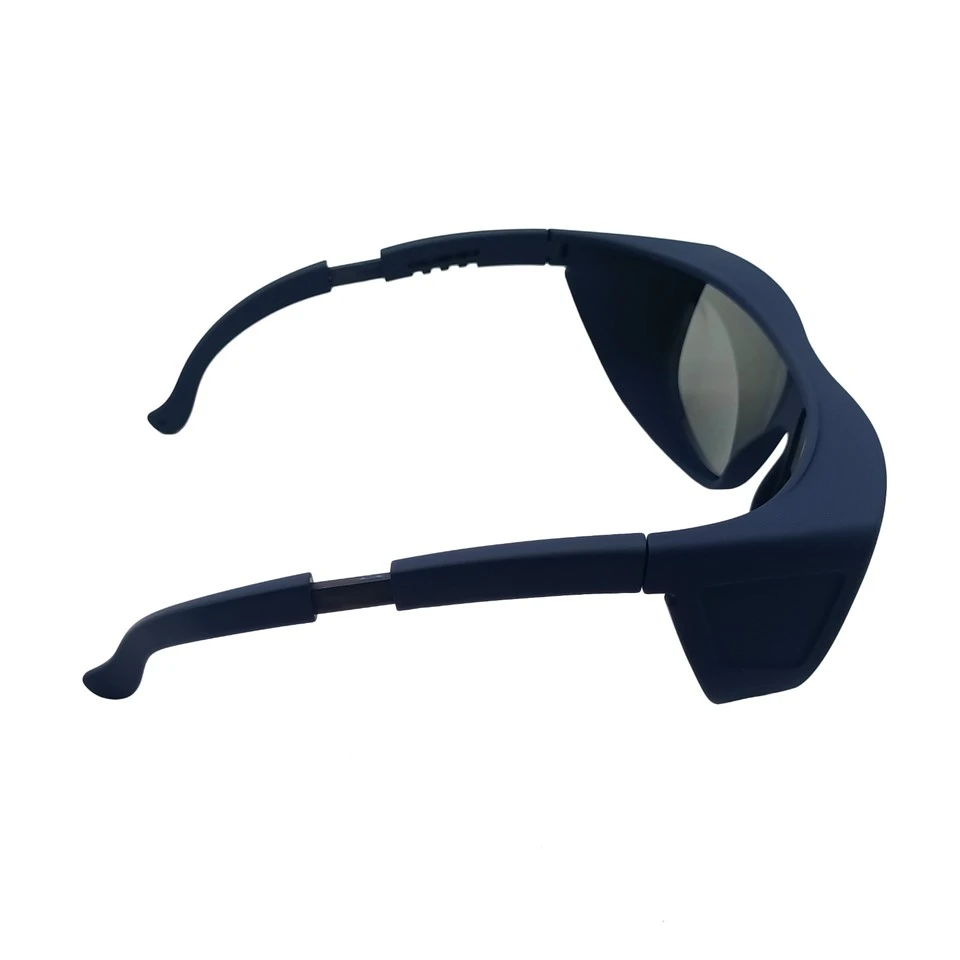
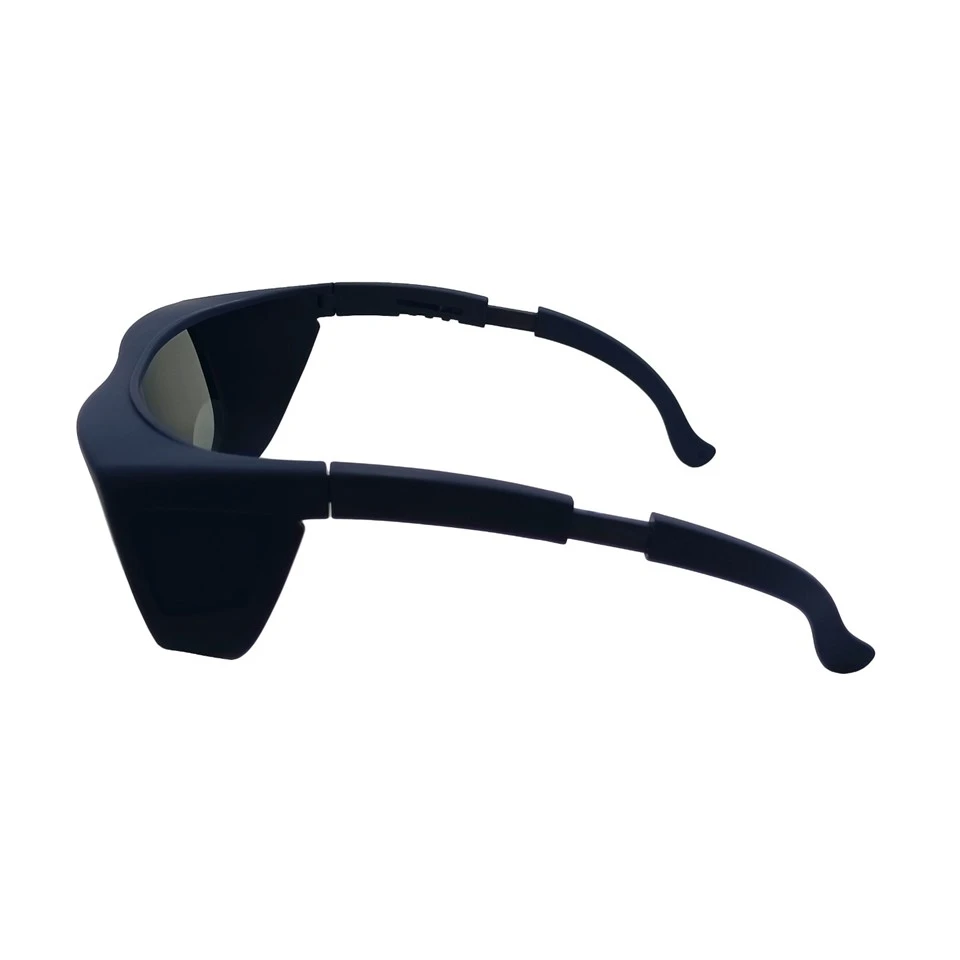
Designed for high-power CO₂ laser applications, these CE-certified laser safety glasses provide reliable protection for operators working with 10600nm laser systems. Covering a protection wavelength range of 5000–11000nm, they are specifically optimized for 10600nm CO₂ lasers, making them suitable for demanding industrial environments where eye safety is essential.
With an Optical Density (OD) of 4+ and 20% Visible Light Transmission (VLT), these glasses help reduce laser exposure while allowing sufficient visibility for precision work.

Why 10600nm CO₂ Laser Protection Is Completely Different From Ordinary Laser Safety
Most industrial CO₂ laser machines operate steadily at 10600nm (10.6μm), a long infrared wavelength that sits far beyond human visible light range. Unlike conventional visible and near-infrared lasers, 10.6μm CO₂ laser radiation is completely invisible to operators. With no visible beam to track, users cannot rely on naked-eye observation to judge laser working status, beam path or potential radiation hazards.
This unique working feature makes dedicated wavelength shielding indispensable. Generic laser goggles cannot handle this special infrared spectrum, which is why professional CO₂ laser safety glasses must be specially rated and tested for accurate 10600nm laser protection. Our eyewear features a full coverage range of 5000–11000nm, perfectly covering the standard 10.6μm wavelength used by almost all mainstream industrial CO₂ laser systems.
10600nm vs 10.6μm: Standard CO₂ Laser Wavelength Explanation
In the laser industry, CO₂ laser wavelengths are marked in both nanometers (nm) and micrometers (μm), which often confuses buyers. In fact, these two units refer to the exact same working spectrum:
10600nm = 10.6μm (Standard CO₂ Laser Wavelength)
The conversion rule is simple and universal: 1 micrometer equals 1000 nanometers. For procurement reference, whether you search for 10600nm laser safety glasses, 10.6 micron laser safety eyewear or industrial CO₂ laser protective goggles, you are looking for protection tailored for standard 10.6μm carbon dioxide lasers.
|
Wavelength Mark |
Equivalent Value |
Laser Type |
|---|---|---|
|
10600nm |
10.6μm |
Industrial CO₂ Laser |
Confirming this core wavelength is the first and most critical step for purchasing qualified CO₂ laser safety glasses, avoiding mismatched protection caused by wavelength confusion.
Why 10.6μm CO₂ Laser Beams Are Invisible & Risky
Human eyes can only capture visible light within a specific spectral range. The 10.6μm wavelength emitted by industrial CO₂ lasers belongs to the far-infrared band, which is fully invisible to the naked eye.
This creates a huge potential safety hazard in daily operation: the working environment looks completely normal with no bright laser beam, yet high-energy 10600nm CO₂ laser radiation is still running and radiating. Many operators mistakenly judge safety status by visible light, which easily leads to accidental eye exposure and long-term radiation damage.
For all CO₂ laser cutting, engraving, marking and laboratory processing scenarios, safety protection cannot depend on visual judgment. Standard operating procedures, mechanical safety designs, and most importantly, wavelength-specific CO₂ laser protective eyewear are essential to eliminate hidden dangers.
Why CO₂ Laser Requires Custom Wavelength-Specific Protection
It is worth emphasizing that no laser safety glasses offer full-spectrum universal protection. Each lens filter is designed for fixed wavelength bands and corresponding optical density levels. Ordinary laser goggles that work for near-infrared lasers will fail completely when facing 10.6μm far-infrared CO₂ laser radiation.
When selecting professional CO₂ laser safety glasses, always verify three core technical parameters to ensure full compliance:
Exact Laser Wavelength: Matches standard 10600nm / 10.6μm CO₂ laser
Effective Protection Range: Covers the full 5000–11000nm spectrum to include 10.6μm
Stable Optical Density: Provides standard OD4+ protection at 10600nm
This professional wavelength-targeted design is specially built for industrial scenarios, including CO₂ laser cutting, engraving, marking, industrial processing and laboratory laser applications, providing stable and reliable eye protection for long-hour industrial operation.
Critical Difference: 10600nm CO₂ Laser vs 1064nm Nd:YAG Laser
This is the most common procurement misunderstanding in the laser safety industry: many buyers mix up 10600nm CO₂ laser and 1064nm Nd:YAG laser due to similar numeric labels. In fact, they are completely different laser sources with huge spectral gaps.
1064nm (1.064μm): Near-infrared wavelength, applies to Nd:YAG lasers, commonly used for laser welding, cleaning and hair removal devices
10600nm (10.6μm): Far-infrared wavelength, exclusive for industrial CO₂ laser cutting and engraving machines
1064nm laser safety glasses cannot protect 10600nm CO₂ laser radiation at all, and vice versa. Eyewear designed for Nd:YAG lasers features totally different filter formulas and cannot block far-infrared CO₂ laser energy.
This distinction is extremely vital for laser equipment distributors, factory procurement teams and manufacturers with multi-type laser equipment, to avoid safety accidents caused by mismatched protective glasses.
Professional-Grade Dedicated 10.6μm CO₂ Laser Safety Solution
Qualified 10600nm CO₂ laser safety glasses are not just wide-spectrum infrared goggles. They are professionally calibrated to focus on the core 10.6μm CO₂ laser wavelength, ensuring accurate attenuation of high-energy far-infrared laser radiation while meeting industrial safety standards.
Standard professional selection process for CO₂ laser protective eyewear:
Confirm CO₂ Laser Type → Verify 10.6μm / 10600nm Wavelength → Check OD4+ Protection Level → Confirm 5000–11000nm Coverage → Match Working Scenarios
Suitable for CO₂ laser machine manufacturers, industrial processing factories, research laboratories and laser equipment distributors. Always confirm laser output power, pulse parameters and actual working conditions before selection, to match the most suitable CO₂ laser protective eyewear for your equipment.
5000–11000nm CO₂ Laser Protection Performance
These CO₂ laser safety glasses provide protection across the specified 5000–11000nm wavelength range, covering the primary 10600nm (10.6μm) wavelength used by CO₂ laser systems.
At the specified protection range, the filter provides OD4+ laser attenuation, making wavelength-specific optical performance the key technical consideration when evaluating this eyewear for compatible CO₂ laser equipment.
5000–11000nm Protection Range
The filter is designed to provide laser protection across:
5000nm → 11000nm
This wavelength range includes:
10600nm = 10.6μm CO₂ Laser
For buyers sourcing 10600nm CO₂ laser safety glasses, this distinction is important. A broad statement such as "infrared laser protection" is not sufficient-the specified protection range must actually include the operating wavelength of the laser.
For this filter:
| Technical Parameter | Specification |
|---|---|
| Protection Range | 5000–11000nm |
| Primary CO₂ Wavelength | 10600nm / 10.6μm |
| Laser Type | CO₂ Laser |
| Optical Density | OD4+ |
| Visible Light Transmission | 20% |
The 10600nm CO₂ laser wavelength falls within the 5000–11000nm protection range, allowing the filter to be evaluated specifically for professional 10.6μm CO₂ laser applications.
OD4+ Protection at 10600nm
At 10600nm (10.6μm), the relevant technical specification for this filter is OD4+ protection.
Optical Density describes the attenuation of laser radiation at a specified wavelength.
An OD4 rating corresponds theoretically to a maximum transmission of approximately:
0.01%
or an attenuation factor of at least:
10,000×
Therefore, where OD4+ is verified at 10600nm, the filter provides high attenuation of the 10.6μm CO₂ laser wavelength.
This makes the OD specification particularly relevant when evaluating CO₂ laser protective eyewear for 10600nm laser systems.
However, OD4+ should not be interpreted as automatically suitable for every CO₂ laser. Required protection depends on the laser's output characteristics, operating conditions, exposure scenario and applicable laser safety requirements.
What B2B Buyers Should Verify
When evaluating 5000–11000nm laser safety glasses for a CO₂ laser, professional buyers should verify that the product documentation answers three separate questions:
1. Is the laser wavelength covered?
The primary 10.6μm CO₂ laser wavelength is 10600nm, which falls within the specified 5000–11000nm protection range.
2. What optical density is provided at 10600nm?
The relevant filter specification is OD4+, subject to verification against the applicable technical data.
3. Is there technical evidence supporting the specification?
Where available, review the spectral OD curve, spectral transmission data, test report and filter identification associated with the product.
This verification process is especially relevant for CO₂ laser equipment manufacturers, industrial laser facilities, laboratories and distributors sourcing protective eyewear for professional laser systems.
Protection Must Match the Actual CO₂ Laser System
The correct selection process for 10600nm CO₂ laser safety eyewear should be:
CO₂ Laser → 10600nm / 10.6μm → Laser Operating Parameters → Required OD → 5000–11000nm Filter → Technical Verification
Wavelength coverage alone does not determine whether protective eyewear is appropriate for a specific laser.
For professional or OEM projects, provide the CO₂ laser wavelength, output parameters and required protection level so the filter specification can be evaluated against the actual equipment requirements.
Industrial CO₂ Laser Applications: Cutting & Engraving
10.6μm / 10600nm CO₂ lasers are widely used in industrial laser cutting and engraving equipment. For operators, equipment manufacturers and industrial facilities working with these systems, laser protective eyewear should be selected according to the actual operating wavelength, required optical density and conditions under which personnel may be exposed to laser radiation.
These 5000–11000nm CO₂ laser safety glasses cover the key 10600nm CO₂ laser wavelength and provide OD4+ protection at the specified wavelength, making them suitable for evaluation in compatible CO₂ laser cutting and engraving environments.
CO₂ Laser Cutting Safety Glasses
Industrial CO₂ laser cutting machines commonly use the 10.6μm / 10600nm wavelength to process a variety of materials.
For personnel working around CO₂ laser cutting equipment, the relevant protective eyewear must provide protection at the actual CO₂ laser wavelength.
This filter provides:
CO₂ Laser Wavelength → 10600nm / 10.6μm
Protection Range → 5000–11000nm
Optical Density → OD4+ at the specified wavelength
For buyers sourcing CO₂ laser cutting safety glasses, wavelength coverage should be verified first, followed by confirmation that the optical density meets the protection requirement determined for the laser system.
This is particularly relevant to:
- Industrial CO₂ laser cutting facilities
- CO₂ laser machine operators
- Laser cutting equipment manufacturers
- Technical and maintenance personnel
- CO₂ laser equipment distributors
The need for protective eyewear can vary depending on the machine design and operating condition. A fully enclosed laser cutting system may rely primarily on engineering controls during normal operation, while service, maintenance or other conditions can involve different exposure considerations.
For this reason, CO₂ laser protective eyewear should be selected according to the equipment risk assessment and actual operating procedure-not simply because the machine is described as a laser cutter.
CO₂ Laser Engraving Safety Glasses
CO₂ laser engraving machines also commonly operate around the 10600nm / 10.6μm infrared wavelength.
Because this CO₂ laser radiation is invisible to the human eye, operators cannot rely on seeing the primary beam to determine whether laser radiation is present.
For compatible engraving systems, these 10600nm CO₂ laser safety glasses provide wavelength-specific protection for evaluation against the equipment requirements:
10600nm CO₂ Laser → 5000–11000nm Filter → OD4+
This makes the eyewear relevant to professional environments involving:
- Industrial CO₂ laser engraving machines
- Commercial laser engraving workshops
- CO₂ laser equipment operation
- Equipment service and maintenance
- Laser engraving machine manufacturers and distributors
When selecting CO₂ laser engraving safety glasses, buyers should confirm the laser wavelength and required protection rather than relying only on terms such as "laser engraving glasses."
Different engraving machines may use different laser technologies and wavelengths, so eyewear designed for a 10600nm CO₂ laser should not be assumed to protect against other engraving laser wavelengths unless those wavelengths are specifically covered by the filter specifications.
One CO₂ Laser Filter for Cutting & Engraving Equipment
For businesses operating or supplying both CO₂ laser cutting and CO₂ laser engraving machines, the common technical point is the laser source:
CO₂ Laser → 10.6μm → 10600nm
Where the equipment operates at 10600nm and the required protection level is compatible with this filter, the same 5000–11000nm CO₂ laser protective eyewear can be evaluated for both cutting and engraving environments.
| Application | Typical Laser | Key Wavelength | Eyewear Specification |
|---|---|---|---|
| CO₂ Laser Cutting | CO₂ Laser | 10600nm / 10.6μm | 5000–11000nm, OD4+* |
| CO₂ Laser Engraving | CO₂ Laser | 10600nm / 10.6μm | 5000–11000nm, OD4+* |
*Final eyewear selection should be based on the required protection level and applicable technical data for the actual laser system.
For CO₂ laser cutting machine manufacturers, engraving equipment suppliers and industrial laser facilities, provide the equipment wavelength and operating specifications to verify whether this 10600nm CO₂ laser safety eyewear is appropriate for your application.
CO₂ Laser Machine-to-Eyewear Matching
Selecting CO₂ laser safety glasses should start with the laser machine-not with the eyewear.
Two CO₂ laser systems may both operate at 10600nm / 10.6μm, but differences in output power, operating conditions and potential exposure can result in different laser protection requirements.
For this reason, we use a machine-based approach to evaluate 10600nm CO₂ laser protective eyewear:
CO₂ Laser Machine → 10.6μm / 10600nm → Operating Parameters → Required OD → Filter Selection → Technical Verification
This process helps CO₂ laser equipment manufacturers, industrial users and distributors evaluate protective eyewear against the actual specifications of the machine rather than selecting glasses by product name alone.
Step 1 - Identify the CO₂ Laser Machine
Start with the laser source installed in the equipment.
For a typical CO₂ laser cutting or engraving machine, the primary operating wavelength is:
CO₂ Laser → 10.6μm → 10600nm
Confirming the laser technology is important because different laser machines can use very different wavelengths.
For example, 10600nm CO₂ laser safety glasses should not be confused with 1064nm laser safety glasses used for other laser technologies.
The protective filter must be evaluated at the actual wavelength emitted by the equipment.
Step 2 - Confirm the 10.6μm / 10600nm Wavelength
Once the laser source has been identified, verify the operating wavelength from the machine or laser source specifications.
For standard 10.6μm CO₂ laser systems:
Operating Wavelength: 10600nm
The eyewear protection range must include this wavelength.
For this model:
Filter Protection Range: 5000–11000nm
Because 10600nm falls within the specified 5000–11000nm protection range, the next step is to determine whether the optical density is appropriate for the machine.
Step 3 - Review the Laser Operating Parameters
Wavelength alone is not enough to select professional laser protective eyewear.
The required protection can depend on the operating characteristics and potential exposure conditions of the CO₂ laser system.
Relevant information may include:
- Laser output power
- Continuous-wave or pulsed operation
- Pulse energy and duration, where applicable
- Beam characteristics
- Operating distance
- Accessible laser radiation
- Machine enclosure and engineering controls
- Service or maintenance conditions
- Potential exposure duration
This is why two 10600nm CO₂ laser machines should not automatically be assigned the same protective eyewear simply because they operate at the same wavelength.
Step 4 - Determine the Required Optical Density
The next step is to determine the required optical density (OD) for the actual laser and exposure scenario according to the applicable laser safety assessment and requirements.
Optical density describes how strongly a protective filter attenuates laser radiation at a specified wavelength.
This eyewear provides:
10600nm / 10.6μm → OD4+*
An OD4 rating corresponds theoretically to at least 10,000× attenuation at a wavelength where that OD is verified.
However, the purchasing question should not be:
"Are OD4+ CO₂ laser safety glasses good enough?"
It should be:
"What OD does this specific CO₂ laser machine require at 10600nm?"
If the required protection is higher than the verified performance of the filter, a different protective solution should be selected.
Step 5 - Match the Required OD to the CO₂ Laser Filter
Once the required OD has been established, it can be compared with the filter specifications.
For this CO₂ laser protective eyewear:
| Selection Factor | Filter Specification |
|---|---|
| Laser Technology | CO₂ Laser |
| Key Wavelength | 10600nm / 10.6μm |
| Protection Range | 5000–11000nm |
| Optical Density | OD4+* |
| VLT | 20% |
| Lens Material | Polycarbonate |
A filter should only be selected when its verified wavelength coverage and optical density satisfy the protection requirements determined for the laser machine.
Step 6 - Verify the Technical Evidence
For professional B2B procurement, filter matching should be supported by technical documentation rather than by the product title alone.
Depending on availability, buyers can verify:
- Spectral OD Curve - shows optical density in relation to wavelength.
- OD Evidence at 10600nm - confirms the filter performance at the key 10.6μm CO₂ laser wavelength.
- Test Report - supports the stated protection specifications.
- CE Documentation - provides applicable product compliance information.
- Filter Identification - connects the supplied eyewear with the corresponding technical documentation.
This is particularly important for CO₂ laser machine manufacturers and equipment distributors integrating protective eyewear into a complete equipment package.
From CO₂ Laser Machine to the Right Protective Eyewear
For professional procurement, the complete selection logic is:
Machine
↓
CO₂ Laser Source
↓
10600nm / 10.6μm Wavelength
↓
Operating & Exposure Parameters
↓
Required Optical Density
↓
5000–11000nm Protective Filter
↓
Technical Verification
This machine-to-eyewear approach allows CO₂ laser safety glasses to be evaluated as part of the laser safety solution rather than treated as a generic machine accessory.
Need to Match Eyewear to Your CO₂ Laser Machine?
For CO₂ laser cutting machine manufacturers, laser engraving equipment suppliers, distributors and industrial laser facilities, send us your machine specifications for filter evaluation.
Please provide:
Laser Type → Wavelength → Output Power → CW/Pulsed Operation → Relevant Operating Parameters → Required OD (if known)
We can compare these requirements with the available 10600nm CO₂ laser safety eyewear specifications and supporting technical documentation.
When to Use - and When Not to Use - This CO₂ Laser Filter
These CO₂ laser safety glasses are designed for protection within the specified 5000–11000nm wavelength range, including the key 10600nm / 10.6μm CO₂ laser wavelength.
However, wavelength coverage alone does not make a laser safety filter suitable for every CO₂ laser machine or operating condition. The eyewear should be selected only when its wavelength range and optical density meet the protection requirements determined for the actual laser system.
When to Consider This 10600nm CO₂ Laser Safety Filter
This 5000–11000nm laser safety filter can be considered when:
- Your laser is a 10.6μm / 10600nm CO₂ laser.
The primary operating wavelength falls within the specified 5000–11000nm protection range.
- The required optical density is compatible with OD4+.
The required OD should be determined from the laser parameters, exposure conditions and applicable laser safety requirements.
- You are selecting eyewear for compatible CO₂ laser cutting or engraving equipment.
The filter can be evaluated for professional CO₂ laser cutting and CO₂ laser engraving environments operating at 10600nm.
- Protective eyewear is required by the operating procedure or laser safety assessment.
This may include applicable open-beam, service, maintenance or other conditions where personnel could potentially be exposed to laser radiation.
- You need dedicated 10.6μm CO₂ laser protective eyewear.
This model is intended for buyers specifically requiring protection around the 10600nm CO₂ laser wavelength rather than a generic laser eyewear solution.
When NOT to Use This CO₂ Laser Filter
Do not select these 10600nm CO₂ laser safety glasses solely because your equipment is described as a "laser machine."
A different filter should be evaluated when:
- Your laser wavelength falls outside 5000–11000nm.
Laser safety eyewear must provide verified protection at the actual operating wavelength.
- Your equipment uses a 1064nm laser rather than a 10600nm CO₂ laser.
1064nm and 10600nm are different wavelengths. CO₂ laser protective eyewear rated for 10600nm should not be assumed to provide protection at 1064nm unless the technical data specifically includes that wavelength.
- Your laser safety assessment requires an OD higher than this filter provides.
If the required optical density exceeds the verified protection of this filter, another laser safety filter should be selected.
- Your machine produces additional laser wavelengths outside the filter's protection range.
Multi-wavelength equipment should be evaluated against every accessible hazardous wavelength-not only the primary CO₂ laser wavelength.
- The filter is damaged or its identification cannot be verified.
Eyewear with damaged lenses, cracks, significant deterioration or unclear filter identification should not be relied upon until its suitability has been confirmed according to the manufacturer's inspection and replacement guidance.
Do You Need Laser Safety Glasses for an Enclosed CO₂ Laser Machine?
Not every CO₂ laser operating condition creates the same eyewear requirement.
Many industrial CO₂ laser cutting and engraving machines use enclosures, interlocks and other engineering controls to prevent access to hazardous laser radiation during normal operation.
The need for CO₂ laser safety eyewear therefore depends on factors such as:
- Laser classification
- Machine enclosure
- Interlock system
- Accessible laser radiation
- Normal operation versus service or maintenance
- Facility operating procedures
- Laser safety risk assessment
Protective eyewear should complement appropriate engineering and administrative controls-not replace them.
For an enclosed CO₂ laser system, determine whether eyewear is required for the specific operating, maintenance or service condition before selecting a filter.
Quick Filter Selection Check
| Check | This Filter |
|---|---|
| Laser Type | CO₂ Laser |
| Primary Wavelength | 10600nm / 10.6μm |
| Protection Range | 5000–11000nm |
| Optical Density | OD4+* |
| Suitable if required OD ≤ verified filter protection? | Evaluate against technical data |
| 1064nm Nd:YAG protection? | Do not assume |
| Other wavelengths outside 5000–11000nm? | Select another/additional filter |
| Damaged or unidentified filter? | Do not use until evaluated |
Verify Before You Select
For professional CO₂ laser safety eyewear procurement, use this selection sequence:
Laser Type → Wavelength → Operating Parameters → Exposure Conditions → Required OD → Filter Specification → Technical Evidence
If your system operates at 10600nm / 10.6μm, provide the laser specifications and required protection level so this 5000–11000nm OD4+ CO₂ laser safety filter can be evaluated against your application.
fAQ
1. Is 10600nm the same as 10.6μm for a CO₂ laser?
Yes. 10600nm and 10.6μm refer to the same wavelength, since 1μm equals 1,000nm. The 10.6μm (10600nm) infrared wavelength is commonly associated with CO₂ laser systems used in cutting and engraving applications.
When selecting CO₂ laser safety glasses, verify that the filter's specified protection range includes 10600nm and that its optical density meets the protection requirement determined for the laser system.
2. Can I use 1064nm laser safety glasses for a 10600nm CO₂ laser?
Not unless the eyewear's technical data specifically confirms protection at 10600nm.
1064nm and 10600nm are very different laser wavelengths:
1064nm = 1.064μm → commonly associated with Nd:YAG lasers
10600nm = 10.6μm → commonly associated with CO₂ lasers
Laser eyewear rated for 1064nm should therefore not be assumed to provide CO₂ laser protection at 10600nm. Always match the protective filter to the actual operating wavelength.
3. Is OD4+ enough for every 10600nm CO₂ laser?
No. OD4+ should not automatically be considered sufficient for every CO₂ laser system.
The required optical density depends on the laser wavelength, output characteristics, exposure conditions, engineering controls and applicable laser safety requirements.
For a 10600nm CO₂ laser, first determine the required protection level and then compare it with the verified OD performance of the filter. If the required OD exceeds the filter's protection rating, different CO₂ laser protective eyewear should be selected.
4. Do I need CO₂ laser safety glasses when using an enclosed laser cutting or engraving machine?
Not necessarily during every operating condition.
Many CO₂ laser cutting and engraving machines use enclosures, interlocks and other engineering controls to restrict access to hazardous laser radiation during normal operation.
Eyewear requirements can change during service, maintenance, enclosure access or other conditions where hazardous radiation may become accessible.
The need for 10600nm CO₂ laser safety glasses should therefore be determined from the machine configuration, laser classification, operating procedure and facility-specific laser safety assessment.
5. Why does the spectral OD curve matter when selecting CO₂ laser safety eyewear?
A spectral optical density curve shows how a laser safety filter's OD changes with wavelength.
For 10.6μm CO₂ laser safety glasses, buyers can use the spectral data to verify the filter's protection around the key 10600nm wavelength, rather than relying only on a general "CO₂ laser protection" claim.
For B2B procurement, the spectral curve can be reviewed together with the test report, filter identification and applicable compliance documentation to verify the stated protection performance.
6. What information should I provide to match safety glasses to my CO₂ laser machine?
For professional CO₂ laser eyewear selection, provide as much of the following information as available:
- Laser type: CO₂ laser
- Operating wavelength: typically 10600nm / 10.6μm
- Output power: machine specification
- Operating mode: CW or pulsed
- Pulse parameters: if applicable
- Required OD: if already determined
- Application: such as CO₂ laser cutting or engraving
- Operating condition: normal operation, service, maintenance or other relevant exposure scenario
For OEM projects, you can also provide the equipment model, required technical documentation, labeling and packaging requirements.
This allows the selection process to follow:
CO₂ Laser Machine → 10600nm → Operating Parameters → Required OD → Protective Filter → Technical Verification
Hot Tags: CO₂ Laser Safety Glasses | CE Certified Protective Eyewear, China, manufacturers, suppliers, factory, customized, wholesale, best, cheap, professional, for sale, near me, 10600nm CO2 Laser Safety Glasses, 1064nm Laser Safety Glasses, Infrared Protection Goggles, Laser Safety Glasses 450nm, ND YAG Laser Goggles, Red Laser Protection Glasses


