


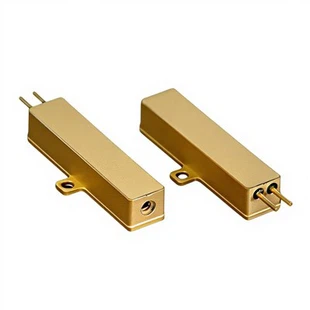
1.54μm/ 1535nm Eye-safe Laser Light Source
The 1.54 μm microchip DPSS laser is a solid-state laser with a specific wavelength, characterized by its eye-safe wavelength and compact all-solid-state design. These characteristics make it indispensable in several key areas:
I. Core Advantages and Principles
Eye Safety: The 1.54 μm wavelength falls within the strong absorption band of water. Most of the laser energy is absorbed by the aqueous humor and lens in the anterior part of the eye before reaching the retina, greatly reducing the risk of permanent retinal damage. Its maximum permissible exposure is several orders of magnitude higher than that of common 1064nm lasers, making its safety level far superior to lasers near 1 μm.
Microchip DPSS Technology: A miniature chip integrating a laser crystal (such as Er:Yb:Glass) and a nonlinear frequency conversion crystal (such as PPLN) is pumped by a laser diode to directly generate 1.54 μm laser light. This design results in a small device size, robust structure, high efficiency, and maintenance-free operation.
II. Main Application Areas
1. Lidar and Ranging
Military and Security: It is the standard choice for military laser rangefinders and target designators. In training, exercises, and low-risk environments, it minimizes the risk of accidental eye injury to operators and friendly units.
Industrial and Surveying: Used for high-precision industrial ranging, topographic surveying, and drone obstacle avoidance, offering safer operation in environments with human presence.
Autonomous Driving: As one of the light sources for lidar, it has potential in public road testing and future applications where eye safety requirements are extremely high.
2. Free-Space Optical Communication
Military Secure Communication: Used for secure data links between ground stations, ships, or air-to-ground communications. The 1.54 μm wavelength has good atmospheric transmission characteristics (attenuation is lower than the 1.55 μm communication wavelength, but far superior to visible light), and the beam is less prone to diffusion, offering strong resistance to interception and interference.
Civilian Emergency and Private Network Communication: Used in scenarios requiring rapid deployment, high bandwidth, and where wireless radio frequency is limited or unavailable.
3. Environmental Monitoring and Spectroscopy
Differential Absorption Lidar: Utilizing the absorption lines of gases such as water vapor and methane near 1.54 μm, it remotely detects and measures the concentration distribution of these components in the atmosphere, used for meteorological research, greenhouse gas monitoring, and pollution source tracing.
Laser-Induced Breakdown Spectroscopy: Used as an excitation source in LIBS applications requiring a safer operating environment.
4. Scientific Research and Testing
Laboratory Light Source: As a standard light source at an eye-safe wavelength, used for optical experiments, detector calibration, and atmospheric transmission characteristics research.
System Testing and Evaluation: Used to test and evaluate the performance of other optical systems (such as infrared cameras and detectors).
5. Medical and Bioimaging (Exploratory Applications)
Optical Coherence Tomography: In OCT technology, the 1.54 μm wavelength can provide deeper tissue penetration depth (compared to the 1300nm window), suitable for dermatology or research on certain deep tissue imaging.
Surgical Assistance and Treatment: Its absorption by water makes it suitable for some delicate soft tissue surgeries.
Summary
The main applications of 1.54 μm microchip DPSS lasers are concentrated in active optoelectronic systems with extremely high requirements for eye safety, especially military/security laser ranging and free-space optical communication. It perfectly combines the high reliability of DPSS technology with the inherent safety and excellent atmospheric transmission characteristics of the 1.54 μm wavelength, making it the preferred light source solution in these professional applications.
Its "microchip" form further promotes miniaturization, low power consumption, and mass production of equipment, making it possible to integrate it into modern platforms such as portable devices, drones, and satellite communication terminals.This answer was generated by AI and is for reference only. Please verify the information carefully.
-
![1535nm Erbium Glass Laser For Laser Distance Measurement]() 1535nm Erbium Glass Laser For Laser Distance Measurement
1535nm Erbium Glass Laser For Laser Distance MeasurementProduct Application
Distance meter
Weather radar
Fuze
Main Features
Built-in PIN, can output laser synchronization signal
Based on Er:glass passive... -
![Erbium Glass Laser - 1535nm 8mJ 5Hz Pulsed Output]() Erbium Glass Laser - 1535nm 8mJ 5Hz Pulsed Output
Erbium Glass Laser - 1535nm 8mJ 5Hz Pulsed OutputModel: JTBY8mJ
Wavelength: 1535±5 nm
Pulse Energy: 8mJ
Pulse Width: 13ns
Repetition Rate:5hz
Spot Diameter:0.8mm
Beam Divergence Angle:4mrad
Size:... -
![1535nm Eye-Safe Erbium Glass Laser With 500uJ Pulse Energy 10Hz Frequency]() 1535nm Eye-Safe Erbium Glass Laser With 500uJ Pulse Energ...
1535nm Eye-Safe Erbium Glass Laser With 500uJ Pulse Energ...Model: JTBY500μJ
Operating Wavelength: 1535nm
Pulse Energy: 500μJ
Pulse Width: 4-6ns
Repetition Rate:1-20hz
Spot Diameter: 0.35mm
Beam Divergence... -
![1535nm Erbium Glass Laser With 40uJ Pulse Energy 1KHz Frequency]() 1535nm Erbium Glass Laser With 40uJ Pulse Energy 1KHz Fre...
1535nm Erbium Glass Laser With 40uJ Pulse Energy 1KHz Fre...Model: JTBY40μJ
Operating Wavelength: 1535nm
Pulse Energy: 40μJ
Pulse Width: 5-7ns
Repetition Rate:1khz
Spot Diameter: 0.3mm
Beam Divergence... -
![400uJ 10Hz Erbium Doped Glass Laser - 1535nm Infrared Laser For Precision Applications]() 400uJ 10Hz Erbium Doped Glass Laser - 1535nm Infrared Las...
400uJ 10Hz Erbium Doped Glass Laser - 1535nm Infrared Las...Model: JTBY400μJ
Operating Wavelength: 1535±2 nm
Pulse Energy: 400μJ
Pulse Width: 4-5ns
Repetition Rate:1-10hz
Spot Diameter: 0.4mm
Beam Divergence Angle:... -
![1535nm Eye-Safe Erbium Glass Laser | 300uJ Pulse Energy 10Hz Repetition Rate]() 1535nm Eye-Safe Erbium Glass Laser | 300uJ Pulse Energy 1...
1535nm Eye-Safe Erbium Glass Laser | 300uJ Pulse Energy 1...Model: JTBYJTBY300μJ
Operating Wavelength: 1535nm
Pulse Energy: 300μJ
Pulse Width: 3-6ns
Repetition Rate:1-10hz
Spot Diameter: 0.3mm
Beam Divergence... -
![1535nm Eye-Safe Infrared Erbium-Doped Glass Laser - 2mJ 5Hz Pulsed Laser For Industrial Sensing]() 1535nm Eye-Safe Infrared Erbium-Doped Glass Laser - 2mJ 5...
1535nm Eye-Safe Infrared Erbium-Doped Glass Laser - 2mJ 5...Model: JTBY2mJ
Wavelength: 1535±5 nm
Pulse Energy: 2mJ
Pulse Width: 12ns
Repetition Rate:5hz
Spot Diameter:0.5mm
Beam Divergence Angle: ≤4mrad... -
![1535nm 20uJ 2KHz Eye-Safe Pulsed Erbium Glass Laser Module]() 1535nm 20uJ 2KHz Eye-Safe Pulsed Erbium Glass Laser Module
1535nm 20uJ 2KHz Eye-Safe Pulsed Erbium Glass Laser ModuleModel: JTBY20μJ
Operating Wavelength: 1535±5 nm
Pulse Energy: 20μJ
Pulse Width: 5-8ns
Repetition Rate:2Khz
Spot Diameter: 0.2mm
Beam Divergence... -
![1535nm Eye-Safe Erbium Laser (200uJ, 10Hz) For Medical/Industrial]() 1535nm Eye-Safe Erbium Laser (200uJ, 10Hz) For Medical/In...
1535nm Eye-Safe Erbium Laser (200uJ, 10Hz) For Medical/In...Model: JTBY200μJ
Operating Wavelength: 1535nm
Pulse Energy: 200μJ
Pulse Width: 5ns
Repetition Rate:10hz
Spot Diameter: 0.3mm
Beam Divergence... -
![1535nm Eye-Safe Erbium Glass Laser 10mJ 5Hz For Medical & Industrial]() 1535nm Eye-Safe Erbium Glass Laser 10mJ 5Hz For Medical &...
1535nm Eye-Safe Erbium Glass Laser 10mJ 5Hz For Medical &...Model: JTBY10mJ
Wavelength: 1535±5 nm
Pulse Energy: 10mJ
Pulse Width: 6ns
Repetition Rate:5hz
Spot Diameter:0.8mm
Beam Divergence Angle: ≤4mrad... -
![1535nm Eye Safe Erbium Glass Laser Module High Energy 100uJ 10Hz]() 1535nm Eye Safe Erbium Glass Laser Module High Energy 100...
1535nm Eye Safe Erbium Glass Laser Module High Energy 100...Model: JTBY100μJ
Operating Wavelength: 1535nm
Pulse Energy: 100μJ
Pulse Width: 4ns
Repetition Rate:10hz
Spot Diameter: 0.2mm
Beam Divergence Angle: 10...


Are 1.54 μm and 1535nm the same product?
This is a very professional and precise question.
The simple and direct answer is: in most practical applications and product contexts, yes, they refer to the same thing. However, strictly speaking, there are slight differences technically. The following is a detailed explanation:
1. Essentially pointing to the same wavelength band (√ Core consistency)
In the fields of lasers and fiber optic communication, both 1.54 μm (micrometers) and 1535 nm (nanometers) refer to a wavelength near the C-band (conventional band) centered at 1540 nanometers.
Conversion relationship: 1 μm = 1000 nm, therefore 1.54 μm = 1540 nm.
Industry practice:
In the fields of lidar, rangefinding, and military applications, it is more common to use the "micrometer" unit, such as 1.54 μm or 1.55 μm, to refer to this "eye-safe wavelength."
In the field of fiber optic communication, nm is used as the unit with very high precision, because the channel spacing of DWDM systems can be as narrow as 0.8 nm or 0.4 nm. 1530 nm-1565 nm is the core range of the C-band.
Therefore, when you see a product labeled as a 1.54 μm DPSS laser, its actual output wavelength is likely to be between 1530 nm and 1550 nm. 1535 nm can be considered one specific wavelength value within this range.
2. Subtle technical differences (△ Accuracy differences)
1.54 μm is a general, colloquial expression. It broadly represents a laser "near 1540 nanometers." Due to factors such as Er (erbium) ion energy level transitions and crystal doping, the output of DPSS lasers usually has a small bandwidth (such as a few nanometers), and the center wavelength may also fluctuate slightly around 1540 nm.
1535 nm is a more specific and precise wavelength value. It may mean:
The laser is designed so that its output wavelength is locked to this very precise point of 1535 nm (for example, to match a specific gas absorption line for sensing).
In fiber optic communication DWDM systems, 1535 nm is one of the standard channels.
3. Why can they be considered the same in the context of your product (1.54 μm Microchip DPSS Laser)?
Identical Eye Safety Mechanisms: Both 1540nm and 1535nm wavelengths fall within the strong absorption band of water, sharing the core characteristic of "eye safety." Safety standards (such as IEC 60825) are defined for a range of wavelengths, and this band belongs to one of the safest categories.
Consistent Technical Implementation: Both are generated through the same physical mechanism—using a laser diode to pump an erbium-doped (or erbium-ytterbium co-doped) gain medium (crystal or glass), producing light near 1.55 μm through stimulated emission. The microchip design is merely a packaging form.
Highly Overlapping Application Scenarios: Both 1540nm and 1535nm are primarily used in fields requiring high safety and reliability, such as laser ranging, LiDAR, and free-space optical communication. Application systems are generally insensitive to this difference of a few nanometers.
We're professional 1.54 μm microchip dpss laser manufacturers and suppliers in China, specialized in providing the best products and service. We warmly welcome you to wholesale cheap 1.54 μm microchip dpss laser for sale here from our factory. Also, customized service is available.