


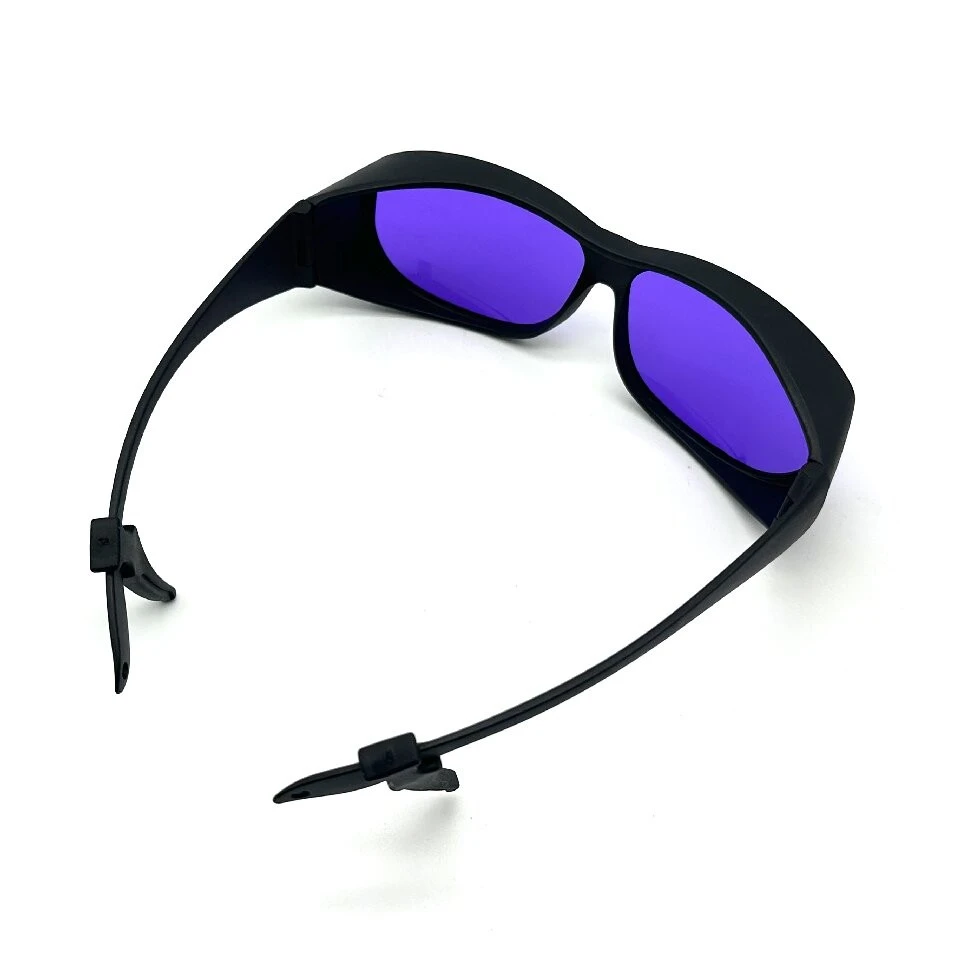
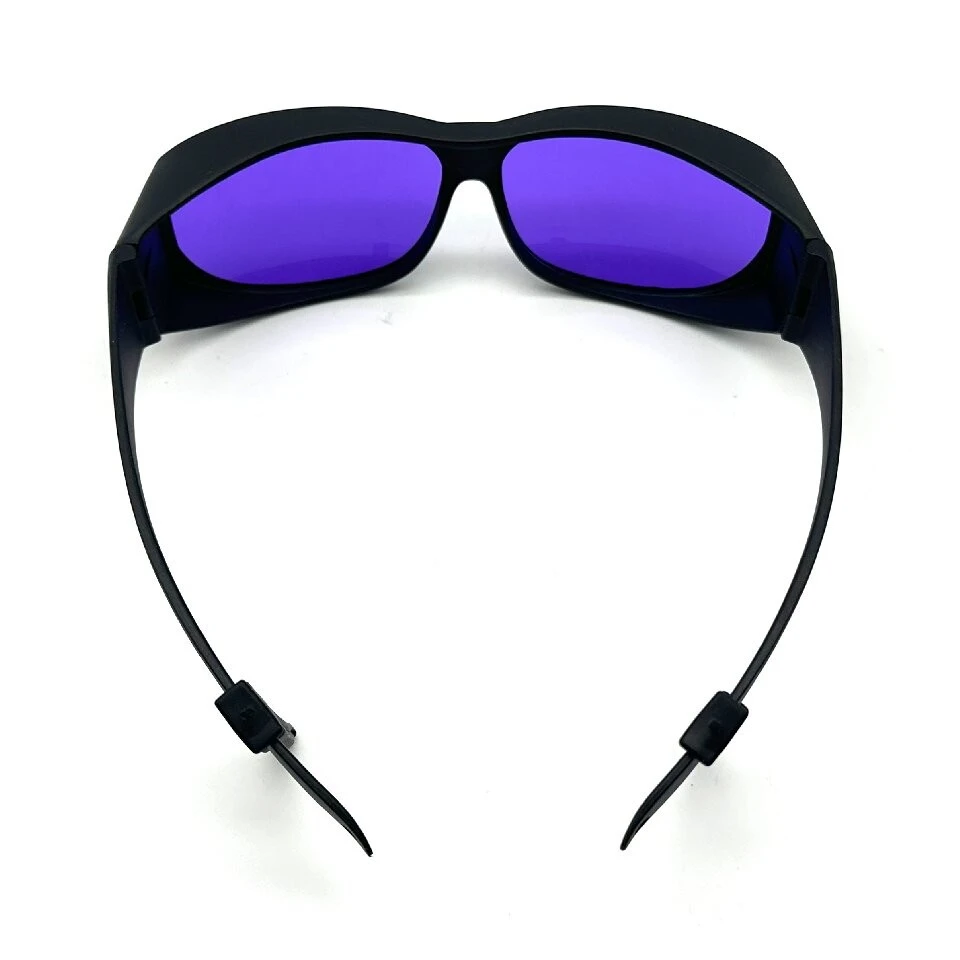
Why 585nm & 595nm Pulsed Dye Lasers Require Dedicated Eye Protection
Protection Selection Starts With the Laser Wavelength, Not the Laser Category
For buyers sourcing 585nm & 595nm Pulsed Dye Laser Safety Glasses, the most important selection factor is not simply whether the product is described as "yellow laser protection" or "medical laser eyewear".
The correct protective eyewear should be selected according to the actual laser wavelength emitted by the Pulsed Dye Laser system.
A professional selection process should begin with:
Laser type → Exact wavelength → Required optical density → Suitable protective eyewear
This is why dedicated 585nm laser safety glasses and 595nm laser safety glasses are required for Pulsed Dye Laser systems operating in these wavelength regions.
Why Pulsed Dye Lasers Commonly Use 585nm and 595nm
Pulsed Dye Lasers (PDL) are commonly associated with visible yellow wavelength regions, particularly around:
585nm
595nm
Different PDL systems may operate at different wavelength settings depending on equipment design, manufacturer configuration, and application requirements.
For procurement teams, the key point is:
A Pulsed Dye Laser is not defined only by the term "PDL".
The actual output wavelength determines which laser safety eyewear specification should be evaluated.
Therefore, when purchasing:
585nm pulsed dye laser safety glasses
595nm pulsed dye laser eyewear
the wavelength information from the laser equipment should be confirmed first.
Why 585nm and 595nm Require Wavelength-Specific Protection
Laser protective eyewear is not selected based only on visible color.
A 585nm laser and a 595nm laser may both appear yellow-orange to the human eye, but they represent different positions in the optical spectrum.
The protection filter must be evaluated based on:
- The exact laser wavelength
- Optical density requirement at that wavelength
- Laser operating conditions
- Required protection level
This means:
Similar appearance does not mean identical protection requirement.
For example:
A product designed specifically for another yellow or green laser wavelength should not automatically be considered suitable for a 585nm or 595nm PDL system.
Why "Yellow Laser Glasses" Is Not Enough for Professional Purchasing
Many buyers start their search with broad terms such as:
yellow laser safety glasses
medical laser glasses
cosmetic laser eyewear
However, these descriptions do not provide enough technical information for correct laser protection selection.
"Yellow laser" is only a visual classification.
- It does not identify:
- exact wavelength
- optical density
- protection range
- suitability for a specific PDL system
For professional procurement, the correct question is not:
❌ "Do these glasses work for yellow lasers?"
The correct question is:
✅ "Are these glasses rated for my laser's actual wavelength and required OD level?"
This wavelength-based approach helps avoid incorrect selection when purchasing 585nm laser protection glasses or 595nm laser safety eyewear.
585nm vs 595nm: Why the Exact Wavelength Matters
Although both wavelengths belong to the Pulsed Dye Laser category, buyers should still verify the exact output wavelength before selecting protective eyewear.
| Laser Wavelength | Selection Consideration |
|---|---|
| 585nm PDL | Requires eyewear evaluated for protection at 585nm |
| 595nm PDL | Requires eyewear evaluated for protection at 595nm |
For customers purchasing 585nm & 595nm Pulsed Dye Laser Safety Glasses, the ideal solution is eyewear with a verified protection range covering the actual operating wavelength.
This reduces uncertainty during:
- Equipment procurement
- Clinical laser room setup
- OEM integration
- Distributor evaluation
Why OD6+ Matters for Pulsed Dye Laser Applications
For Pulsed Dye Laser environments, optical density is another important selection factor.
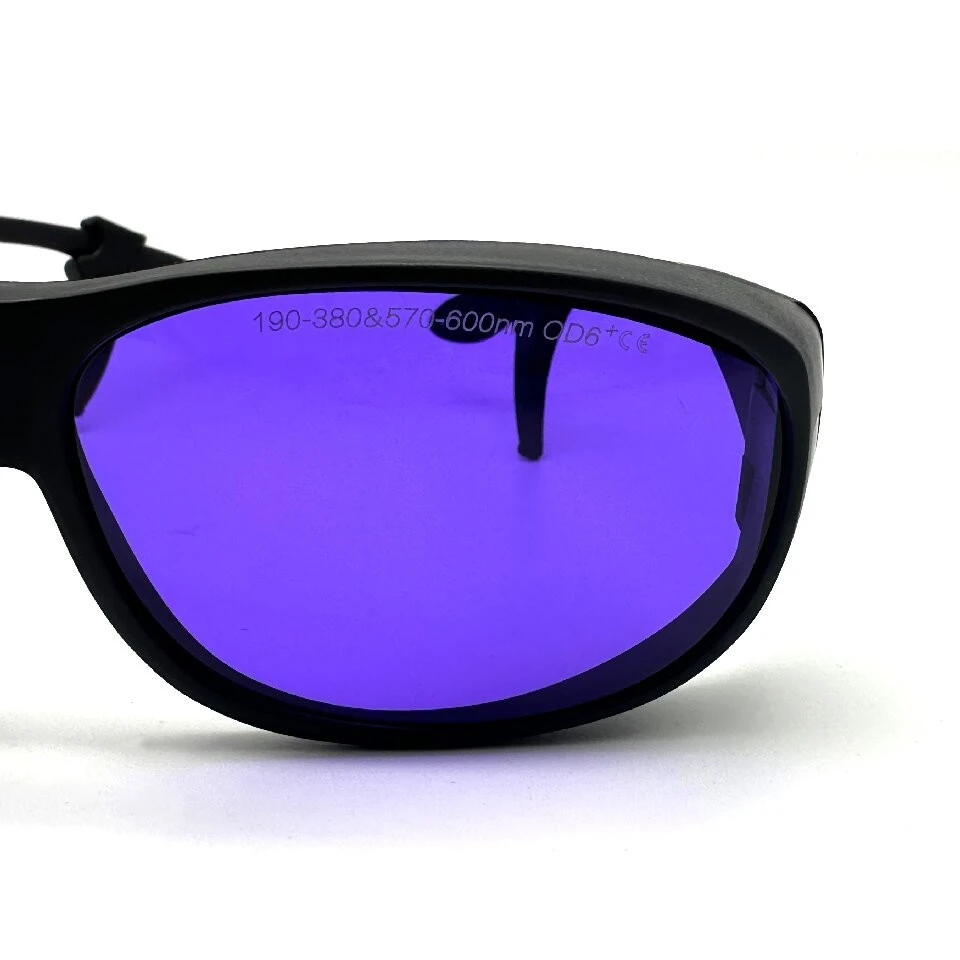
The OD6+ rating indicates a high level of optical attenuation within the specified protection range.
However, OD should always be considered together with wavelength.
The correct evaluation is:
585nm / 595nm wavelength compatibility
OD6+ protection performance
Actual laser operating conditions
A higher OD value alone does not make eyewear suitable if the protection wavelength does not match the laser source.
Wavelength Matching Creates Better Laser Protection Decisions
The key difference between professional pulsed dye laser eyewear and generic yellow laser glasses is the selection approach.
Generic approach:
Laser looks yellow → Choose yellow glasses
Professional approach:
Identify laser wavelength → Verify protection range → Confirm OD → Select eyewear
For 585nm and 595nm Pulsed Dye Laser systems, wavelength-specific protection provides a more reliable basis for laser safety eyewear selection.


570–600nm Protection Band Explained
For buyers evaluating 585nm & 595nm Pulsed Dye Laser Safety Glasses, the most important technical point is that protective eyewear should be matched to the actual laser wavelength, not simply to a broad category such as "yellow laser glasses" or "medical laser eyewear."
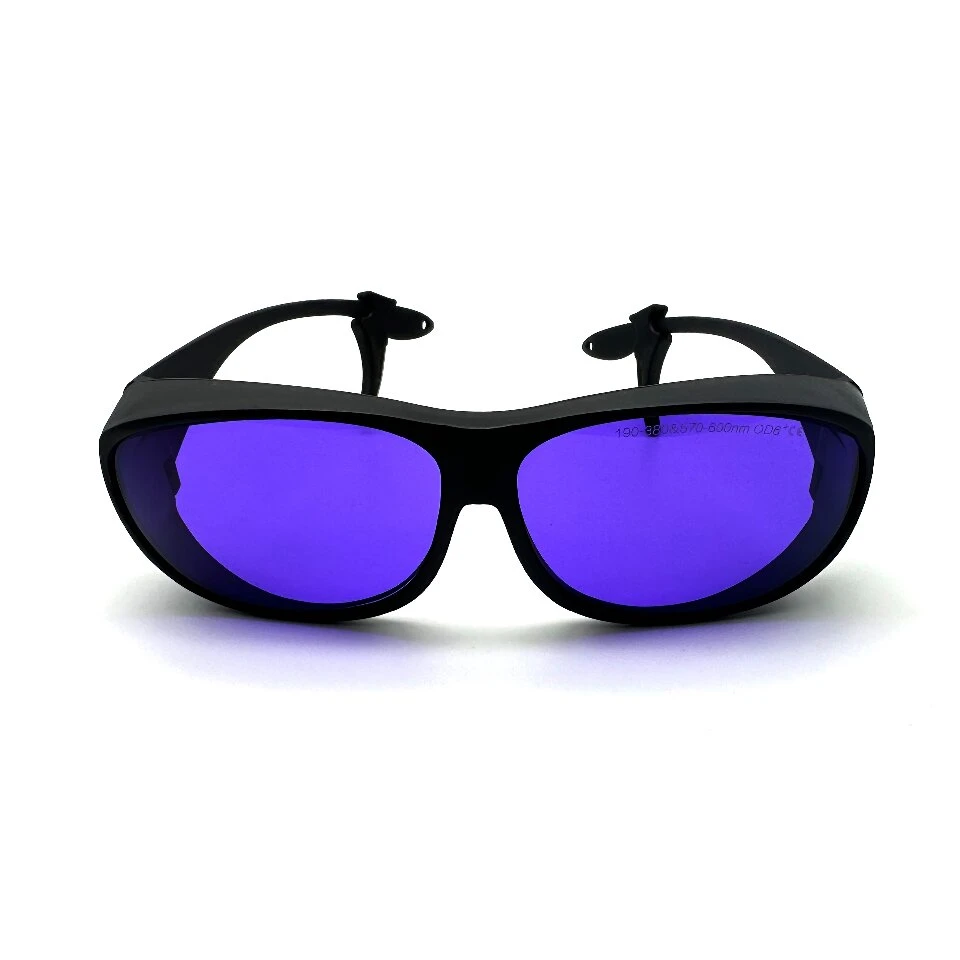
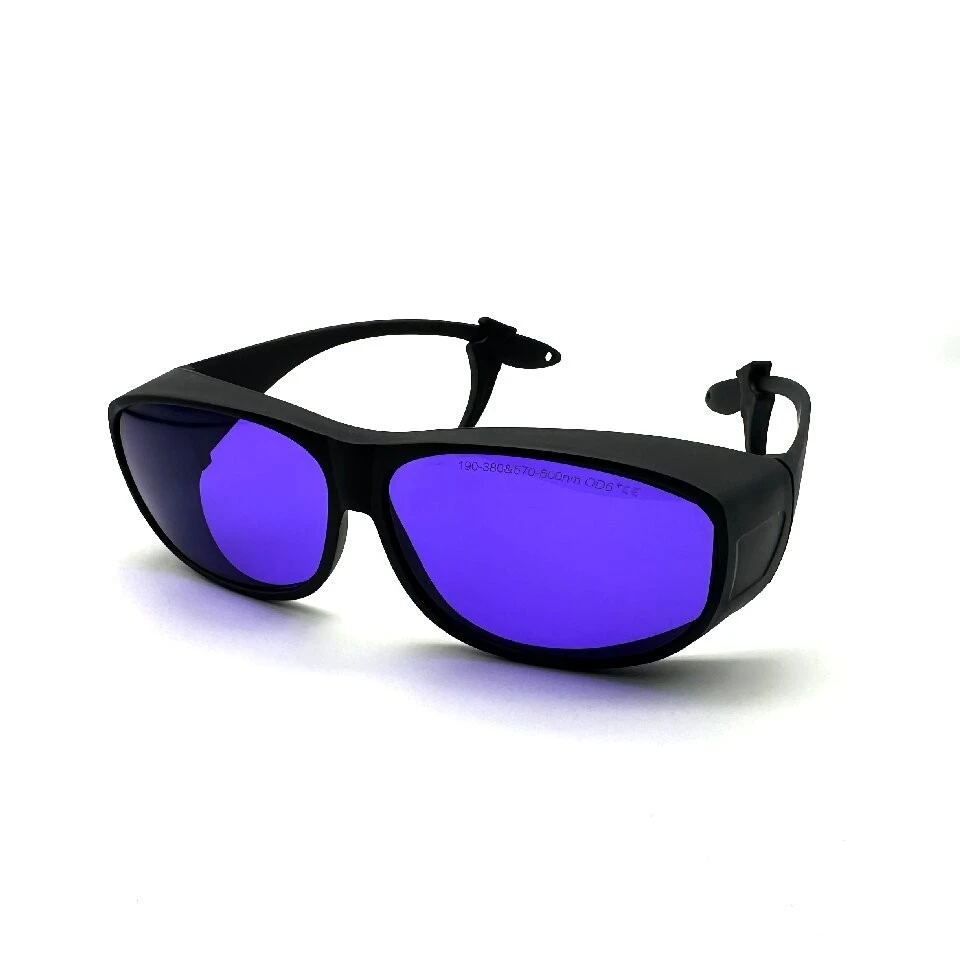
This product is designed around a defined 570–600nm visible protection band, which directly includes the two wavelengths most commonly associated with Pulsed Dye Laser (PDL) systems:
585nm
595nm
That is why the 570–600nm protection range is highly relevant for customers sourcing:
585nm laser safety glasses
595nm laser safety glasses
pulsed dye laser eyewear
OD6+ laser protective eyewear for PDL systems
Wavelength vs Optical Density
For professional pulsed dye laser safety eyewear, wavelength and optical density cannot be separated.
A product may mention:
OD6+
but the relevant purchasing question is:
OD6+ at which wavelength?
That is why professional buyers should evaluate:
| Technical Factor | Why It Matters |
|---|---|
| Protection Range | Confirms whether 585nm or 595nm is included |
| Optical Density (OD) | Indicates attenuation level at the relevant wavelength |
| Laser Type | Confirms the product is being evaluated for a Pulsed Dye Laser system |
| Operating Conditions | Helps determine whether the eyewear is suitable for the intended environment |
This wavelength-specific approach is especially important for medical laser distributors, aesthetic laser equipment buyers, OEM project teams, and professional laser safety procurement.
What Does OD6+ Mean for 585–595nm Laser Protection?
For buyers comparing 585nm laser safety glasses or 595nm laser protective eyewear, OD6+ is an important specification because it describes the attenuation performance of the filter within the stated protection range.
In simplified terms:
OD6 corresponds to a theoretical transmission of 10⁻⁶
That means approximately 0.0001% transmission
In other words, the filter is designed to reduce transmitted laser radiation at the rated wavelength by a factor of one million
For procurement purposes, the key point is not simply that OD6+ is a high number.
The important point is that OD6+ protection is provided in the 570–600nm band that includes 585nm and 595nm Pulsed Dye Laser wavelengths.
This is the reason the product should be evaluated as:
585nm OD6+ laser safety glasses
595nm OD6+ laser protective eyewear
PDL laser safety glasses with wavelength-specific protection
rather than as generic yellow laser glasses.
Why the 570–600nm Band Matters for PDL Eyewear Selection
Many visible laser eyewear products are marketed with broad color labels, but Pulsed Dye Laser safety eyewear should be selected by wavelength band and OD performance.
For this product, the selection logic is clear:
Pulsed Dye Laser system
→ actual wavelength is 585nm or 595nm
→ required protection falls inside 570–600nm
→ OD6+ attenuation is specified within that band
This provides a much more reliable basis for B2B purchasing than choosing eyewear only because it is described as:
yellow laser glasses
skin treatment laser glasses
medical laser eyewear
Why This Protection Band Is a Key Differentiator
The 570–600nm protection band gives this product a clear identity within your product range.
It is not:
a 532nm green laser filter
a 540–570nm narrow-band visible laser filter
a broad-spectrum NIR laser eyewear model
Instead, it is a wavelength-specific OD6+ protection solution for Pulsed Dye Laser environments centered around 585nm and 595nm.
That distinction makes this product especially relevant for buyers who already know their equipment is operating in the 585–595nm PDL wavelength region and need laser safety glasses matched to that specific spectral band.
Why Pulsed Laser Characteristics Matter for 585nm & 595nm Protection
Pulsed Dye Laser Protection Requires More Than Wavelength Matching
Unlike continuous-wave (CW) laser systems, Pulsed Dye Lasers (PDL) deliver laser energy in short-duration pulses.
Therefore, selecting 585nm & 595nm Pulsed Dye Laser Safety Glasses should not rely only on wavelength identification.
Professional laser protection evaluation should consider:
- Laser wavelength
- Pulse energy
- Pulse duration
- Repetition rate
- Required optical density
The reason is simple:
The same wavelength can present different protection requirements under different operating conditions.
Why Pulse Characteristics Matter
For PDL systems, short laser pulses can create different exposure conditions compared with continuous laser output.
When evaluating 585nm laser safety glasses or 595nm laser protective eyewear, buyers should confirm:
Is the laser operating in pulsed mode?
What is the pulse energy?
What is the pulse duration?
What OD level is required?
This ensures the selected eyewear matches the actual laser system rather than only the visible wavelength.
Select Protection Based on the Complete Laser Specification
The correct selection process is:
Laser wavelength
↓
Pulse characteristics
↓
Required optical density
↓
Suitable laser safety glasses
For 585nm and 595nm Pulsed Dye Laser systems, OD6+ protection should be evaluated together with the actual laser parameters.
Before selecting PDL laser safety glasses, provide:
- Laser wavelength
- Pulse energy
- Pulse duration
- Repetition rate
- Application conditions
This allows the appropriate wavelength-specific pulsed laser protection solution to be evaluated.
Where Protective Eyewear Enters the PDL Workflow
1. Before Equipment Deployment
Before a PDL system is placed into operation, the laser specifications should be reviewed.
Important information includes:
- Laser wavelength
- Pulse operation mode
- Required optical density
- Operating environment
For systems operating around:
585nm
595nm
the selected eyewear should provide verified protection within the relevant wavelength range.
2. During Daily Laser Operation
During regular operation, service, adjustment, or equipment demonstration, personnel may require appropriate PDL laser safety eyewear based on their role and exposure conditions.
The protective eyewear selection should consider:
- Actual laser wavelength
- Required protection level
- Working environment
- Visibility requirements
The goal is not simply to wear darker glasses.
The goal is to use eyewear matched to the specific laser hazard.
3. During Equipment Service and Technical Support
For:
Laser equipment distributors
Service engineers
OEM technicians
laser eyewear is often part of the technical support process.
During installation, maintenance, or troubleshooting, users need protection that corresponds to the actual laser system being handled.
This makes 585nm / 595nm laser safety glasses an important part of professional PDL equipment support.
Why PDL Eyewear Selection Should Be Included in Procurement
For organizations purchasing or distributing PDL systems, protective eyewear is often evaluated together with the laser equipment.
Professional buyers may need:
- Confirmed wavelength compatibility
- OD information
- Product specifications
- Certification documents
- Supply capability
This is especially important for:
Medical laser equipment distributors
OEM laser manufacturers
System integrators
Technical procurement teams
The jTBYShield Difference: Matching Laser Systems With Protection Requirements
Many suppliers treat laser glasses as a standalone PPE product.
Loshield approaches laser protection from a system perspective:
What laser is being used?
↓
What wavelength does it operate at?
↓
What protection level is required?
↓
Which eyewear matches the application?
For 585nm and 595nm Pulsed Dye Laser systems, this approach helps customers select wavelength-specific laser safety eyewear instead of relying on general categories such as "yellow laser glasses."
A Better PDL Protection Workflow
A professional selection process:
PDL System Information
↓
585nm / 595nm Wavelength Confirmation
↓
Pulse Characteristics Evaluation
↓
OD6+ Protection Verification
↓
Select Suitable Laser Safety Glasses
This ensures that the selected pulsed dye laser eyewear matches the actual equipment requirements.
Hot Tags: 585nm & 595nm pulsed dye laser safety glasses | od6+ protective eyewear, China, manufacturers, suppliers, factory, customized, wholesale, best, cheap, professional, for sale, near me, 1064nm Laser Safety Glasses, BGR Laser Blocking Goggles, IPL Hair Removal Safety Glasses, Laser Safety Glasses 450nm, ND YAG Laser Goggles, Red Laser Protection Glasses


