


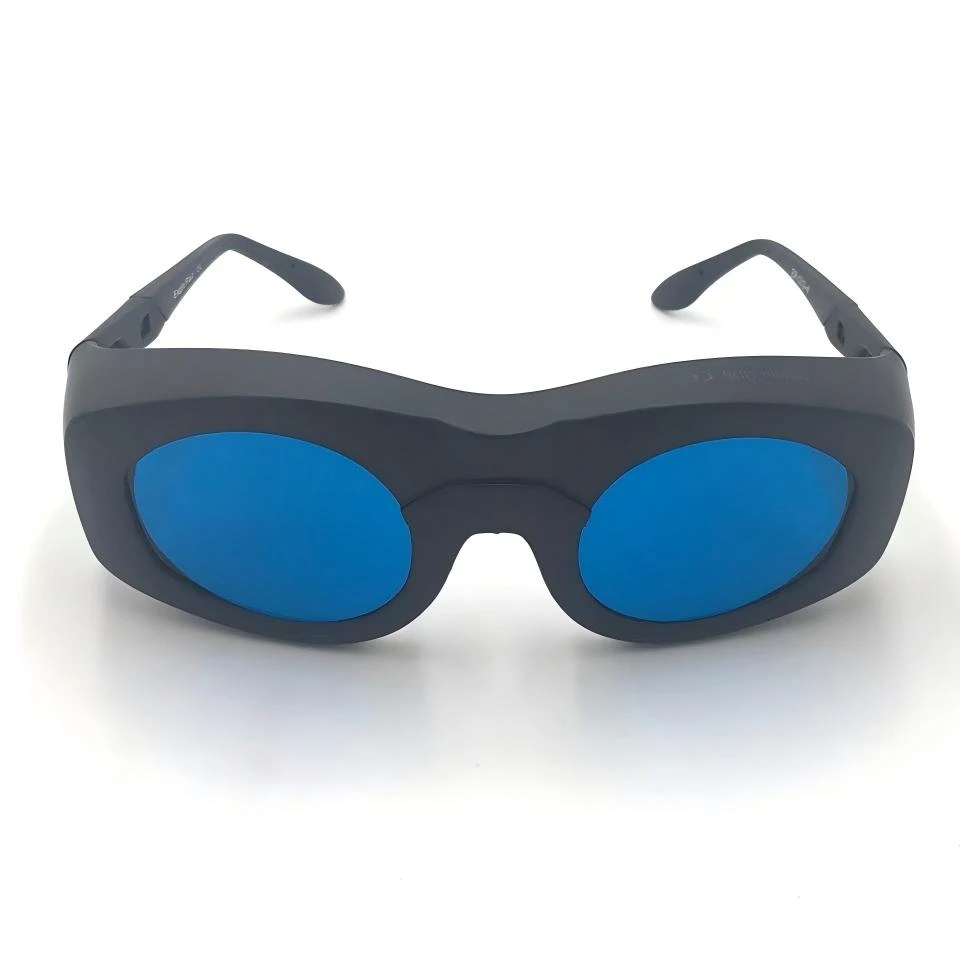
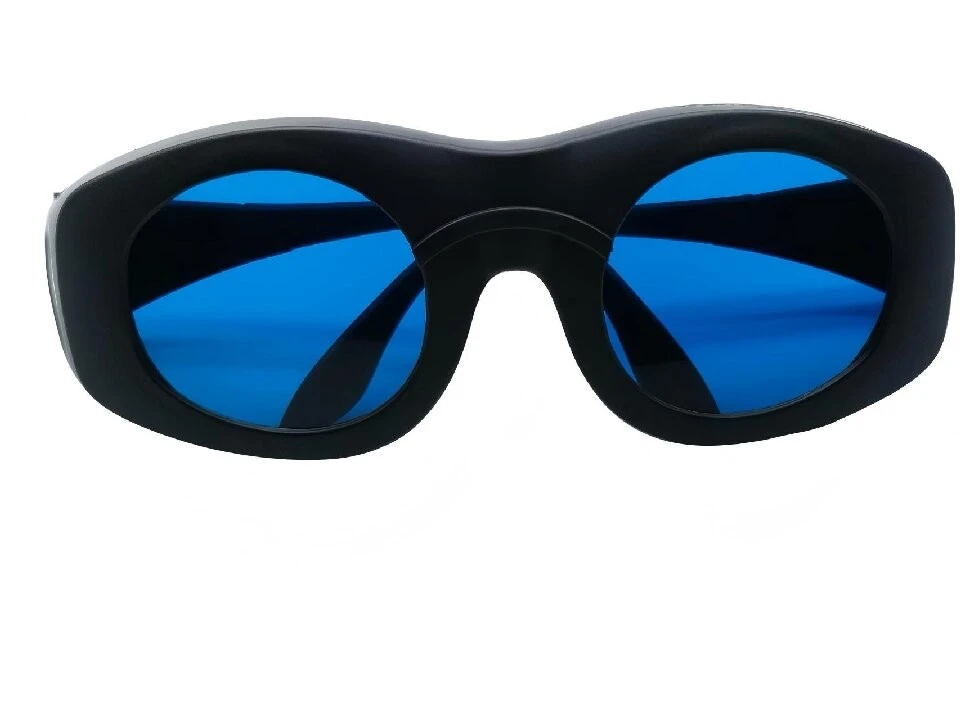
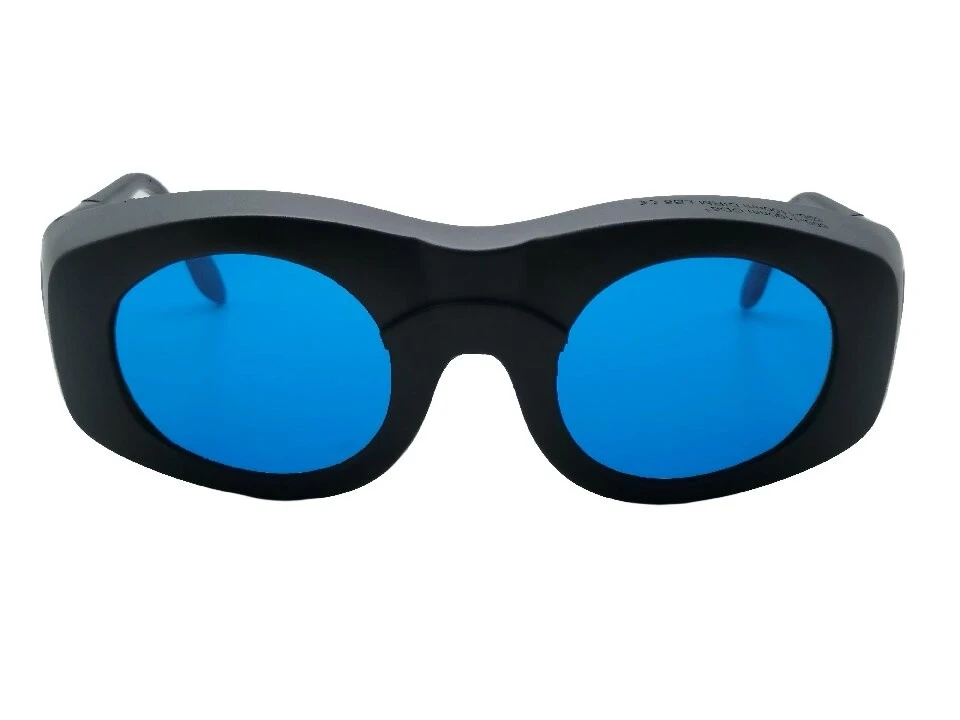

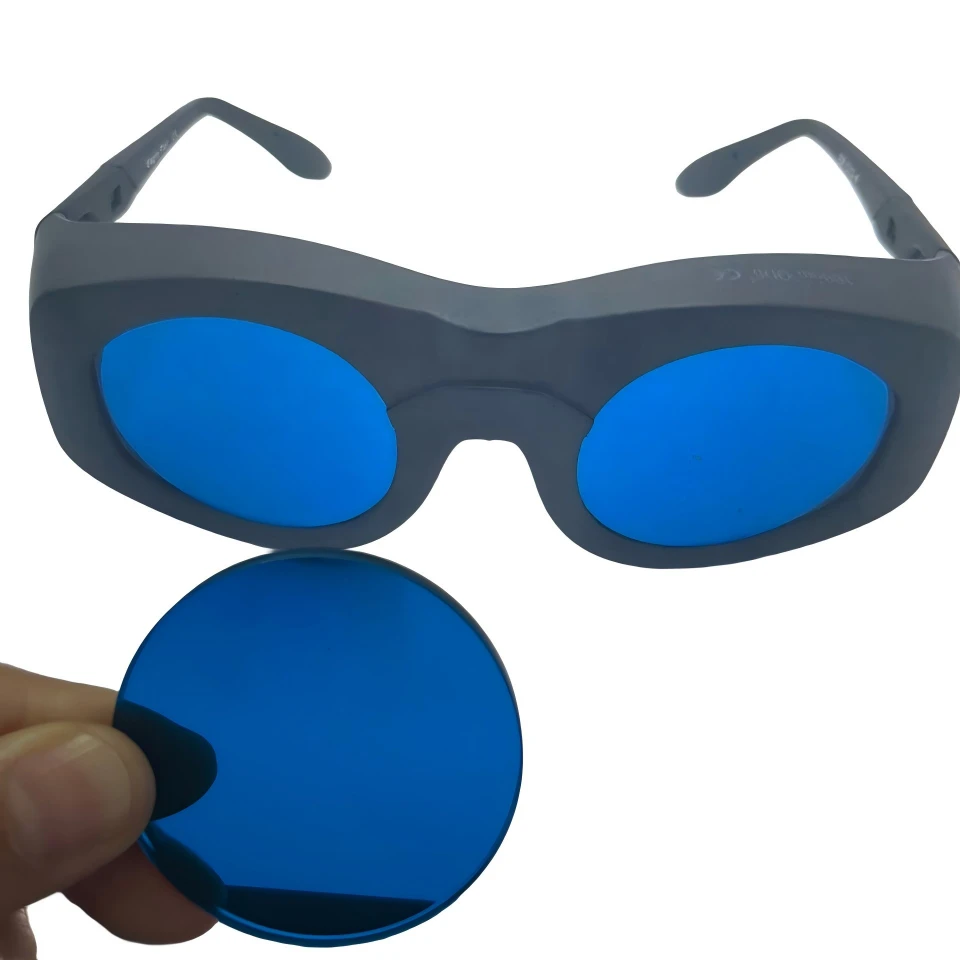
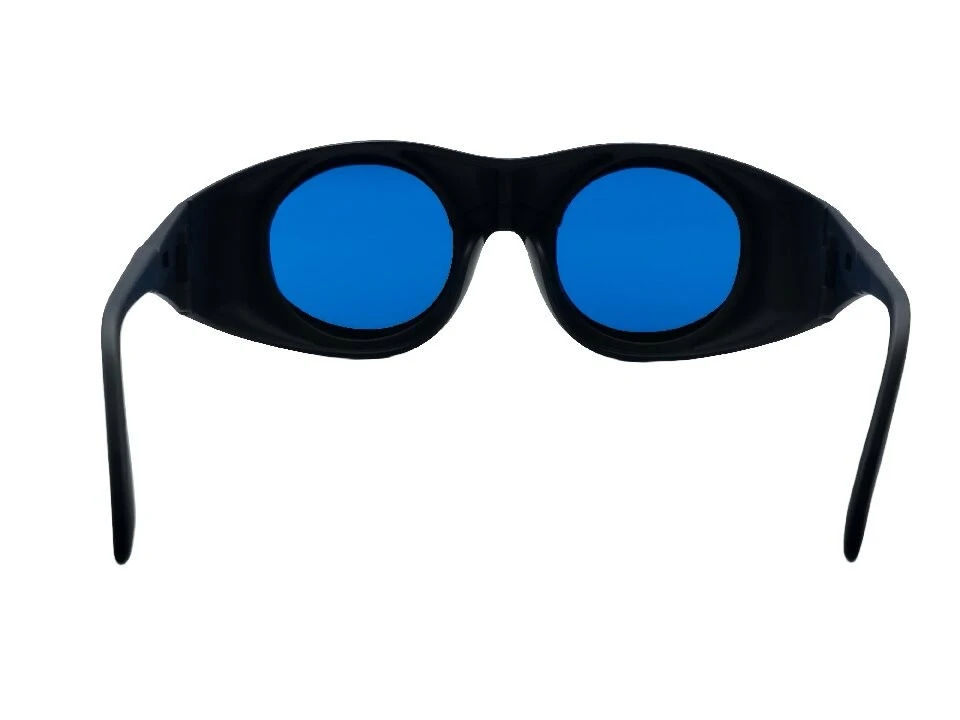
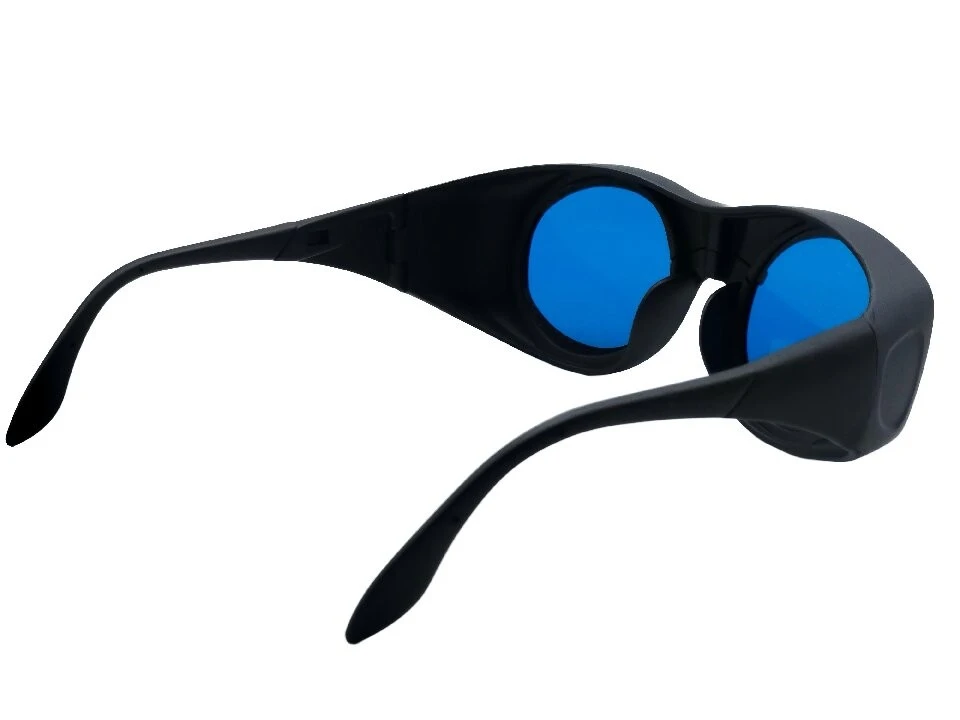
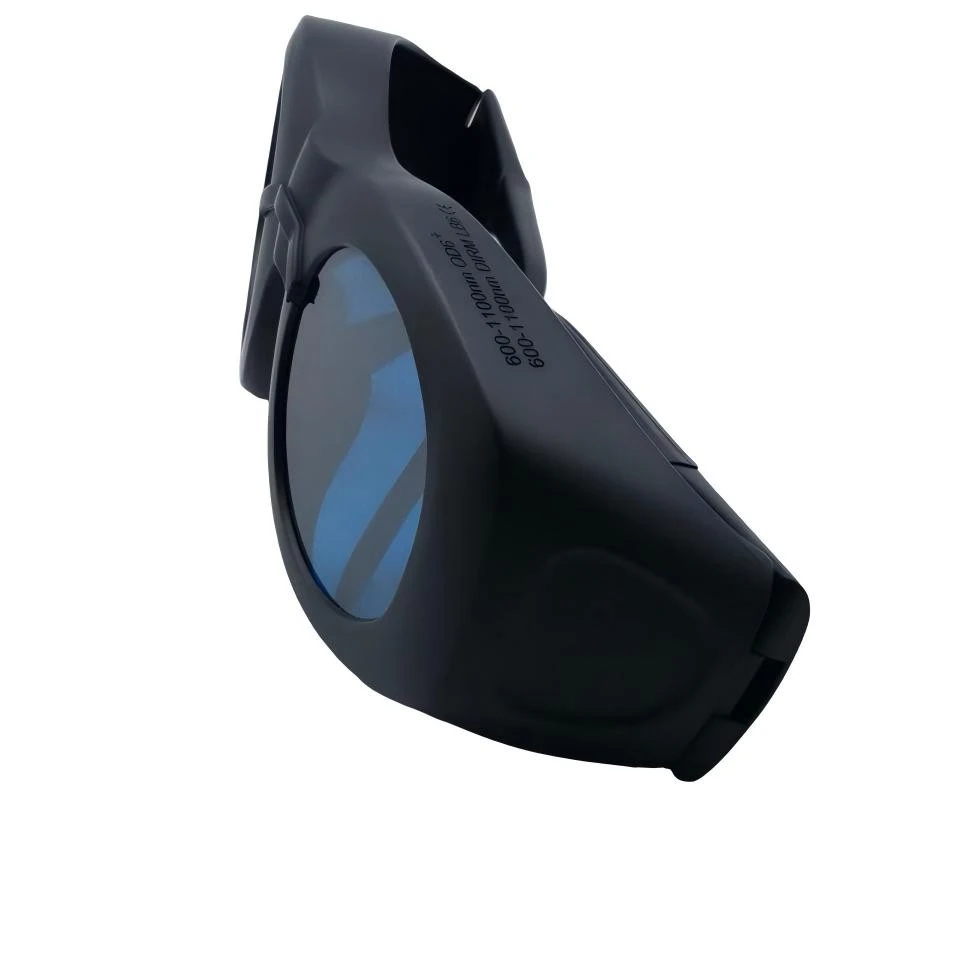
Products overview
Reliable Protection for Red & Near-Infrared Lasers
Designed for professional laser applications, these laser safety glasses provide protection throughout the 600–1100nm wavelength range with an OD6+ rating. The lenses are intended for use with compatible red and near-infrared laser systems commonly found in medical, cosmetic, laboratory, and industrial environments.
Glass Optical Lenses
Unlike standard polymer lenses, this model features optical glass lenses engineered for consistent optical performance and long-term durability. The glass construction offers excellent surface hardness and resistance to everyday wear, making the eyewear suitable for frequent use in demanding professional settings.
Balanced Visibility
With 40% Visible Light Transmission (VLT), the lenses allow more ambient light to pass through than lower-VLT models, helping maintain a brighter field of view while still providing the specified laser protection. This makes routine equipment operation, inspection, and alignment more comfortable in well-lit workplaces.


Why Optical Glass Matters in Laser Protection
More Than a Lens Material - It Is Part of the Filter Design
For professional laser protection, the lens material is not only about physical appearance or wearing comfort. It is also part of how the protective filter delivers its intended optical performance.
These 600–1100nm Optical Glass Laser Safety Glasses use an optical glass laser protection filter for applications where buyers prioritize spectral performance, optical consistency, and long-term reliability.
Unlike general polymer-based laser eyewear, optical glass filters are often considered for professional environments where protection performance and optical characteristics are important parts of the purchasing decision.
For laser equipment manufacturers, system integrators, laboratories, and industrial users, this makes optical glass laser safety glasses a distinct option rather than simply another OD6+ eyewear model.
Stable Spectral Performance Across a Broad Protection Range
The key value of an optical glass filter is not simply that it is made of glass.
What matters is how the filter performs across the required laser wavelengths.
For this model, the protection range extends from 600nm to 1100nm, covering multiple visible-red and near-infrared laser wavelengths within one protective filter.
This makes spectral performance particularly important when the same eyewear may be evaluated for laser sources around:
633nm
650nm
808nm
980nm
1064nm
1070nm
Rather than focusing on a single laser line, the glass laser protection filter is designed around broad wavelength coverage with OD6+ protection across the specified range.
This combination of optical glass + 600–1100nm coverage + OD6+ attenuation is the defining technical identity of this product.
Why Optical Reliability Matters in Industrial Laser Protection
B2B buyers often evaluate laser eyewear differently from occasional users.
For an industrial laser facility, optical laboratory, OEM production line, or equipment service team, protective eyewear may be used repeatedly and become part of the standard laser safety setup.
The purchasing decision therefore goes beyond:
"Does it block my laser wavelength?"
Professional buyers may also consider:
- Consistency of optical performance
- Spectral protection across the required wavelengths
- Optical quality during repeated professional use
- Technical specifications and documentation
- Suitability for the intended laser environment
For these applications, optical glass laser safety glasses provide an alternative for buyers who place greater emphasis on the filter itself as an optical component.
Optical Glass vs General Polymer Laser Eyewear
The difference should not be understood as "glass is always better than polymer."
They serve different product requirements.
| Selection Priority | Optical Glass Eyewear | General Polymer Eyewear |
|---|---|---|
| Optical filter characteristics | Key selection consideration | Depends on filter design |
| Broad spectral protection | Available depending on filter | Available depending on filter |
| Weight | Typically heavier | Typically lighter |
| Professional optical applications | Strong consideration | Application-dependent |
| Selection basis | Wavelength + OD + optical requirements | Wavelength + OD + application requirements |
For buyers, the correct question is therefore not:
"Is glass better?"
It is:
"Which filter technology best matches my wavelength, OD, optical and working requirements?"
Built for Multi-Wavelength Laser Environments
The real differentiation of these 600–1100nm OD6+ Optical Glass Laser Safety Glasses comes from the combination of filter design and spectral coverage.
They are especially relevant when a buyer needs to evaluate one protective eyewear solution across several compatible laser wavelengths rather than sourcing eyewear around a single narrow laser line.
Typical users include:
- Laser equipment manufacturers requiring consistent PPE specifications.
- System integrators working with multiple laser sources.
- Industrial laser teams operating diode, Nd:YAG, or fiber laser equipment.
- Optical laboratories requiring broad visible-to-NIR laser protection.
- Service engineers who may encounter different compatible laser wavelengths across equipment platforms.
For these users, the product is better positioned as a multi-wavelength optical glass laser protection solution rather than generic industrial laser eyewear.
The Difference Is the Filter Strategy
The defining value of this product is not any single specification.
It is the combination of:
Optical Glass Filter
+
600–1100nm Broad Wavelength Coverage
+
OD6+ Protection
+
Multi-Wavelength Laser Compatibility
This gives the 600–1100nm Optical Glass Laser Safety Glasses a clear role for professional buyers looking for broad-range industrial laser protection with an optical glass filter design.
One Filter Covering Multiple Visible-to-NIR Laser Sources
Broad Protection for Facilities Using More Than One Laser Wavelength
Not every laser environment operates at a single wavelength.
Laser equipment manufacturers, system integrators, laboratories, and industrial facilities may work with several laser sources across the visible-red and near-infrared spectrum. In these environments, selecting separate protective eyewear for every individual wavelength can make PPE management more complex.
The 600–1100nm Optical Glass Laser Safety Glasses are designed around a different approach:
one broad protection band covering multiple compatible laser wavelengths.
With OD6+ protection across the specified 600–1100nm range, this model can be evaluated for laser sources operating at wavelengths such as 633nm, 650nm, 808nm, 980nm, 1064nm, and 1070nm.
This makes the eyewear particularly relevant for buyers searching for multi-wavelength laser safety glasses rather than protection for only one isolated laser line.
From Visible Red to Near-Infrared Laser Protection
The 600–1100nm protection range spans several important laser wavelength groups:
| Wavelength | Typical Laser Source | Protection Category |
|---|---|---|
| 633nm | He-Ne laser | Visible red |
| 650nm | Laser diode | Visible red |
| 808nm | Diode laser | Near-infrared |
| 980nm | Diode laser | Near-infrared |
| 1064nm | Nd:YAG laser | Near-infrared |
| 1070nm | Fiber laser | Near-infrared |
Instead of positioning this product only as 808nm laser safety glasses or 1064nm laser safety glasses, its stronger value is the ability to address several compatible wavelengths within a single specified protection range.
Why Multi-Wavelength Coverage Matters
Consider an industrial or R&D environment containing:
650nm alignment laser + 808nm diode laser + 1064nm Nd:YAG laser
The protection requirement is no longer centered around one wavelength.
The buyer needs to determine whether one protective filter can cover the relevant laser sources while meeting the required optical density at each wavelength.
This is where 600–1100nm multi-wavelength laser safety glasses have a distinct role.
They can simplify eyewear selection for environments where several compatible visible-to-NIR laser sources are present, subject to the laser hazard assessment and required OD for each source.
One Protection Range, Different Laser Technologies
Another important distinction is that wavelength coverage is not limited to one laser technology.
Within the specified range, buyers may encounter different laser source types:
Diode Lasers
Common wavelengths may include 650nm, 808nm, and 980nm.
Nd:YAG Lasers
A key wavelength is 1064nm, creating demand for 1064nm laser safety glasses.
Fiber Lasers
Compatible systems may operate around 1070nm, requiring appropriate near-infrared laser protection.
He-Ne Lasers
Systems operating around 632.8/633nm fall within the visible-red portion of the protection band.
This means the product is not tied to a single laser technology. Its defining feature is the 600–1100nm spectral coverage across multiple compatible laser sources.
When Multi-Wavelength Eyewear Makes More Sense Than Narrow-Band Protection
A narrow-band filter can be appropriate when the working environment contains one clearly defined laser wavelength.
This product addresses a different requirement.
Consider 600–1100nm OD6+ laser protective eyewear when:
- Multiple compatible laser wavelengths are used in the same facility
- Engineers work across different laser equipment platforms
- Service teams encounter several laser source types
- OEMs need a broader protection option for equipment support
- Laboratories require visible-to-NIR wavelength coverage rather than one narrow laser band
The objective is not to choose the widest possible protection range.
It is to select a range that matches the actual combination of laser sources present in the working environment.
Optical Glass Filter vs Standard Laser Eyewear
The Right Choice Depends on the Optical Requirement
Choosing between optical glass laser safety glasses and standard laser eyewear should not be reduced to which lens material is "better."
Both can provide effective laser protection when the filter has the appropriate wavelength coverage and optical density for the application.
The difference is primarily in the purchasing priorities.
An optical glass laser protection filter is particularly relevant when professional buyers place greater emphasis on spectral characteristics, optical consistency, long-term optical reliability, and technical documentation.
For this 600–1100nm OD6+ laser protective eyewear, optical glass is therefore part of the product's technical positioning rather than simply a lens-material feature.
1. Stable Spectral Performance
For professional laser protection, consistent filter performance across the required wavelength range is an important consideration.
Optical glass filters are often selected for applications where buyers place particular emphasis on stable wavelength filtering characteristics and predictable optical performance.
This becomes especially relevant when one filter is intended to cover multiple laser wavelengths.
For the 600–1100nm Optical Glass Laser Safety Glasses, buyers may need to evaluate protection at several points across the spectrum, including:
633nm → 808nm → 980nm → 1064nm → 1070nm
Rather than evaluating only a single laser line, the purchasing decision involves the performance of the glass laser protection filter across a broad visible-to-NIR range.
2. Long-Term Optical Reliability
Industrial laser protection is often a repeat-use requirement rather than a one-time purchase.
Laser equipment manufacturers, maintenance teams, laboratories, and production facilities may use protective eyewear as part of their regular laser safety system.
In these environments, buyers may consider:
- Consistency of optical characteristics
- Long-term filter usability
- Transmission characteristics
- Environmental operating conditions
- Repeat-use requirements
For customers prioritizing these factors, optical glass laser safety glasses provide a filter option worth evaluating for long-term professional use.
Actual service life should always depend on the condition of the eyewear, working environment, handling, inspection, and manufacturer recommendations rather than lens material alone.
3. Professional Optical Applications
Optical glass becomes particularly relevant when laser eyewear is evaluated as a technical optical component, rather than simply general PPE.
Typical professional buyers may need to assess:
Wavelength accuracy
Does the protection range match the actual laser sources?
Optical performance
Does the filter meet the optical requirements of the working environment?
Optical density
Is the required OD achieved at the relevant wavelengths?
Technical documentation
Can the supplier provide the specifications and supporting documents required for engineering or procurement review?
These considerations are particularly relevant for industrial laser protection, optical laboratories, laser equipment OEMs, system integrators, and technical procurement teams.
When Should You Consider an Optical Glass Filter?
An optical glass laser protection filter may be worth considering when your project involves:
- Multiple laser wavelengths within the same protection range
- Repeated professional or industrial use
- Greater emphasis on optical consistency
- Defined wavelength and OD requirements
- Engineering or procurement documentation
- OEM or laser system integration
For example, a facility operating compatible 808nm diode, 980nm diode, and 1064nm Nd:YAG laser systems may prioritize a technically defined broad-range filter rather than selecting eyewear around only one laser wavelength.
This is where 600–1100nm optical glass laser safety glasses have a distinct B2B role.
When Standard Laser Eyewear May Be Enough
Optical glass is not automatically necessary for every laser application.
Standard laser eyewear may be appropriate when it already provides:
- The required wavelength protection
- The required optical density
- Suitable visibility
- Appropriate fit and comfort
- Required certification
Acceptable performance for the working environment
The correct selection should therefore be based on:
Laser Hazard Requirements + Optical Requirements + Working Conditions
-not material preference alone.
The Selection Principle
The purpose of choosing optical glass laser safety glasses is not simply to choose "glass instead of polymer."
It is to select the filter technology that best matches the technical requirements of the laser environment.
For professional buyers evaluating 600–1100nm OD6+ laser protective eyewear, the decision should consider:
Wavelength Coverage
+
Required OD
+
Optical Performance
+
Long-Term Use Requirements
+
Technical Documentation
When these factors carry greater weight in the purchasing decision, an optical glass filter becomes a meaningful product differentiator rather than just another material specification.
Who Needs This 600–1100nm Optical Glass Laser Protection Solution?
The 600–1100nm Optical Glass Laser Safety Glasses are designed for professional buyers who need more than single-wavelength laser protection.
With OD6+ protection across a broad visible-to-NIR range, this model is particularly relevant to organizations managing multiple compatible laser sources, standardized PPE specifications, OEM equipment projects, or technical procurement requirements.
Rather than targeting a general "industrial laser" audience, this solution is better suited to the following B2B users.
Laser Equipment Manufacturers
Laser equipment manufacturers often need protective eyewear that can be incorporated into a standardized equipment safety package.
Their purchasing priorities may include:
- Defined 600–1100nm protection specifications
- Consistent OD requirements
- Technical documentation
- Repeat-order availability
- OEM and bulk supply
For manufacturers building equipment around compatible diode, Nd:YAG, or fiber laser sources, OD6+ optical glass laser safety glasses can be evaluated as part of the equipment's PPE solution rather than sourced as a standalone accessory.
This is particularly relevant for OEMs seeking a stable protection specification across multiple product models.
Fiber Laser System Integrators
Fiber laser integrators frequently work with complete systems rather than isolated laser sources.
Depending on the system configuration, personnel may encounter the primary laser source as well as alignment, diagnostic, or auxiliary wavelengths.
For compatible systems operating within the specified range, 600–1100nm laser safety glasses offer a broad protection platform that can be evaluated against the wavelengths present in the system.
For integrators working around 1064nm or 1070nm-class laser sources, key purchasing considerations include:
actual wavelength → required OD → system configuration → suitable protective eyewear
This makes the product relevant to buyers searching for 1064nm laser safety glasses, 1070nm fiber laser protective eyewear, or broader fiber laser safety solutions.
Diode Laser Equipment Manufacturers
Diode laser systems can operate at several wavelengths within the 600–1100nm region, including commonly encountered 808nm and 980nm sources.
For manufacturers producing multiple diode laser equipment models, sourcing separate eyewear around every individual wavelength may complicate PPE standardization.
A broad-range optical glass laser protection filter can therefore be useful when the verified protection range and OD requirement cover several laser platforms.
Typical searches from these buyers include:
808nm laser safety glasses
980nm laser safety glasses
diode laser protective eyewear
600–1100nm OD6+ laser glasses
Laser Service & Maintenance Teams
Service engineers may work across different equipment platforms during installation, commissioning, troubleshooting, and maintenance.
Unlike an operator assigned to one fixed laser system, a service team may encounter several compatible wavelengths across different machines.
For these teams, multi-wavelength laser safety glasses can simplify PPE planning when the relevant laser hazards fall within the verified 600–1100nm OD6+ protection range.
The value here is not simply broader coverage-it is the ability to evaluate one defined protection specification across multiple service scenarios.
Optical System & Photonics Integrators
Optical and photonics systems may combine several laser sources within a single platform.
These buyers often evaluate protective eyewear from an engineering perspective, including:
- Exact wavelength coverage
- Optical density
- Filter characteristics
- Technical specifications
- Documentation for project approval
For projects involving compatible visible-red and near-infrared sources, optical glass laser safety glasses provide an option for teams that treat protective eyewear as part of the overall optical safety system.
OEM & B2B Procurement Teams
For procurement teams, the challenge is often not finding "a pair of laser glasses."
It is finding a product that can support:
Defined Specification + Documentation + Repeat Supply + OEM Requirements
Loshield can support B2B projects with product selection, technical documentation, bulk purchasing, and OEM supply requirements.
For customers managing several compatible laser systems, the 600–1100nm OD6+ Optical Glass Laser Safety Glasses can be evaluated as a standardized protective eyewear option across multiple equipment platforms.
A Better Fit for Multi-System Laser Environments
This solution is particularly relevant when your requirement looks like:
Multiple compatible laser sources
→ 600–1100nm wavelength coverage
→ OD6+ protection requirement
→ Optical glass filter
→ Standardized B2B / OEM supply
That is the key buyer profile for this product.
It is not simply eyewear for a broad "industrial" audience-it is a multi-wavelength optical glass laser protection solution for equipment manufacturers, fiber laser integrators, diode laser OEMs, service teams, and technical procurement organizations.
Hot Tags: 600–1100nm optical glass laser safety glasses | od6+ protective eyewear, China, manufacturers, suppliers, factory, customized, wholesale, best, cheap, professional, for sale, near me, BGR Laser Blocking Goggles, Infrared Protection Goggles, IPL Hair Removal Safety Glasses, Laser Safety Glasses, ND YAG Laser Goggles, Safety Glasses For Green Laser


