


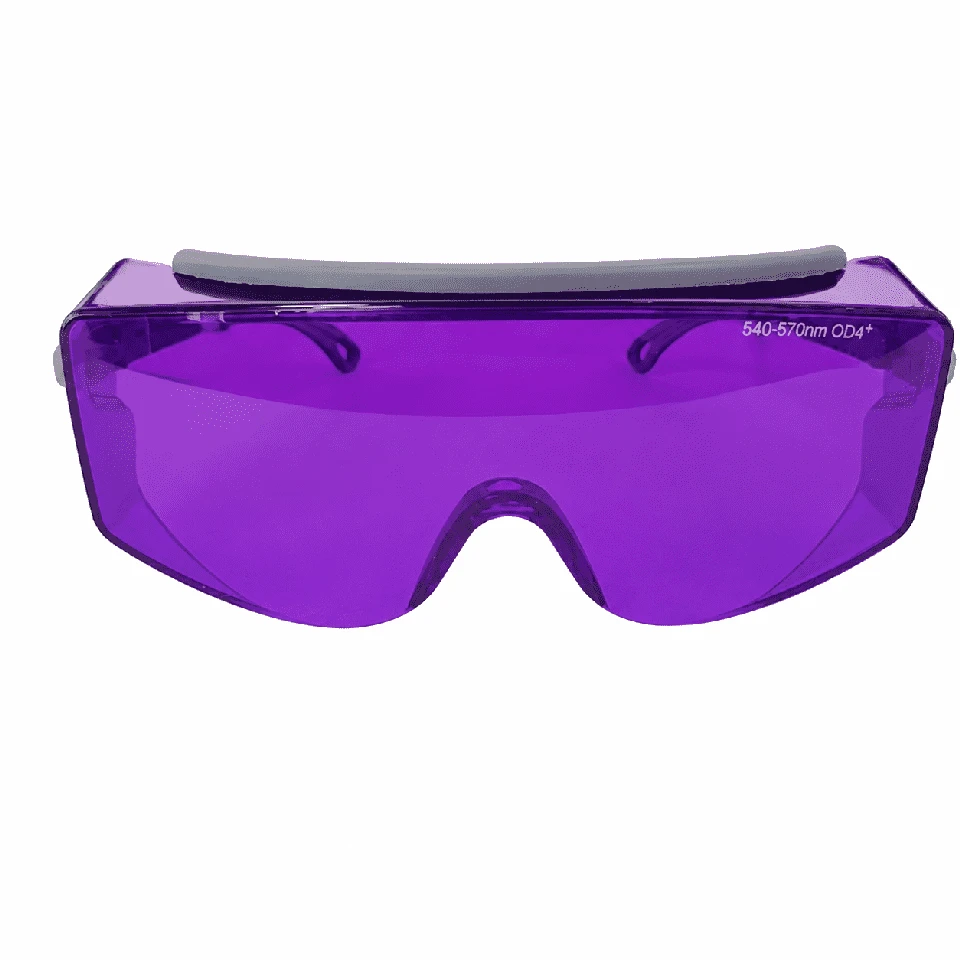
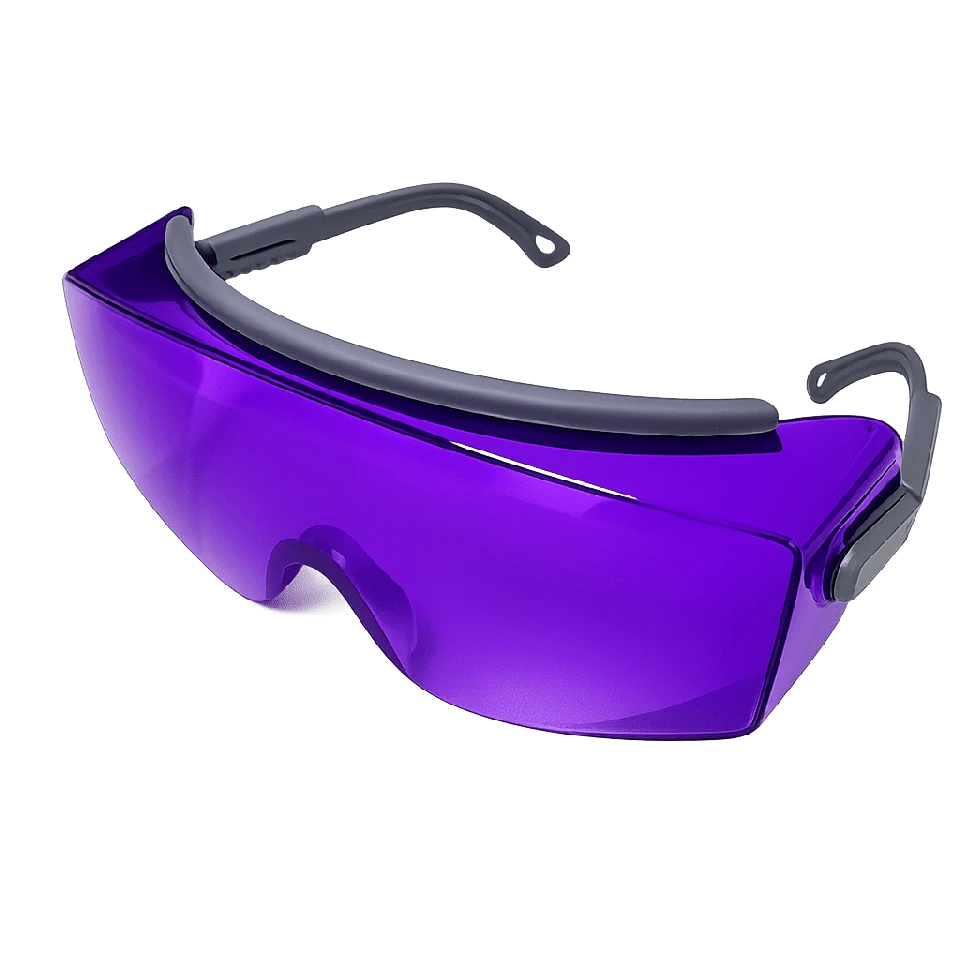
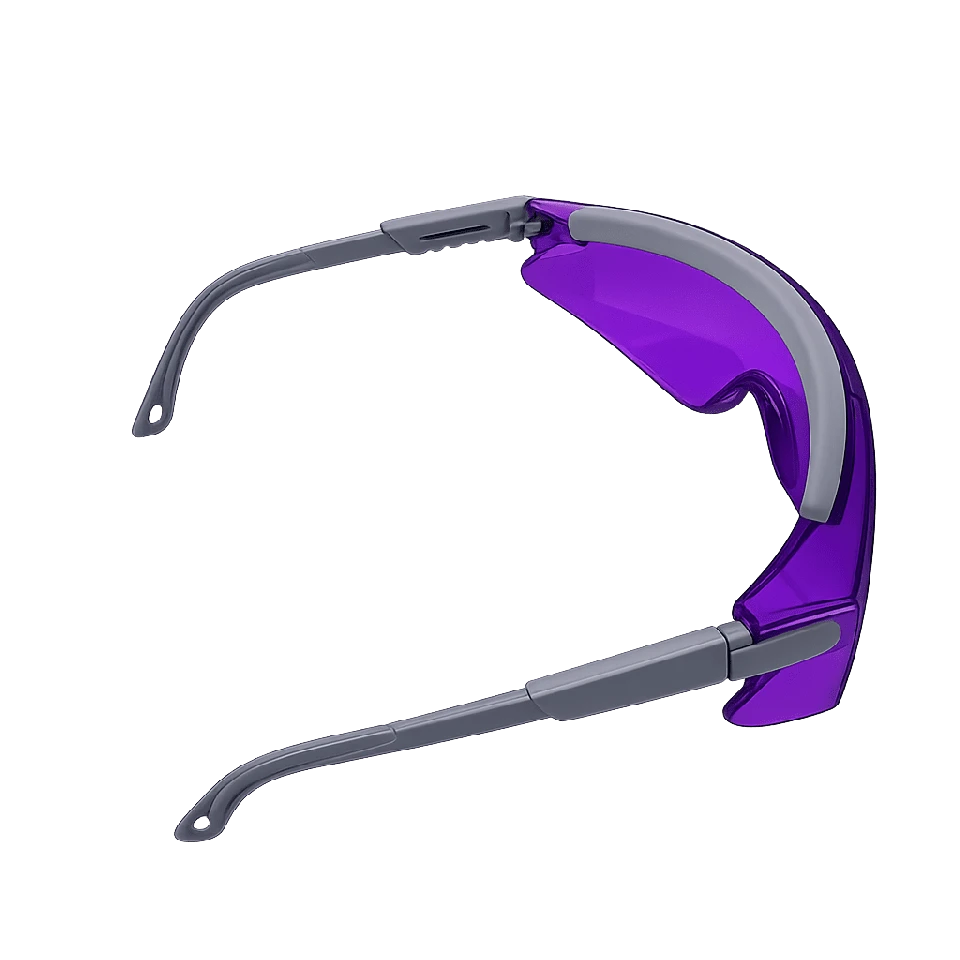
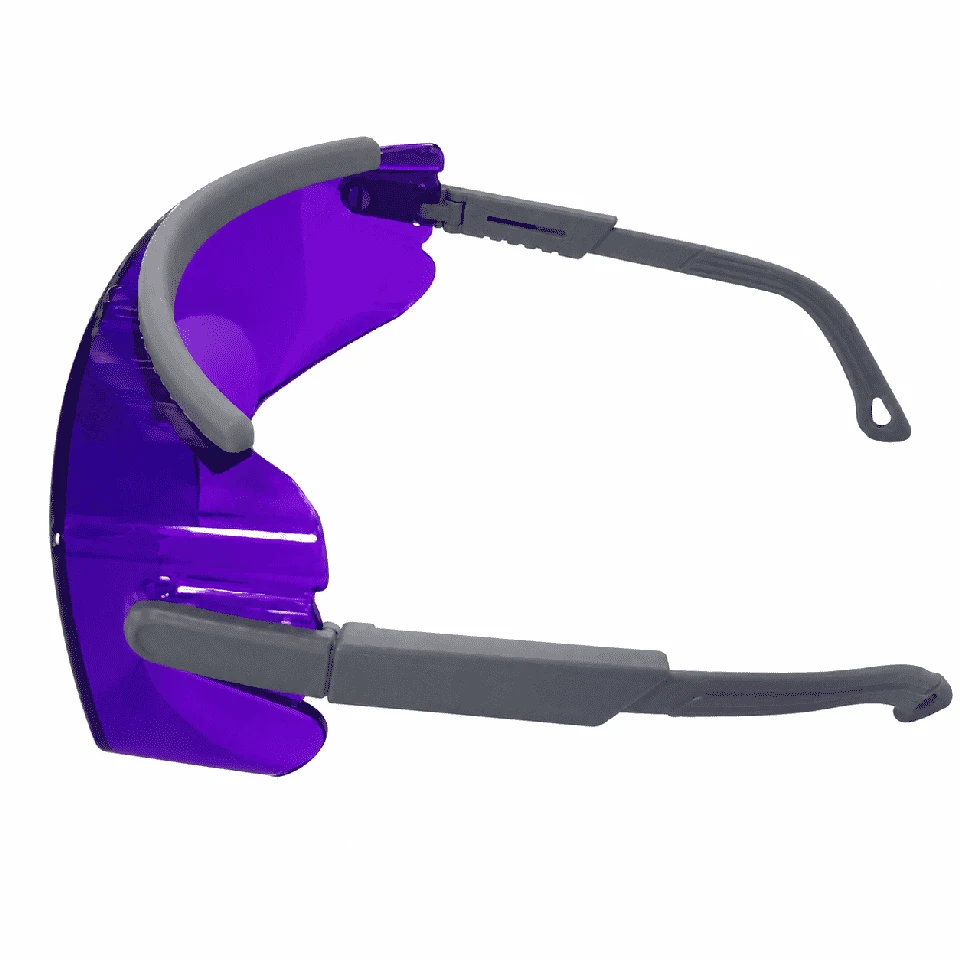
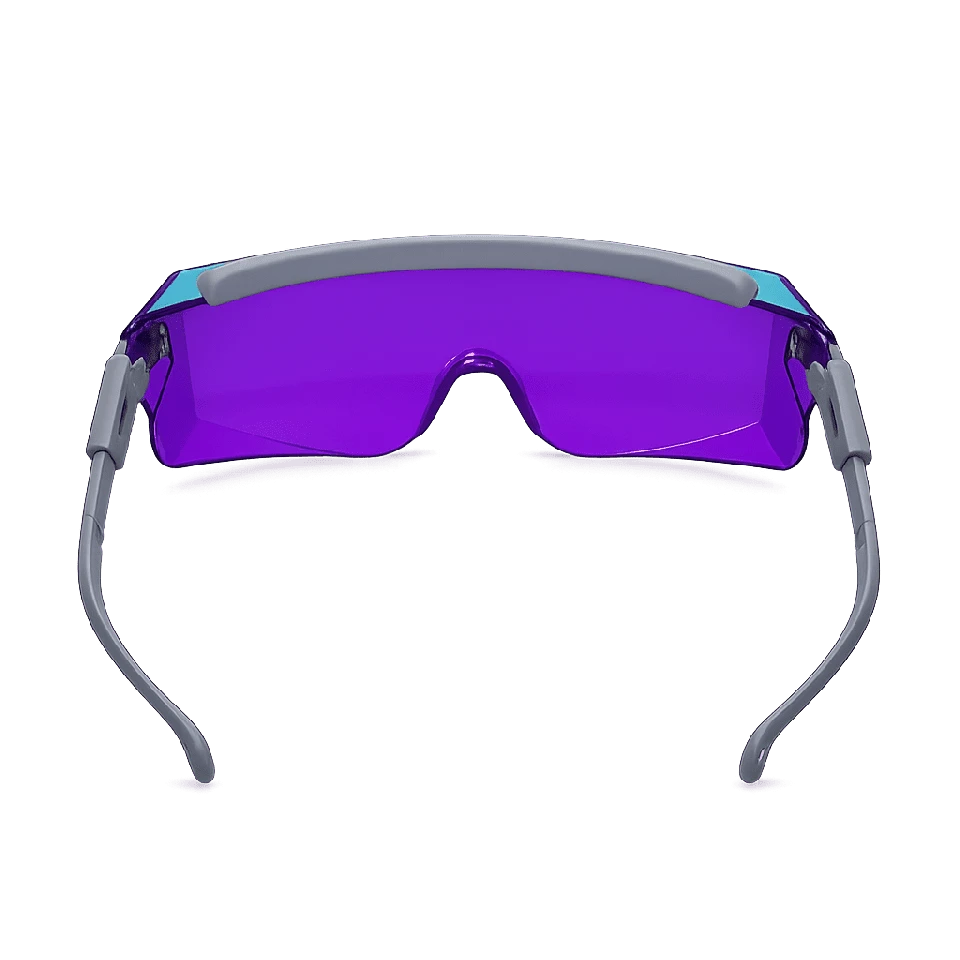
Narrow-Band Protection for 540–570nm Visible Lasers
Our 540–570nm OD4+ Laser Safety Glasses deliver targeted shielding for visible green and yellow-green lasers, covering laser sources operating anywhere between 540nm and 570nm.
Many broad-spectrum laser protective eyewear covers extensive visible or infrared bands, yet this model follows a different design philosophy built for narrow-band wavelength requirements. It offers precise protection exclusively for laser systems whose output falls within the certified 540–570nm visible laser spectrum.
It works perfectly for setups running wavelengths around 545nm, 555nm, 556nm, 561nm and 568nm. For these applications, precise wavelength matching carries greater weight than picking generic filters labelled only as green laser protection.
Why Narrow-Band Protection Matters
Not every green-looking laser shares the same operating wavelength. A 532nm green laser, a 555nm laser and a 561nm laser appear similar to the human eye, but they sit in distinct spectral regions and cannot rely on identical safety filters.
This explains why experienced professionals select laser safety glasses according to exact laser wavelength, instead of judging protection purely by visible light colour.
This defined 540–570nm protection range caters to compatible green and yellow-green visible laser devices. It directly addresses common search requirements:
555nm laser safety glasses
561nm laser protective eyewear
568nm laser safety glasses
540–570nm laser protection glasses
green-yellow laser safety eyewear
Unlike universal green laser filters, this eyewear serves as a purpose-built, wavelength-specific safety solution.
Select Eyewear Based on Your Actual Laser Wavelength
What sets these 540–570nm laser safety glasses apart is precise spectral coverage.
Instead of asking simply: "Will these fit green lasers?" A more critical question should be: "Does my laser operate within the verified 540–570nm protection window?"
This distinction matters greatly for technical purchasers, laser system integrators, optical engineers and research labs. Minor shifts in wavelength can determine whether a filter delivers adequate safety.
A reliable selection workflow follows this sequence: Exact laser wavelength → verified protection range → required optical density → operational environment
For this model, the core protected band remains 540–570nm, delivering consistent OD4+ protection across the full spectrum.
Targeted Safety for Green-to-Yellow-Green Laser Sources
The 540–570nm spectral band hosts visible lasers widely adopted in precision optics, engineering research, beam alignment and optical instrumentation. Common working wavelengths inside this range include: 545nm - green visible laser modules 555nm - green & yellow-green laser equipment 556nm - laboratory and scientific laser systems 561nm - DPSS lasers and optical measurement instruments 568nm - yellow-green laser setups
Facilities operating these laser sources benefit from a dedicated 540–570nm narrow-band laser protective filter. It ensures safety gear is chosen based on hardware specifications, rather than broad colour classifications.
Not Suitable for 532nm Laser Systems
Clearly defined spectral limits also help users recognise where this eyewear cannot be used.
532nm sits below the 540–570nm protection threshold. Do not choose these glasses just because both 532nm and 555nm lasers emit visible green light. Any 532nm laser setup requires safety eyewear with official protection ratings at 532nm.
In the same way, wavelengths longer than 570nm demand separate protective filters outside this product's coverage.
These clear spectral boundaries separate 540–570nm narrow-band laser safety glasses from general-purpose green laser eyewear on the market.
OD4+ Protection Across the Defined Visible Spectrum
This eyewear provides stable OD4+ optical density throughout the certified 540–570nm wavelength range.
Its value extends far beyond the OD rating alone. The complete solution combines: Defined visible wavelength coverage + OD4+ laser attenuation + wavelength-specific matching
That makes it ideal for professional buyers who aim to match protective eyewear precisely to confirmed laser wavelengths, without paying for extra, unnecessary wide-spectrum coverage.
Engineered for Wavelength-Specific Laser Work
These 540–570nm OD4+ Laser Safety Glasses are well suited for:
- Laser module manufacturers
- Optical instrument developers
- Scientific research laboratories
- Laser system integrators
- Precision alignment equipment producers
- Optical engineering teams
- Specialised visible laser applications
For these professionals, accurate wavelength matching often outweighs the appeal of overly broad protection ranges.
This product functions as a dedicated narrow-band safety option for 540–570nm visible laser systems, with optimized performance for 545nm, 555nm, 556nm, 561nm and 568nm laser applications.


Why 540–570nm Is a Distinct Laser Protection Band
The 540–570nm wavelength band cannot be confused with standard 532nm green laser protection. While 532nm and wavelengths such as 545nm, 555nm, 561nm and 568nm all emit visible light that appears green to yellow-green, they sit in separate spectral zones and demand tailored laser safety solutions.
Best practice for professional laser safety is to select protective eyewear based on your laser's actual operating wavelength, instead of judging suitability only by visible colour. That's why our 540–570nm OD4+ Laser Safety Glasses act as purpose-built wavelength-specific protective eyewear for green-to-yellow-green visible lasers, rather than generic "green laser glasses".
532nm and 540–570nm Have Separate Protection Requirements
A frequent mistake during procurement is assuming all green laser safety eyewear can be used interchangeably. This is not the case.
A 532nm laser falls below the coverage threshold of these safety glasses. In contrast, laser devices running at 545nm, 555nm, 556nm, 561nm or 568nm sit fully within the certified protection spectrum.
This spectral gap carries real safety implications: laser protective eyewear must align precisely with the wavelength of hazardous radiation.
| Laser Wavelength | Visible Region | Compatibility with 540–570nm Eyewear |
|---|---|---|
| 532nm | Green | Outside protection range |
| 545nm | Green | Within protection range |
| 555nm | Green / yellow-green | Within protection range |
| 556nm | Green / yellow-green | Within protection range |
| 561nm | Yellow-green | Within protection range |
| 568nm | Yellow-green | Within protection range |
| 585nm | Yellow | Outside protection range |
Anyone searching for 555nm laser safety glasses or 561nm laser protective eyewear should avoid picking eyewear designed for 532nm purely because both laser outputs look green.
Laser Colour Alone Is Not Enough for Selection
Labelling a device a "green laser" only describes its visual appearance. It does not serve as a formal laser safety specification.
Two visible lasers may look nearly identical, yet operate tens of nanometres apart. Such wavelength differences can mean completely different filter requirements.
For B2B purchasers, optical engineers, laser system integrators and lab staff, the correct workflow follows this order: Exact laser wavelength → verified eyewear protection range → required optical density → working environment
Avoid the simplified and risky approach: Laser appears green → purchase standard green laser glasses
This wavelength-first selection principle becomes critical for specialized laser hardware that operates outside the widely recognized 532nm green laser band.
Why 555nm and 561nm Require Targeted Eyewear Selection
Most users automatically associate green lasers with 532nm sources. Even so, many advanced optical and research-grade systems rely on alternative green and yellow-green wavelengths.
A 555nm laser sits more than 20nm higher than 532nm. A 561nm laser shifts further toward the yellow-green end of the visible spectrum.
When sourcing safety gear for these devices, buyers are not just looking for generic green laser safety glasses. More targeted search terms include: 555nm laser safety glasses 561nm laser safety glasses 540–570nm laser protective eyewear OD4+ green-yellow laser protection
The 540–570nm OD4+ protection band is engineered for this less common spectral segment, setting it apart from filters built exclusively for 532nm laser setups.
Narrow Protection Band Delivers Precise Application Matching
Broad-spectrum eyewear works well when you need coverage across multiple distinct wavelengths. This model follows a different design approach.
These 540–570nm Laser Safety Glasses focus on a defined segment of the visible spectrum. They are ideal for users who already know their laser wavelength and need eyewear calibrated to match that exact band.
Common applications include equipment operating at:
545nm visible laser systems
555nm green / yellow-green lasers
556nm scientific laser sources
561nm DPSS laser systems
568nm-class visible lasers
The purchasing intent for this product is highly targeted: "My laser runs within 540–570nm, and I need OD4+ protective eyewear matched to this wavelength range."
This stands in clear contrast to customers browsing for all-purpose 532nm green laser safety glasses.
Spectral Boundaries Matter at Both Upper and Lower Limits
The filter's minimum and maximum wavelength cut-offs are just as important as the wavelengths covered inside the range.
For this product: Below 540nm: requires separate verified laser protection 540–570nm: certified protection band for this eyewear Above 570nm: requires separate verified laser protection
Do not treat these safety glasses as a universal solution for every green, yellow-green or yellow visible laser.
For reference: 532nm demands eyewear with confirmed protection at 532nm 555nm / 561nm fall within the 540–570nm coverage of this model 585nm / 595nm pulsed dye lasers need eyewear validated for those specific wavelengths
Understanding these spectral boundaries prevents the common error of selecting laser safety gear based purely on colour, rather than confirmed filter coverage.
Core Differentiator of 540–570nm Eyewear
The greatest strength of 540–570nm OD4+ Laser Safety Glasses is not wide spectral coverage. Its key advantage is precision wavelength targeting.
Three core design characteristics define this product: A fixed 540–570nm visible protection band Consistent OD4+ attenuation across the specified range A dedicated safety solution for green-yellow lasers outside the standard 532nm category
Laser equipment manufacturers, research labs, optical instrument developers and system integrators benefit greatly from this model, especially when procurement starts from a confirmed laser wavelength, instead of a vague colour-based description.
Select Based on Wavelength, Not the Label "Green"
When comparing 532nm green laser safety glasses and 540–570nm laser safety glasses, the decision hinges on accurate wavelength matching.
If your laser outputs at 532nm, choose eyewear with verified protection at 532nm. If your equipment operates at 545nm, 555nm, 556nm, 561nm, 568nm or any other wavelength inside the validated 540–570nm band, evaluate eyewear rated for this range.
The most reliable question to ask before purchase is not: "Do you stock green laser glasses?"
Instead, confirm: "What exact wavelength does my laser use, and does this eyewear deliver certified protection at that wavelength?"
Spectral Protection & Technical Evidence
Verified Protection Starts With Spectral Performance
For professional laser safety eyewear, protection should be evaluated by spectral performance, not only by product appearance or a general wavelength label.
The 540–570nm OD4+ Laser Safety Glasses are designed as wavelength-specific visible laser protective eyewear, with protection focused on the green-to-yellow-green laser region.
For technical buyers, the key question is not simply:
"Does this product mention green laser protection?"
The more important question is:
"Does the filter provide the required optical density at my actual laser wavelength?"
This is why spectral protection data is an important part of evaluating:
- 540–570nm laser safety glasses
- 555nm laser protective eyewear
- 561nm laser safety glasses
- 568nm laser protection glasses
Why Spectral Data Matters More Than Lens Color
A common misunderstanding in visible laser protection is selecting eyewear based on lens appearance.
For example:
A purple or dark lens may visually appear suitable for green laser protection.
However, appearance alone does not determine laser protection performance.
Professional evaluation requires understanding:
Which wavelengths are attenuated?
How much attenuation is provided?
Where does the protection peak within the spectrum?
This is why spectral transmission data and optical density testing are more meaningful than lens color when selecting visible laser safety glasses.
OD4+ Performance at the Target Wavelength
The OD4+ rating represents the attenuation capability of the filter within the specified protection range.
For users evaluating:
555nm laser safety glasses
561nm laser protective eyewear
568nm laser safety glasses
the relevant consideration is whether the filter provides sufficient OD performance at the actual operating wavelength.
A professional selection process should confirm:
Laser wavelength
Where does the laser operate?
Example:
555nm, 561nm, or 568nm
↓
Protection range
Does the eyewear cover that wavelength?
Example:
540–570nm
↓
Optical density
Does the OD performance meet the required protection level?
Example:
OD4+
This wavelength-specific approach prevents incorrect selection based only on broad categories such as "green laser glasses."
Technical Evidence for Professional Laser Protection Evaluation
For B2B customers, laser protective eyewear is often evaluated as part of a larger technical purchasing process.
Typical evaluation requirements may include:
- Product specification sheet
- Protection wavelength information
- OD performance information
- Spectral transmission characteristics
- Certification documents
- Application guidance
- This information supports evaluation by:
- Laser equipment manufacturers
- Optical system integrators
- Research laboratories
- Industrial engineering teams
- Safety managers
- Distributors
Technical Documentation for OEM and Engineering Customers
For OEM manufacturers, laser system integrators, and professional users, documentation is often an important part of supplier selection.
Loshield supports technical evaluation by providing relevant product information for:
- Laser protection assessment
- Project documentation
- Engineering review
- Procurement approval
- Distributor qualification
For customers integrating visible laser systems, the ability to review technical protection information helps create a more reliable laser safety selection process.
Laser Source + Protective Eyewear Matching
From Laser Wavelength Identification to the Right Protective Eyewear Solution
Selecting laser safety glasses should begin with the laser source, not with the eyewear category.
For professional visible laser applications, the correct protective eyewear depends on the relationship between:
Laser wavelength
Optical density requirement
Operating conditions
Application environment
Loshield provides more than wavelength-based product supply. We help customers match their laser source characteristics with the appropriate protective eyewear solution.
For applications using 540–570nm visible laser sources, the OD4+ Laser Safety Glasses provide a wavelength-specific protection option for compatible green-to-yellow-green laser systems.
Why Laser Source Matching Matters
A common purchasing approach is:
"I need green laser glasses."
However, "green laser" describes appearance, not a complete technical requirement.
Different visible laser sources can operate at different wavelengths:
532nm
545nm
555nm
561nm
568nm
Although these wavelengths may look similar to the human eye, they require different protection evaluation.
A professional selection process starts with:
What laser source are you using?
↓
What is the exact output wavelength?
↓
What OD level is required at that wavelength?
↓
Which eyewear provides verified protection?
This wavelength-matching approach helps avoid selecting the wrong protective filter for a specific laser system.
Matching 540–570nm Laser Sources With Protective Eyewear
The 540–570nm OD4+ Laser Safety Glasses are designed for compatible visible laser sources operating within this defined wavelength region.
Typical matching examples include:
545nm Laser Systems
For green visible laser sources operating around 545nm, the correct evaluation is whether the eyewear provides verified protection within the 540–570nm range.
555nm Laser Systems
For users searching for:
555nm laser safety glasses
the key requirement is wavelength compatibility.
The eyewear should provide protection at 555nm rather than relying only on a general "green laser" category.
561nm DPSS Laser Systems
561nm laser sources are commonly associated with specialized visible laser applications.
For these systems, users should evaluate:
561nm wavelength coverage
OD performance
Operating environment
Required protection level
The 540–570nm OD4+ laser protective eyewear provides a dedicated option for compatible 561nm applications.
568nm Visible Laser Systems
For laser sources around 568nm, wavelength-specific selection becomes particularly important because the wavelength approaches the upper boundary of the 540–570nm range.
Professional users should verify:
Actual laser wavelength
Protection range
OD performance
before selecting eyewear.
Supporting OEMs and Laser System Integrators
For laser module manufacturers, equipment OEMs, and system integrators, protective eyewear is often part of a complete laser solution.
Typical requirements include:
- Matching eyewear to the integrated laser source
- Providing correct wavelength protection information
- Supporting customer safety documentation
- Selecting appropriate PPE for demonstration or service environments
Loshield supports these customers by combining knowledge of:
Laser products
Laser wavelength characteristics
Protective eyewear selection
This allows customers to evaluate laser safety as part of the overall system design process.
Applications Where Laser + Eyewear Matching Adds Value
A wavelength-matched eyewear approach is particularly valuable for:
Laser Module Development
When developing or integrating visible laser modules, engineers need protective eyewear that corresponds to the actual output wavelength.
Optical Instrument Manufacturing
Optical equipment manufacturers often work with specific visible laser wavelengths rather than general-purpose laser sources.
Research & Photonics Laboratories
Research systems may use specialized wavelengths such as:
555nm
556nm
561nm
where accurate wavelength matching is important.
Laser Alignment and Precision Systems
Visible laser alignment systems require eyewear selection based on the exact laser output wavelength and working conditions.
Beyond Standard Laser Safety Glasses Supply
Many suppliers provide laser glasses based only on:
- Color category
- Broad wavelength range
- Product specification
- Loshield approaches laser protection differently.
The selection process starts from:
The laser source
not:
The eyewear model.
By understanding both laser products and protective requirements, Loshield helps customers identify:
Suitable wavelength range
Appropriate OD level
Matching protective eyewear category
Technical documentation requirements
Your Laser Source Determines Your Protection Solution
Before selecting 540–570nm laser safety glasses, provide:
- Laser wavelength
- Laser type
- Output power
- CW or pulsed operation
- Application scenario
- Required quantity
Our team can help evaluate whether the OD4+ visible laser protective eyewear is suitable for your specific laser system.
The goal is not simply to supply laser glasses.
The goal is to create a matched solution:
Laser Source → Wavelength → Protection Requirement → Correct Eyewear
Hot Tags: 540–570nm laser safety glasses | od4+ protective eyewear, China, manufacturers, suppliers, factory, customized, wholesale, best, cheap, professional, for sale, near me, 1064nm Laser Safety Glasses, BGR Laser Blocking Goggles, Infrared Protection Goggles, IPL Hair Removal Safety Glasses, Laser Safety Glasses, Safety Glasses For Green Laser


