


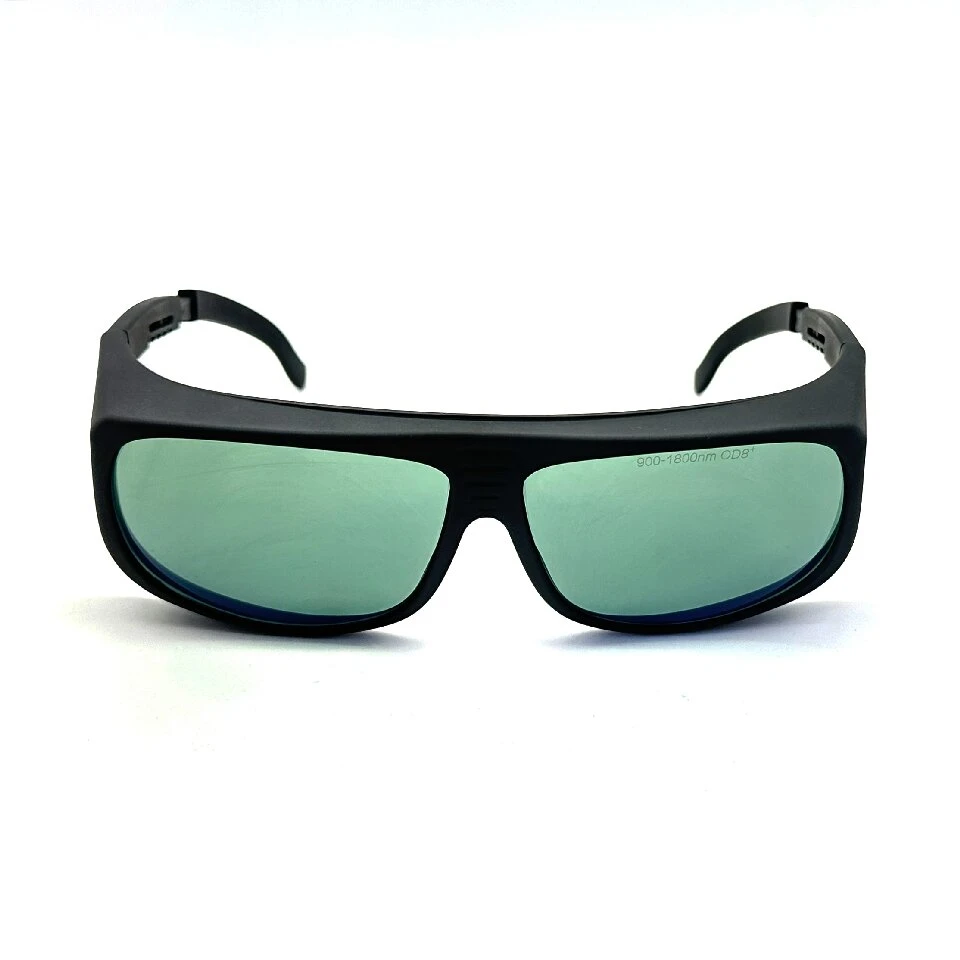
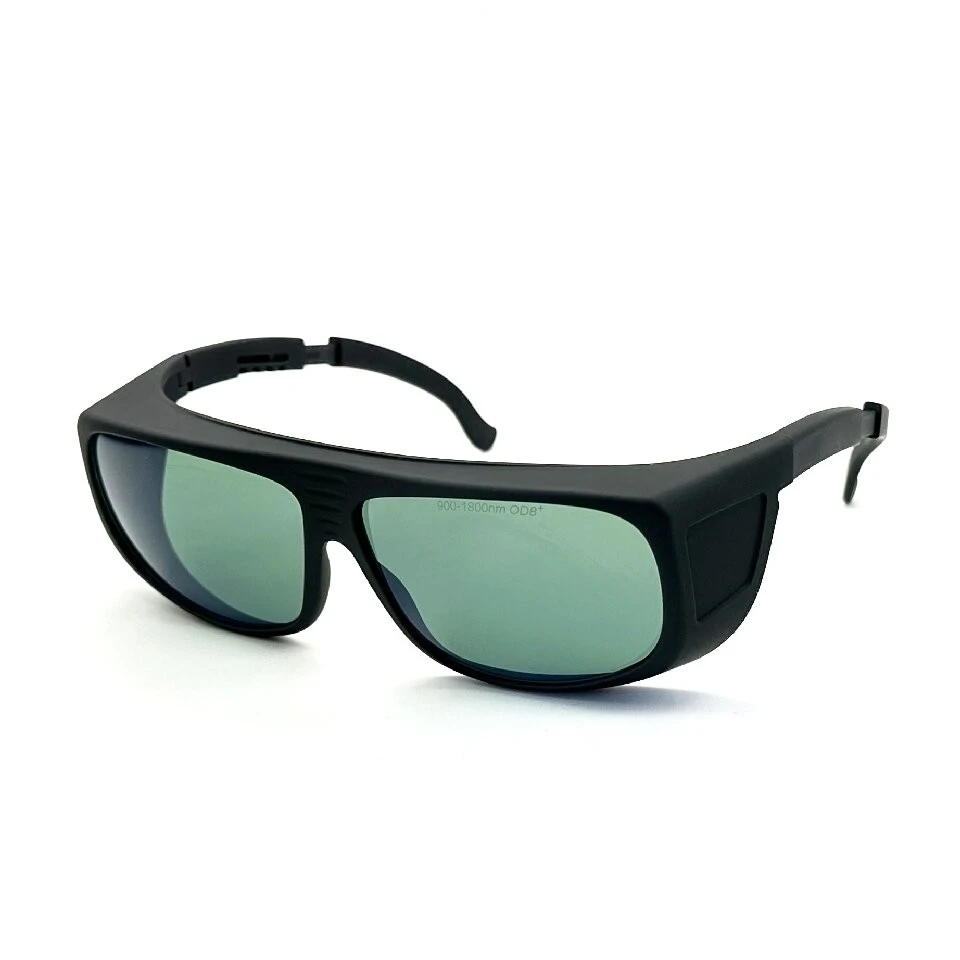
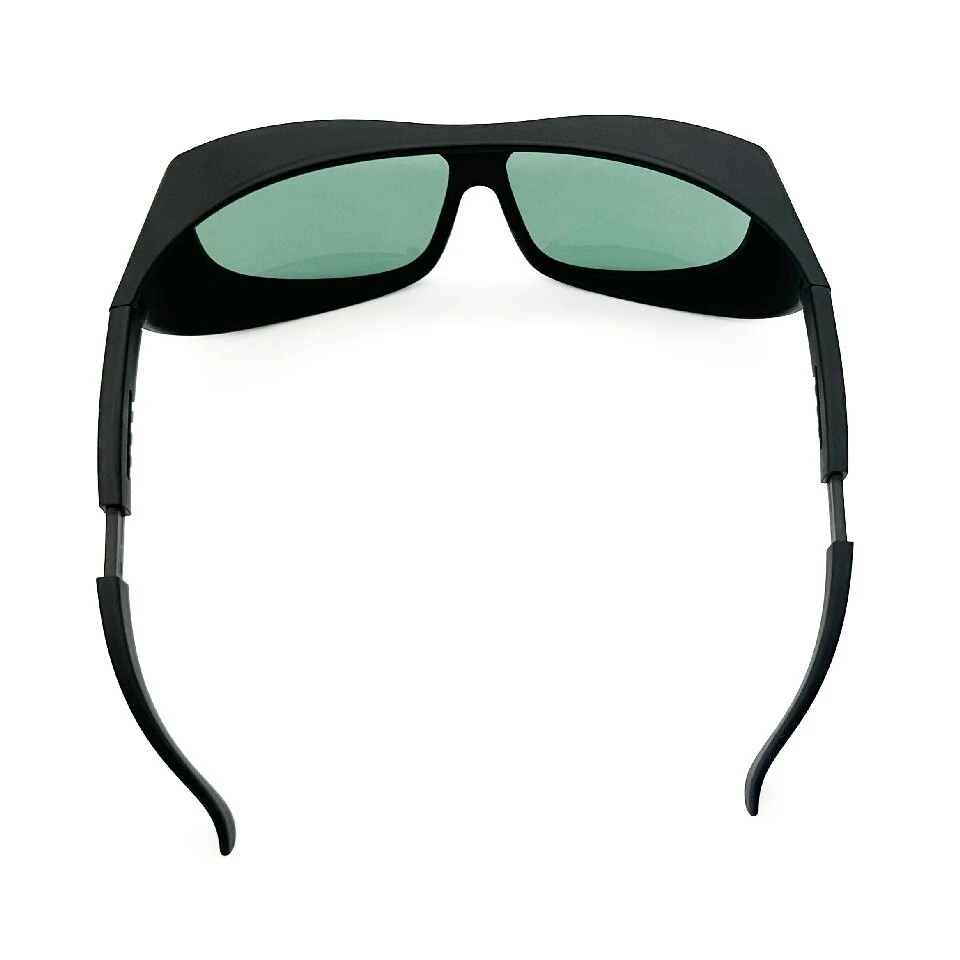
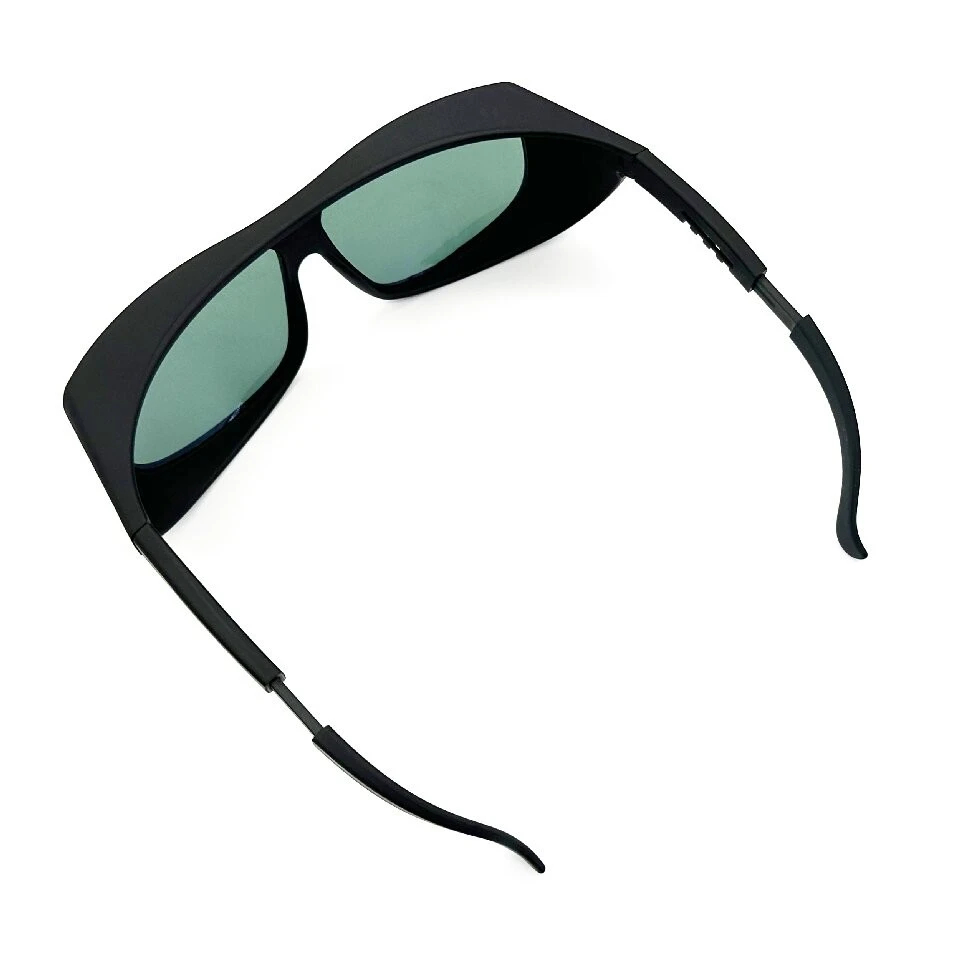
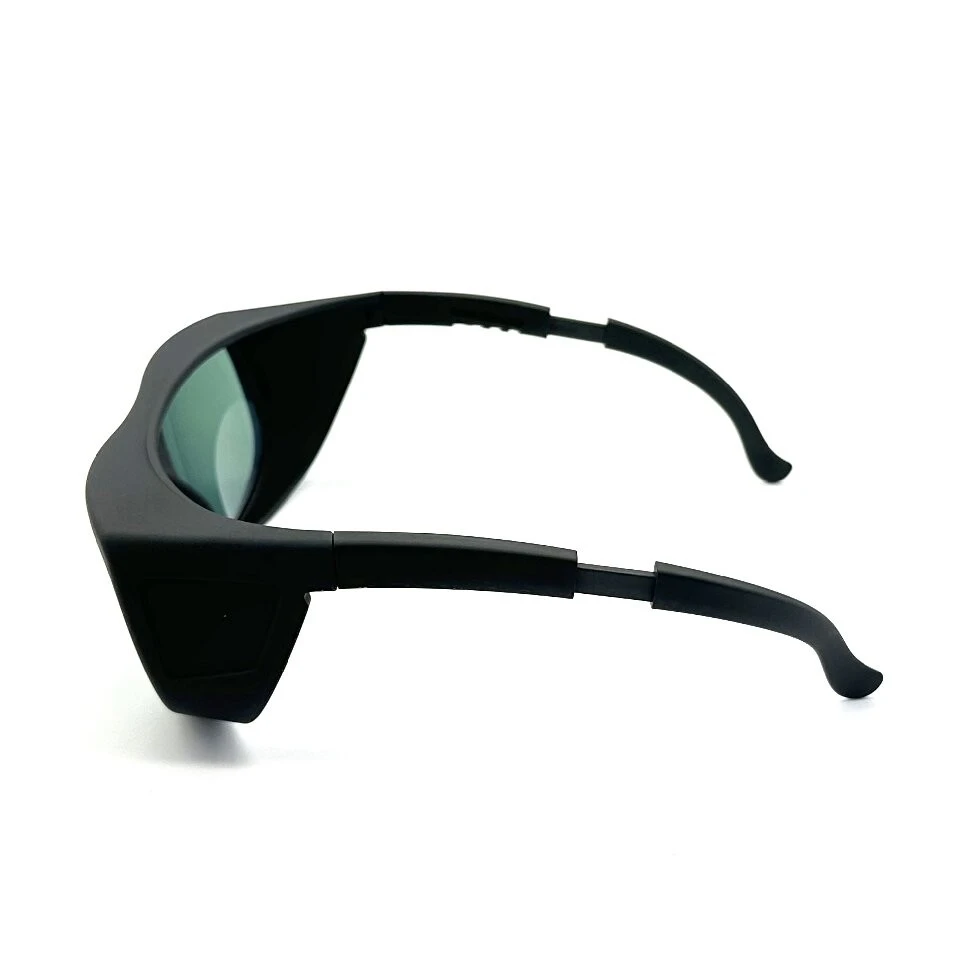
High-OD Protection Across the 900–1800nm Near-Infrared Range
Our 900–1800nm OD8+ Laser Protective Glasses deliver true professional-grade safety for near-infrared laser working environments. Specially engineered for industrial and laboratory use, these near-infrared laser safety glasses provide full-spectrum shielding across the entire 900–1800nm NIR wavelength range. With industry-certified OD8+ laser protection, they are the ideal choice for laser setups that require maximum laser light attenuation and strict on-site safety control.
High Optical Density Is the Core Advantage
Most standard NIR laser protective eyewear focuses only on wide wavelength coverage while compromising protection intensity. Our 900–1800nm OD8+ laser safety glasses take a different approach, prioritizing steady, high-performance OD8+ optical density and superior laser attenuation for rigorous laser applications.
If your on-site laser safety audit requires upgraded high-density protection, theseOD8 laser safety glasses offer trustworthy coverage for all mainstream NIR laser devices. Compatible equipment includes 1064nm Nd:YAG lasers, 1064nm and 1070nm fiber lasers, Yb fiber laser systems, and 1550nm NIR lasers. All laser wavelengths within the validated 900–1800nm protection spectrum are fully covered.
This model precisely matches real industry search and procurement needs for high-OD laser safety glasses, OD8 laser protective eyewear, 1064nm OD8 laser glasses, fiber laser safety glasses, Nd:YAG laser protection, and high-attenuation NIR laser eyewear.
Built for High-Standard Laser Safety Operations
We designed the900–1800nm OD8+ laser protective glasses for professional users and technical teams that prioritize actual safety performance over basic wavelength matching. Suitable for laser operators, field service engineers, system integrators, equipment commissioning teams, industrial laser technicians, optical engineering staff and laboratory R&D personnel, these glasses fit all high-demand near-infrared laser working scenarios.
Perfect for industrial manufacturing and research environments, this eyewear supports professional PPE evaluation based on real laser working parameters - including laser wavelength, precise optical density requirements, operating modes and actual exposure conditions. It serves as the reliable high-attenuation solution for facilities using fiber lasers, Nd:YAG lasers, industrial NIR laser equipment and research-grade laser systems.
0nm OD8+ laser protective glasses cater to professional teams that select safety gear based on strict optical density and attenuation standards.
Primary users cover laser operators, field service engineers, system integrators, equipment commissioning crews, industrial laser technicians, optical engineers, lab staff and R&D specialists working with compliant near-infrared laser hardware.
These glasses fit industrial and research facilities that assess laser PPE holistically. Key evaluation criteria include laser wavelength, required optical density, operational parameters, exposure risks and verified protective performance, instead of picking eyewear based on wavelength range only.
For B2B purchasers sourcing high optical density laser eyewear for fiber lasers, Nd:YAG lasers, industrial NIR laser machines or research laser platforms, this model meets one critical specification: OD8+ high-attenuation protection covering the entire 900–1800nm near-infrared range.


Why Choose OD8+ Protection?
In professional laser operation and industrial laser safety management, optical density (OD) is the most critical benchmark for judging the protective performance of laser protective eyewear. It directly determines how effectively safety glasses block and attenuate harmful laser radiation at specific working wavelengths.
Our 900–1800nm OD8+ Laser Protective Glasses are purpose-built for industrial and laboratory scenarios that demand higher optical density and stronger laser attenuation across the full near-infrared spectrum. Unlike ordinary NIR laser safety glasses that only meet basic protection standards, this OD8+ model targets working environments with strict laser safety thresholds, where protection level takes priority over general wavelength coverage.
Most standard NIR laser eyewear is chosen simply based on whether it covers the required laser wavelength. In contrast, these 900–1800nm OD8+ laser safety glasses support professional safety selection, allowing engineers and safety managers to confirm eyewear according to the actual required OD protection level, rather than relying on wavelength matching alone.
What Does Optical Density Mean in Laser Safety?
Optical Density refers to the logarithmic attenuation rate of laser radiation passing through a professional laser filter. It is the core technical indicator to measure the shielding capacity of laser safety glasses.
To put it simply:
- OD6 provides a theoretical laser transmittance of around 10⁻⁶.
- OD8 delivers a far lower theoretical transmittance of approximately 10⁻⁸.
For verified wavelengths within the protection range, OD8 laser safety glasses offer two orders of magnitude stronger laser attenuation compared to OD6 alternatives. This substantial performance gap explains why professional sites upgrade to high optical density laser eyewear when standard OD6 protection cannot meet on-site hazard control needs.
For B2B buyers and technical teams sourcing high-attenuation NIR laser eyewear, the core evaluation standard is never just wavelength coverage - it is whether the verified OD rating can fully offset actual laser hazards.
OD6 vs OD8: Understand the Real Performance Gap
The difference between OD6 and OD8 laser safety glasses is not a simple upgrade between standard and premium versions. The two specifications serve completely different industrial safety requirements.
OD6+ eyewear is sufficient for general laser scenarios where basic attenuation levels can control laser radiation risks.
OD8+ eyewear is reserved for professional applications where safety calculations, equipment specifications and hazard assessments explicitly require higher optical density.
The practical distinction is clear:
- OD6+ = Basic qualified attenuation for conventional laser working conditions
- OD8+ = Enhanced high-density attenuation for high-risk laser environments
This is especially critical when users compare 1064nm OD6 vs OD8 laser safety glasses. Even though both types cover the 1064nm mainstream wavelength, their laser shielding strength differs drastically, which directly affects on-site operational safety standards.
Why a Higher OD Rating Is Not Always Better
A higher optical density value does not mean the laser protective eyewear is universally better for all laser systems. Professional laser PPE selection always follows one principle: match the exact protection demand, without sacrificing visibility and operational usability unnecessarily.
If your laser equipment's hazard assessment only requires OD6-level attenuation, blindly choosing OD8+ laser glasses will not bring practical safety benefits. It may even reduce visible light transmittance and affect daily operation efficiency.
On the other hand, if your industrial laser or experimental laser system exceeds the protection limit of OD6 eyewear, upgrading to OD8+ laser protective eyewear becomes essential to meet compliance and safety standards.
Trusted laser eyewear selection relies on actual laser hazard data, not simply pursuing the highest OD parameter on the market.
When Do You Need OD8+ Laser Safety Glasses?
It is recommended to adopt OD8+ laser protective eyewear for the following professional working scenarios:
- On-site safety assessment requires optical density higher than OD6
- Laser hazard reports explicitly specify high-OD filter protection
- Working conditions demand stronger near-infrared laser attenuation
- Laser equipment operates steadily within the certified 900–1800nm protection range
- Enterprise safety specifications prioritize laser attenuation performance
- Technical procurement requires standardized high-optical-density laser eyewear
This makes our OD8+ model the ideal choice for professional users in need of high-attenuation NIR laser safety glasses, including industrial laser operators, laser equipment engineers, system integrators, field service technicians and optical R&D teams.
Start With Your Laser System, Not the Eyewear
Wavelength range alone cannot support accurate laser eyewear selection. Even two laser devices with the same wavelength can generate completely different radiation risks due to varied output power, operating modes and exposure distances.
When choosing between OD6 and OD8 laser safety glasses, teams must evaluate comprehensive parameters: laser wavelength, CW/pulsed working mode, output power, pulse energy, pulse duration, beam characteristics, on-site exposure conditions, working distance, required optical density and local laser safety compliance standards.
Accordingly, 1064nm laser safety glasses, fiber laser protective eyewear and Nd:YAG laser glasses should never be selected merely based on wavelength matching. The OD grade must strictly match the actual laser hazard level.
Core Advantages of Our 900–1800nm OD8+ Model
The core value of our 900–1800nm OD8+ Laser Protective Glasses lies in targeted high-density protection, not just wide-spectrum coverage. This eyewear is professionally calibrated to deliver reliable high optical attenuation for scenarios that explicitly require OD8+ grade protection.
It is fundamentally different from ordinary low-OD NIR laser glasses designed only for multi-wavelength coverage and general workshop versatility.
For enterprise safety managers, technical engineers and B2B procurement teams, the selection logic is straightforward and professional:
Choose OD8+ laser safety glasses when your laser system requires enhanced attenuation performance.
Choose standard lower-OD eyewear when your working conditions only need basic laser shielding.
The goal of professional laser safety configuration is simple: select qualifiedlaser safety eyewear whose verified wavelength coverage and OD rating perfectly match your actual laser protection requirements.
CE Certification & Technical Documentation
Supporting Professional Laser Protection Evaluation with Compliance Documentation
For professional laser applications, selecting OD8+ laser safety glasses requires more than checking wavelength range and optical density specifications.
Industrial buyers, laser equipment manufacturers, system integrators, laboratories, and safety teams often need supporting documentation to evaluate whether the eyewear matches their technical requirements.
The 900–1800nm OD8+ Laser Protective Glasses are supplied with CE certification documentation, supporting professional procurement processes and technical evaluation for compatible near-infrared laser protection applications.
The purpose of certification and technical documentation is to help customers verify important product information before integrating laser protective eyewear into their workplace safety programs.
CE-Certified OD8+ Laser Protective Eyewear
The CE certification provides documented evidence that the product meets applicable European conformity requirements for the relevant product category.
For B2B customers, CE documentation supports:
- Supplier qualification
- Product compliance review
- Technical purchasing evaluation
- Project documentation
- Distributor requirements
- OEM customer approval processes
When purchasing OD8 laser safety glasses, professional buyers often require more than a product description.
They need documented information that supports:
- What protection range does the eyewear cover?
- What optical density performance is specified?
- Can the product information be reviewed during procurement?
CE documentation helps provide this foundation.
Technical Documentation for OD8+ Protection Evaluation
Because laser safety eyewear selection depends on the relationship between wavelength and optical density, technical information plays an important role in product evaluation.
For the 900–1800nm OD8+ Laser Protective Glasses, buyers can evaluate product information including:
Protection Wavelength Range
Designed for compatible near-infrared laser applications within:
900–1800nm
Including common professional laser wavelengths such as:
980nm
1064nm
1070nm
1550nm
Optical Density Information
The product provides:
OD8+ optical density protection
for compatible wavelengths within the specified protection range.
For technical buyers, OD information is a critical factor when selecting:
- High optical density laser eyewear
- Fiber laser safety glasses
- Nd:YAG laser protective glasses
- Industrial NIR laser protection
Product Specification Documentation
Professional customers can review product specifications related to:
- Protection wavelength range
- Optical density rating
- Visible light transmission
- Lens characteristics
- Frame design
- Intended application environments
This allows engineers and procurement teams to compare the eyewear against their specific laser protection requirements.
Documentation Support for OEMs, Integrators and Industrial Buyers
Laser safety eyewear is often part of a larger industrial laser system.
For OEM manufacturers, equipment integrators, and industrial users, documentation availability can be an important factor during supplier evaluation.
Typical requirements may include:
- Product technical specifications
- Certification documents
- Application recommendations
- Bulk purchasing support
- Product customization communication
JTBYShield supports B2B customers by providing technical information required during:
Laser equipment projects
Industrial safety reviews
Distributor evaluation
OEM cooperation
Engineering procurement
Why Documentation Matters More for OD8+ Laser Protection
The higher the required optical density, the more important technical verification becomes.
For example, a buyer evaluating:
1064nm OD8 laser safety glasses
should not only confirm:
"Does the product mention 1064nm?"
The evaluation should also consider:
"Does the documented protection performance match my laser system requirements?"
This is why professional laser protection selection should combine:
- Laser wavelength
- Required optical density
- Technical documentation
- Application conditions
Rather than selecting eyewear based only on product names or wavelength labels.
Supporting a Complete Laser Safety Selection Process
Loshield does not position OD8+ laser eyewear as a one-size-fits-all solution.
Different laser systems require different protection considerations.
For technical evaluation, customers can provide:
- Laser wavelength
- Laser type
- Output power
- CW or pulsed operation
- Pulse energy
- Pulse duration
- Application scenario
- Required quantity
Based on these parameters, Loshield can support customers in evaluating:
Suitable wavelength protection range
Required OD level
Applicable laser eyewear category
Available technical documentation
From Laser Eyewear Supply to Technical Protection Support
The role of a professional laser protection supplier is not only providing a pair of glasses.
It is helping customers make a correct protection decision.
For 900–1800nm OD8+ Laser Protective Glasses, Loshield combines:
CE-certified product documentation
OD8+ high optical density protection
laser application evaluation support
OEM and B2B procurement assistance
to support industrial, engineering, and research customers requiring reliable near-infrared laser safety eyewear solutions.
Who May Not Need OD8+?
OD8+ laser safety glasses are not automatically the right choice for every near-infrared laser application.
The 900–1800nm OD8+ Laser Protective Glasses are intended for situations where a laser safety assessment, engineering specification, or internal protection requirement indicates that higher optical density is needed.
If your application does not require that level of attenuation, a different laser protective eyewear option may provide a better balance of protection, visibility, and usability.
1. Applications Where the Required OD Is Below OD8
If the calculated or specified protection requirement for your laser system is already satisfied by a lower optical density, OD8+ may not be necessary.
For example, if a laser hazard assessment determines that appropriately rated OD6 laser safety glasses provide sufficient protection at the relevant wavelength, selecting OD8+ simply because the number is higher does not automatically improve the overall eyewear choice.
The correct selection should be based on:
Required OD → Verified wavelength-specific protection → Working conditions
rather than:
Highest OD available → Purchase decision
For professional buyers comparing OD6 vs OD8 laser safety glasses, this distinction is critical.
2. Users Who Prioritize Higher Visible Light Transmission
High optical density and visible light transmission must be considered together.
This OD8+ model has a 10% VLT, which means the lens is noticeably darker than clear or higher-transmission protective eyewear.
If the laser hazard can be adequately controlled with a lower-OD filter that provides better visibility, operators performing visually demanding tasks may benefit from evaluating another eyewear option.
This can be particularly important for work involving:
- Fine equipment adjustment
- Reading instruments or displays
- Detailed inspection
- Long-duration laboratory work
- Tasks performed in lower ambient light
In these situations, the selection goal should be sufficient laser protection with practical task visibility, not simply the highest optical density.
3. Facilities Looking Mainly for Multi-Workstation Flexibility
Some organizations select laser eyewear primarily to simplify PPE across several compatible NIR laser systems.
In that case, the purchasing priority may be:
- Broader operational flexibility
- Easier eyewear standardization
- Reduced PPE SKU complexity
- Cross-workstation use
If higher attenuation is not specifically required, a different broad-spectrum NIR laser safety glasses model may better fit that procurement strategy.
The OD8+ model is positioned differently.
Its primary role is high-optical-density protection for applications where attenuation performance is the deciding factor.
4. Laser Wavelengths Outside the 900–1800nm Range
OD8+ does not compensate for an incorrect wavelength range.
If the hazardous laser wavelength falls outside the specified 900–1800nm protection range, this model should not be selected simply because it has a high OD rating.
For example, applications requiring protection beyond 1800nm need eyewear with verified protection at those longer infrared wavelengths.
The correct sequence is always:
Correct wavelength coverage first
then
Required optical density
A high OD at the wrong wavelength does not provide the protection needed for the actual laser hazard.
5. Buyers Choosing Eyewear Only by Laser Power
A "high-power laser" does not automatically mean that OD8 laser safety glasses are required.
Laser power is only one part of the hazard assessment.
Professional laser eyewear selection may also depend on:
- Laser wavelength
- CW or pulsed operation
- Pulse energy
- Pulse duration
- Beam diameter
- Exposure conditions
- Engineering controls
- Required optical density
For this reason, buyers searching for high-power fiber laser safety glasses should avoid treating OD8+ as a universal default.
The required OD should be determined from the actual laser parameters and protection criteria.
6. Users Who Do Not Have a Defined OD Requirement Yet
If you know the laser wavelength but do not yet know the required optical density, the best next step is not to automatically choose OD8+.
Instead, start with the laser specifications.
For example, a buyer may know:
Laser wavelength: 1064nm
but still need to determine:
Required OD at 1064nm
before deciding between OD6, OD8, or another laser protective eyewear option.
This is especially relevant for users searching for:
1064nm laser safety glasses
fiber laser protective eyewear
Nd:YAG laser safety glasses
high optical density laser glasses
The wavelength identifies where protection is needed. The hazard assessment determines how much attenuation is required.
Choose OD8+ for a Defined Reason
The 900–1800nm OD8+ Laser Protective Glasses are best considered when there is a clear technical reason to require higher optical density.
That reason may come from:
- A laser hazard assessment
- An engineering safety calculation
- An internal laser safety specification
- A project requirement
- A defined OD requirement at the operating wavelength
If none of these indicate the need for OD8+, another eyewear option may be more appropriate.
The goal is not to buy the highest-rated laser glasses.
The goal is to select laser protective eyewear with the correct wavelength coverage, sufficient optical density, and practical visibility for the real application.
Hot Tags: 900–1800nm laser protective glasses | od8+ near-infrared protection, China, manufacturers, suppliers, factory, customized, wholesale, best, cheap, professional, for sale, near me, 1064nm Laser Safety Glasses, BGR Laser Blocking Goggles, IPL Hair Removal Safety Glasses, Laser Safety Glasses 450nm, ND YAG Laser Goggles, Red Laser Protection Glasses


