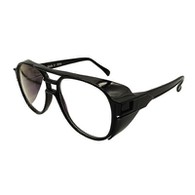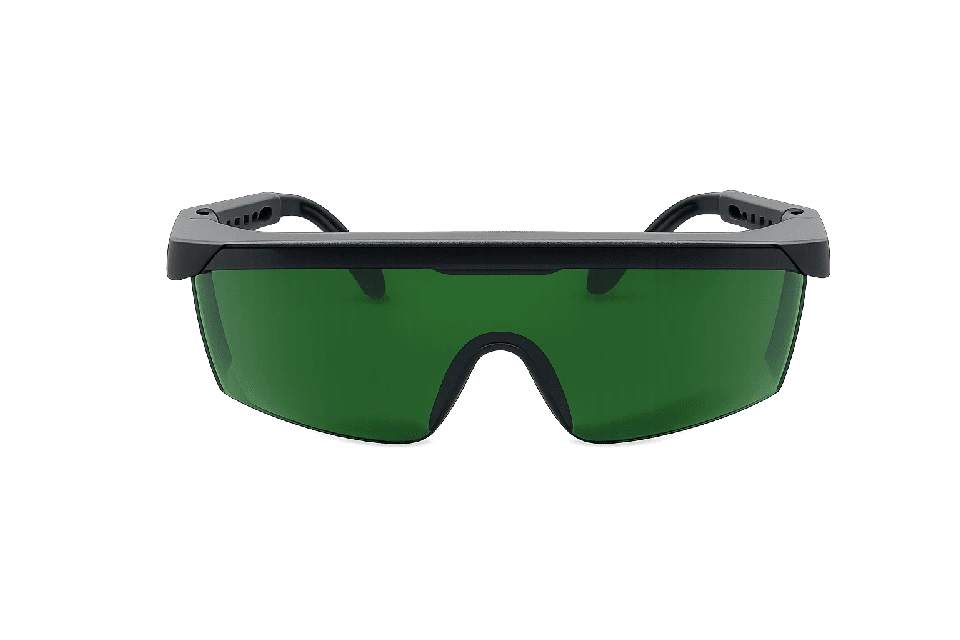
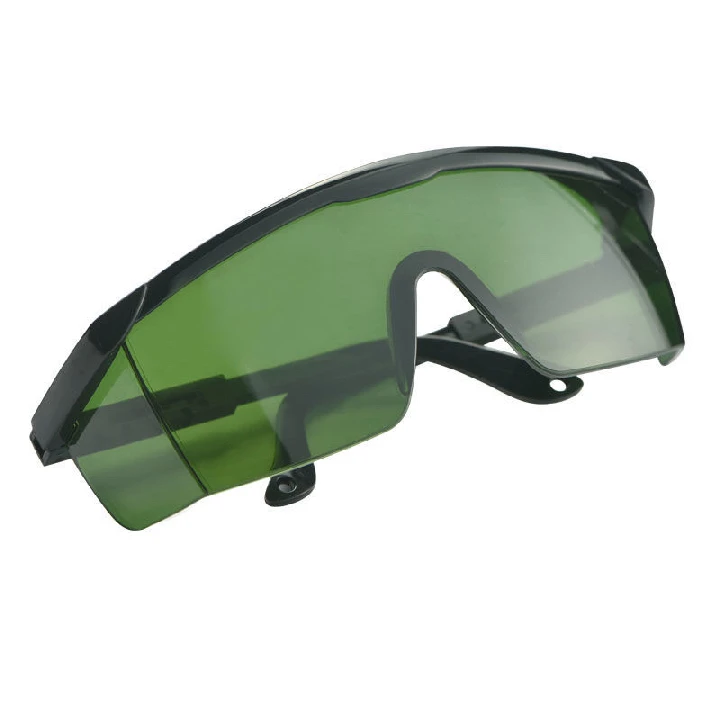
Professional Protection Solution for 2940nm Er Lasers
Er laser systems operating at 2940nm are widely used in dermatology, aesthetic medicine, dentistry, soft-tissue procedures, medical-device development, and laser research. Because this mid-infrared wavelength is invisible, personnel cannot recognize exposure by brightness or colour. Appropriate wavelength-specific eyewear is therefore an important part of a controlled laser working environment.
These 2940nm Er laser safety glasses are designed for professionals involved in clinical treatment, equipment setup, calibration, testing, servicing, and routine maintenance. The filter provides OD4+ attenuation within the specified protection range, helping reduce ocular exposure when the eyewear is correctly matched to the laser system and working conditions.
Unlike ordinary tinted lenses, the filter is developed around the spectral characteristics of the target wavelength. With 40% visible light transmission, it also supports practical visibility of treatment areas, handpieces, displays, instruments, and surrounding equipment. The lightweight frame is intended for extended use across multiple clinical or technical sessions.
This solution is suitable for:
- Dermatology and skin-resurfacing clinics
- Dental practices using 2940nm Er systems
- Aesthetic and medical laser treatment centers
- Laser equipment testing and servicing
- Medical-device manufacturers and system integrators
- Training facilities and laser research laboratories
Why 2940nm Er Lasers Require Dedicated Eye Protection
Radiation at 2940nm is strongly absorbed by water. Since the front structures of the eye, particularly the cornea, contain significant water content, they can absorb Er laser energy efficiently.
This absorption characteristic means that even brief accidental exposure may create a serious hazard. The absence of a visible beam makes the risk more difficult to recognise during normal operation, especially when staff are focused on treatment positioning, device controls, accessories, or patient care.
For this reason, protection should be selected specifically for the emitted wavelength rather than by lens colour, apparent darkness, or general-purpose safety claims.
Exposure May Come from More Than the Main Beam
Laser hazards are not limited to direct viewing of the aperture. Energy may also be redirected by:
- Handpieces and treatment tips
- Mirrors and optical components
- Metallic instruments
- Polished accessories
- Device housings
- Other reflective surfaces near the working area
The severity of a potential exposure depends on the laser power or pulse energy, pulse duration, repetition rate, beam size, divergence, distance, reflection characteristics, and exposure time.
Personnel inside the designated laser-controlled area should therefore follow the facility's protective procedures whenever exposure could exceed the applicable safety limit.
Why Ordinary Eyewear Is Not a Reliable Substitute
Prescription glasses, sunglasses, clear safety spectacles, and standard tinted lenses are not designed to provide verified attenuation at 2940nm. Their visible appearance does not indicate how much infrared laser radiation they transmit.
Eyewear rated for other common laser sources should not be treated as interchangeable either. Filters intended for 532nm green lasers, 808nm diode lasers, or 1064nm Nd lasers may offer no confirmed protection at the Er wavelength.
Laser filters must always be evaluated according to their documented spectral performance.
How to Confirm Product Suitability
Before purchasing, the buyer should verify:
- Exact laser wavelength
- Output power or pulse energy
- Pulse duration and repetition rate
- Beam diameter and operating distance
- Required optical density
- Continuous-wave or pulsed operation
- Applicable laser safety standard
- Frame coverage and side protection
- Facility-specific risk assessment
The marked protection range must include 2940nm, and the stated attenuation level must be appropriate for the actual laser parameters.
Optical density should not be evaluated in isolation. A complete assessment should consider both the technical characteristics of the laser and the conditions in which the eyewear will be used.
What 40% VLT Means in Practice
Visible Light Transmission, or VLT, indicates how much visible light passes through the protective lens. A 40% VLT means that the lens transmits approximately 40% of visible light under the specified measurement conditions while filtering the laser wavelengths for which the eyewear is rated.
In practical use, the view through the lens will appear darker than normal, but it should remain sufficiently clear for many controlled dental, dermatological and aesthetic laser environments. Operators can generally continue to observe the treatment area, surrounding instruments and equipment displays without repeatedly removing the eyewear.
Real-World View Through the Lens
Product images should include a comparison between the unaided view and the view through the lens under representative clinical lighting. This gives buyers a more realistic understanding of lens darkness than a VLT percentage alone.
The photograph should show:
- Skin, dental models or representative treatment surfaces
- Instrument markings and control panels
- Room lighting similar to the intended workplace
The same camera position and exposure settings for both views
Because camera processing can alter brightness and colour, these images should be presented as a visual reference rather than a substitute for measured VLT data.
Expected Colour Shift
Laser filters do not attenuate every visible wavelength equally. As a result, users may notice a change in colour balance when looking through the lens. Certain colours may appear warmer, cooler, less saturated or more difficult to distinguish, depending on the filter's spectral characteristics.
This colour shift does not necessarily indicate poor optical quality. It is a consequence of selectively filtering specific wavelength bands. However, buyers should evaluate whether the remaining colour recognition is suitable for tasks involving tissue assessment, status lights, colour-coded labels or other visual cues.
Where colour discrimination is important, request a transmission curve or a representative through-the-lens image before placing a bulk order.
Recommended Room Illumination
A 40% VLT lens is generally more practical in a well-lit treatment room than in a dimly illuminated environment. Clinics should maintain even ambient lighting across the working area and avoid strong glare, deep shadows or highly reflective surfaces.
Additional task lighting may be helpful when operators need to identify fine surface details. The selected lighting should illuminate the treatment area without interfering with the laser procedure or encouraging users to remove their protective eyewear for a clearer view.
The appropriate room illumination depends on the procedure, equipment layout and visual demands of the operator. A workplace assessment should therefore be performed under actual operating conditions rather than relying on VLT alone.
Visibility of Displays and Aiming Beams
With 40% VLT, most illuminated control panels and high-contrast digital displays should remain readable in a properly lit room. Screen brightness and contrast may need to be adjusted when the eyewear is first introduced into the workflow.
The visibility of an aiming beam cannot be determined from the overall VLT value alone. It depends on the aiming beam wavelength and the lens transmission at that specific wavelength. If the filter also strongly attenuates the aiming-beam colour, the beam may appear dim or may no longer be clearly visible.
Before clinical use, confirm:
- The wavelength of the aiming beam
- The lens transmission at that wavelength
- Whether the beam remains visible at the intended operating level
- Whether critical display colours and warning indicators remain distinguishable
Balancing Protection and Workplace Visibility
A higher VLT can improve visual comfort, but VLT must never take priority over the required laser attenuation. Conversely, selecting an unnecessarily dark filter may make detailed work more difficult and increase the temptation to lift or remove the eyewear during a procedure.
The correct eyewear should provide the required protection at 2940 nm while preserving enough visible light for the intended clinical task. Wavelength coverage, optical density, applicable safety ratings and actual workplace visibility should therefore be assessed together.
OEM and Clinic Procurement
For clinics and hospitals sourcing 2940nm Er:YAG laser safety glasses, simple wavelength‑matching is never enough. Your chosen OD4+ laser safety eyewear also has to fit real‑world clinical workflows: staff long‑shift comfort, regular disinfection & cleaning, complete compliance documentation, and stable repeat‑order supply for ongoing replacement needs.
These OD4+ laser safety glasses are built for facilities running 2940 nm Er laser hardware across dermatology, dental practices, aesthetic clinics and fractional skin‑resurfacing procedures. Before you place an order, clinical buyers should double‑check that both the protective wavelength range and OD4+ rating align with your actual laser devices and on‑site working conditions.
Support for Clinical Procurement Teams
We can assist purchasing departments, laser safety officers, biomedical engineers, and clinical managers with the technical information required for product evaluation, including:
- Wavelength protection and optical density information
- Product specifications and spectral test data
- Frame and lens material details
- Cleaning and maintenance guidance
- Packaging and labeling information
- Sample evaluation before bulk purchasing
- Batch documentation, where available
- OEM and private-label options
Designed for Shared Clinical Environments
In hospitals and multi-user clinics, protective eyewear may be worn by physicians, nurses, technicians, assistants, and authorized observers. Procurement teams should therefore consider frame fit, side coverage, visible light transmission, cleaning compatibility, and ease of identification.
The lightweight frame and practical 40% visible light transmission help support extended procedures and routine clinical work while maintaining usable visibility of instruments, treatment areas, and control panels.
For infection-control purposes, each facility should confirm that its approved cleaning or disinfection method is compatible with the lens and frame materials. Eyewear should be inspected regularly and removed from service if the lenses become cracked, deeply scratched, chemically damaged, or difficult to see through.
Bulk Supply for Hospitals and Clinic Groups
For hospitals, clinic chains, dental groups, and medical-device distributors, bulk purchasing options can be arranged according to the required quantity and delivery schedule.
Available procurement support may include:
- Standard bulk orders
- Individual or department-based packaging
- Custom logo printing
- Private-label packaging
- Custom product identification
- Multilingual labels or instructions
- Scheduled replenishment orders
- Distributor and medical-equipment OEM supply
Consistent model identification can help reduce the risk of staff selecting eyewear intended for a different laser wavelength. Custom labels may include the protected wavelength, optical density, department name, equipment model, or internal asset number.
Sample Evaluation Before Bulk Ordering
Clinics may request a sample to evaluate:
- Frame comfort and fit
- Compatibility with masks or other PPE
- Visibility of treatment areas
- Readability of laser control screens
- Aiming-beam visibility
- Cleaning and disinfection procedures
- Suitability for extended clinical use
A sample evaluation helps assess usability, but it should not replace technical verification of the wavelength range, required optical density, laser operating parameters, and applicable safety requirements.
Information Required for a Procurement Recommendation
To help us recommend an appropriate solution, please provide:
- Laser brand and model
- Operating wavelength
- Maximum output power or pulse energy
- Pulse duration and repetition rate
- Intended medical or dental procedure
- Number of users or required quantity
- Cleaning or disinfection requirements
- Required certification or technical documents
- Packaging and branding requirements
- Destination market
Our team can review this information and recommend a standard or customized Er laser protective eyewear solution for your clinical procurement project.
FAQ
Q:What laser wavelength are these safety glasses designed for?
A:These laser safety glasses are designed for compatible 2940nm Er laser systems. Before use, confirm that the eyewear's marked protection range includes the actual wavelength emitted by your equipment.
They should not be assumed to protect against other laser wavelengths unless those wavelengths are specifically included in the verified protection range.
Q:Are these glasses suitable for all 2940nm Er lasers?
A:Not automatically. Although the eyewear is designed for 2940nm applications, buyers must verify that its wavelength range and optical density meet the requirements of the individual laser system.
Q:Can ordinary prescription glasses protect against a 2940nm laser?
A:No. Prescription glasses, sunglasses and standard clear safety spectacles should not be treated as verified Er laser protection.
A lens may provide physical impact resistance or appear dark while still transmitting hazardous radiation at 2940nm. Only eyewear with verified wavelength-specific attenuation should be selected.fileciteturn0file0L3871-L3875
Q:Can 1064nm or 532nm laser safety glasses be used for a 2940nm Er laser?
A:Not unless the eyewear is also specifically rated for 2940nm. Laser protection is wavelength-dependent.
Eyewear designed for 532nm green lasers, 808nm diode lasers or 1064nm Nd lasers may provide little or no verified protection at 2940nm.
Q:Will the lenses affect colour perception?
A:Some colour shift may occur because laser filters do not transmit all visible wavelengths equally. Certain colours may appear warmer, cooler, less saturated or more difficult to distinguish.
Buyers should evaluate colour recognition when procedures depend on tissue appearance, colour-coded controls, warning lights or instrument markings. Representative through-the-lens images and spectral transmission data can help with this assessment.
Q:Will control screens remain visible through the lenses?
A:Most illuminated displays and high-contrast control panels should remain readable in a well-lit room, although screen brightness or contrast may need adjustment.
Visibility depends on the display type, ambient lighting, viewing angle and the spectral characteristics of the lens. Workplace testing is recommended before introducing the eyewear into routine clinical use.
Q:Do You Provide Certificates and Test Reports?
A:Yes. Relevant product documentation can be provided for procurement and technical review, subject to the specific model, order requirements, and destination market.
Available documents may include:
- Product specifications and technical datasheets
- Optical density and wavelength protection data
- Spectral transmission or laboratory test reports
- Material and quality inspection records
- CE or other applicable compliance documents
- Batch-related documentation, where available
For hospitals, clinics, medical-device distributors, and OEM customers, please inform us of the certificates or test reports required by your purchasing department before placing an order. Our team will confirm document availability based on the selected product and intended market.
To request documentation, please provide the product model, required quantity, destination country, and the specific certification standard needed.
Hot Tags: 2940nm er:yag laser safety glasses | vlt40% protective eyewear, China, manufacturers, suppliers, factory, customized, wholesale, best, cheap, professional, for sale, near me, 10600nm CO2 Laser Safety Glasses, 1064nm Laser Safety Glasses, BGR Laser Blocking Goggles, Laser Safety Glasses 450nm, ND YAG Laser Goggles, Red Laser Protection Glasses