


Products overview
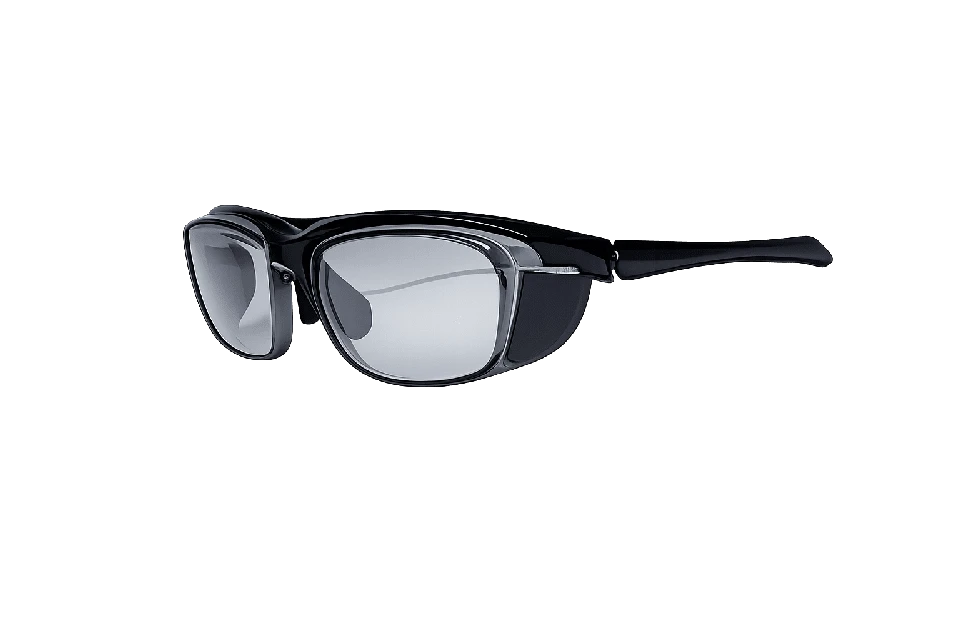
The 0.5mmPb Lead Radiation Protective Glasses Type B With Side Guard are wraparound X-ray safety eyewear designed for medical professionals who require both frontal eye protection and extended lateral coverage in environments with scattered X-ray radiation.
Type B combines 0.5mmPb lead-glass lenses with an extended side-guard design to provide a broader protective profile around the eye area than conventional flat-front radiation glasses. The close-fitting wraparound frame helps position the protective components closer to the frontal and lateral eye areas while supporting stable wear during routine clinical movement.
Designed for use in medical X-ray environments such as fluoroscopy, C-arm imaging and other procedures involving scattered radiation, these radiation protective glasses with side shields offer a compact eyewear solution for users who prioritize side coverage without moving to a larger face-shield format.
For hospitals, medical distributors and radiation-protection suppliers, JTBYShield supports Type B with available technical documentation, sample evaluation, OEM customization and bulk procurement services.
Why Type B Side-Guard Radiation Glasses?
Standard radiation glasses primarily place protective lead lenses in front of the eyes. This frontal protection is important, but scattered X-ray radiation in clinical environments does not always approach the wearer from a straight-ahead direction.
During fluoroscopy, C-arm imaging and other X-ray procedures, medical staff may change position relative to the patient, X-ray source and imaging equipment. As working angles change, scattered radiation may reach the eye area from oblique or lateral directions rather than only from the front.
The Type B 0.5mmPb lead radiation protective glasses are designed to address this broader exposure geometry by combining frontal lead-glass protection with an extended side-guard wraparound design.
From Frontal Protection to Lateral Eye Coverage
Conventional flat-front X-ray protective glasses mainly position shielding directly in front of the eyes. Depending on the frame design, the lateral eye area may remain less enclosed.
Type B uses a closer-fitting wraparound profile with extended side sections to increase physical shielding around the outer eye area.
This makes the radiation glasses with side shields particularly relevant for users who want both:
- frontal eye protection from the main lead-glass lenses;
- additional lateral coverage around the sides of the eyes.
The purpose of the side guard is not simply to change the appearance of the frame. Its function is to extend the protective structure beyond the front lens and provide a broader shielding geometry around the eye area.
Why Angled Scatter Matters
Scattered radiation is generated when the primary X-ray beam interacts with the patient or other materials in the imaging field. The direction from which scatter reaches medical personnel can vary depending on procedure setup, equipment position and where the operator is standing.
For users working around fluoroscopy or mobile C-arm systems, this means protective eyewear may need to account for radiation approaching from more than one direction.
The wraparound structure of the Type B radiation protection glasses with side guards is designed for this type of working environment, where both frontal and lateral eye coverage may be important considerations.
Rather than relying only on a front-facing protective lens, the side-guard design helps position additional shielding closer to the lateral eye area.
Side Guards for Broader Eye Protection
The key difference between Type B and standard lead glasses is the way the frame extends protection around the sides of the eyes.
When worn correctly, the wraparound X-ray safety glasses create a more enclosed protective profile than conventional flat-front eyewear. This can help reduce open lateral gaps around the eye area and provide broader physical coverage against scattered X-ray radiation.
For procurement teams comparing different types of radiation protective eyewear, Type B may be a suitable option when side protection is a higher priority than with basic frontal-protection glasses.
Who Should Consider Type B?
The Type B 0.5mmPb radiation glasses with side protection may be considered for medical professionals and radiation-safety programs that prioritize:
- frontal and lateral eye coverage;
- a close-fitting wraparound frame;
- side guards designed to extend shielding around the outer eye area;
- protective eyewear for environments where staff may work at changing angles to the X-ray source;
- a glasses-format solution that provides more lateral coverage than standard flat-front radiation eyewear.
For users who mainly require lightweight frontal eye protection, a simpler radiation-glasses design may be sufficient. When broader lateral coverage is preferred, the Type B wraparound radiation glasses with side shields provide a more targeted solution.
The appropriate radiation protective eyewear should always be selected according to the specific procedure, expected scatter-radiation conditions, facility radiation-safety assessment and applicable regulations.

Designed for Changing Radiation Angles
Medical professionals do not always remain in a fixed position during X-ray procedures. In fluoroscopy, mobile C-arm imaging and other interventional workflows, staff may move around the patient, adjust equipment or work from different sides of the imaging field. As the working position changes, scattered X-ray radiation may also reach the eye area from different angles.
The Type B 0.5mmPb lead radiation protective glasses are designed with a wraparound frame and extended side guards to provide a broader protective profile around the eyes than conventional flat-front radiation eyewear.
Protection Beyond a Single Forward Direction
Standard X-ray protective glasses mainly position lead-glass shielding directly in front of the eyes. This can be appropriate when frontal coverage is the primary requirement, but clinical working positions are not always directly aligned with the X-ray source.
When the wearer turns the head or changes position relative to the patient and imaging equipment, the direction of scattered radiation can also change.
The Type B radiation glasses with side protection use an extended wraparound structure to increase physical coverage around the lateral eye area. This helps reduce the open side area that may exist with more conventional frame designs.
Wraparound Coverage for Dynamic Clinical Workflows
The wraparound geometry of Type B is intended for users who need protective eyewear that remains relevant as their working angle changes during a procedure.
Rather than relying only on front-facing lenses, the side-guard radiation glasses extend the protective structure toward the outer sides of the eyes. This design can be particularly useful in environments where staff regularly reposition themselves around X-ray equipment.
For buyers evaluating wraparound X-ray safety glasses, the benefit is therefore not simply the curved appearance of the frame. The design is intended to provide a closer-fitting protective geometry around both the frontal and lateral eye areas.
Supporting Eye Protection Around C-Arm and Fluoroscopy Procedures
In C-arm and fluoroscopy environments, operator position may change throughout the procedure. Medical staff may stand beside the patient, move around the imaging table or work at different angles relative to the radiation source.
For these workflows, radiation protective eyewear with side shields may be preferred when procurement teams want more lateral coverage than standard front-lens designs provide.
The Type B design combines:
- 0.5mmPb lead-glass frontal protection;
- extended side guards for lateral eye coverage;
- a close-fitting wraparound frame;
- a glasses-format design suitable for repeated clinical use.
This makes Type B a practical option for users who prioritize both frontal protection and broader side coverage during changing working positions.
Why Changing Radiation Angles Matter When Selecting Eyewear
The choice between standard radiation glasses and wraparound radiation glasses with side guards should not be based only on lead equivalency.
Buyers should also consider how staff actually move during procedures, where scattered radiation may originate and whether lateral eye coverage is important for the intended application.
Type B is designed for situations where:
- the wearer may work from different positions around the patient;
- scattered radiation may approach from frontal or oblique directions;
- side coverage is an important purchasing consideration;
- a wraparound glasses format is preferred over a larger face shield.
For users who mainly require frontal eye protection, a simpler radiation-glasses design may be sufficient. When changing working angles and lateral coverage are more important, the Type B 0.5mmPb radiation glasses with side guards offer a more targeted eyewear solution.
The final selection of X-ray protective eyewear should always be based on the specific procedure, expected scatter-radiation conditions, facility radiation-safety assessment and applicable regulations.
Wraparound Frame for a Close Clinical Fit
The Type B wraparound radiation glasses are designed with a close-fitting frame geometry that follows the contour around the eyes more closely than conventional flat-front protective eyewear. This shape helps position the frontal lead-glass lenses and extended side guards closer to the intended protection area while supporting a stable fit during routine clinical movement.
For medical professionals who may turn, reposition or move around imaging equipment during a procedure, frame geometry is an important part of how X-ray protective glasses with side shields perform in everyday use.
Wraparound Geometry That Follows the Eye Area
Unlike conventional straight or flat-front frames, the Type B frame extends around the sides of the face to create a more enclosed eyewear profile.
This wraparound geometry serves two practical purposes. It brings the side-guard structure closer to the lateral eye area and helps reduce the open space between the protective eyewear and the sides of the face.
For buyers evaluating radiation glasses with side protection, this closer frame geometry is particularly relevant because the effectiveness of lateral coverage depends not only on the presence of a side guard, but also on how the eyewear is positioned when worn.
The Type B design therefore combines the frontal protective lenses with extended side coverage in one integrated wraparound X-ray safety eyewear format.
Stable Positioning During Clinical Movement
Medical staff rarely remain completely motionless during imaging procedures. Users may turn their head, look between the patient and equipment, adjust their working position or move around the procedure area.
Protective eyewear that shifts excessively during these movements may require repeated repositioning.
The close-fitting structure of the Type B X-ray protective glasses is designed to support more stable positioning during normal head and body movement. By keeping the frame closer to the face, the wraparound profile helps the frontal lenses and side guards remain aligned with the eye area as the wearer changes viewing direction.
This can be especially useful during workflows where users frequently alternate their attention between the patient, imaging monitor, instruments and surrounding equipment.
Designed to Move With the Wearer
The purpose of the Type B frame is not to restrict movement, but to provide a protective eyewear format that can remain comfortably positioned while the wearer performs normal clinical tasks.
Its close-fitting profile supports:
stable positioning during head movement;
closer placement of the side guards around the lateral eye area;
reduced need for frequent frame readjustment;
consistent frontal and side coverage during routine clinical activity;
a glasses-format alternative to larger radiation face shields.
For users who need radiation protective eyewear for changing working positions, this combination of wraparound geometry and stable fit can be an important consideration alongside lead equivalency and side protection.
Fit Is Part of the Protection Design
When comparing 0.5mmPb radiation protection glasses, buyers often focus first on lens material and lead equivalency. However, frame fit also affects how the protective components are positioned relative to the user's eyes.
A frame that sits too far away from the face or moves excessively may create a different coverage geometry than a closer-fitting design.
Type B uses its wraparound profile to position the protective structure closer around the frontal and lateral eye areas while maintaining a wearable glasses format.
For procurement teams, this means the Type B design should be evaluated as a combination of:
0.5mmPb frontal lens protection + side-guard coverage + wraparound geometry + stable clinical fit.
Together, these characteristics distinguish Type B from standard flat-front lead radiation glasses designed primarily around frontal eye protection.
Individual fit can vary according to face shape and head dimensions. Buyers evaluating Type B for institutional or distributor procurement should confirm the product dimensions, fit requirements and available sample options before bulk ordering.
Type B vs Type C Face Shield: Which X-Ray Protection Format Fits Your Application?
The Type B 0.5mmPb radiation protective glasses and Type C 0.5mmPb lead acrylic radiation face shield are designed for different protection priorities.
Type B uses a wraparound glasses format with frontal lead-glass lenses and extended side guards, making it suitable for users who prioritize front and lateral eye coverage in a compact eyewear design.
Type C uses a larger transparent lead acrylic visor to provide broader coverage across the eyes and upper face, together with a flip-up X-ray protective visor that can be raised when protection is temporarily not required.
The choice between the two therefore depends not only on lead equivalency, but also on the required coverage area, working position and preferred protection format.
Type B: Wraparound Eye Protection With Side Guards
The Type B radiation glasses with side protection are designed for users who want to remain in a conventional glasses format while extending shielding beyond the frontal eye area.
Its wraparound geometry places the protective structure closer around the eyes, while the side guards increase lateral coverage compared with standard flat-front radiation eyewear.
Type B may be preferred when the main purchasing priorities are:
- frontal eye protection;
- lateral eye coverage;
- a close-fitting wraparound frame;
- reduced open space around the sides of the eyes;
- a compact X-ray protective glasses format for repeated clinical use.
For medical personnel who frequently change working positions around fluoroscopy, C-arm or other X-ray imaging equipment, the side-guard design provides a more targeted solution for users concerned about angled or lateral scatter reaching the eye area.
Type C: Broader Eye and Upper-Face Coverage
The Type C lead acrylic radiation face shield is designed for a different protection requirement.
Instead of using individual lead-glass lenses and side guards, Type C places a larger transparent protective visor in front of the eyes and upper face. This creates a broader physical shielding area than a glasses-format product.
Type C may be considered when the user's priorities include:
- broader coverage beyond the eye area;
- protection across the eyes and upper face;
- a transparent 0.5mmPb lead acrylic visor;
- a head-mounted protection format;
- a flip-up mechanism for easier transitions between protected and non-protected working positions.
The flip-up X-ray face shield format can also be useful in workflows where users prefer to raise the visor rather than repeatedly remove the entire protective device.
Type B vs Type C: Key Differences
| Feature | Type B Radiation Glasses | Type C Radiation Face Shield |
|---|---|---|
| Protection format | Wraparound glasses | Head-mounted visor |
| Primary coverage | Eyes | Eyes + upper face |
| Lateral coverage | Extended side guards | Broader visor area |
| Frame design | Close-fitting wraparound frame | Adjustable head-mounted design |
| Main differentiation | Front + side eye coverage | Larger facial coverage |
| Flip-up function | No | Yes |
| Best suited for | Users prioritizing lateral eye protection in a glasses format | Users prioritizing broader facial coverage and workflow flexibility |
Which Model Should You Choose?
Choose Type B wraparound radiation glasses when the main requirement is to protect the eyes while maintaining a compact eyewear format with additional side coverage.
Type B is especially relevant for buyers looking for:
0.5mmPb radiation glasses with side shields, wraparound X-ray safety glasses, or radiation protective eyewear with lateral coverage.
Choose the Type C radiation protection face shield when the purchasing priority shifts from eye-only protection toward a larger protective area covering both the eyes and upper face.
Type C is more appropriate for buyers looking for:
0.5mmPb lead acrylic face shields, flip-up X-ray protective visors, or radiation face shields with broader facial coverage.
Neither format should be treated as universally superior. Type B and Type C address different protection and workflow requirements, so selection should be based on the procedure, expected scatter-radiation conditions, required coverage area, user fit and facility radiation-safety assessment.
For B2B procurement, LOSHIELD can provide the available technical specifications, test documentation and sample information to help distributors and institutional buyers compare Type B and Type C before bulk ordering.
Wearing, Inspection & Care
Proper wearing, routine inspection and appropriate cleaning help maintain the fit, visibility and service condition of Type B 0.5mmPb lead radiation protective glasses during repeated clinical use.
Because Type B combines frontal lead-glass lenses with a wraparound frame and extended side guards, users should check not only the lenses, but also the frame position, lateral coverage and overall condition of the radiation protective eyewear before use.
How to Wear Type B Radiation Glasses Correctly
Before entering an X-ray procedure area, place the wraparound radiation glasses securely on the face and confirm that the frame sits evenly around the eyes.
The frontal lead-glass lenses should remain properly aligned with the eyes, while the side guards should sit close to the lateral eye area without excessive gaps.
When fitting the glasses, check that:
- the frame sits securely without excessive movement;
- the frontal lenses remain centered in front of the eyes;
- the side guards are positioned close to the outer eye area;
- the glasses do not interfere with normal head movement or clinical tasks;
- any compatible retention strap or accessory is correctly positioned, if used.
A proper fit is especially important for X-ray protective glasses with side shields, because lateral coverage depends in part on how the wraparound frame is positioned relative to the wearer's face.
Individual fit may vary according to facial shape and head dimensions, so institutional buyers should consider sample evaluation when assessing the product for multiple users.
Inspect Before Each Use
Before wearing the 0.5mmPb radiation protection glasses, visually inspect the lenses, side guards and frame for signs of damage or deterioration.
Pay particular attention to:
- cracks, chips or visible damage to the lead-glass lenses;
- scratches or surface defects that may interfere with visibility;
- loose or damaged frame components;
- deformation of the wraparound structure;
- damaged or unstable side guards;
- loose hinges or temple sections;
- contamination that cannot be removed through normal cleaning.
If the protective lens, side-shield structure or frame appears damaged, the eyewear should be removed from service and evaluated according to the facility's radiation-safety and PPE procedures.
For lead radiation glasses with side protection, maintaining the physical integrity of both the frontal and lateral protective components is important because damage may affect coverage or usability.
Cleaning Lead Radiation Protective Glasses
Clean the lead radiation protective glasses using a soft, non-abrasive cloth and a cleaning method compatible with the lens and frame materials.
Avoid cleaning methods that may scratch, chemically attack or otherwise damage the protective components.
As a general care practice:
- remove dust or loose particles before wiping the lenses;
- use a soft microfiber or other non-abrasive cloth;
- use only cleaning agents confirmed to be compatible with the product materials;
- avoid abrasive pads, powders or harsh mechanical scrubbing;
- do not expose the glasses to unnecessary heat or aggressive chemicals.
If LOSHIELD specifies approved cleaning or disinfecting agents for Type B, those product-specific instructions should take priority over general cleaning practices.
Protect Optical Clarity and Side Coverage
The performance of wraparound X-ray safety glasses depends not only on radiation-shielding materials, but also on clear visibility and correct positioning around the eyes.
Deep scratches, cracks, frame deformation or damage to the side guards can reduce usability and may alter how the eyewear sits on the face.
Routine inspection therefore helps users identify when the glasses should be cleaned, adjusted, professionally evaluated or replaced.
Procurement teams managing reusable radiation safety glasses may also benefit from establishing a documented inspection schedule for frequently used eyewear.
Storage Between Uses
When not in use, store Type B X-ray protective eyewear in a clean, dry location where the lenses and frame are protected from impact, pressure and unnecessary surface contact.
Where available, use a protective case or designated storage area to help prevent:
- lens scratches;
- frame deformation;
- damage to the side guards;
- contamination between uses;
- accidental impact during transport or storage.
Avoid placing heavy objects on top of the glasses or storing them in a position that places continuous pressure on the wraparound frame.
When Should Radiation Glasses Be Replaced?
There is no single replacement interval that applies to every clinical environment. Replacement should be based on product condition, frequency of use, inspection findings and the facility's radiation-safety procedures.
Type B radiation glasses with side shields should be evaluated for replacement if there is visible damage to the protective lenses, deterioration of the frame, unstable side guards, impaired visibility or any condition that prevents the glasses from fitting securely.
For hospital procurement teams and medical distributors, LOSHIELD can provide available product specifications, care information and replacement guidance for Type B radiation protective eyewear.
FAQs About Type B Side-Guard Radiation Glasses
1. Why choose radiation glasses with side shields instead of standard lead glasses?
Standard lead glasses primarily position radiation-shielding lenses in front of the eyes. Type B adds an extended wraparound side-guard structure to provide additional coverage around the lateral eye area.
For users who may work at different angles relative to the patient or imaging equipment, radiation glasses with side shields provide a different protection geometry from conventional flat-front eyewear. Type B is therefore intended for buyers who prioritize both frontal and lateral eye coverage while remaining in a compact glasses format.
2. Does the Type B side guard have the same 0.5mmPb lead equivalency as the front lens?
The 0.5mmPb lead equivalency should be confirmed separately for the frontal lens and side-protection components according to the applicable product specification and test documentation.
For procurement evaluation, buyers should verify exactly which components carry the stated lead-equivalent rating rather than assuming that one Pb value automatically applies to the entire frame.
LOSHIELD can provide available technical specifications and lead-equivalency documentation for review before bulk purchasing.
3. Why does lateral coverage matter when working around a C-arm or fluoroscopy system?
During fluoroscopy and mobile C-arm procedures, medical staff may change position relative to the patient, X-ray source and imaging equipment. Because working angles can change throughout a procedure, scattered radiation may not always approach the wearer from directly in front.
The wraparound side guards of the Type B X-ray protective glasses extend the protective structure toward the outer eye area, making this model particularly relevant when lateral coverage is an important part of the facility's radiation-protection strategy.
The appropriate eyewear should still be selected according to the specific procedure and radiation-safety assessment.
4. Is Type B better than a radiation face shield?
Not necessarily. Type B radiation glasses and a lead acrylic radiation face shield address different protection priorities.
Type B is designed for users who want frontal and lateral eye protection in a close-fitting glasses format. A radiation face shield such as Type C provides a larger protective area across the eyes and upper face and may also include features such as a flip-up visor.
Type B may therefore be preferred when compact eyewear and side coverage are the priority, while a face shield may be considered when broader facial coverage is required.
5. How should distributors evaluate the fit of wraparound radiation glasses before a bulk order?
Because facial dimensions vary between users, fit should not be evaluated only from product photographs.
For wraparound radiation glasses with side protection, buyers should review dimensions such as frame width, lens size, temple dimensions and the position of the side guards. Sample evaluation can also help confirm how closely the glasses sit around the lateral eye area and whether the frame remains stable during normal head movement.
For hospitals or distributors purchasing for multiple users, evaluating a sample before a larger order can help identify potential fit requirements.
6. Are side guards only for physical coverage, or do they provide radiation shielding?
This depends on the material and construction of the specific product.
A side guard can provide physical coverage around the lateral eye area, but its radiation-shielding performance should be determined from the actual material specification and verified lead-equivalency or attenuation data.
When comparing X-ray glasses with side guards, procurement teams should therefore ask two separate questions:
How much lateral area does the side guard cover?
and
What radiation attenuation or lead equivalency does that side-protection component provide?
This distinction is important when comparing different radiation protective eyewear designs.
7. When should a buyer choose Type B instead of Type A?
Type B is the more targeted option when side protection and wraparound coverage are key purchasing considerations.
A simpler Type A design may be appropriate for buyers whose main priority is lightweight frontal eye protection. Type B adds an extended side-guard structure and wraparound frame geometry for users who want broader coverage around the outer eye area.
For distributors building a radiation eyewear range, the two models can therefore serve different customer needs rather than functioning as interchangeable versions of the same product.
8. What technical documents should I request before buying radiation protective glasses in bulk?
For B2B procurement of 0.5mmPb radiation protective glasses, buyers should consider requesting documentation that helps verify both protective performance and product consistency.
Depending on availability, useful documents may include:
- product technical datasheet;
- front-lens lead-equivalency test data;
- side-protection material or attenuation information;
- applicable radiation attenuation test report;
- product dimensions and weight;
- material specifications;
- quality-control information;
- packaging and labeling specifications.
Medical distributors can also request available sample, OEM, MOQ and bulk-order information before supplier qualification.
Hot Tags: 0.5mmpb lead radiation protective glasses type b with side guard | wraparound x-ray safety eyewear, China, manufacturers, suppliers, factory, customized, wholesale, best, cheap, professional, for sale, near me


