

Products overview
Clear Vision Combined with Premium-Grade Laser Safety
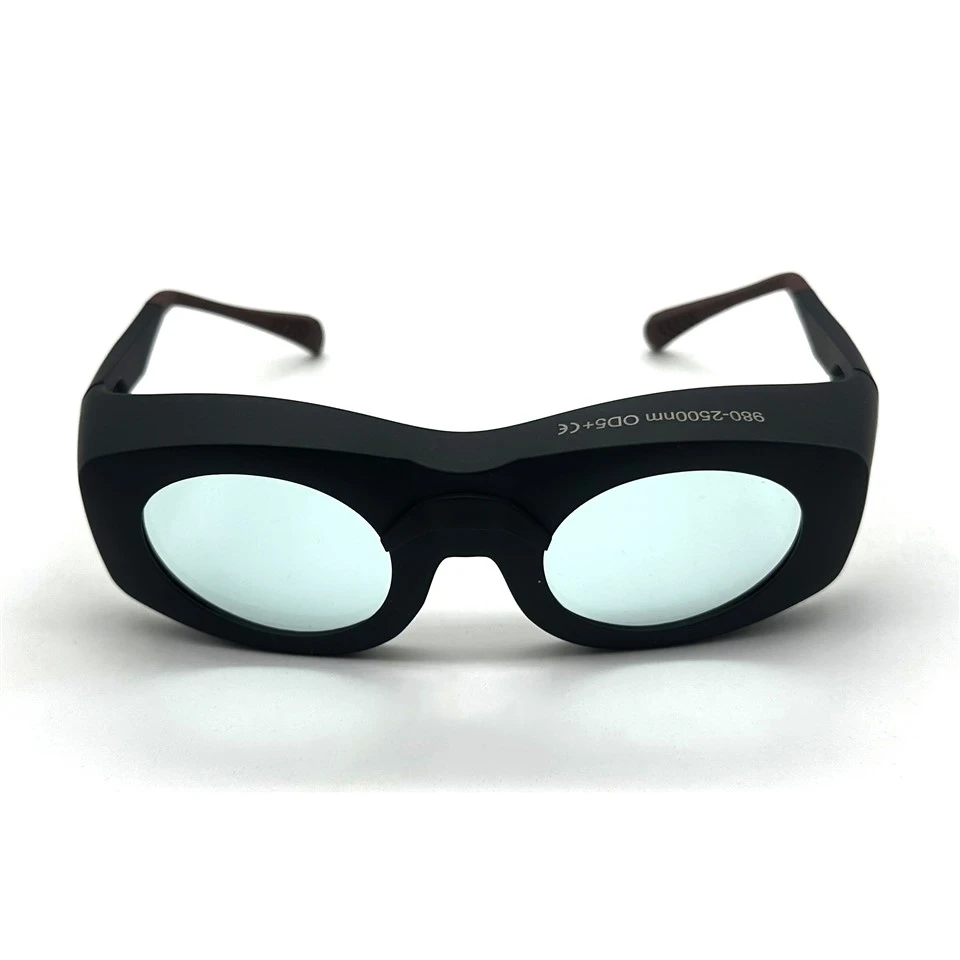
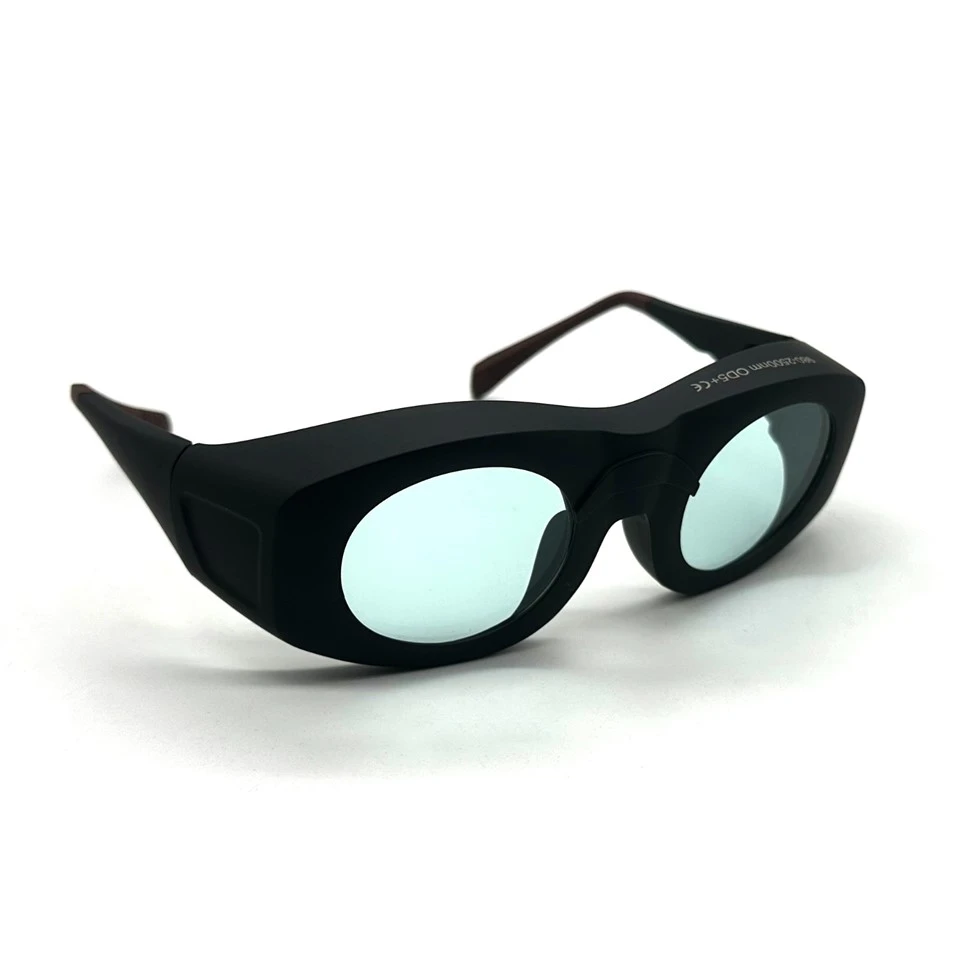
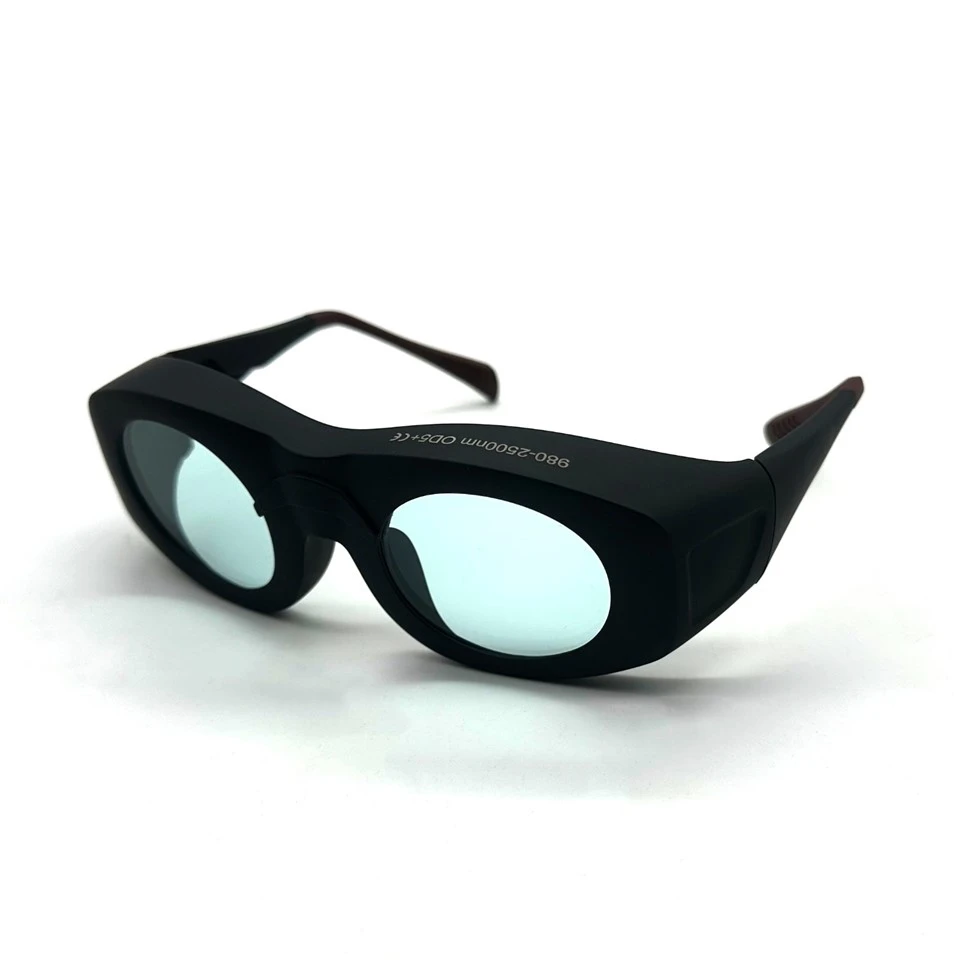
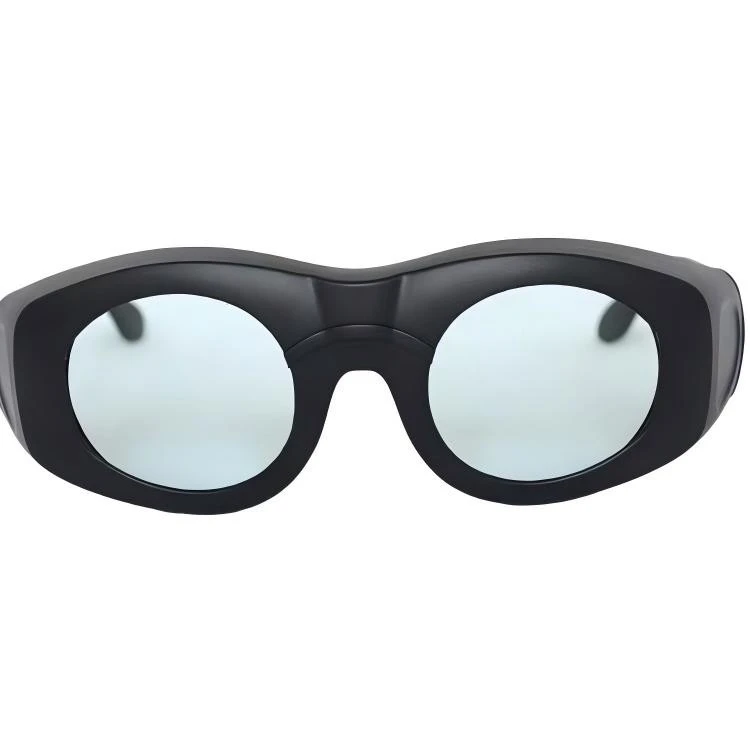
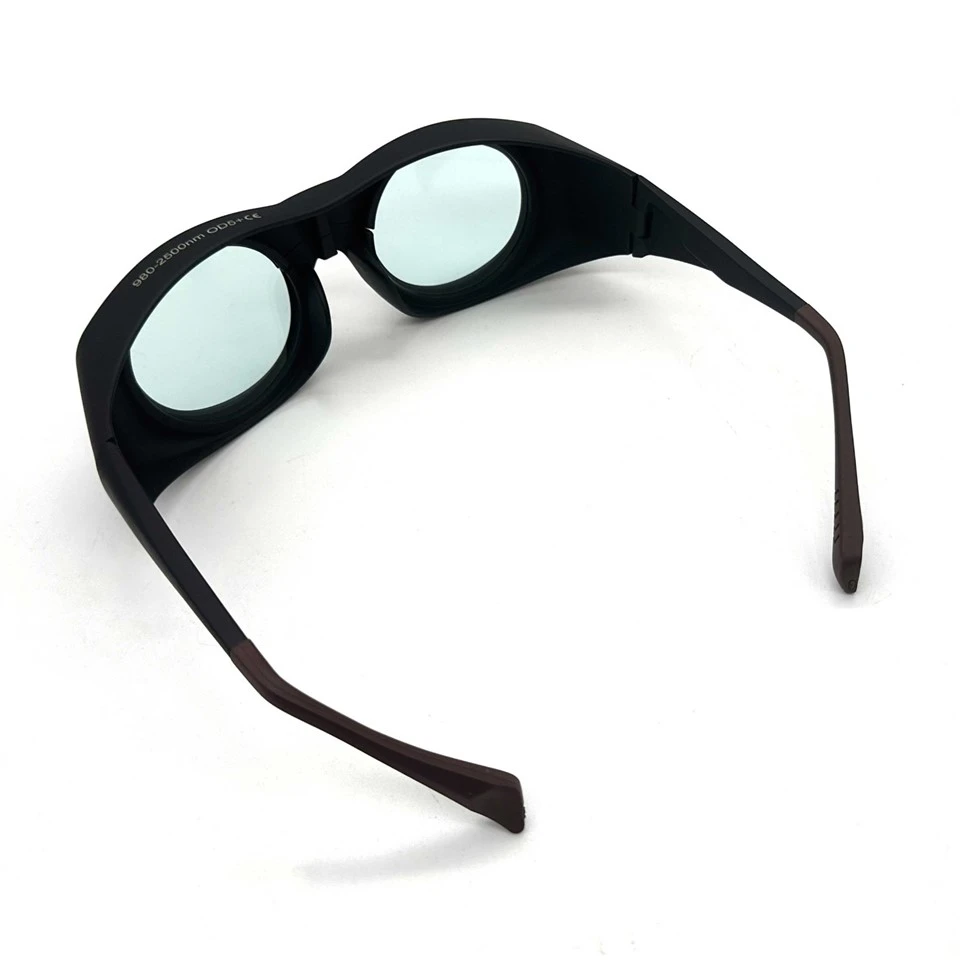
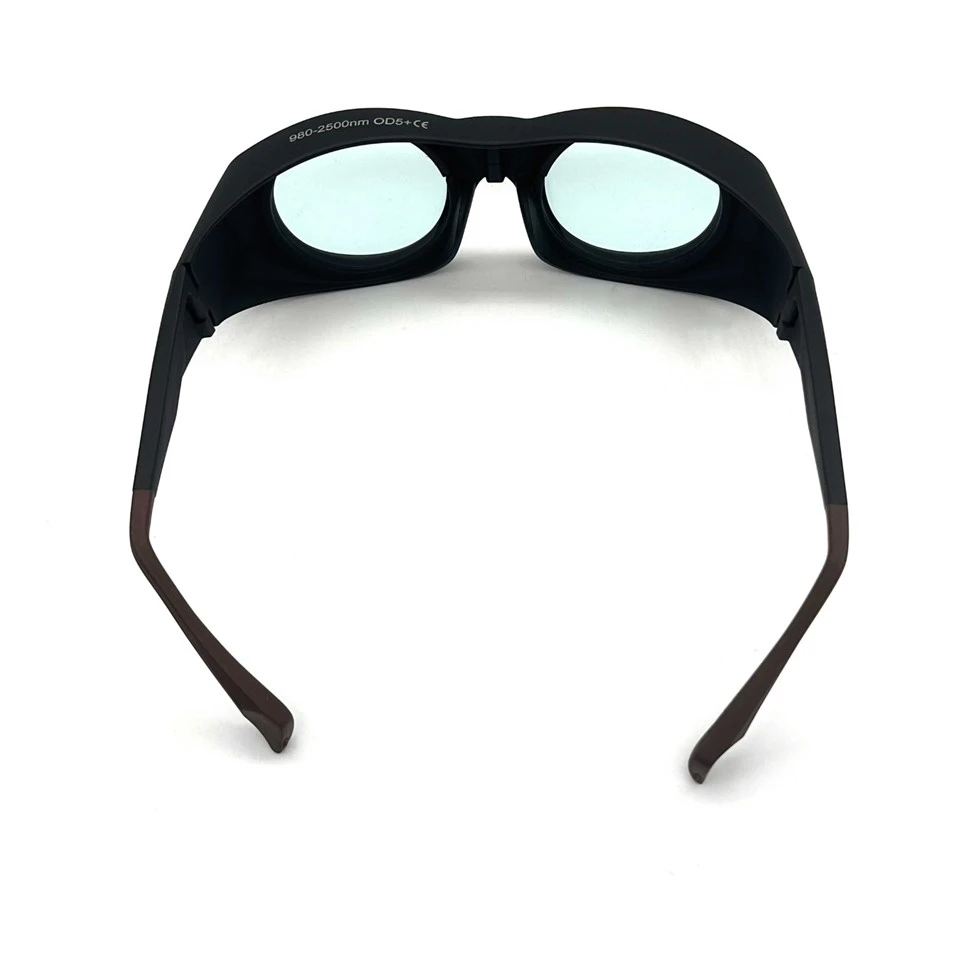
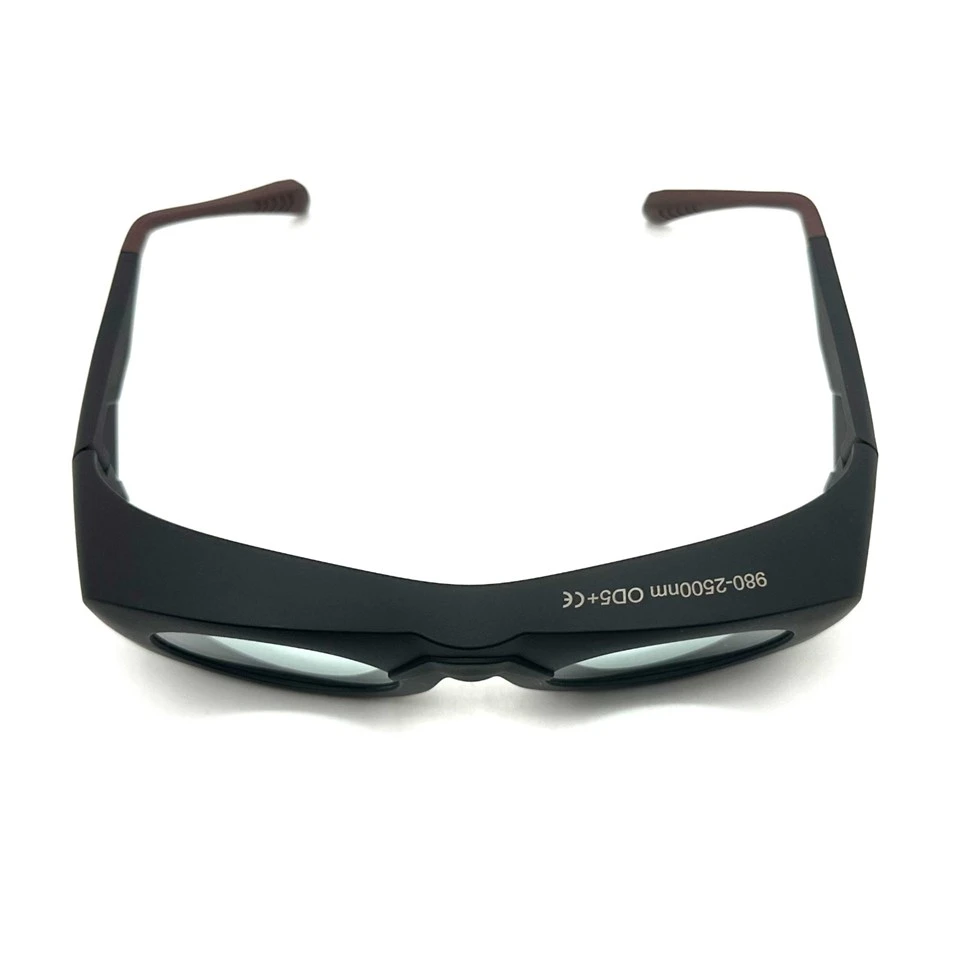
This 980–2500nm laser safety eyewear is designed for professionals working with multiple near-infrared and infrared laser platforms. It provides OD5+ protection across 980–2500nm while maintaining up to 80% visible light transmission, helping users keep a bright and clear view of the working area.
The broad protection range covers common wavelengths including 980nm, 1064nm, 1320nm, 1470nm, 1480nm, 1550nm, 1927nm and 1940nm, making this model suitable for environments where several compatible laser systems may be used.
Typical applications include dermatology and aesthetic laser procedures, medical laser systems, laboratory work, laser equipment servicing and selected industrial laser operations.
For facilities operating multiple NIR/IR wavelengths, the wide spectral coverage can simplify eyewear selection and reduce the need to switch between several wavelength-specific filters during routine work.

Why We Chose Optical Glass Lenses for This 980–2500nm Laser Safety Eyewear
For this 980–2500nm laser safety eyewear, we selected optical glass lenses because the product is designed not only to provide broad NIR/IR laser attenuation, but also to maintain high visual clarity for professional environments where operators need to see the working area, instruments, and equipment clearly.
Higher Visible-Light Transmission for Precision Work
Broad-spectrum laser filters can sometimes significantly darken the operator's field of view. This model is designed with optical glass to achieve up to 80% visible light transmission while maintaining OD5+ protection across the specified 980–2500nm range.
The higher VLT helps operators maintain clearer visibility of treatment areas, workpieces, control panels, instruments, and surrounding environments, making the eyewear particularly suitable for applications where visual accuracy is important.
Better Optical Clarity for Long-Term Professional Use
Optical glass provides excellent transparency and consistent optical quality. Compared with heavily tinted or lower-transmission filters, the clear glass lens helps reduce unnecessary visual distortion and supports more natural observation during precision laser work.
This is especially valuable for medical, laboratory, laser servicing, and equipment-integration applications where users may need to wear protective eyewear for extended periods.
Improved Scratch Resistance and Surface Durability
Laser safety eyewear used in clinics, laboratories, workshops, and industrial environments is frequently cleaned, handled, and reused. Optical glass offers strong resistance to surface scratching, helping preserve lens clarity over repeated use.
Maintaining a clean and undamaged viewing surface is particularly important for professional users who rely on consistent visibility during laser operation.
Stable Optical Performance Over Time
The optical characteristics of the protective filter are a critical part of laser eyewear performance. Glass filter materials offer excellent dimensional and optical stability, making them well suited for applications where consistent transmission and filtration characteristics are required over a long service life.
For customers who prioritize long-term optical performance rather than minimum eyewear weight, glass is therefore a practical choice.
Designed for Users Who Value Protection and Visibility
We chose glass for this model because its intended users often need more than wavelength coverage alone. They also need:
- broad 980–2500nm NIR/IR protection;
- OD5+ attenuation;
- high visible-light transmission;
- clear observation of the working area;
- good scratch resistance;
- and durable optical performance for repeated professional use.
For applications where lightweight construction or high-impact resistance is the primary priority, a polycarbonate filter may be a better choice. However, when optical clarity, high VLT, surface durability, and long-term filter stability are more important, this optical glass configuration offers a stronger fit.

Why Can These 980–2500nm Laser Safety Glasses Reach 80% VLT?
If you've shopped around for near‑infrared laser safety eyewear, you've probably noticed a common trade‑off: solid laser blocking often comes with dark, heavily‑tinted lenses that cut down your field of view. Our 980‑2500nm laser safety glasses break that pattern, delivering OD5+ laser protection paired with a high visible light transmission (VLT) reaching 80%. Many buyers wonder how a safety lens can keep operators safe yet stay so transparent. It all boils down to how the built‑in optical filter works.
Standard visible light sits within the 380nm‑780nm spectrum. This pair of laser safety glasses targets laser threats starting from 980 nm, covering near‑infrared through mid‑infrared bands up to 2500 nm. Since its optical filter is engineered specifically for NIR and IR laser wavelengths, it does not need to soak up large volumes of visible light to hit the required optical density rating.
What this means for end‑users on the shop floor: plenty of natural and workspace light passes straight through the lens, while hazardous laser energy across the full 980‑2500nm range gets heavily attenuated. Operators get crisp, bright vision for setup, part alignment and general workstation observation, without sacrificing reliable OD5+ laser eye protection.
Selective NIR and IR Filtering
The optical glass filter is designed to provide strong attenuation in the infrared region rather than simply making the entire lens darker.
This is important for applications involving wavelengths such as 980nm, 1064nm, 1550nm, 1927nm, 1940nm and 2100nm, where the main laser hazard is outside the visible spectrum.
By controlling transmission in the required infrared wavelengths while maintaining higher transmission through the visible spectrum, the filter can combine:
- 980–2500nm wavelength protection
- OD5+ optical density
- up to 80% visible light transmission
- clear optical glass lenses
This balance is especially useful when operators need laser protection but still need a bright, clear field of view.
Why Optical Glass Helps Maintain High Light Transmission
The glass lens is not selected simply because it is more durable. It also provides good optical transparency and stable transmission characteristics.
For this model, the optical glass filter is designed so that the protective attenuation is concentrated in the required NIR/IR region, while much of the visible spectrum remains relatively transparent.
As a result, the wearer does not need to look through an unnecessarily dark filter when working with infrared laser systems.
What Does 80% VLT Mean for the User?
High VLT is particularly useful in professional environments where clear vision is part of the working process.
For example, users may need to:
- observe a treatment area clearly;
- inspect a workpiece or laser processing area;
- read machine displays and control panels;
- identify positioning marks;
- work in laboratories or indoor environments with limited ambient light.
For these applications, high-VLT laser safety glasses can offer a more natural viewing experience than heavily tinted protective eyewear.
This makes the 980–2500nm model particularly suitable for users who need a combination of broad infrared laser protection and good visible-light transmission.
Protection Comes First
A high VLT does not mean lower protection by itself. What matters is whether the eyewear provides the required optical density at the laser wavelength being used.
This model is specified for OD5+ protection from 980–2500nm, but the correct laser safety eyewear should still be selected according to the laser wavelength, power or energy, operating mode and required protection level.
If you are unsure whether these 980–2500nm laser safety glasses are suitable for your laser system, provide the laser wavelength and operating parameters for filter matching.
Is This 980–2500nm Laser Safety Eyewear the Right Choice for Your Application?
Not every laser safety filter is designed for the same working environment. This 980–2500nm glass lens laser safety eyewear is a better fit when users need broad NIR/IR wavelength coverage together with high visible light transmission and durable optical performance.
Choose This Model If You Work With Multiple NIR or IR Laser Wavelengths
This eyewear covers a broad 980–2500nm protection range, making it suitable for facilities that operate more than one compatible near-infrared or infrared laser system.
Instead of selecting a separate pair of eyewear for every wavelength, users working with systems around 980nm, 1064nm, 1550nm, 1927nm, 1940nm or 2100nm may be able to use one broader-range filter, provided the required optical density is appropriate for each laser.
This makes the model especially relevant for:
- medical and aesthetic laser clinics;
- laser equipment demonstration centers;
- laboratories;
- service engineers;
- laser system integrators;
distributors supplying multiple laser platforms.
Choose This Model If Clear Vision Is a Priority
Some laser safety filters provide the required protection but noticeably darken the working environment.
With up to 80% visible light transmission, this model is designed for users who still need to clearly see treatment areas, workpieces, instruments, displays and surrounding objects while wearing protective eyewear.
For clinical, laboratory and precision laser work, the combination of OD5+ infrared laser protection and high VLT can make the eyewear easier to use during tasks that depend on visual accuracy.
Choose This Model If You Prefer Optical Glass for Repeated Professional Use
The optical glass lens is well suited to users who value clear optical transmission, scratch resistance and long-term surface durability.
This can be useful in professional environments where eyewear is frequently handled, cleaned and reused.
For clinics, laboratories and laser equipment facilities, maintaining a clear lens surface over repeated use can be just as important as the initial optical performance.
When Should You Consider Another Laser Safety Filter?
This model is not intended to replace every type of laser protective eyewear.
A different filter may be more appropriate when:
- your laser wavelength is below 980nm;
- protection for visible wavelengths such as 532nm is required;
- your laser requires a higher optical density than OD5+;
- your application requires a specific certification or LB rating not provided by this model;
- lightweight eyewear is more important than the optical and scratch-resistant characteristics of glass;
- the laser system requires protection outside the 980–2500nm range.
Choosing laser safety eyewear should therefore be based on the actual laser parameters rather than wavelength coverage alone.
Need Help Comparing Laser Safety Filters?
If you are deciding between this 980–2500nm OD5+ glass lens model and another laser safety filter, send us your laser wavelength, output power or pulse energy, operating mode and application.
JTBYShield can help compare suitable filter options based on your laser system and required protection level. For OEM or project-based orders, we can also discuss frame options, logo branding and customized packaging according to your purchasing requirements.
This allows equipment manufacturers, medical laser suppliers and distributors to select the appropriate laser safety eyewear before moving forward with samples or bulk orders.
Hot Tags: 980–2500nm Glass Lens Laser Safety Glasses for High-Power Infrared Laser Protection, China, manufacturers, suppliers, factory, customized, wholesale, best, cheap, professional, for sale, near me, 10600nm CO2 Laser Safety Glasses, BGR Laser Blocking Goggles, IPL Hair Removal Safety Glasses, Laser Safety Glasses 450nm, Red Laser Protection Glasses, Safety Glasses For Green Laser


