

Products overview
Lightweight Protection with a Wide, Unobstructed View
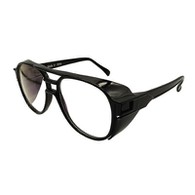
Designed for professionals who value both comfort and visibility, the Acrylic Lead Radiation Glasses A combine a minimalist rimless frame with high-quality lead acrylic lenses to deliver dependable radiation protection during X-ray procedures. With a 0.5mmPb lead equivalency, these glasses help reduce exposure to scatter radiation while maintaining a lightweight feel throughout the workday.
The sleek, open-frame design provides a modern appearance and a broad field of vision, making them well suited for demanding clinical environments.
Engineered for Daily Performance
Medical professionals often wear protective eyewear for extended periods. Acrylic Lead Radiation Glasses A are designed to reduce unnecessary weight while maintaining reliable shielding performance. The streamlined construction allows users to move naturally between patients, monitors, and equipment without feeling restricted.
Lead acrylic lenses also offer excellent impact resistance, making them a practical choice for busy healthcare settings.
Why Lead Acrylic Matters for Lightweight Radiation Eyewear
For radiation protective eyewear used throughout the working day, shielding performance is only one part of the selection process. The weight of the lenses also affects how the glasses feel after repeated or extended wear.
Using lead acrylic lenses helps create a more lightweight radiation eyewear design while maintaining the specified 0.5mmPb radiation protection required for the product.
This makes lead acrylic particularly relevant for healthcare professionals who need lightweight X-ray protective eyewear for routine daily imaging work.
Lower Lens Weight Reduces the Front-Heavy Feeling
The lenses account for a significant part of the total weight of radiation protective glasses.
When the lens material is heavy, the eyewear can feel front-loaded, placing more downward force on the nose bridge and increasing the tendency for the glasses to slide during use.
A lead acrylic radiation glasses design can help reduce this front-heavy feeling by lowering the weight concentrated at the front of the frame.
For users who repeatedly put on and remove protective eyewear throughout the day, this difference can have a noticeable effect on overall wearing comfort.
Less Pressure Around the Nose Bridge
Radiation glasses that are too heavy at the front can create pressure around the nose bridge during extended wear.
This becomes particularly relevant when eyewear is worn during:
- repeated X-ray examinations
- routine radiography workflows
- dental imaging procedures
- veterinary X-ray work
- fluoroscopy support
- other daily diagnostic imaging tasks
By reducing lens weight, lightweight lead acrylic glasses can help improve the balance between shielding performance and pressure around the nose area.
The actual comfort still depends on the complete frame design, nose bridge shape, fit, and total eyewear weight.
Better Weight Balance Can Improve Temple Comfort
Eyewear weight is not supported by the nose alone.
The temples also help stabilize the glasses, so a front-heavy design may require additional pressure around the sides of the head to keep the eyewear in position.
A lightweight lens configuration can make it easier to achieve a more balanced fit between:
- the nose bridge
- temples
- ear contact points
- front lens section
For professionals who wear 0.5mmPb radiation glasses for extended periods, this balance can be just as important as the Pb-equivalent specification itself.
Designed for Extended Daily Wear
Many X-ray professionals do not need protective eyewear for only one short procedure. Glasses may be worn repeatedly throughout a shift or kept on during a series of imaging examinations.
In these workflows, small differences in eyewear weight can become more noticeable over time.
The combination of 0.5mmPb lead acrylic lenses and a lightweight semi-rimless frame is therefore designed around users who prioritize:
- reduced eyewear weight
- less front-heavy pressure
- stable everyday fit
- open visual field
- comfort during repeated wear
This makes the eyewear especially suitable for routine environments where practical daily use is as important as the shielding specification.
Lightweight Does Not Mean Reduced Shielding Specification
The purpose of using lead acrylic is not simply to make the glasses lighter.
The lens material must still provide the specified radiation attenuation performance.
For this model, the lenses are specified at 0.5mmPb lead equivalency, combining a defined X-ray shielding level with the weight advantages of acrylic-based radiation protection lenses.
This creates a different product priority from heavier lead glass eyewear designed around higher Pb options or more extensive shielding coverage.
A Practical Balance for Routine X-Ray Procedures
For routine X-ray professionals, selecting protective eyewear is often a balance between:
- Pb equivalency
- total eyewear weight
- lens coverage
- field of view
- nose bridge comfort
- temple pressure
- frequency of use
The 0.5mmPb lead acrylic radiation glasses are designed around this balance.
Rather than maximizing lens weight or shielding thickness, the product focuses on providing a practical combination of lightweight radiation protection, clear visibility, and extended-wear comfort for routine daily X-ray procedures.


Why a Semi-Rimless Design Boosts Field of View
For medical staff wearing radiation protective glasses during daily X-ray operations, unobstructed vision carries equal importance to reliable radiation shielding. Bulky full-rim frames easily block downward and peripheral sightlines. This creates distractions when practitioners constantly shift focus between patients, imaging monitors, control panels and surrounding equipment.
These 0.5mmPb lead acrylic radiation glasses adopt a semi-rimless structure. The design cuts redundant frame barriers at the bottom of lenses to deliver a more open field of view for clinical work.
Reduced Frame Blockage on Lenses
Traditional full-rim frames wrap lenses with solid borders. Although the structure offers stable support, it occupies portions of the peripheral vision range.
The semi-rimless radiation glasses design removes excess frame material along the lower lens edge, maximizing the usable transparent area of lead acrylic lenses without visual obstruction.
This advantage shines when users frequently switch observation targets, including:
- Patients under examination
- X-ray positioning devices
- Imaging display monitors
- Operation control panels
- Surgical and diagnostic instruments
- Surrounding work zones
Within standard radiology workflows, minimizing frame interference helps operators feel less confined visually.
Enhanced Downward Vision for Clinical Operations
Medical practitioners frequently need to glance down without turning their heads fully. Common scenarios include:
- Adjusting patient posture and positioning
- Operating equipment control buttons
- Organizing imaging auxiliary accessories
- Checking diagnostic instruments
- Moving between patients and workstations
Compared with styles fitted with thick lower rims, semi-rimless X-ray protective eyewear features an open bottom lens area to maintain a broader downward field of view. This benefit stands out for users who wear radiation protection eyewear continuously throughout shifts.
Expanded Visual Range for General X-Ray Applications
A broad field of view brings notable advantages in general radiography, dental radiology, veterinary X-ray and other diagnostic settings. Operators need to simultaneously monitor imaging procedures and conditions within the whole workspace.
Paired with high-transmission lead acrylic lenses, the streamlined frame maintains certified 0.5mmPb radiation shielding performance, while delivering a more open viewing experience.
This eyewear is ideal for professionals prioritizing:
- Wide visual coverage
- Crisp forward sight
- Optimized downward visibility
- Less frame visual interference
- Lightweight all-day wearing experience
Lightweight Frame Improves Long-Term Visual Comfort
The semi-rimless layout also enables an overall lightweight build. Cutting unnecessary frame components around lenses lowers visual bulk and delivers balanced weight distribution.
Combined with low-density lead acrylic lenses, this pair of radiation protective glasses takes both viewing experience and prolonged wear comfort into consideration, instead of focusing merely on lead equivalent shielding parameters.
Balance Field of View and Radiation Protection
A wider field of view cannot replace adequate radiation shielding performance.
When sourcing lightweight radiation protection glasses, purchasers need to evaluate two core factors:
- The degree of unobstructed vision provided by the frame
- The effective eye coverage of shielding lenses
For conventional X-ray working environments, the optimal solution strikes a practical balance among 0.5mmPb eye radiation protection, lightweight structure and open field of view.
This semi-rimless model caters to users who demand broad viewing scope and reduced frame obstruction during daily radiographic work.
Designed for Radiation Protection in Repeated X-Ray Workflows
Interventional Radiology
Interventional radiology procedures often require clinicians to remain close to the patient and fluoroscopy equipment for extended periods. During these workflows, radiation protective eyewear may need to be worn continuously while the operator moves between the patient, imaging monitors, instruments, and control equipment.
For users who prioritize lower eyewear weight during long procedures, 0.5mmPb lead acrylic radiation glasses provide a practical balance between radiation shielding, visibility, and wearing comfort.
The lightweight lead acrylic lens design helps reduce the front-heavy feeling commonly associated with denser protective eyewear, which can be particularly relevant during procedures that require prolonged use.
In interventional radiology environments, this model is suited to users who value:
- lightweight eye protection for extended wear
- 0.5mmPb lead-equivalent lenses
- a wide field of view
- reduced frame obstruction
- comfortable movement between the patient and imaging monitors
- practical daily radiation protection
For procedures requiring higher Pb equivalency or more extensive lateral coverage, a dedicated interventional radiation glasses model may be more appropriate.
Fluoroscopy Rooms
Fluoroscopy rooms can involve repeated X-ray use throughout the working day, making consistent use of personal radiation protection equipment an important part of routine workflow.
Healthcare professionals may wear X-ray protective eyewear during multiple examinations or procedures rather than for a single short exposure.
In these environments, lightweight construction can help make protective glasses easier to wear repeatedly during daily clinical work.
The combination of 0.5mmPb lead acrylic lenses and a semi-rimless frame makes this model particularly suitable where users need:
- routine scatter radiation protection
- repeated eyewear use throughout the day
- clear visibility of monitors and equipment
- lightweight wearing comfort
- an open working field of view
- simple transition between imaging tasks
For fluoroscopy staff who do not require a heavier, higher-Pb eyewear configuration, lightweight radiation protection glasses can offer a practical option for routine occupational use.
Radiation Protection Application Experience
Radiation protective eyewear should be selected according to the actual working environment rather than Pb equivalency alone.
In both interventional radiology and fluoroscopy rooms, practical factors such as procedure duration, frequency of X-ray use, operator position, eyewear fit, field of view, and wearing comfort can influence which model is most appropriate.
For routine and extended-use applications, we consider several factors when configuring lead acrylic radiation glasses, including:
- required lead equivalency
- lens material
- total eyewear weight
- frame geometry
- field of view
- user wearing time
- frequency of daily procedures
- required side coverage
This application-based approach helps hospitals, imaging departments, and medical distributors select radiation protective eyewear according to the actual clinical workflow rather than choosing a model based only on a single shielding specification.
Lead Acrylic Lens and Frame Quality Control
For 0.5mmPb lead acrylic radiation glasses, product quality depends on more than the radiation shielding specification of the lenses. Optical condition, lens dimensions, frame alignment, assembly stability, and overall weight balance all affect how the eyewear performs during routine daily use.
Our quality control process therefore evaluates both the lead acrylic lenses and the finished eyewear assembly before shipment.
Lead Acrylic Lens Inspection
The lead acrylic lenses are the primary radiation shielding component of the eyewear.
Before and during assembly, the lenses are checked for factors that may affect their appearance, fit, or usability, including:
- correct lens material
- specified 0.5mmPb configuration
- lens dimensions
- surface condition
- scratches or visible defects
- edge condition
- optical appearance
- left and right lens consistency
For lightweight radiation protective eyewear, lens consistency is particularly important because both lenses must fit accurately into the semi-rimless frame while maintaining a balanced visual field.
Verification of the 0.5mmPb Lens Specification
The radiation shielding specification is checked against the confirmed product configuration.
For this model, the lead acrylic lenses are specified at 0.5mmPb, providing the defined shielding level used for the finished eyewear.
Where applicable, relevant technical or radiation shielding documentation can be reviewed as part of B2B procurement requirements.
The Pb-equivalent specification should be considered separately from the physical thickness of the acrylic lens and interpreted according to the relevant test conditions.
Optical Quality for a Clear Working Field of View
Radiation protective eyewear must provide shielding without introducing unnecessary visual interference.
For this reason, visual inspection of the clear lead acrylic lenses is an important part of quality control.
Inspection can include checking for:
- visible surface marks
- irregularities in the viewing area
- lens symmetry
- unacceptable visual distortion
- clarity across the main field of view
This is especially relevant for a semi-rimless model designed around a broad, unobstructed working field of view.
Semi-Rimless Frame Assembly Inspection
The semi-rimless structure requires accurate assembly because the frame provides less material around the lower edge of the lens than a traditional full-rim design.
During assembly, key points can include:
- lens positioning
- bridge alignment
- temple symmetry
- hinge movement
- lens retention
- frame opening and closing
- overall frame geometry
Correct alignment helps the semi-rimless radiation glasses sit more evenly on the face and keeps the clear viewing area in the intended position.
Weight Balance and Wearing Stability
Because this model is designed as lightweight X-ray protective eyewear, total weight is only part of the comfort equation.
How the weight is distributed between the lenses, nose bridge, and temples also affects the wearing experience.
Final assembly checks therefore consider:
- front-to-back balance
- nose bridge position
- left-right frame symmetry
- temple alignment
- lens positioning
- general wearing stability
The objective is to avoid an unnecessarily front-heavy configuration while maintaining secure positioning during normal movement.
Final Inspection Before Packing
Before shipment, each pair of 0.5mmPb lead acrylic radiation glasses can be checked against the confirmed product specification.
Final quality control may include:
- lead acrylic lens specification
- lens surface condition
- frame model
- frame alignment
- hinge function
- semi-rimless assembly
- overall appearance
- accessories
- labeling
- packaging
For hospital, distributor, and OEM orders, batch consistency can also be checked so that the supplied radiation protective eyewear follows the same confirmed configuration across the order.
By combining lead acrylic lens inspection with frame assembly and fit-related quality control, the finished eyewear can be evaluated as a complete wearable radiation protection product rather than only as a pair of shielding lenses.
FAQ
1. Why choose lead acrylic lenses instead of traditional lead glass lenses?
Lead acrylic lenses are generally lighter than traditional lead glass lenses, which can help reduce the front-heavy feeling of radiation protective eyewear. For professionals who wear X-ray protective glasses repeatedly during the day, lower lens weight can improve overall comfort around the nose bridge and temples.
This makes lead acrylic radiation glasses particularly suitable for users who prioritize lightweight daily wear.
2. Does the semi-rimless frame affect radiation protection?
The semi-rimless design mainly affects frame structure and field of view rather than the specified shielding performance of the lenses.
The 0.5mmPb lead acrylic lenses remain the primary radiation shielding component, while the reduced lower frame helps create a more open visual field.
Buyers should still consider total lens coverage and frame fit when selecting radiation protective eyewear.
3. Are these glasses suitable for extended daily wear?
They are designed with extended and repeated wear in mind. The combination of lightweight lead acrylic lenses and a semi-rimless frame helps reduce unnecessary front weight and visual obstruction.
Actual comfort depends on individual face shape, nose bridge fit, temple pressure, and total wearing time, but this model is positioned for professionals who need lightweight X-ray protective eyewear for routine daily use.
4. Are lead acrylic lenses easier to scratch than lead glass?
Acrylic-based lenses require appropriate surface care and should be cleaned with non-abrasive materials. Sharp objects, rough cloths, and unsuitable cleaning agents may damage the lens surface.
For this reason, lead acrylic radiation glasses should be stored in a protective case when not in use and cleaned according to the recommended care instructions.
5. What does 0.5mmPb mean for these radiation glasses?
The 0.5mmPb lead equivalency describes the radiation attenuation performance of the protective lenses relative to a specified thickness of lead under defined test conditions.
It does not describe the physical thickness of the acrylic lens.
For B2B procurement, the Pb-equivalent specification should ideally be reviewed together with the applicable technical or test documentation.
6. Who is this lightweight radiation glasses model best suited for?
This model is best suited to users who prioritize:
- 0.5mmPb radiation protection
- reduced eyewear weight
- semi-rimless construction
- wide field of view
- repeated daily wear
- routine X-ray work
Typical users may include staff in general radiography, dental imaging, veterinary X-ray, fluoroscopy support, and other medical imaging environments..
Hot Tags: 0.5mmpb acrylic lead radiation glasses a | lightweight x-ray protective eyewear, China, manufacturers, suppliers, factory, customized, wholesale, best, cheap, professional, for sale, near me