



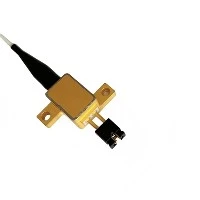
The He-Ne laser, operating at the iconic 632.8nm red wavelength, is a ubiquitous tool found in educational demonstrations, research laboratories, and certain alignment applications. A model emitting 2.3 milliwatts (mW) represents a common power level for such devices. Determining its precise IEC safety classification is essential for implementing appropriate protective measures, ensuring user safety, and fulfilling legal compliance obligations across global markets.

1. Core Framework of the IEC 60825 Standard
IEC 60825-1 establishes a hazard classification system based on the laser radiation's potential to cause biological damage, primarily to the eye and skin. The classification is fundamentally determined by comparing the laser's Accessible Emission Limit (AEL) for a specific class against its measured Accessible Emission Level. The AEL is the maximum power (for continuous-wave lasers) or energy (for pulsed lasers) permitted for a particular class under defined measurement conditions.
The Classification Hierarchy (from least to most hazardous):
Class 1: Safe under all reasonably foreseeable conditions of operation. Emissions are below the AEL for Class 1 for all exposure durations.
Classes 1M & 2M: Safe for the unaided eye due to low power or large beam divergence, but potentially hazardous when viewed with optical instruments (e.g., binoculars, microscopes) or for Class 2M, when the beam is condensed on the eye.
Class 2: Applies only to visible lasers (400-700 nm). Safe for momentary, accidental exposure (up to 0.25 seconds, the human aversion response time). The AEL for CW Class 2 lasers is 1 mW.
Class 3R: "Reduced Risk" class for lasers (visible and some invisible) with accessible emissions 1 to 5 times the AEL of Class 2 (for visible) or Class 1 (for invisible). While posing a higher risk of injury than Class 2, the risk is limited, and less stringent manufacturing requirements apply than for Class 3B.
Class 3B: Hazardous for direct intrabeam viewing and specular reflections. Diffuse reflections are usually safe. Requires strict engineering controls (key switch, safety interlocks, emission indicators).
Class 4: High-power lasers capable of causing immediate skin injury and eye damage from direct, diffuse, or reflected beams. They present a fire hazard and require the most stringent controls.
Key Parameters for Classification: Wavelength, output power/energy, emission duration, pulse characteristics, beam divergence, and source size are all critical factors in determining the correct class.
2. Technical Analysis of the Helium-Neon Laser in Question
The laser under assessment possesses defining characteristics crucial for its classification:
Wavelength: 632.8 nm: This places it squarely within the visible spectrum (red). The human eye is highly transparent to this wavelength, and the light is perceived as bright red, triggering the natural aversion response (blink reflex, ~0.25 s).
Output Power: 2.3 mW (Continuous Wave): This is a measured, steady-state power level. The CW nature simplifies classification, as it does not involve complex pulse energy calculations.
3. Classification Determination for the 632.8nm 2.3mW Laser
The process involves a direct comparison against the AELs defined in IEC 60825-1 for visible, continuous-wave lasers.
Comparison with Class 2 AEL: For visible CW lasers, the Class 2 AEL is 1 mW. The laser's output of 2.3 mW clearly exceeds this limit. Therefore, it cannot be classified as Class 2.
Comparison with Class 3R AEL: For visible CW lasers, the Class 3R AEL is defined as 5 times the Class 2 AEL. This calculates to 5 mW. The laser's output of 2.3 mW is greater than 1 mW but less than 5 mW.
Consideration of Other Factors:
Wavelength Correction: No wavelength-dependent correction factors apply differently to Classes 2 and 3R within the visible band for this power calculation.
Measurement Conditions: The 2.3 mW value is assumed to be the accessible emission level as defined by the standard (worst-case, post-collimating optics output).
Aversion Response: For Class 3R, the protection afforded by the aversion response is still considered, though with less margin than for Class 2.
Conclusion of Classification: Based on the IEC 60825-1 framework, a continuous-wave, 632.8nm helium-neon laser with an accessible emission power of 2.3 mW is classified as a Class 3R laser product.
4. Safety Requirements and Management Measures for Class 3R Lasers
While Class 3R represents a "reduced risk" category compared to 3B and 4, it is not "safe" like Class 2. Specific requirements and prudent safety practices apply:
Manufacturer Requirements (per IEC 60825):
Labeling: Must bear a warning label with the wording "LASER RADIATION" or "LASER LIGHT," the Class 3R designation, and a triangular warning symbol (black sunburst on yellow background).
User Information: The manual must contain clear safety instructions, including warnings against direct eye exposure.
User Safety Practices (Strongly Recommended):
Never intentionally stare into the beam or view it with optical instruments.
Terminate the beam path. Always use a beam stop or a properly shielded, non-reflective target to absorb the beam at the end of its useful path.
Control the environment. Keep the beam path above or below eye level in occupied areas. Remove or cover reflective surfaces (like jewelry, watches, or glossy tools) from the beam path.
Assign a Laser Safety Officer (LSO). For institutional settings (labs, universities), an LSO should oversee the use of Class 3R and higher lasers, ensuring safe procedures are followed.
Provide user training. Anyone operating a Class 3R laser should receive basic laser safety training covering the specific hazards and controls for that device.
5. Practical Considerations for Common Applications
This type of HeNe laser is prevalent in specific settings:
Education & Research: Used in physics labs for optics demonstrations (interference, diffraction), alignment of optical benches, and as a light source in holography or spectroscopy setups. In these settings, strict supervision and clear safety protocols are paramount.
Low-Power Alignment & Pointing: Historically used in construction or manufacturing for low-power alignment. This application is now largely superseded by Class 2 red diode lasers.
Personal Protection Equipment (PPE): For routine use of a 2.3mW HeNe laser, dedicated laser safety goggles are generally not required if administrative and procedural controls are strictly followed. However, if there is a foreseeable risk of prolonged intrabeam viewing (e.g., during complex alignment procedures), goggles with appropriate Optical Density (OD) for 632.8nm may be prudent.
6. Conclusion and Final Recommendations
Definitive Conclusion: A continuous-wave helium-neon laser emitting at 632.8 nm with a power of 2.3 mW is classified as a Class 3R laser according to IEC 60825-1.
While its risk is lower than that of higher-power classes, it presents a definite eye hazard if viewed directly. Its classification necessitates a higher level of safety awareness than a common Class 2 laser pointer. Users must:
Respect the warning labels and treat the device as a potential hazard.
Implement and follow safe operating procedures, primarily focused on avoiding any intrabeam eye exposure.
Ensure the beam is always properly terminated in a controlled environment.
Adherence to these principles allows for the productive and safe utilization of this classic and valuable optical tool.
Contact information:
If you have any ideas, feel free to talk to us. No matter where our customers are and what our requirements are, we will follow our goal to provide our customers with high quality, low prices, and the best service.
 Email:info@loshield.com; laser@loshield.com
 Tel:0086-18092277517; 0086-17392801246
 Fax: 86-29-81323155
 Wechat:0086-18092277517; 0086-17392801246


