



Bird activities pose significant threats to the safety and reliability of substations, leading to issues such as bird-caused flashovers, short circuits from nesting, and physical damage to equipment. Traditional deterrent methods often suffer from limitations like habituation, diminishing effectiveness, and high maintenance. This paper introduces the solar-powered laser bird repellent as an automated, green, and efficient solution.

Part 1: Technical Principles of Solar-Powered Laser Bird Repellents
Core Deterrence Mechanism
Visual Threat Principle: Birds perceive the moving, high-intensity green laser beam as an unpredictable physical threat or barrier, triggering an instinctive flight response from the irradiated area.
Non-Lethal and Anti-Habituation: The technology employs "gentle deterrence," causing no physical harm. By utilizing randomized scanning patterns and paths, it effectively prevents birds from becoming accustomed to the stimulus.
System Components and Functionality
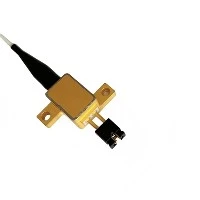
Laser Emission Module: The core component, typically using eye-safe, low-power Class 3R or similar green laser diodes (wavelength ~532nm), optimized for avian visual sensitivity.
Intelligent Control Module: An embedded microprocessor pre-programmed with multiple scanning modes (sector, circular, random), customizable schedules (dawn/dusk activation), and sensitivity settings.
Solar Power System: Comprising photovoltaic panels, a deep-cycle battery, and a charge controller. This ensures complete energy autonomy, making it ideal for remote or off-grid substation environments.
Housing and Mounting Structure: Engineered with robust, weatherproof (IP65 or higher) materials for protection against dust, water, and corrosion, along with versatile mounting brackets or poles.
Operational Characteristics
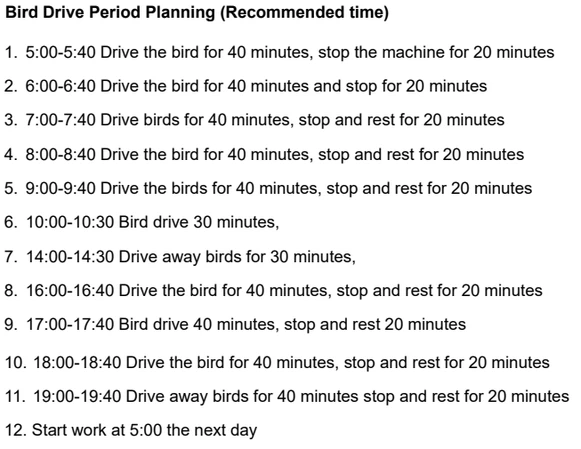
Fully Automated Operation: Functions autonomously based on pre-set schedules, typically during peak bird activity periods at dawn and dusk.
Smart Sensing (Optional): Advanced models integrate radar or passive infrared (PIR) sensors, enabling "on-demand" operation-activating only upon detecting bird presence, thereby optimizing energy use.
Remote Monitoring and Management: Network connectivity (4G/5G, Wi-Fi, LoRa) allows for remote configuration, real-time status monitoring (power levels, operational logs), fault alerts, and pattern updates via dedicated software or mobile applications.

Part 2: Advantages for Substation Application
Superior Deterrence Efficacy
Offers extensive coverage (thousands of square meters per unit) with programmable, systematic scanning that eliminates blind spots.
Delivers long-term effectiveness by overcoming the habituation problem associated with static or auditory deterrents.
Enhanced Safety and Economic Benefits
Improved Grid Reliability: Directly reduces bird-induced outages, flashovers, and equipment faults, ensuring a more stable power supply.
Lower Operational Expenditure (OPEX): Minimizes the need for frequent manual nest removal, line cleaning, and associated hazard-based repairs.
Extended Asset Lifespan: Reduces corrosive damage from bird droppings on insulators, conductors, and structural components.
Environmental Sustainability
Operates silently without chemical agents, eliminating noise pollution and environmental contamination.
Solar-powered operation aligns with the green development goals of modern utilities, reducing the carbon footprint of substation operations.
The non-lethal approach adheres to wildlife conservation principles and demonstrates corporate social responsibility.
Smart Integration and Data Capability
Easily integrates into existing Substation Automation Systems (SAS) or IoT platforms for unified facility management.
Generates operational data that can be analyzed to understand bird activity trends and refine overall avian management strategies.
Part 3: Key Considerations for Deployment in Substations
Pre-Deployment Planning and Site Survey
Critical Zone Identification: Target areas prone to bird issues: busbar configurations, insulator strings, transformer tops, disconnect switches, and outdoor control cabinet areas.
Strategic Layout Planning: Design device placement, height, and tilt angle based on substation topography, equipment layout, and primary bird flight paths to ensure overlapping coverage without gaps.
Laser Safety Assessment: Crucially, scanning paths must be programmed to avoid roads, maintenance walkways, control room windows, and neighboring properties. Compliance with laser safety standards (e.g., IEC 60825) is mandatory.
Installation and Commissioning
Professional Installation: Ensure secure mounting with optimal PV panel orientation for maximum solar gain.
Parameter Configuration: Calibrate operational schedules, laser intensity, scanning speed, and patterns according to local bird species and seasonal behavior.
Field Testing and Optimization: Conduct trials during active bird periods to fine-tune settings for maximum effectiveness.
Operation, Maintenance, and Management
Remote Monitoring: Utilize management software for daily oversight of system health, energy status, and activity logs.
Preventive Maintenance: Schedule regular cleaning of PV panels and laser lenses, inspection of connections and mechanical integrity, and software/firmware updates.
Contingency Planning: Maintain backup or complementary deterrent measures for use during extended periods of severe weather or device maintenance.
Part 4: Challenges, Mitigation Strategies, and Future Outlook
Current Challenges
Weather Dependencies: Extended rainy/cloudy periods can strain battery reserves; heavy fog or snow can scatter and attenuate laser beams.
Topographical Limitations: Dense equipment clusters or complex structures can create shielding zones difficult for the linear laser to reach.
Initial Capital Outlay: Higher upfront cost compared to simple physical deterrents like spikes, requiring a lifecycle cost-benefit analysis for justification.
Public Perception: Proactive communication is needed to educate the public and stakeholders about the eye-safe and non-harmful nature of the technology.
Mitigation and Future Trends
Technological Advancements: Integration of higher-efficiency PERC/PV cells, hybrid power systems (solar/wind), and multi-wavelength or dynamic pattern lasers for broader species efficacy.
Intelligence and Integration: Coupling with AI-powered cameras for species-specific identification and behavior-triggered response. Development of "Swarm" systems where multiple units communicate for coordinated area denial.
Multi-Modal Deterrence Systems: Future devices will likely combine lasers with conditional audible deterrents or drone-based patrols for a layered defense strategy.
System Integration & Standards: Deeper integration into Digital Twin platforms for predictive simulation and management. The development of industry-wide application guidelines will foster standardized and safe adoption.

Conclusion
Solar-powered laser bird repellents represent a paradigm shift in substation avian control, offering an intelligent, highly effective, sustainable, and automated solution. They directly address core operational challenges of safety, reliability, and cost while aligning with environmental stewardship goals. As technology evolves towards greater intelligence and integration, these systems are poised to become a standard component of the smart, resilient, and low-maintenance substation of the future, with applications extending to transmission lines, wind farms, and other critical infrastructure.
Contact information:
If you have any ideas, feel free to talk to us. No matter where our customers are and what our requirements are, we will follow our goal to provide our customers with high quality, low prices, and the best service.
 Email:info@loshield.com; laser@loshield.com
 Tel:0086-18092277517; 0086-17392801246
 Fax: 86-29-81323155
 Wechat:0086-18092277517; 0086-17392801246


