



Most people researching laser skin treatments focus entirely on skin-related outcomes: redness, healing time, and final texture improvements. What many clients and even new practitioners overlook is one critical, preventable risk: ocular damage from laser energy exposure. The short answer is clear: yes, unprotected laser skin treatments can absolutely damage the eyes, even when the laser is targeted only at your face or body skin.
Laser injuries do not only happen from direct, intentional staring at a laser beam. Scattered, reflected, and diffused laser light during routine skincare procedures poses genuine risks to eye tissue. All cosmetic laser devices used for resurfacing, hair removal, pigment correction, and anti-aging treatments emit concentrated, high-intensity light energy that interacts differently with delicate eye structures than human skin. Without strict, standardized safety protocols, temporary discomfort can quickly turn into permanent visual impairment.
Why Laser Skin Energy Harms Eye Tissue
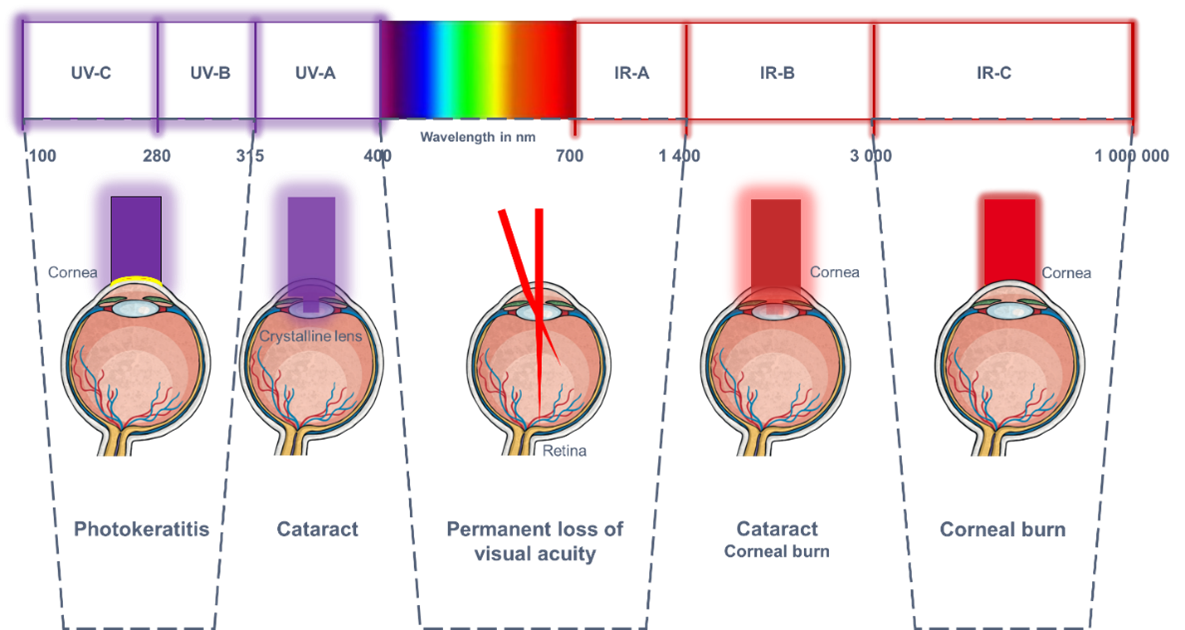
Human eyes are far more sensitive to concentrated light than the skin. Laser light operates at specific, consistent wavelengths designed to target precise skin layers. When this energy contacts eye structures-including the cornea, lens, and retina-it is absorbed rapidly with no natural protective barrier to neutralize it.
A common misconception is that only direct beam contact causes harm. In reality, most laser-related eye injuries in cosmetic settings stem fromscattered light bouncing off the skin's surface or reflective equipment during treatment. Even brief, indirect exposure adds strain and damage to vulnerable eye tissue. Most medical and cosmetic laser devices fall under high-risk laser classifications, requiring mandatory protective measures for everyone present in the treatment room.
Verified Eye Injuries From Unprotected Laser Exposure
All risks outlined below are documented in clinical cosmetic laser safety records and ophthalmic research, with no speculative or unproven outcomes included. Injuries fall into two clear categories: temporary reversible issues and permanent long-term damage.
Temporary Eye Conditions
These short-term issues commonly occur after mild unprotected laser exposure and require professional monitoring to avoid secondary complications. They include persistent glare sensitivity, lingering dark spots in the field of vision, blurred near or far vision, and mild corneal irritation or dry eye syndrome. While these symptoms often fade with proper rest and eye care, repeated unprotected exposure lengthens recovery time and increases the chance of lasting damage.
Permanent Eye Damage
Uncontrolled or prolonged laser exposure leads to irreversible ocular harm that cannot be corrected with medication or routine eye care. The most serious risk is retinal burns, which damage light-sensitive retinal cells and create permanent blind spots or distorted vision. Additional permanent injuries include corneal scarring, chronic dry eye damage to eye surface tissue, and long-term light sensitivity that disrupts daily vision comfort. In rare severe cases, significant vision loss can occur.
Common Laser Eye Safety Misconceptions to Avoid
Many preventable laser eye injuries happen due to simple, widespread misunderstandings about treatment safety. Clearing up these myths is key to safe laser skincare for clients and practitioners alike.
First, closing your eyes is not enough protection. Eyelid tissue is thin and cannot block concentrated laser wavelengths. Scattered laser energy easily penetrates closed lids to reach internal eye structures. Second, indirect scattered light is not harmless. Many people assume only direct beam contact causes injury, but diffused laser energy accumulates and damages eye tissue over the course of a full treatment session. Third, standard sunglasses or tinted eyewear offer no valid protection. Only wavelength-matched laser-specific protective gear can filter cosmetic laser energy effectively.
Non-Negotiable Laser Eye Safety Protocols
Safe laser skincare relies on consistent, standardized protocols for clients, practitioners, and treatment environments. These evidence-based rules apply to every laser skin procedure, regardless of treatment area or device type.
1. Wavelength-Specific Eye Protection for All Individuals
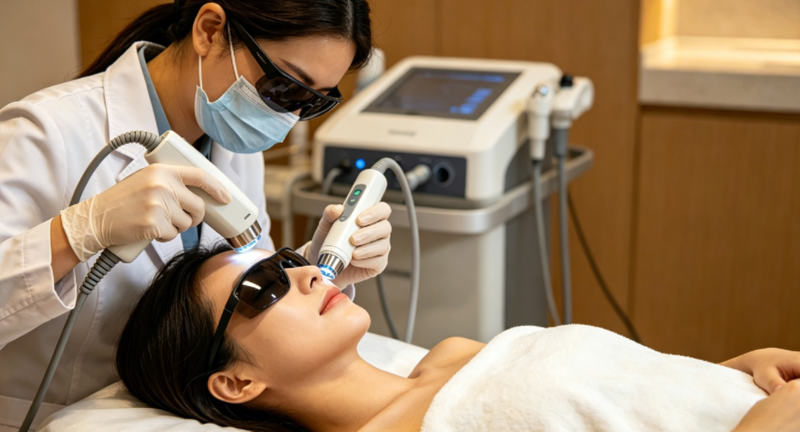
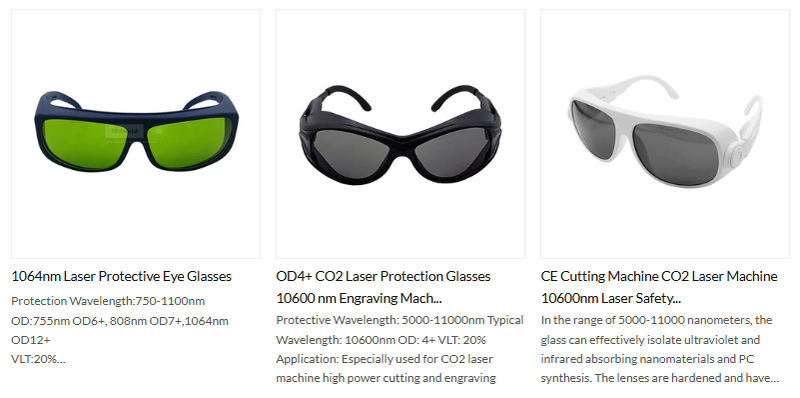
Protective eyewear must match the exact wavelength of the laser device in use. Generic safety glasses do not provide adequate coverage. This rule applies to every person in the treatment room: the receiving client, the operating practitioner, and any assisting staff or observers. Eyewear must fit snugly to block peripheral scattered light and remain worn for the entire duration of device operation, including laser alignment and test pulses.
For periorbital treatments (procedures near the eye area), external protective eye shields are required as an added layer of defense. These specialized shields cover the eye completely to eliminate exposure during delicate facial laser work, and should never be removed mid-treatment for convenience.
2. Pre-Treatment Ocular Risk Assessment
Before every laser session, a basic eye and health assessment should take place. Practitioners check for pre-existing eye conditions such as dry eye, glaucoma, eyelid laxity, or prior eye surgery, as these conditions increase injury risk. This quick screening ensures adjusted safety measures for vulnerable clients and prevents unnecessary ocular strain.
3. Controlled Treatment Environment
Laser treatment spaces must limit reflective surfaces that can bounce laser light toward unprotected eyes. Doors remain closed during treatment, and clear laser safety warning signage alerts anyone approaching the room of active laser use. No one enters the treatment zone without proper protective equipment while the laser device is active.
4. Post-Exposure Response Protocol
If accidental unprotected laser exposure occurs, immediate action is required. Any client or staff member experiencing blurred vision, eye pain, spots in vision, or light sensitivity after exposure must seek urgent ophthalmology review. All exposure details-including laser wavelength, pulse settings, and exposure duration-should be fully documented for medical assessment. No topical eye products should be applied without specialist guidance to avoid worsening tissue irritation.
Final Key Takeaways for Laser Eye Safety
Laser skin treatments are safe and effective when performed under full safety compliance, but they carry genuine eye risks when protocols are skipped. Eye damage from cosmetic lasers is almost entirely preventable with correct protective gear, consistent screening, and disciplined treatment room practices.
For clients, never consent to a laser treatment where proper wavelength-matched eye protection is not provided for everyone present. For practitioners, treat eye safety as a non-negotiable foundational step of every procedure, not an optional precaution. Protecting the eyes ensures laser skincare remains a low-risk, beneficial cosmetic solution without avoidable long-term visual consequences.