



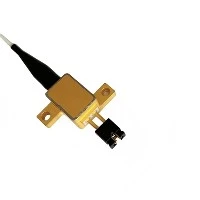
Diode-Pumped Solid-State (DPSS) lasers have become a cornerstone technology in modern photonics, offering superior efficiency, stability, and compactness compared to traditional lamp-pumped systems. At the heart of their performance lies beam quality-a composite metric defining the laser's spatial coherence, focusability, and intensity distribution.

1. Introduction
1.1 Overview of DPSS Lasers
DPSS lasers utilize high-brightness laser diodes to optically pump a solid-state gain medium, typically a rare-earth-doped crystal (e.g., Nd:YAG, Nd:YVO₄). This architecture eliminates the inefficiencies and thermal load of flashlamps, enabling highly compact, reliable, and energy-efficient laser systems that produce high-intensity light with excellent spectral purity.
1.2 Defining and Quantifying Beam Quality
Beam quality is not a singular property but a synthesis of spatial characteristics that determine how well laser radiation can be concentrated and propagated. The primary metric is the M² factor (Beam Propagation Ratio), where M² = 1 represents a perfect diffraction-limited Gaussian beam. Higher M² values indicate increased deviation from this ideal. Complementary parameters include:
Beam Divergence: The angular spread of the beam, inversely related to focusability.
Beam Parameter Product (BPP): The product of beam waist radius and far-field divergence.
Spatial Mode: The transverse electromagnetic (TEM) mode structure, with the fundamental TEM₀₀ mode being optimal for most applications.
Beam Circularity and Astigmatism: Measures of symmetry and aberrations.
Together, these parameters dictate the laser's ultimate utility, influencing precision, efficiency, and signal integrity in every application.
2. The Core Impact of Beam Quality on DPSS Laser Applications
2.1 Industrial Materials Processing
In cutting and welding, beam quality directly translates to the minimum achievable spot size and depth of focus. A low M² beam can be focused to a smaller, more intense spot, enabling finer feature resolution, narrower kerf widths, and the ability to process reflective materials like copper and gold. In precision micromachining and drilling, high beam quality ensures clean, precise edges and optimal energy coupling, maximizing throughput and yield.
2.2 Scientific Research
Ultra-High-Resolution Spectroscopy and Interferometry: These techniques rely on perfect wavefronts and high spatial coherence. Poor beam quality introduces phase noise and reduces fringe contrast, degrading measurement sensitivity and accuracy.
Cold Atom Trapping and Quantum Optics: Experiments with optical lattices, magneto-optical traps, and atom interferometry demand lasers with extremely pure TEM₀₀ modes and exceptional pointing stability. Aberrations or mode impurities can lead to uneven trapping potentials or heating of atomic ensembles.
2.3 Medical and Biotechnological Applications
Surgical Procedures: In ophthalmology (e.g., LASIK) and dermatology, a smooth, top-hat or Gaussian intensity profile is crucial for predictable and controlled tissue ablation. Hotspots from poor beam profiles can cause collateral damage.
Flow Cytometry and Confocal Microscopy: These systems require a perfectly shaped, stable beam for uniform cell interrogation and high-resolution imaging. Beam wander or distortion results in signal noise and reduced image clarity.
2.4 Defense, Lidar, and Communications
Free-Space Optical (FSO) Communication: The link budget is critically dependent on beam divergence. A low-divergence, high-quality beam minimizes power loss over long distances and reduces interference from ambient light.
Lidar and Remote Sensing: Beam quality determines the spot size at the target and thus the system's lateral resolution. It also affects the amount of backscattered light collected, directly influencing signal-to-noise ratio and maximum operational range.
3. Key Factors Degrading Beam Quality in DPSS Lasers
3.1 Internal Factors
Thermal Effects in the Gain Medium: The primary challenge. Non-uniform pump absorption creates temperature gradients, leading to:
Thermal Lensing: A refractive index gradient that acts as a lens, destabilizing the resonator.
Thermal Birefringence: Induces depolarization, causing power loss and mode distortion.
Thermal-Induced Stress Fracture: At extreme power levels.
Poor Pump Beam Mode Matching: Inefficient overlap between the pump diode's mode volume and the resonator's desired lasing mode excites higher-order transverse modes, raising M².
Resonator Design and Misalignment: The cavity geometry (stable, unstable, hybrid) dictates the natural mode. Imperfect mirrors, contamination, or misalignment degrade mode purity and output stability.
3.2 External Factors
Temperature Fluctuations: Affect diode emission wavelength (shifting pump absorption efficiency) and crystal dimensions/refractive index.
Mechanical Vibrations: Cause resonator misalignment and beam pointing instability.
Power Supply Noise: Ripples in pump diode current induce intensity noise and mode instability in the DPSS output.
4. Technological Pathways for Enhancing Beam Quality
4.1 Advanced Thermal Management
Novel Cooling Geometries: Micro-channel coolers, conductive edge-cooling of crystals, and the use of non-water coolants for tighter temperature control.
Thermally-Insensitive Cavity Designs: Using composite crystals (e.g., diffusion-bonded YAG) or designing cavities that are dynamically stable under a range of thermal lensing strengths.
Use of Low-Thermal-Optic Materials: Such as Yb-doped tungstate crystals (e.g., Yb:KGW) which exhibit lower thermal lensing.
4.2 Resonator Design and Control
Intracavity Aberration Correction: Integrating adaptive optics (deformable mirrors) or phase-conjugating mirrors inside the cavity to correct dynamic wavefront distortions in real-time.
Mode-Control Elements: Strategic use of apertures, graded-reflectivity mirrors, or photonic crystal fibers to selectively favor the fundamental TEM₀₀ mode.
4.3 Pump Scheme Optimization
End-Pumping vs. Side-Pumping: While side-pumping scales to higher power, end-pumping inherently provides better mode matching and superior beam quality. Advanced hybrid schemes are under development.
Wavelength-Stabilized Pump Diodes: Ensuring the diode emission remains locked to the peak absorption of the gain medium despite temperature drift.
Beam-Shaping of Pump Light: Using micro-optics to transform the diode's asymmetric, multi-mode output into a circular, top-hat profile for uniform gain distribution.
4.4 Active Control and Diagnostics
Integrated Beam Analysis: Real-time feedback from in-line beam profilers to monitor M², profile, and pointing.
Intelligent Control Systems: Using AI/ML algorithms to predict and compensate for thermal transients or vibrational disturbances by adjusting pump power or cavity alignment actuators.
5. Future Trends and Challenges
5.1 The High-Power/High-Beam-Quality Paradigm
The relentless push for higher output power exacerbates thermal management challenges. Future breakthroughs will hinge on novel gain materials (e.g., sesquioxides like Sc₂O₃) with superior thermal properties and advanced spectral/coherent beam combining techniques to multiplex multiple high-quality beams.
5.2 Miniaturization and Integration
The trend toward microchip and waveguide DPSS lasers presents new challenges for heat extraction and mode control in ultra-small volumes. Photonic Integrated Circuits (PICs) for lasers may offer new ways to engineer and stabilize resonator modes.
5.3 The Age of Adaptive and Intelligent Lasers
The future DPSS laser will be a "smart" system. Fully integrated adaptive optics will become standard for high-end systems, and digital twin simulations will allow predictive optimization of beam quality under varying operational conditions.
6. Conclusion
Beam quality is not merely a specification on a datasheet; it is the definitive characteristic that unlocks the full potential of DPSS laser technology. It governs the frontier of precision in manufacturing, the limit of sensitivity in scientific discovery, the efficacy of medical treatment, and the reach of optical systems. The ongoing quest for perfect beams is driving innovation at the intersection of materials science, thermal engineering, optical design, and digital control. As these multidisciplinary efforts converge, the next generation of DPSS lasers will deliver not just higher power, but smarter, more adaptable, and fundamentally higher-fidelity light, enabling applications yet to be imagined.
Contact information:
If you have any ideas, feel free to talk to us. No matter where our customers are and what our requirements are, we will follow our goal to provide our customers with high quality, low prices, and the best service.
 Email:info@loshield.com; laser@loshield.com
 Tel:0086-18092277517; 0086-17392801246
 Fax: 86-29-81323155
 Wechat:0086-18092277517; 0086-17392801246


