



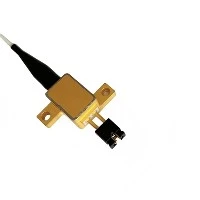
Laser Diode modes are divided into longitudinal mode and transverse mode. The longitudinal mode refers to the standing wave mode of the laser in the axial direction of the resonant cavity, which determines the spectral characteristics; the transverse mode is the light field distribution perpendicular to the propagation direction, which affects the beam shape and divergence angle. Single longitudinal mode lasers only output a single frequency with high spectral purity; single transverse mode lasers (such as fundamental mode TEM₀₀) have Gaussian beam distribution and excellent spatial coherence. Laser diodes of different modes have unique advantages in the fields of communications, sensing, and medical treatment. Choosing the right mode is crucial to application performance.

Working Principle Comparison
1. Single longitudinal mode laser diode
Resonant cavity design: Multi-longitudinal mode oscillations are suppressed by short cavity length (such as the structure of vertical cavity surface emitting laser VCSEL, which has a short cavity length itself) or distributed Bragg reflector (DBR/DFB, like DBR laser, which uses grating frequency selection to achieve specific functions). Its core purpose is to make only a single longitudinal mode stably exist and oscillate and amplify in the longitudinal mode direction of the resonant cavity, so as to output single longitudinal mode light.
Spectral characteristics: It has the characteristics of narrow line width, which can usually reach MHz level. This means that the frequency stability of its output light is very high and the frequency fluctuation range is very narrow. This characteristic makes it have important applications in the field of high-precision spectroscopy. For example, in Raman spectroscopy experiments for precise analysis of material composition, a light source with highly stable frequency is required to accurately identify the spectral characteristics corresponding to the energy level transition of material molecules; at the same time, it is also critical in the field of optical communication. The narrow line width can reduce the influence of dispersion on signal transmission and improve communication quality and capacity. For example, in high-speed, long-distance optical fiber communication systems, single longitudinal mode laser diodes can better ensure low-loss and high-quality transmission of optical signals.
2. Single transverse mode laser diode
Waveguide structure design: Special waveguide structures such as ridge waveguide or tapered structure are mainly used to limit the generation of high-order transverse modes. These structures constrain the propagation mode of light in the transverse direction (in the plane perpendicular to the propagation direction of light), so that only the fundamental mode (TEM₀₀ mode) can be stably transmitted in the transverse direction, thereby ensuring that the output is single transverse mode light.
Beam quality: The fundamental mode (TEM₀₀) output can be achieved, and the M² factor is close to 1, which means that the divergence angle of its output beam is very small. Simply put, the energy of light is more concentrated during propagation, the collimation of the beam is better, and it can be more accurately focused on the target position or maintain a smaller spot size over a longer distance. This high-quality beam is very important for some applications that require precise spot focusing. For example, in the field of laser processing, a single transverse mode laser with a small divergence angle can more accurately cut and weld materials, avoiding problems such as reduced processing accuracy due to beam divergence.
Key Parameter Comparison
| Parameters | Single longitudinal mode laser diode | Single transverse mode laser diode |
| Wavelength Stability | High (small temperature drift, <0.1 nm/K) | Medium (affected by thermal lensing) |
| Output Power | Low (usually <100mW) | High (up to hundreds of mW) |
| Divergence Angle | Determined by transverse mode (may be larger) |
Small (Gaussian distribution of fundamental mode, typically 10°x36°) |
| Side Mode Suppression Ratio (SMSR) | >30dB (high purity spectrum) | Not applicable (no spectral selection of transverse mode) |
| Typical Structure | DBR, DFB, VCSEL | Ridge waveguide, tapered laser |
Application Field Comparison
1. Single longitudinal mode laser diode
①Fiber optic communication field
Application: It plays a key role in dense wavelength division multiplexing (DWDM) systems. Due to its narrow line width, it can effectively reduce channel crosstalk, so that multiple channels with different wavelengths can be stably transmitted in one optical fiber, greatly improving the communication capacity and transmission efficiency of optical fiber, ensuring the smooth implementation of high-speed and long-distance communication, and meeting the needs of scenarios with extremely high communication bandwidth and quality requirements such as massive data transmission between Internet data centers.
②Spectroscopy and sensing field
Application: It has outstanding performance in high-resolution gas detection. For example, taking CO₂ laser as an example, the light output by its single longitudinal mode has the characteristics of high frequency stability, which can more accurately correspond to the specific absorption spectrum of gas molecules. By detecting the subtle changes in the spectrum after the interaction between light and gas, high-precision measurement of parameters such as gas concentration can be achieved. It can be widely used in environmental monitoring, industrial process control, accurate analysis of gas composition and content, and other scenarios.
③ Quantum technology field
Application: It can be used as a single photon source and plays an important role in quantum key distribution, quantum computing and other quantum communication and quantum information processing related experiments; at the same time, in cold atom experiments, with its extremely high frequency stability, it can provide a precise electromagnetic field environment for manipulating the energy level transition of cold atoms and other processes, helping to achieve precise control and research of microscopic quantum states, and promote the development and application exploration of quantum technology.
2. Single transverse mode laser diode
① Laser processing field
Application: Because it can achieve fundamental mode (TEM₀₀) output and a small divergence angle, the energy is Gaussian distributed and highly concentrated, so it has unique advantages in precision cutting, welding and other processing operations. For example, when finely processing metal sheets, electronic components, etc., the light spot can be more accurately focused on the part to be processed, achieving high-precision material removal or connection, improving processing quality while reducing the heat-affected zone, which is suitable for manufacturing scenarios with high requirements for processing accuracy and material property protection.
②LiDAR field
Application: By taking advantage of its small divergence angle, it can better focus the emitted and received laser signals during the ranging process, and improve the accuracy of the target distance measurement. This is critical for autonomous driving vehicles to accurately perceive the surrounding environment, build high-precision maps, and achieve safe obstacle avoidance. It helps to improve the safety and reliability of autonomous driving, and is also one of the important sensor applications in the current development of intelligent transportation technology.
③Medical and biological imaging field
Application: It plays an important role in confocal microscopy. Because it can produce low-aberration beams, it can better focus on different levels of the sample and collect clear image information, reducing image blur or distortion caused by factors such as optical path distortion during imaging, thereby achieving high-resolution, three-dimensional imaging observation of the internal structure of biological tissues, etc., and is widely used in the research and diagnosis of microstructures and pathological characteristics in fields such as cell biology and pathology.
In summary, single longitudinal mode laser diodes have become the first choice for frequency-sensitive applications such as optical communications and precision spectral analysis due to their extremely high spectral purity (narrow linewidth and low noise). They can effectively avoid multi-frequency interference and ensure the accuracy of signal transmission and measurement. Single transverse mode laser diodes are known for their excellent beam quality (Gaussian distribution and low divergence angle). They are particularly suitable for fields with strict requirements on spatial accuracy, such as laser processing and LiDAR, and can achieve high energy concentration and fine spatial resolution. The two types of lasers have their own advantages, and the actual selection needs to balance the spectral characteristics and beam quality according to the specific application requirements.
Contact information:
If you have any ideas, feel free to talk to us. No matter where our customers are and what our requirements are, we will follow our goal to provide our customers with high quality, low prices, and the best service.
 Email:info@loshield.com
 Tel:0086-18092277517
 Fax: 86-29-81323155
 Wechat:0086-18092277517


