




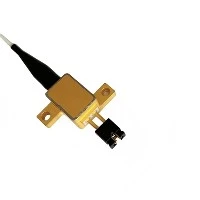
As one of the cornerstones of modern science and technology, the importance of laser diodes is self-evident. With their high efficiency, long life and small size, they play a key role in many fields. From medical health to communication technology, to industrial production and scientific research, the application of laser diodes is extensive and in-depth.

In this context, single-mode laser diodes and multi-mode laser diodes, as two main laser emission devices, each show their unique advantages. Single-mode laser diodes occupy an important position in precision measurement and optical communication with their stable phase and Gaussian beam distribution; while multi-mode laser diodes shine in fields such as medical beauty and industrial processing with their high output power and wide divergence angle. Understanding the basic concepts and differences of these two laser diodes is crucial to selecting the right laser source to meet specific application requirements.

Characteristics and applications of single-mode laser diodes:
I. Overview of technical characteristics
Gaussian beam distribution: Single-mode laser diodes produce fundamental mode Gaussian beams, which have a smooth intensity distribution and a small divergence angle, making the spot size small and concentrated, which is conducive to improving focusing accuracy.
Long coherence length: Since single-mode laser diodes output a single longitudinal mode light wave, its phase remains consistent in space, so the coherence length is much longer than that of multi-mode laser diodes, which is crucial for application scenarios that require high coherence.
Narrow linewidth: Single-mode laser diodes usually have a narrow spectral linewidth, which means they can provide purer colors and higher wavelength stability, which is an important advantage for fields such as precision measurement and optical communications.
Low noise characteristics: Compared with multi-mode laser diodes, single-mode laser diodes generate lower noise during operation, which is very important for applications that require signal clarity and stability.
II. Discussion of application fields
Precision measurement: In the field of precision measurement, such as interferometers, spectrometers and other instruments, the Gaussian beam and long coherence length provided by single-mode laser diodes make them ideal light sources, enabling high-precision distance and displacement measurements.
Optical communication: In optical fiber communication systems, single-mode laser diodes are used as light sources. Their narrow linewidth and high coherence help to improve the transmission distance and bandwidth of signals, while reducing the impact of dispersion and ensuring communication quality.
Medical imaging and treatment: In medical imaging technologies such as confocal microscopy, the Gaussian beam of single-mode laser diodes can improve the resolution of imaging; in laser surgery, its precise energy control helps to perform fine cutting and coagulation operations.
Scientific research experiments: In basic research in multiple disciplines such as physics, chemistry and biology, single-mode laser diodes are often used as excitation sources or probes to study the structure, dynamic processes and interactions of substances and biomolecules.
In summary, single-mode laser diodes, with their unique technical characteristics, play an important role in precision measurement, optical communication, medical imaging and treatment, scientific research experiments and other fields. With the advancement of science and technology and the continuous growth of application needs, single-mode laser diodes will continue to promote technological innovation and development in related fields.
Characteristics and applications of multimode laser diodes:
I. Overview of technical characteristics
Multi-transverse mode structure: The beam generated by a multimode laser diode contains multiple transverse modes, which means that its spot size is larger and the intensity distribution is not as uniform as that of a single-mode laser. This characteristic enables multimode laser diodes to provide a wider irradiation area in some applications.
Large divergence angle: Since multimode laser diodes output multiple modes of light waves, their phases are not completely consistent in space, resulting in a relatively large divergence angle of the beam. This makes multimode laser diodes excel in applications that require a large irradiation range.
High output power: Multimode laser diodes are generally able to provide higher output power than single-mode laser diodes, thanks to their multi-transverse mode structure and large divergence angle, allowing more energy to be distributed over a wider area.
Cost-effectiveness: Compared with single-mode laser diodes, multimode laser diodes have lower manufacturing costs and relatively loose requirements on driving current and temperature, making them more attractive in cost-sensitive applications.
II. Discussion of application fields
Medical beauty: In medical beauty procedures such as laser hair removal, skin reconstruction, and tattoo removal, multimode laser diodes are widely used due to their large divergence angle and high output power. These characteristics help achieve fast and uniform energy delivery and improve treatment effects.
Industrial processing: The high output power and wide irradiation range of multimode laser diodes make them an ideal choice in industrial processing fields such as material cutting, welding and surface treatment. They can effectively process large areas of materials and improve production efficiency.
Lighting and display: In lighting applications such as stage lighting, car headlights and large display backlights, the wide beam and high brightness characteristics provided by multimode laser diodes meet the needs for lighting intensity and coverage.
Scientific research experiments: In laboratory research in fields such as physics, chemistry and biology, multimode laser diodes are often used to excite samples or as detection tools, especially in experiments that require larger spot sizes and higher power densities.
In short, multimode laser diodes, with their unique technical characteristics, play an important role in many fields such as medical beauty, industrial processing, lighting and display, and scientific research experiments. With the continuous advancement of technology and the growth of market demand, multimode laser diodes will continue to expand their application prospects in various fields.
1. Performance Comparison Analysis
Output Power:
Single-mode laser diodes usually provide lower output power because their design optimizes beam quality and coherence rather than power output.
Multi-mode laser diodes can provide higher output power, thanks to their multi-transverse mode structure and large divergence angle, allowing more energy to be distributed over a wider area.
Beam Quality:
Single-mode laser diodes produce fundamental mode Gaussian beams with smooth intensity distribution and small divergence angle, which makes the spot size small and concentrated, which is conducive to improving focusing accuracy.
The beam produced by multi-mode laser diodes contains multiple transverse modes, with a larger spot size and less uniform intensity distribution than single-mode lasers, but its larger divergence angle enables it to provide a wider irradiation area in some applications.
Temperature Stability:
Single-mode laser diodes are sensitive to temperature changes and require precise temperature control to maintain their stable operating state and output characteristics.
Multi-mode laser diodes have relatively loose temperature requirements, which makes them more attractive in cost-sensitive applications.
2. Discussion on the advantages and disadvantages in different application scenarios
Precision measurement and optical communication:
In these fields, single-mode laser diodes are the first choice due to their Gaussian beam distribution and long coherence length, which can achieve high-precision distance and displacement measurement, as well as high-quality signal transmission.
Medical beauty and industrial processing:
In these applications, the high output power and wide irradiation range of multi-mode laser diodes make them an ideal choice, which can quickly and evenly transfer energy, improve treatment effects and production efficiency.
Lighting and display:
For lighting applications that require larger spot sizes and higher brightness, the wide beam and high brightness characteristics provided by multi-mode laser diodes meet market demand.
Scientific research experiments:
In scientific research experiments, single-mode or multi-mode laser diodes may be selected according to the specific needs of the experiment. For example, in experiments that require high coherence and narrow linewidth, single-mode laser diodes are more suitable; while in experiments that require larger spot sizes and higher power density, multi-mode laser diodes are more advantageous.
In summary, single-mode laser diodes and multi-mode laser diodes have their own characteristics in performance and are suitable for different application scenarios. When selecting a laser diode, factors such as output power, beam quality, and temperature stability need to be weighed against specific application requirements to ensure that the most suitable laser source is selected to meet the needs of a specific application.
Contact information:
If you have any ideas, feel free to talk to us. No matter where our customers are and what our requirements are, we will follow our goal to provide our customers with high quality, low prices, and the best service.
 Email:info@loshield.com
 Tel:0086-18092277517
 Fax: 86-29-81323155
 Wechat:0086-18092277517


