



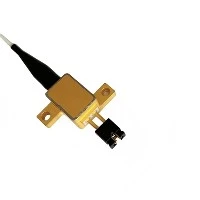
Before purchasing a Fiber Laser, it is necessary to understand how it differs from other lasers. We know that a working laser requires three components: a pump source for energy supply, a gain medium and an optical resonator. For fiber lasers, although the choice of pump source is nothing more than laser diodes and other fiber lasers, the design of the gain medium and optical resonator are essentially different.

This unique structure brings seven major advantages:

1. High-efficiency gain medium
Unlike other lasers, fiber lasers achieve light amplification in optical fibers doped with rare earth metal ions such as ytterbium (Yb3+), neodymium (Nd3+), thulium (Tm3+), praseodymium (Pr3+) or erbium (Er3+). These laser-active ions can absorb most of the pump light and then emit photons of specific frequencies through stimulated emission. The inherently flexible structure of optical fiber allows for longer gain distances compared to other types of lasers. This provides high optical gain.
2. Intelligent feedback loop through fiber Bragg grating
Instead of using traditional dielectric mirrors, optical feedback in fiber lasers is typically provided by fiber Bragg gratings, which are a series of glass fibers with different refractive indexes fused in a periodic manner. These periodic structures can reflect laser beams of specific wavelengths and thus become the optical cavity of the fiber laser. Therefore, for fiber lasers, the optical cavity is actually inside the gain medium.
3. Robust optical cavity
There is a common misunderstanding to avoid when talking about fiber lasers, and that is that fiber lasers are not the same as lasers with fiber optics. For example, in fiber-coupled diode lasers, the optical fiber is used only for beam transmission purposes and the physical principles of stimulated emission are not involved. So while optical fibers do couple to laser systems, they still don't have all the excellent qualities of fiber lasers. The unique integrated optical cavity uses coiled optical fiber as the gain medium, creating a strong and stable optical cavity.
4. Compact structure
One of the main advantages of fiber lasers is their compact layout. Compared with similar products, fiber lasers have a much smaller footprint for equivalent output powers. This is because optical fiber is bendable and can be coiled into a compact space. In addition, the flexibility of fiber optics also makes it possible to further customize the optical path, providing greater design freedom for various specific situations.
5. High output power
Because the gain medium in fiber lasers is very thin and flexible, the fiber can be several kilometers long, allowing very high pump light gains to be achieved. Additionally, the heat generated by fiber lasers can be dissipated efficiently due to the fiber's large surface area to volume ratio. As a result, fiber lasers can operate continuously at kilowatt levels without the need for complex cooling systems.
6. Excellent beam quality
Typically, laser beam quality refers to how tightly the beam is focused, quantified by the M2 coefficient, which ideally equals 1 for the highest beam quality. Among fiber lasers, single-mode fiber usually has the best beam performance and is therefore widely used. For example, in laser cutting and welding, high beam quality allows long distances between the workpiece and the focused object. This configuration protects the optics from debris and smoke. Crucially, shrinking the beam diameter not only enables the fabrication of finer structures but also allows the use of smaller, cheaper optical components.
7. High reliability
Fiber lasers are highly reliable and require little maintenance, and because the optical path is enclosed within a protective cladding, the laser beam is less susceptible to external interference. Therefore, fiber lasers generally have excellent stability under high temperature and vibration operating conditions.
What is the difference between fiber lasers and other lasers?
While the advantages of fiber lasers are many, it's important to understand how they stack up against the competition. As we will see below, the superiority of a fiber laser depends on the application setting, and in some cases a fiber laser competitor may be a better fit for the fiber laser.
Fiber lasers vs. Block lasers
A bulk laser is a solid-state laser that uses a doped bulk crystal or glass as the gain medium. Nd:YAG lasers and titanium-sapphire lasers are two good examples. Generally speaking, fiber lasers have better specifications than bulk lasers, as shown in the figure below:

However, this does not mean that volume lasers are not valuable for materials processing. For example, in the wavelength region of 700-1000 nm, no fiber laser can replace a tunable Ti:sapphire laser. In addition, volume lasers can achieve higher peak powers and are therefore more suitable for processing materials. On top of that, fiber laser systems can require special components and complex usage, and their higher cost can be detrimental to economics.
Fiber lasers vs. CO2 lasers
While both lasers are great for cutting materials, their functional focus is actually different. On the one hand, CO2 lasers are great tools for cutting non-metallic materials like plastics. Their relatively high efficiency and good beam quality make them the most widely used laser type in the industry.

CO2 Laser Cutting Machine
On the other hand, fiber lasers have made significant progress in cutting metal plates (mainly stainless steel) in recent years, mainly due to their fast cutting speed. With equivalent power, their cutting speed is usually 2-3 times that of carbon dioxide lasers. times. Generally speaking, fiber lasers are worth considering for volume production when cutting metals 0.25 inches thick or less, but when metals are thicker than 0.375 inches, CO2 lasers still offer speed advantages and excellent cut quality. Therefore, fiber lasers are unlikely to completely replace CO2 lasers when it comes to material cutting.
Fiber Lasers and Direct Diode Lasers
Diode lasers have long been criticized for low output power and poor beam quality. Nonetheless, recent advances in direct diode laser technology show its potential as a major player in materials processing. Direct diode lasers can cut 10%-20% faster than fiber lasers. In addition, direct diode lasers can cut thicker metals and achieve smaller surface roughness. Best of all, they are also suitable for processing highly reflective materials such as copper. In contrast, fiber lasers have limited efficacy in this regard. However, fiber lasers still have huge advantages in terms of beam quality and technology maturity. This makes them an excellent choice for macroscopic material processing.
Fiber lasers have clearly revolutionized the laser industry. Fiber lasers offer a number of key advantages over other types of lasers, opening the way to increased productivity. The choice of efficient gain media and integrated laser cavity provides powerful and stable output performance. Its compact footprint is a key selling point for OEM/integrated applications. However, their superiority depends heavily on the application setup, taking into account their output wavelength and limited tunability.
Contact information:
If you have any ideas, feel free to talk to us. No matter where our customers are and what our requirements are, we will follow our goal to provide our customers with high quality, low prices, and the best service.
 Email:info@loshield.com
 Tel:0086-18092277517
 Fax: 86-29-81323155
 Wechat:0086-18092277517


