



The importance of laser modules in environmental monitoring is reflected in their high precision, real-time and non-contact measurement capabilities, which make them play an irreplaceable role in the fields of air pollution monitoring, water pollution detection and soil analysis.

Application of laser modules in environmental science:
1. Air pollution monitoring
Particle measurement: The laser module can monitor the concentration of pollutants such as PM2.5 and PM10 in real time by emitting laser beams and detecting the scattered light of particles in the air. Its high precision and rapid response make it an important tool for air pollution research.
Gas composition analysis: Using differential absorption lidar (DIAL) technology, the laser module can measure specific gas components in the atmosphere, such as ozone, sulfur dioxide and nitrogen oxides, to provide data support for air quality assessment.
2. Water pollution detection
Suspended matter monitoring: The laser module can efficiently identify suspended particles and their distribution in the water by measuring the scattered light of suspended matter in the water. This method is non-invasive and highly sensitive, and is suitable for water quality monitoring in rivers, lakes and oceans.
Organic matter detection: Through laser-induced fluorescence spectroscopy technology, the laser module can detect organic pollutants in water bodies, helping scientists understand the types and concentrations of pollutants and formulate effective treatment measures.
3. Soil analysis and monitoring
Heavy metal detection: The laser module can detect the content of heavy metals in the soil, such as lead, cadmium and mercury, by measuring the soil reflection spectrum. Its non-destructive detection characteristics make soil pollution research more convenient and efficient.
Analysis of organic pollutants: Using laser-induced breakdown spectroscopy (LIBS) technology, the laser module can analyze organic pollutants in the soil and provide important data for farmland management and environmental protection.
4. Meteorological observation and research
Aerosol measurement: The laser module is used to measure the distribution and characteristics of aerosols in the atmosphere. By analyzing the laser echo signal, the cloud structure, visibility and other data are obtained to improve the accuracy of weather forecasts and disaster warning capabilities.
Wind speed and direction monitoring: Doppler Wind Lidar can accurately monitor wind speed and direction by measuring the movement speed of particles in the atmosphere, providing important support for meteorological research and forecasting.
5. Ecosystem Research
Vegetation Monitoring: Laser modules can monitor the growth and health of plants by measuring the reflectance spectrum of vegetation, providing important data for ecological research and agricultural management.
Animal Behavior Research: Using LiDAR technology, researchers can track the activity trajectories and behavior patterns of animals to help understand biodiversity and ecosystem dynamics.
6. Environmental Impact Assessment
Industrial Emission Monitoring: Laser modules can monitor pollutants in industrial emissions in real time, helping companies optimize production processes and reduce negative impacts on the environment.
Natural Disaster Assessment: After natural disasters such as earthquakes and fires, laser modules can be used to assess the extent of environmental damage and guide post-disaster reconstruction.

Types of laser modules that can be used for environmental monitoring:
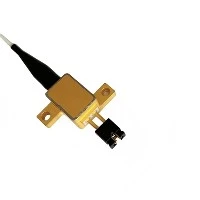
1. Laser diode modules
Laser diode modules are commonly used in fields such as atmospheric pollution monitoring and lidar. They provide high-precision, real-time environmental data by measuring the concentration and distribution of particulate matter in the air. Its wavelengths are diverse, such as 650nm, 780nm, etc., to meet different monitoring needs.
2. Laser diode array modules
Laser diode array modules consist of multiple laser diodes and are widely used in laser display and laser lighting. Its high brightness and high efficiency make it perform well in large-scale scanning and imaging applications in environmental monitoring.
3. Laser diode pump modules
Laser diode pump modules are mainly used to pump solid-state lasers or fiber lasers. Common wavelengths include 808nm, 976nm, etc. This module plays an important role in improving laser output power and efficiency, and is suitable for high-precision environmental monitoring equipment.

4. VCSEL vertical cavity surface emitting laser module
VCSEL vertical cavity surface emitting laser module has the characteristics of low cost and high reliability, and is suitable for robot navigation, obstacle avoidance and 3D scanning. Its invisible wavelength (such as 808nm, 850nm) reduces light pollution and improves system performance.
5. Infrared laser module
Infrared laser module is widely used in medical beauty and industrial control fields, such as skin treatment and laser cutting. Its monochromaticity and narrow bandwidth characteristics simplify image processing and improve the overall system performance. It is suitable for a variety of environmental monitoring and precision processing tasks.
Laser modules have a wide range of applications in environmental science, including air pollution monitoring (such as particulate matter and gas composition analysis), water pollution detection (such as suspended matter and organic matter detection), soil analysis and monitoring (such as heavy metal and organic pollutant detection), meteorological observation and research (such as aerosol measurement and wind speed and direction monitoring), ecosystem research (such as vegetation and animal behavior monitoring), and environmental impact assessment (such as industrial emissions and natural disaster assessment). These applications demonstrate the importance of laser modules in improving monitoring accuracy and promoting environmental protection and sustainable development.
Contact information:
If you have any ideas, feel free to talk to us. No matter where our customers are and what our requirements are, we will follow our goal to provide our customers with high quality, low prices, and the best service.
 Email:info@loshield.com
 Tel:0086-18092277517
 Fax: 86-29-81323155
 Wechat:0086-18092277517


