

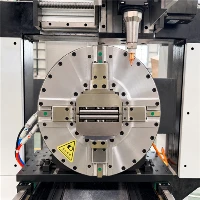
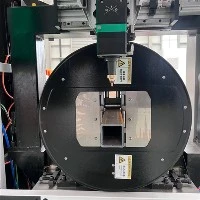
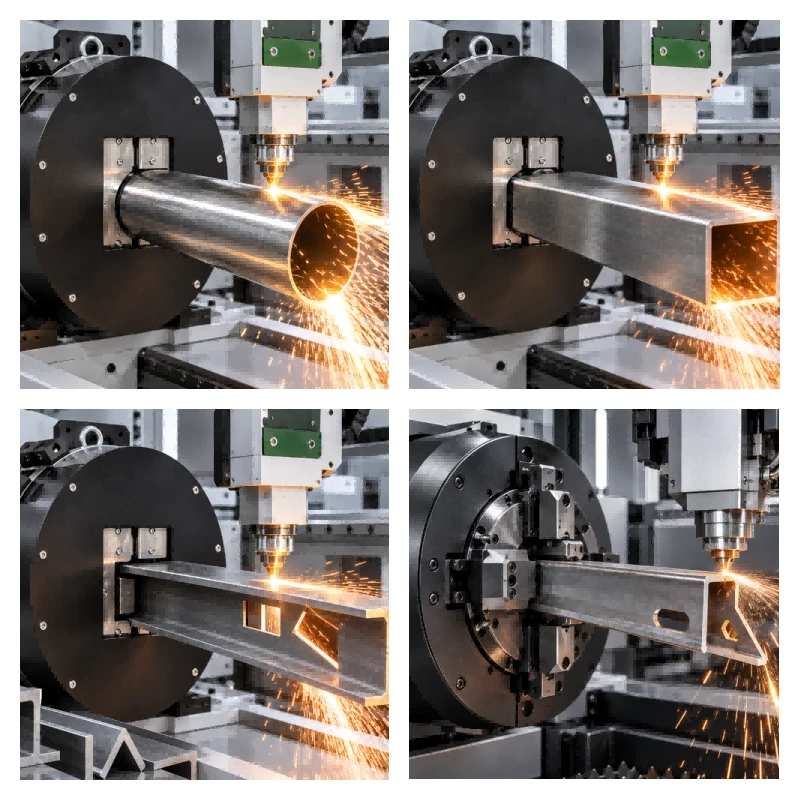
Tube laser cutters are widely used in metal fabrication to process round pipes, square tubes and all kinds of structural profiles. As a core part of the machine, the chuck clamps, locates and spins workpieces while cutting is underway.
Picking the right tube laser chuck directly affects secure clamping, fit with your machine and stable running. With so many sizes, structural styles and load ratings on the market, what should you look at before buying?
Below are five practical points to guide your selection.
1. Workpiece Size and Clamping Range
Start with the size and shape of the tubing you regularly process. Different cutting jobs call for different clamping limits. Before settling on a chuck, note the minimum and maximum sizes of your parts:
Round tubes: minimum and maximum outer diameter
Square tubes: maximum width and height
Structural profiles: whether it works with I-beams, channel steel and angle steel
Special-shaped tubing: whether custom auxiliary jaws will be needed
For reference, JTBYShield supplies 120 mm and 160 mm tube laser chucks to cover different processing needs.
| Model | Round Tube Range | Combined Load Capacity |
|---|---|---|
| JTBY-120PZ-235 | Ø8–Ø120 mm | 80 kg |
| JTBY-120PV-235 | Ø8–Ø120 mm | 80 kg |
| JTBY-120SY-205 | Ø8–Ø120 mm | 100 kg |
| JTBY-160PV-305 | Ø8–Ø165 mm | 120 kg |
| JTBY-160SV-275 | Ø8–Ø165 mm | 140 kg |
120 mm versions can handle square tubes up to 120 × 120 mm, while 160 mm models go up to 165 × 165 mm. Exact limits depend on the chuck's specific setup. A chuck with a matching clamping range ensures it fits your actual workpieces.
2. Chuck Design and Jaw Setup
Next, look at the chuck structure and jaw layout. Chucks are built differently to suit varied workpiece shapes and machine specs. For instance, round-hole and square-hole types have distinct mechanical layouts. JTBYShield offers multiple options, including the precision square-hole JTBY-160PV-305 and round-hole JTBY-160SV-275.
Jaw selection matters just as much. Standard jaws work fine for most common tube cutting work. Custom auxiliary jaws, on the other hand, make it possible to grip special-shaped tubes and structural profiles. When shopping, check if the jaw design fits your parts, and confirm whether the supplier can offer custom clamping solutions when you need them.
3. Load Capacity and Workpiece Weight
Load capacity is critical, especially when running large, heavy metal tubing. The chuck assembly must stay within its rated load when holding a workpiece. When comparing models, pay attention to the combined load rating of the front and rear chucks as a set. JTBYShield models have combined load capacities ranging from 80 kg to 140 kg based on the variant.
Before placing an order, work out the heaviest part you will process, tube sizes and how you arrange clamping. Make sure the chuck can keep up with your production demands. One quick check: clarify whether the listed load rating applies to one single chuck or the full front-rear chuck pair. This is a common point of confusion.
4. Machine Compatibility and Installation Requirements
Even if a chuck fits your workpiece size and weight, it still has to work with your laser cutter. Whether you are replacing an old chuck or adding a new one, verify these details:
Chuck center height: front and rear chucks must align with your machine layout
Mounting flange: mounting dimensions, bolt holes and connection interfaces
Transmission setup: gearbox and reducer specs to match machine power output
Installation space: enough room for jaw movement, tube feeding and free rotation
As an example, the JTBY-120PV-235 has a front chuck center height of 235 mm and rear chuck center height of 125 mm. Sharing your machine drawings and installation dimensions with the supplier upfront helps avoid fit problems down the line.
5. Customization and Manufacturer Support
Last but not least, check what customization and technical support the supplier provides. Not all metal fabrication jobs use standard round or square tubing. Many shops run special-shaped tubes, I-beams, channel steel and other structural profiles. For these cases, custom auxiliary jaws are often required.
When picking a tube laser chuck supplier, confirm they can deliver:
Custom jaw solutions for unusual workpiece shapes
Technical drawings and installation dimension data
Multiple chuck sizes and structural configurations
OEM modification tailored to your machine
Product spec sheets and quality inspection records
A dependable supplier will listen to your application needs and help you lock in the right chuck configuration.
Final Thoughts: Pick the Tube Laser Chuck That Fits Your Work
Choosing a proper tube laser chuck is about more than just matching a diameter or model code. You need to weigh workpiece dimensions, chuck structure, load rating, machine compatibility and customization options together.
For laser machine builders, equipment distributors and metal fabrication shops, a well-matched chuck helps meet your production and installation requirements.
JTBYShield carries a full lineup of tube laser cutting chucks, including 120 mm and 160 mm variants, precision square-hole designs and different front-rear chuck combinations.
Looking for a suitable laser tube chuck for your machine? Check out https://www.loshield.com/laser-parts/ to view the full product range and specs. Send over your workpiece sizes and machine requirements to our team, and we will work out a suitable solution for you.
FAQ
What is a tube laser cutting chuck? It is a mechanical clamping component fitted on tube laser cutters. It secures and locates metal tubes or profiles during cutting and rotates the workpiece as needed.
What is the difference between a 120mm and a 160mm tube laser chuck? The main difference lies in clamping range. JTBYShield's 120 mm models accept round tubes up to Ø120 mm, while the 160 mm versions go up to Ø165 mm. The right choice depends on your workpiece sizes and machine setup.
Can one laser chuck handle both round and square tubes? Yes. Many tube laser chucks are designed for both round and square tubing. That said, actual compatibility depends on the chuck structure, jaw setup and published clamping range.