



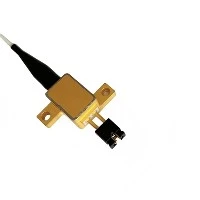
Laser Modules play an important role in environmental science research. They are widely used in air quality monitoring, water quality analysis, soil composition assessment, and ecosystem protection.
The application of laser modules in environmental science mainly includes two aspects: air quality monitoring and water quality analysis. Radar Laser Module use remote sensing technology to monitor atmospheric particles, gases, and water vapor in real time and with high resolution. Laser modules play a key role in these applications. They emit lasers to target objects and measure the intensity and time delay of the reflected or scattered laser signals to obtain information about the target material.

Applications in environmental monitoring
1. Air quality monitoring:
The main role of Red Laser Sensor Detection Module in air quality monitoring is to measure the concentration of particulate matter in the atmosphere, such as PM2.5 and PM10. These particulate matter has a serious impact on the environment and human health because they can enter the respiratory system and cause heart disease, asthma, and other respiratory diseases. LiDAR measures the concentration of particulate matter by emitting laser pulses into the atmosphere and measuring the time delay of its return signal. Because particles of different sizes move at different speeds, they return signals at different time delays. By analyzing these time-delayed data, the size distribution and concentration of particles can be determined.

In addition to particle concentration, laser modules can also be used to measure other parameters related to air quality, such as gas concentrations (e.g., O3, NO2, and CO) and temperature and humidity profiles. These parameters are very important for assessing air quality and predicting weather changes. For example, ozone is a strong oxidant that is harmful to humans and ecosystems. The laser module can monitor ozone concentrations in real time and take timely countermeasures to reduce its harm to the environment and humans.
2. Water quality analysis:
The application of laser modules in water quality analysis is mainly to detect organic pollutants, heavy metal ions, and organisms in water. Organic pollutants in water include pesticides, drugs, and personal care products, which may cause harm to aquatic organisms and human health. Laser technology can be used to monitor the concentration and distribution of these pollutants so that timely measures can be taken to prevent their further spread.
In addition, laser modules can also be used to detect heavy metal ions in water, such as lead, mercury, and cadmium. Heavy metal ions have serious effects on human health because they can enter the human body through drinking water and food. The laser module can monitor the concentration of heavy metal ions in real time so that timely measures can be taken to prevent its harm to the human body.
3. Soil composition analysis:
Using laser induced breakdown spectroscopy (LIBS) technology, the surface of the soil sample can be instantly heated to an evaporation state by a high-energy pulsed laser, and characteristic atomic emission spectra can be stimulated. Based on the information of these spectra, the content of multiple elements in the soil can be quickly and accurately determined. Compared with traditional chemical analysis methods, LIBS technology has the advantages of non-destructive detection, simple and fast operation, and is very suitable for large-scale field surveys.
In the field of environmental monitoring and protection, the application of laser modules is not limited to air quality, water quality and soil composition analysis, but also extends to vegetation coverage monitoring and wildlife protection.
1. Vegetation coverage monitoring:
Combining remote sensing technology and laser scanners, scientists can obtain information on the height of the forest canopy. LiDAR technology accurately calculates the height of trees by emitting laser pulses and measuring their return time. This method not only provides a three-dimensional image of the forest structure, but also assesses the health and biomass of vegetation. This is of great significance for forest management, carbon stock estimation, and the value assessment of ecosystem services.
2. Wildlife protection:
Nighttime infrared laser technology is used to track and study animal behavior patterns. This technology uses infrared laser beams to observe and record animals non-invasively at night, reducing interference with the natural behavior of animals. By analyzing the range of animals, migration paths, and habitat use, researchers can better understand their living habits and develop more effective protection strategies.
3. Climate change research:
Laser modules also play an important role in climate change research. For example, through airborne or satellite-borne lidar systems, scientists can remotely observe the melting rate of glaciers and the rise of sea levels. In addition, laser absorption spectroscopy can also be used to accurately determine the concentration changes of greenhouse gases such as carbon dioxide in the atmosphere, helping to monitor the trend of global warming.
Development Trends
With the continuous development of laser technology, its application in environmental monitoring will continue to deepen. The following trends may emerge in the future:
1) Higher spatial resolution and temporal resolution: With the continuous advancement of lidar technology, future laser modules will have higher spatial resolution and temporal resolution, which will make environmental monitoring more accurate and real-time. High spatial resolution means that the environmental pollution status of local areas can be monitored more carefully, while high temporal resolution means that changes in pollution events can be captured more quickly. This is of great significance for environmental protection work because it can help governments and relevant departments take timely measures to deal with pollution events.
2) Stronger spectral resolution: Spectral resolution refers to the ability of laser modules to distinguish light of different wavelengths. With the development of spectral technology, future laser modules will have stronger spectral resolution, which will make environmental monitoring more diversified and comprehensive. Light of different wavelengths can carry different information, for example, some wavelengths of light can be used to measure the concentration of organic matter, while other wavelengths of light can be used to measure the concentration of heavy metal ions. By improving the spectral resolution, laser modules can measure the concentration of multiple pollutants at the same time, thereby improving the efficiency and accuracy of environmental monitoring.
3) Stronger anti-interference ability: Environmental monitoring is usually carried out in a complex and changeable natural environment, so the laser module needs to have strong anti-interference ability to accurately measure the concentration of pollutants. With the continuous advancement of electronic technology and materials science, future laser modules will be more durable and have better anti-electromagnetic interference and waterproof and dustproof capabilities. This will enable the laser module to work normally under various harsh environmental conditions and provide stable and reliable environmental monitoring data.
4) Lower cost and technical threshold: With the continuous advancement of laser module manufacturing technology and the application of large-scale production, the cost of laser modules will be reduced in the future, and the technical threshold will also be reduced. This will enable more companies and research institutions to use laser modules for environmental monitoring, thereby promoting the development of environmental protection.
In summary, laser modules are increasingly used in environmental science, from microscopic water quality and soil analysis to macroscopic vegetation monitoring and wildlife protection, to global climate change research, these technologies provide strong support for environmental protection. With the continuous advancement of technology, we have reason to believe that laser modules will play a more important role in future environmental protection work.
Contact information:
If you have any ideas, feel free to talk to us. No matter where our customers are and what our requirements are, we will follow our goal to provide our customers with high quality, low prices, and the best service.
 Email:info@loshield.com
 Tel:0086-18092277517
 Fax: 86-29-81323155
 Wechat:0086-18092277517


