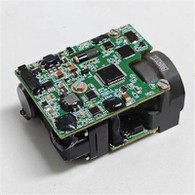


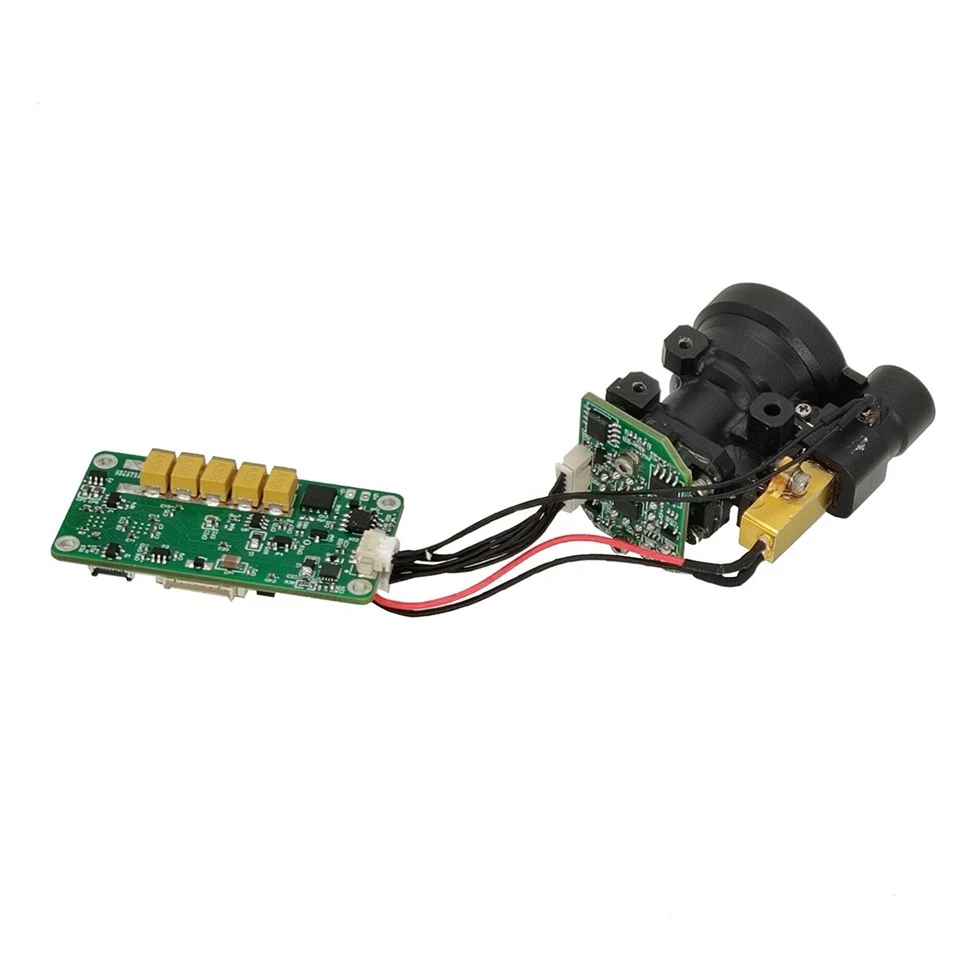


Why Choose the 05XLH08X 5km Laser Rangefinder Module?
The 05XLH08X 1535nm 5km laser rangefinder module is designed for OEM systems that require a practical balance between compact integration and mid-to-long-range distance measurement. Instead of simply pursuing the longest possible ranging distance, this model is positioned for projects where engineers need reliable multi-kilometer ranging without moving to a larger and heavier 6km or 8km rangefinder platform.
For system integrators, the key advantage of this 1535nm eye-safe laser rangefinder module is that its ranging capability is defined under specific target and environmental conditions rather than by a single maximum-distance figure. This makes it easier to evaluate whether the module matches the actual detection targets of an EO/IR system, UAV payload, observation device, or other OEM optical platform.
Target-Specific Ranging Performance
The ranging distance of a laser rangefinder depends on several factors, including target size, target reflectivity, atmospheric visibility, and environmental conditions. For this reason, the 05XLH08X provides different ranging references for different target types.
| Target Condition | Reflectivity | Atmospheric Visibility | Typical Ranging Distance |
| Maximum ranging condition | - | - | Up to 8,000 m |
| Large target | 60% | 20 km | Up to 6,500 m |
| 2.3 × 2.3 m target | 30% | 12 km | Up to 5,000 m |
| 1 × 1 m target | 10% | 12 km | Up to 2,300 m |
| Small UAV target | 10% | 12 km | Up to 1,300 m |
The 5km rating therefore refers to ranging performance on a 2.3 × 2.3 m target with 30% reflectivity under 12 km atmospheric visibility, while the module can reach up to 8 km under more favorable target conditions.
This distinction is important for B2B buyers comparing different 5km laser rangefinder modules, because maximum range alone does not indicate how the product will perform against smaller or lower-reflectivity targets.
A Balanced Option for Compact OEM Systems
Within a multi-range product portfolio, the 05XLH08X is especially suitable for projects that need more ranging capability than an ultra-compact 4km module but do not require the larger platform typically associated with 6km or 8km configurations.
This makes the 05XLH08X mini laser rangefinder module a practical option for:
EO/IR and electro-optical system integration
Compact optical observation platforms
UAV and lightweight sensor payloads
Handheld or portable ranging equipment
OEM systems requiring a 1535nm eye-safe laser rangefinder
Projects that need a balance between ranging performance, module size, and system integration requirements
For OEM buyers, evaluating the required target size, reflectivity, operating environment, and expected ranging distance before selecting a module can help avoid choosing a product that is either underspecified or unnecessarily large for the final system.
The 05XLH08X is therefore best positioned not simply as an "8km maximum range" product, but as a compact 1535nm 5km laser rangefinder module optimized for realistic target-specific ranging and OEM system integration.

Product Paramenters
|
Item |
Index |
|
|
Model |
05XLH08X |
|
|
Operating wavelength |
1535nm ±10nm |
|
|
Eye-Safe |
Class 1 (IEC 60825-1) |
|
|
Receiving Aperture |
Φ25mm |
|
|
Ranging range |
30-8000m |
|
|
Range performance |
8000m |
Maximum range( Typical targets) |
|
6500m |
Big target,Reflectivity: 60 %,observer visibility 20 km |
|
|
5000m |
2.3 × 2.3 m target size,Reflectivity: 30 %,observer visibility 12 km |
|
|
2300m |
1 × 1 m target size,Reflectivity:10 %,observer visibility 12 km |
|
|
1300m |
UAV,Reflectivity:10 %,observer visibility 12 km |
|
|
Communication Interface |
RS422 / TTL(Customizable) |
|
|
Humidity |
≤ 70% |
|
|
Ranging accuracy |
±1m |
|
|
Accuracy rate |
≥98% |
|
|
Divergence angle |
≤0.4mrad |
|
|
Continuous ranging time |
≥30min |
|
|
Non-parallelism of the laser optical axis to the mounting reference |
<0.3mrad |
|
|
Ranging frequency |
1~10hz |
|
|
Size |
≤54mm×33.25mm×43.5mm |
|
|
Voltage |
9-15V |
|
|
Power consumption |
Standby:<1.5W; Rated:<3.5W; Peak:<7W |
|
|
Working temperature |
-40℃~+70℃ |
|
|
Storage temperature |
-50℃~+75℃ |
|
|
Weight |
≤75g |
|
Note: All interfaces and parameters of the laser rangefinder module can be customized.
Continuous ranging time:
Room temperature (25 ℃) environment, with a maximum frequency of 10hz continuous ranging time ≥ 1h, high temperature (70 ℃) environment, with a maximum frequency of 10hz continuous ranging time ≥ 30min;
(f) Command response time: ≤15ms;
(g) Power-on start-up time: ≤ 10ms
Dimension

Electrical Interface
a) Communication interface: LRS422 communication; baud rate: 115200;
b) The laser rangefinder module externally adopts Changjiang connector (Model: A1251H-8P) to connect with other control units, the pin definition is shown in the following table.
Pin definitions
|
Pin |
Pin Definition |
Electrical Characteristics Definition |
Remarks |
|
P-1 |
RS422_TX+ |
Signal output port |
From rangefinder to host computer |
|
P-2 |
RS422_TX- |
|
|
|
P-3 |
RS422_RX- |
Signal Input Port |
From host computer to rangefinder |
|
P-4 |
RS422_RX+ |
|
|
|
P-5 |
RS422_GND |
Signal ground |
|
|
P-6 |
+12V |
Rangefinder power supply |
Rangefinder Power Supply |
|
P-7 |
GND |
|
|
|
P-8 |
NC |
|
|
Position of pin 1 of connector

Class 1 1535nm Eye-Safe Design
The 05XLH08X 1535nm laser rangefinder module is designed around an eye-safe 1535nm ranging architecture and is specified as Class 1 according to IEC 60825-1. This makes the module suitable for OEM optical systems where laser safety is an important consideration during product design, integration, and end-use evaluation.
Compared with shorter near-infrared wavelengths, 1535nm laser energy is strongly absorbed in the anterior parts of the eye before reaching the retina, which is one reason this wavelength is widely used in eye-safe laser ranging applications. For system manufacturers, this enables long-distance ranging capability while supporting designs intended to meet appropriate laser safety requirements.
Why 1535nm Matters for Laser Rangefinding
For an eye-safe laser rangefinder module, wavelength selection is only one part of the safety design. Laser classification also depends on factors such as output energy, pulse characteristics, beam divergence, aperture, exposure conditions, and the final optical configuration.
The 05XLH08X combines a 1535nm laser source with a beam divergence of ≤0.4 mrad and a compact optical design, providing a platform for long-distance ranging while maintaining its specified Class 1 safety classification.
For OEM buyers, the main benefits of the 1535nm design include:
1535nm eye-safe laser architecture for long-distance ranging applications
Specified Class 1 laser classification under IEC 60825-1
Suitable for integration into EO/IR, UAV, portable optical, and sensing systems
Compact module format for embedded OEM applications
Long-range measurement without relying on visible laser emission
Laser Safety Should Be Evaluated at System Level
When the 1535nm eye-safe laser rangefinder module is integrated into a finished optical system, the final product design should still be evaluated for laser safety compliance.
Changes to the optical path, external lenses, apertures, mechanical structure, firmware control, or operating conditions may affect the characteristics of the final system. OEM manufacturers should therefore verify the completed product according to the applicable laser safety standards and regulatory requirements for their target market.
For engineering evaluation, buyers should confirm the applicable laser classification data and available technical documentation for the exact 05XLH08X configuration before mass production.
Application & Integration Scenarios
The 05XLH08X 1535nm 5km laser rangefinder module is designed for OEM optical and sensing systems that require compact dimensions, multi-kilometer ranging capability, and digital communication with a host controller. With a module weight of ≤75 g, 1–10 Hz ranging frequency, and RS422 / optional TTL communication, it can be evaluated for integration into a range of space- and weight-sensitive platforms.
Rather than positioning the module as a universal rangefinder, the following applications represent scenarios where its size, ranging performance, communication interface, and 1535nm eye-safe laser design can provide practical system-level value.
EO/IR and Electro-Optical Systems
For EO/IR cameras, observation systems, and other electro-optical platforms, a 1535nm laser rangefinder module can provide distance information alongside imaging or target observation functions.
The 05XLH08X is suitable for OEM projects where the rangefinder needs to be integrated into a limited internal space together with cameras, thermal imaging components, stabilization units, or control electronics.
Key integration advantages include:
Compact 54 × 33.25 × 43.5 mm module dimensions
Weight of ≤75 g for space- and weight-sensitive optical payloads
RS422 communication for connection with a host controller
1–10 Hz ranging frequency for different measurement requirements
Up to 5 km ranging on specified 2.3 × 2.3 m targets
1535nm Class 1 eye-safe laser design
For EO/IR system manufacturers, the module can be evaluated as an embedded ranging component rather than as a standalone finished rangefinder.
UAV and Lightweight Sensor Payloads
Weight and available installation space are important considerations when integrating ranging functions into UAV payloads. The relatively compact structure and ≤75 g module weight make the 05XLH08X suitable for evaluation in UAV-based optical or sensing payloads where total payload weight must be controlled.
Under the specified test conditions, the module provides ranging references for different target types, including smaller UAV-type targets, making target-specific performance data useful during system selection.
For a UAV laser rangefinder module project, buyers should consider:
- Required target size and reflectivity
- Expected operating altitude and atmospheric visibility
- Payload weight limitations
- Available supply voltage
- Required communication protocol
- Required ranging frequency
- Mechanical mounting and optical alignment
The 05XLH08X is therefore better suited to UAV projects requiring an embedded 1535nm laser ranging function than applications that simply require the longest possible ranging distance regardless of size or weight.
Handheld and Portable Optical Equipment
The 05XLH08X can also be considered for handheld optical systems where designers need to integrate laser ranging into a portable device without adopting a larger long-range module.
Its compact form factor allows system developers to combine the 5km laser rangefinder module with other optical, display, power, or control components inside a portable enclosure.
Potential integration projects can include:
- Portable observation devices
- Handheld optical instruments
- Integrated ranging and imaging systems
- Compact OEM distance-measurement equipment
For handheld designs, engineers should evaluate the complete system power budget, enclosure dimensions, heat dissipation, optical alignment, user interface, and required ranging frequency before finalizing the module selection.
Robotics and Sensing Platforms
For robotics and sensing systems that require direct distance measurements to selected targets, the 05XLH08X can provide laser ranging data through its digital communication interface.
The RS422 laser rangefinder module configuration is particularly relevant for OEM systems where ranging data must be transmitted to a host processor, embedded controller, or other system electronics.
Depending on the final platform, the module can be evaluated for applications requiring:
- Long-distance point ranging
- Target distance confirmation
- Sensor-assisted observation
- Remote measurement
Integration with other optical or electronic sensing components
The module is intended for point-to-target laser ranging rather than wide-area 3D scanning, so it should not be treated as a replacement for LiDAR or scanning sensors in applications that require continuous environmental mapping.
Choosing the Right Integration Scenario
For OEM buyers, the suitability of a 1535nm eye-safe laser rangefinder module should be evaluated according to the complete system requirement rather than maximum ranging distance alone.
Important factors include:
Target type → Required range → Payload weight → Available space → Supply voltage → Communication interface → Ranging frequency → Operating environment
If these requirements match the 05XLH08X platform, the module provides a compact option for integrating 5km-class laser ranging into EO/IR systems, UAV payloads, portable optical equipment, and selected sensing platforms without moving to a larger 6km or 8km rangefinder module.
Hot Tags: 1535nm 5km Eye-Safe Laser Rangefinder Module, China, manufacturers, suppliers, factory, customized, wholesale, best, cheap, professional, for sale, near me