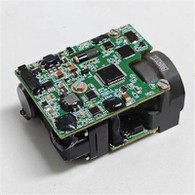


Why Choose the 10XLD13X 10km Laser Rangefinder Module?
The 10XLD13X 10km Laser Rangefinder Module is designed for OEM electro-optical systems that require a practical balance of long-range performance, narrow beam divergence, flexible target selection and compact integration. Compared with other JTBYShield 10km laser rangefinder modules, the 10XLD13X is particularly suitable for systems built around a 10–14V power supply and requiring ≤0.3 mrad beam divergence, range gating, and first/last target selection.
Optimized for 10–14V OEM System Integration
With a 10–14V input voltage, the 10XLD13X can be integrated into EO/IR payloads, observation systems and other compact ranging platforms designed around a nominal 12V power architecture. For OEM engineers comparing different 10km laser rangefinder modules, the power-input requirement is an important selection factor because it directly affects system-level power design and integration complexity.
≤0.3 mrad Beam Divergence for More Concentrated Long-Range Ranging
The module features a laser beam divergence of ≤0.3 mrad, providing a narrower ranging beam for applications where target discrimination and long-distance ranging performance are important. This makes the 10XLD13X a strong option for system designers looking for a 1535nm laser rangefinder module with 0.3 mrad divergence rather than a wider-divergence alternative.
Range Gating for Defined Measurement Windows
The integrated range gating function allows the host system to define a specific distance window for ranging. This capability is useful when the application needs to reduce interference from unwanted objects outside the selected ranging zone or focus measurement on targets within a predefined distance interval.
For OEM electro-optical systems operating in complex scenes, range gating provides greater control than a basic single-distance laser ranging function.
First and Last Target Selection
The 10XLD13X supports first-target and last-target selection, enabling the ranging system to distinguish between multiple returned signals in the measurement path. Depending on the operating environment, the system can prioritize the nearest valid return or the farther target return.
This function makes the module more suitable for applications where obstacles, vegetation, foreground objects or multiple reflecting surfaces may appear along the laser path.
165g Mechanical Envelope for Compact EO Integration
With a weight of ≤165g and compact module dimensions, the 10XLD13X is designed for integration into space- and weight-constrained electro-optical systems. It provides a middle-ground option within the JTBYShield 10km LRF range when the project requires both compact packaging and advanced ranging functions such as range gating and multi-target selection.
10km Defined-Target Performance with up to 13km Maximum Range
The 10XLD13X provides 10km ranging capability under defined target conditions and a maximum ranging distance of up to 13km. Rather than treating "10km" as an isolated marketing figure, system engineers should evaluate the module together with target size, reflectivity, atmospheric visibility and other ranging conditions specified in the technical data.
For projects requiring a 10km OEM laser rangefinder module with ±1m ranging accuracy, ≤0.3 mrad divergence, 10–14V input, range gating and first/last target selection, the 10XLD13X offers a clearly defined integration profile within the JTBYShield laser rangefinder product family.

Product features
1. Integrated structural design, shock and vibration resistance, high reliability, strong environmental adaptability;
2. 1535nm pumped Q-switched erbium glass laser integrated structure design and end-face multi-point sealing installation mode, strong anti-misadjustment ability, durable, long working life and human eye safety;
3. The internal interface of the circuit is all welded wire direct connection process, solid and reliable, which can avoid shortcircuit or poor contact caused by loose connector, oxidation and water vapor, and improve product reliability and life.
Product performance index
|
Item |
Index |
|
|
Model |
10XLD13X |
|
|
Operating wavelength |
1535nm ±10nm |
|
|
Ranging range |
50m-13000m |
|
|
13000m |
Typical Large target, visibility ≥ 25km |
|
|
10000m |
Visibility ≥ 25km, target with 0.3 reflectivity for 2.3m × 2.3m vehicles |
|
|
Humidity |
≤ 60% |
|
|
Ranging accuracy |
±1m |
|
|
Accuracy rate |
≥98% |
|
|
Range resolution |
≤50m |
|
|
Divergence angle |
≤0.3mrad |
|
|
Ranging frequency |
Once,1hz,5hz,10hz |
|
|
Size |
≤89mm×62.5mm×46mm |
|
|
Voltage |
10V~14V |
|
|
Working power consumption |
Average power consumption: ≤ 5W |
|
|
Standby power consumption |
≤1.5W |
|
|
Working temperature |
-40℃~+60℃ |
|
|
Storage temperature |
-55℃~+70℃ |
|
|
Weight |
≤165g |
|
Structure installation interface

Product function
* Laser ranging function;
* Power-on self-detection function;
* First and last target selection function;
* Range gating function;
* Set automatic distance interval function;
* Accumulate laser emission times function;
* Power polarity reverse protection.
Electrical Interface
Electrical interface requirements are as follows:
* Power supply voltage: 10V~14V;
* Average power consumption: ≤5W;
* Standby power consumption: ≤1.5W;
* The cross linking test between the upper computer end and the A1257H-10P connector of the rangefinder end is realized through
the A1257H-10P connector. Distance finder end power supply and communication port pin definitions are shown in the following table.
Pin definition of power supply and communication port at rangefinder end
|
Pin number |
Number |
Transmission direction |
Notes |
|
P-1 |
GND |
-- |
Communication ground wire |
|
P-2 |
RS422_RX_N |
I |
Rangefinder receiver - |
|
P-3 |
RS422_RX_P |
I |
Rangefinder receiver + |
|
P-4 |
RS422_TX_N |
O |
Rangefinder sender - |
|
P-5 |
RS422_TX_P |
O |
Rangefinder sender + |
|
P-6 |
NC |
-- |
standby |
|
P-7 |
NC |
-- |
standby |
|
P-8 |
NC |
-- |
standby |
|
P-9 |
P- |
-- |
Power supply, ground |
|
P-10 |
P+ |
-- |
Power supply, 10V~14V |

Understanding Range Resolution and Beam Divergence
When evaluating a 10km laser rangefinder module, ranging distance alone does not fully describe how the module performs in a real electro-optical system. Range resolution, ranging accuracy and laser beam divergence describe different aspects of the measurement process and should be evaluated separately during OEM system selection.
For the 10XLD13X 1535nm Laser Rangefinder Module, the specified range resolution is ≤50m, while the ranging accuracy is ±1m and the laser beam divergence is ≤0.3 mrad.
What Does "Range Resolution ≤50m" Mean?
The ≤50m range resolution specification should not be confused with the module's ±1m ranging accuracy.
Ranging accuracy describes how closely the reported distance corresponds to the actual distance of a valid target. Range resolution, by contrast, describes the module's ability to resolve target returns according to the ranging and signal-processing definition used for the 10XLD13X.
For engineering evaluation, the exact definition of the ≤50m range resolution should be referenced together with the 10XLD13X test method and ranging protocol.
Engineering confirmation required before publication:
Confirm whether "Range Resolution ≤50m" specifically refers to the minimum separable distance between multiple targets, distance discrimination between two valid returns, range-gate resolution, or another internal signal-processing definition.
Once this definition is confirmed, it should be stated explicitly rather than treating "resolution" as a general measure of ranging precision.
Range Resolution vs. ±1m Ranging Accuracy
These two specifications answer different engineering questions.
±1m ranging accuracy indicates the expected distance-measurement error for a valid target under the specified ranging conditions.
≤50m range resolution describes how the system distinguishes or processes target returns according to the module's defined resolution criterion.
This distinction is especially important for OEM engineers evaluating a long-range laser rangefinder module for scenes containing multiple reflecting objects. A module can provide accurate distance measurement to an identified target while having a different specification governing how separate target returns are resolved.
Why ≤0.3 mrad Beam Divergence Matters
The 10XLD13X uses a ≤0.3 mrad laser beam divergence, giving it a relatively concentrated ranging beam for long-distance target measurement.
As ranging distance increases, beam divergence determines how quickly the transmitted laser beam expands. A lower divergence value helps limit beam spread at long range, which can be beneficial when the system needs to direct laser energy toward a defined target area rather than illuminate a wider field.
For a 10km laser rangefinder module, beam divergence becomes particularly relevant when evaluating:
target dimensions at long distance;
nearby objects within the laser line of sight;
target discrimination in complex scenes;
optical alignment between the rangefinder and the host EO system;
ranging performance on relatively small or low-reflectivity targets.
The ≤0.3 mrad divergence of the 10XLD13X is therefore not simply an optical specification-it is an important system-integration parameter when selecting a 1535nm LRF module for long-range electro-optical applications.
Range Resolution, Beam Divergence and Target Selection Work Together
In practical ranging scenarios, range resolution and beam divergence should not be evaluated independently from target conditions.
Beam divergence affects the area illuminated by the laser at a given distance, while the range-resolution specification relates to how returned signals are distinguished or processed in the distance domain. The 10XLD13X also supports range gating and first/last target selection, giving the host system additional control when multiple objects or unwanted reflections are present along the ranging path.
For this reason, OEM customers evaluating the 10XLD13X should consider the following specifications together:
Range accuracy: ±1m
Range resolution: ≤50m
Beam divergence: ≤0.3 mrad
Range gating: Supported
First / last target selection: Supported
Defined-target ranging distance: 10km
Maximum ranging distance: Up to 13km
Evaluating these parameters together provides a more meaningful picture of system performance than comparing maximum ranging distance alone.
Customization for OEM Laser Rangefinder Projects
The 10XLD13X 10km Laser Rangefinder Module is designed for integration into OEM electro-optical and long-range ranging systems. In addition to the standard configuration, selected electrical, communication, mechanical and firmware parameters can be reviewed for customization according to the host system requirements and project volume.
For customers developing a new EO/IR platform, observation system or other integrated ranging equipment, JTBYShield can evaluate the laser rangefinder OEM integration requirements before sample production to help reduce redesign work at the system-integration stage.
What Can Be Customized?
| Item | Standard 10XLD13X Configuration | OEM Customization Status |
| Communication Interface | RS422 | Customizable subject to engineering review |
| Input Voltage | 10–14V | Customizable subject to project requirements |
| Connector | Standard module connector | Connector type and cable solution can be reviewed |
| Housing | Standard 10XLD13X housing | Mechanical housing customization can be evaluated |
| Ranging Frequency | Standard supported ranging modes | Custom ranging-frequency requirements can be reviewed |
| Firmware | Standard ranging functions | Command logic and selected firmware functions can be evaluated |
| Mechanical Interface | Standard dimensions and mounting interface | Mounting and interface modifications can be reviewed |
| Optical Parameters | Standard 1535nm ranging configuration | Normally fixed unless separately confirmed by engineering |
| Core Ranging Performance | Standard 10km defined-target performance | Normally based on the validated product configuration |
Final customization capability depends on the requested specification, engineering feasibility, development scope and order quantity.
Communication Interface Customization
The standard 10XLD13X laser rangefinder module uses RS422 communication for connection with the host system. For OEM projects using a different system architecture, communication requirements can be reviewed before integration.
Possible project discussions may include:
communication interface requirements;
baud rate and data format;
command structure;
ranging data output;
system-status feedback;
host-control logic.
For customers integrating the module into an existing electro-optical platform, JTBYShield can provide the relevant communication documentation for technical evaluation.
Power Supply and Voltage Adaptation
The standard 10XLD13X operates with a 10–14V input voltage, making it suitable for systems based around a nominal 12V power architecture.
If the host platform uses a different supply-voltage range, the requirement can be submitted for engineering evaluation. Voltage customization should be reviewed together with power consumption, electrical protection, startup behavior and the available space inside the customer's system.
This is particularly important when selecting a 10km OEM laser rangefinder module for UAV payloads, EO/IR systems or compact observation equipment where the power architecture has already been defined.
Connector and Cable Customization
The standard connector can be retained for normal integration, while OEM projects may require a different connector, cable length, cable orientation or wiring arrangement.
Depending on project requirements, JTBYShield can evaluate customization of:
connector type;
pin assignment;
cable length;
cable exit direction;
harness configuration;
host-side connection requirements.
Providing the connector specification at the beginning of the project can help avoid additional adapter boards or cable modifications during final assembly.
Housing and Mechanical Interface Customization
For systems with strict mechanical-envelope requirements, the standard 10XLD13X housing and mounting interface should first be compared with the available installation space.
Where required, mechanical customization can be evaluated for items such as:
- mounting-hole position;
- installation interface;
- housing geometry;
- cable or connector orientation;
- external dimensions;
- integration with the customer's mechanical structure.
For OEM development, customers are encouraged to provide a 2D drawing, 3D model or available installation envelope so that mechanical compatibility can be reviewed before prototype production.
Ranging Frequency and Firmware Functions
The 10XLD13X supports multiple ranging functions in its standard configuration. For system-level projects, selected ranging behavior or control logic may be reviewed according to the operating requirements of the host platform.
Possible requirements may include:
- ranging frequency;
- single or continuous ranging logic;
- range-gating control;
- first/last target selection;
- command-response format;
- data-output logic;
- startup behavior;
- system self-test functions.
Firmware-related customization should be confirmed during the technical evaluation stage, as not every function can necessarily be modified independently from the validated hardware configuration.
Fixed Parameters vs. Customizable Parameters
Not every specification of a 1535nm laser rangefinder module should be treated as freely customizable.
Core optical and ranging parameters-such as laser wavelength, beam characteristics, validated ranging performance and other safety- or performance-related specifications-may need to remain within the qualified design configuration.
By contrast, parameters related to system integration, including communication, connectors, mounting interfaces and selected control functions, are generally more suitable for OEM evaluation.
Clearly separating fixed performance parameters from customizable integration parameters helps both engineering teams define the project scope before sample development.
What Information Should You Provide for an OEM Evaluation?
To evaluate a custom 10km laser rangefinder module, it is helpful to provide the following project information:
required ranging distance and target conditions;
- host-system supply voltage;
- communication interface;
- required ranging frequency;
- connector and cable requirements;
- available installation dimensions;
- maximum acceptable module weight;
- required environmental conditions;
- firmware or command requirements;
- estimated prototype and production quantity.
Based on these requirements, JTBYShield can determine which specifications can use the standard 10XLD13X configuration and which items require an OEM modification.
Need a Customized 10km Laser Rangefinder Module?
If the standard 10XLD13X 10km laser rangefinder module does not fully match your system architecture, send us your electrical, communication and mechanical requirements for an engineering review.
Request OEM Evaluation
Request 10XLD13X Datasheet
Request Communication Protocol
Send Mechanical Integration Requirements
Hot Tags: 10km resolution with integrated laser rangefinder module, China, manufacturers, suppliers, factory, customized, wholesale, best, cheap, professional, for sale, near me