

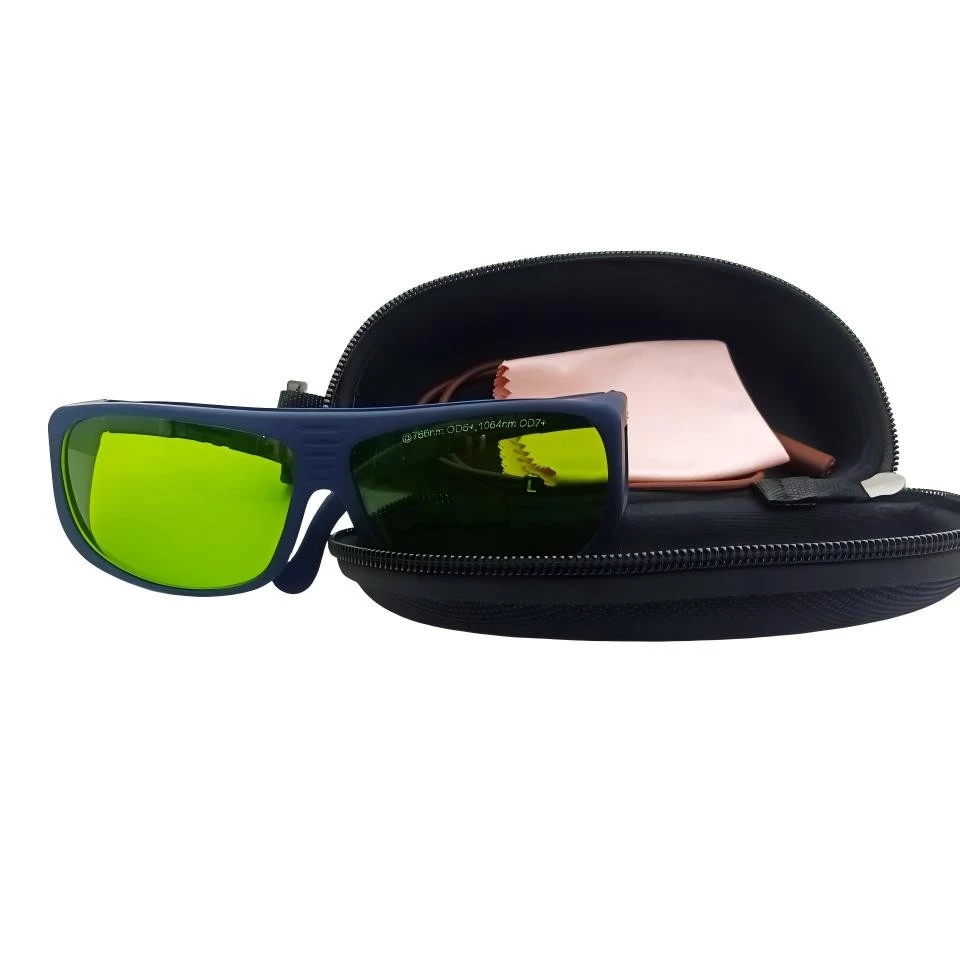
Products overview
Broad-Spectrum Laser Coverage
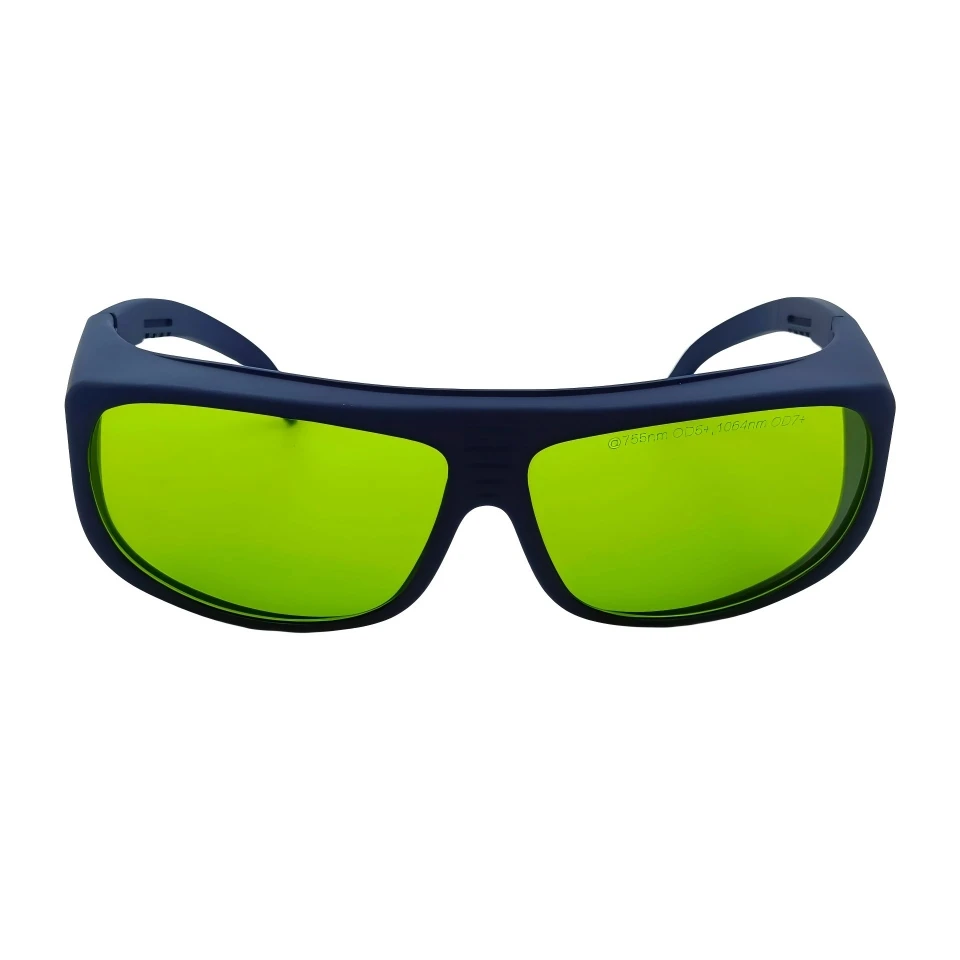
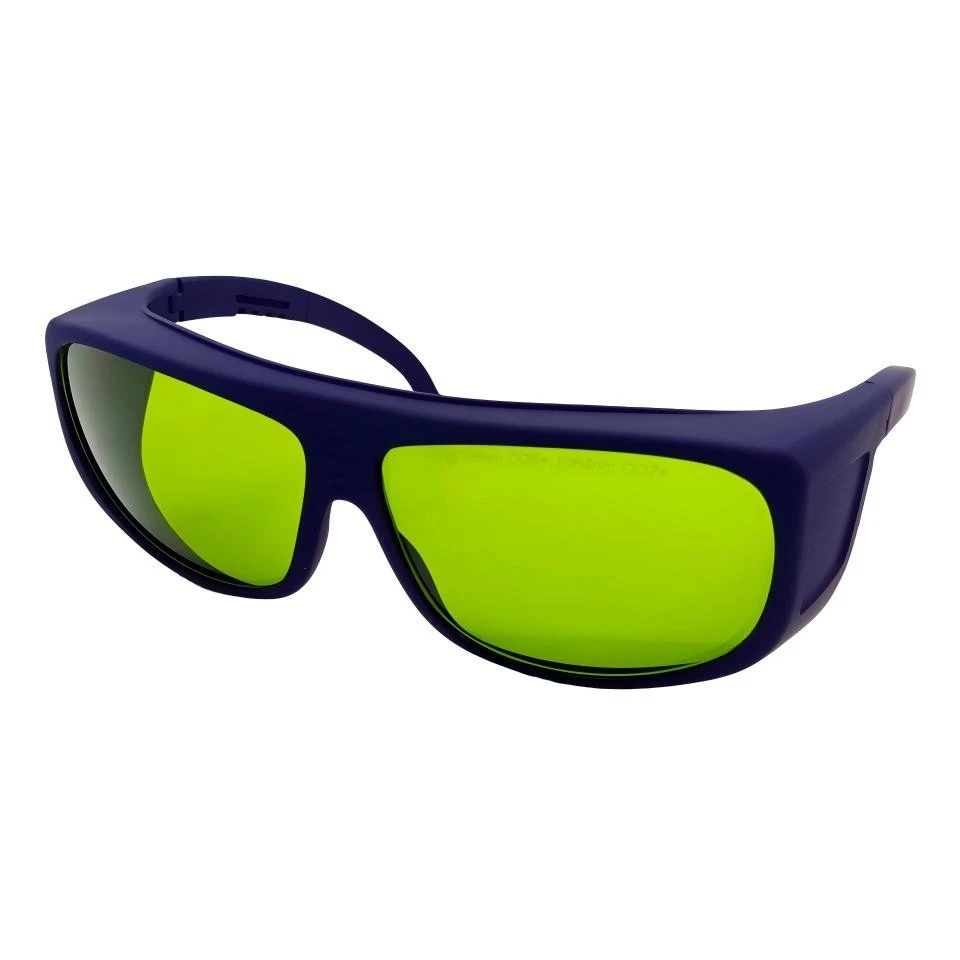
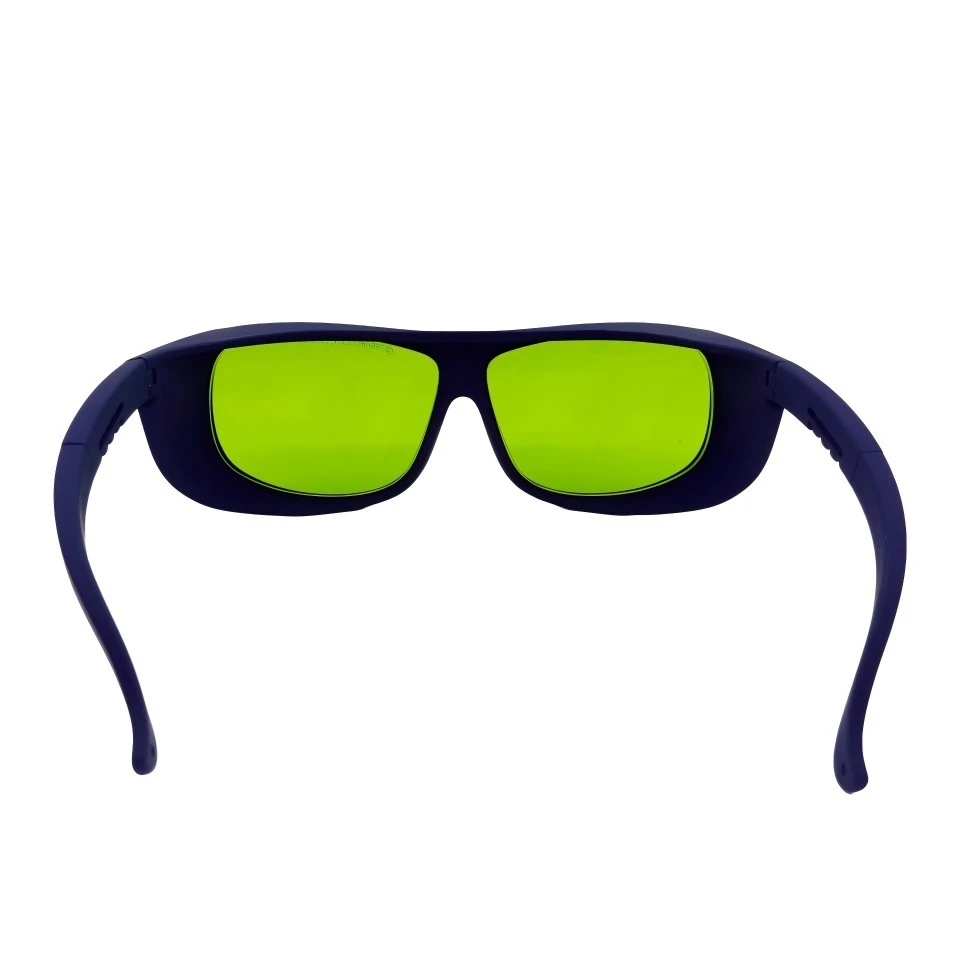
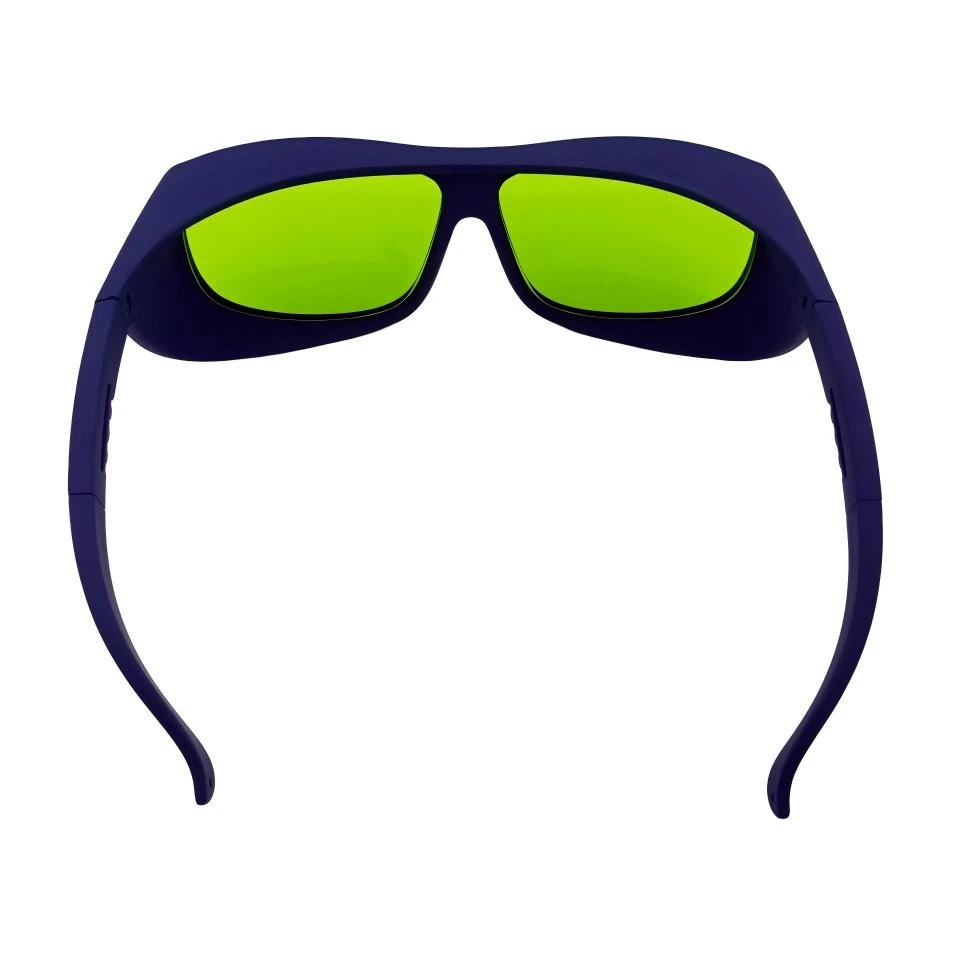
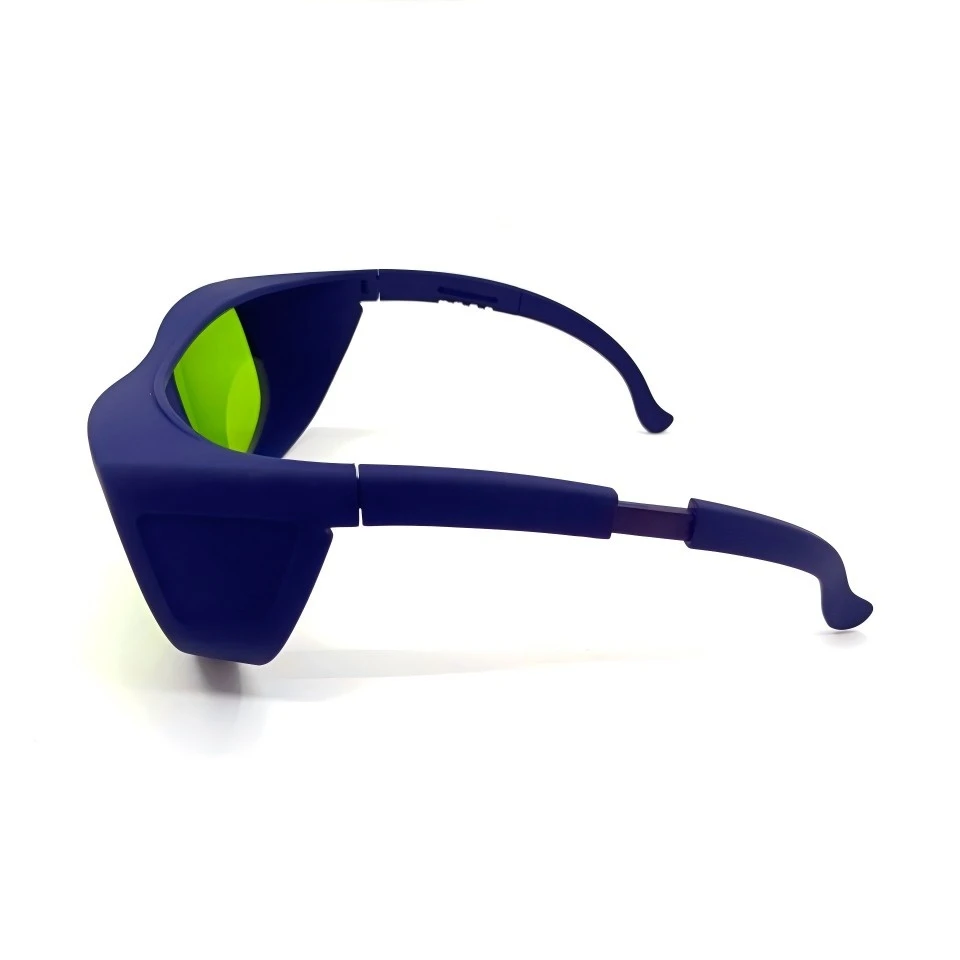
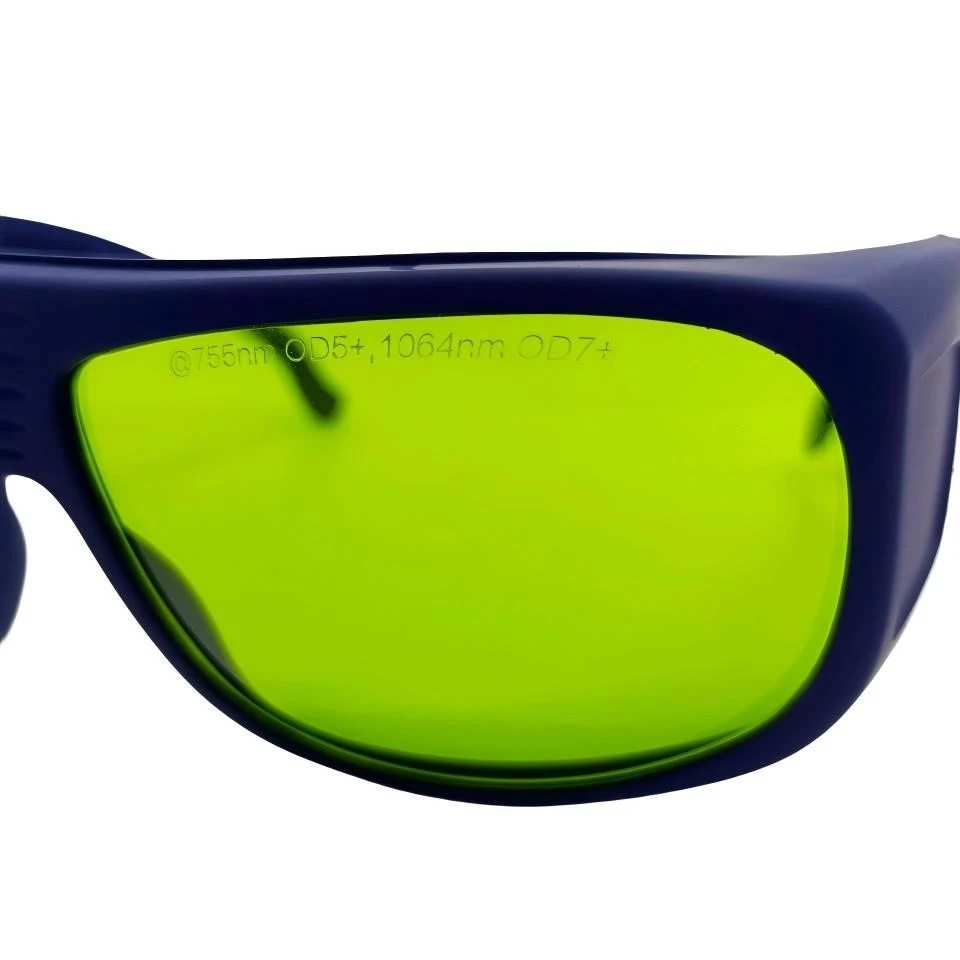
This protective eyewear covers the 600–1100nm wavelength range, making it suitable for workplaces that use several visible-red and near-infrared laser technologies. It is particularly matched to systems operating at 755nm, 808nm, and 1064nm.
Wavelength-Specific Protection
The lenses provide different attenuation levels for key laser wavelengths:
755nm: OD5+
808nm: OD5+
1064nm: OD7+
Visible Light Transmission: ≥20%
This configuration supports high attenuation at commonly used aesthetic laser wavelengths while preserving practical visibility for equipment positioning and procedural observation.

Why Higher OD Is Not Always the Selection Goal
The Right OD Matters More Than the Highest OD
When selecting laser safety glasses, it can be tempting to assume that a higher optical density automatically means a better choice.
For professional laser protection, however, the objective is not simply to select the highest available OD.
The correct approach is to determine the required optical density at the actual laser wavelength and then select protective eyewear that meets or exceeds that requirement.
For these 600–1100nm Laser Safety Glasses, the stated wavelength-specific protection is:
| Laser Wavelength | Typical Laser Source | Stated Optical Density |
|---|---|---|
| 755nm | Alexandrite Laser | OD5+ |
| 808nm | Diode Laser | OD5+ |
| 1064nm | Nd:YAG Laser | OD7+ |
This OD5+ / OD5+ / OD7+ protection profile gives buyers a clearly defined basis for evaluating whether the eyewear matches their actual laser system.
Higher OD Does Not Replace Laser Hazard Assessment
A pair of OD12+ laser safety glasses should not automatically be selected instead of OD5+ or OD7+ eyewear simply because the OD number is higher.
Required OD depends on factors including:
- Laser wavelength
- Output power or pulse energy
- CW or pulsed operation
- Pulse duration and repetition rate
- Exposure conditions
- Applicable laser safety requirements
For example, if a hazard assessment determines that a specific 808nm diode laser requires protection within the capability of an OD5+ filter, the purchasing objective is to select eyewear that satisfies that requirement-not simply to find the highest OD available.
The same principle applies when evaluating 755nm Alexandrite laser safety glasses or 1064nm Nd:YAG laser protective eyewear.
Protection Is a Matching Problem, Not a Number Competition
Professional laser eyewear selection should follow:
Actual Laser Wavelength
↓
Laser Operating Parameters
↓
Required Optical Density
↓
Eyewear Providing the Required OD
This is more technically meaningful than:
Higher OD → Automatically Better Choice
For B2B buyers, this distinction is particularly important when comparing several laser safety glasses that cover similar wavelength ranges but provide different OD profiles.
OD Must Also Be Considered With Working Requirements
Optical density is a critical protection specification, but it is not the only factor involved in eyewear selection.
Once the required OD has been satisfied, professional buyers may also need to evaluate:
- Visible light transmission (VLT)
- Working visibility
- Filter characteristics
- Fit and coverage
- Wearing requirements
- Certification and technical documentation
This model provides VLT ≥20%, allowing buyers to evaluate the relationship between the required wavelength-specific attenuation and visibility for the intended working environment.
Importantly, VLT should never be prioritized by reducing protection below the required OD.
When Should You Move to Higher-OD Laser Eyewear?
Higher-OD eyewear should be considered when the actual laser hazard assessment requires protection beyond this model's stated OD performance.
For example:
If the required protection at 1064nm exceeds OD7+, this model should not be selected solely because 1064nm falls within its 600–1100nm wavelength range.
A suitable higher-OD filter should be evaluated instead.
This distinction is important:
Wavelength Covered ≠ Required OD Satisfied
Both conditions need to be met.
The Selection Principle
For buyers comparing OD5+ laser safety glasses, OD7+ laser protective eyewear, and higher-OD laser goggles, the better question is not:
"Which product has the highest OD?"
It is:
"What OD does my laser require at its actual operating wavelength, and which eyewear meets that requirement?"
For applications where OD5+ at 755nm, OD5+ at 808nm, and OD7+ at 1064nm meet the determined protection requirements, these 600–1100nm laser safety glasses provide a wavelength-specific protection option without making "maximum OD" the purchasing objective.

Why Choose This OD5+/OD7+ Configuration?
Wavelength-Specific Protection Without Automatically Moving to the Highest OD
The 600–1100nm Laser Safety Glasses are designed for laser environments where the verified optical density requirement falls within the product's wavelength-specific protection ratings, while operators still need practical visible-light transmission for equipment positioning and procedure observation.
The protection profile is specifically defined at three important laser wavelengths:
755nm → OD5+
808nm → OD5+
1064nm → OD7+
Rather than positioning this model as maximum-OD laser eyewear, its purpose is to provide an appropriately matched OD5+/OD7+ protection configuration for compatible Alexandrite, diode, and Nd:YAG laser systems.
This distinction is particularly relevant for buyers comparing 755nm laser safety glasses, 808nm diode laser protective eyewear, and 1064nm Nd:YAG laser safety glasses with substantially higher-OD alternatives.
Important: This model should not be selected solely because the laser wavelength falls within the 600–1100nm protection range. The required OD must be verified against the actual laser output, operating mode, exposure conditions, and applicable laser hazard assessment.
Wavelength-Specific Protection Profile
For professional procurement, 600–1100nm wavelength coverage should always be read together with the OD provided at the actual operating wavelength.
| Laser Wavelength | Optical Density | Typical Laser Platform | Buyer Consideration |
|---|---|---|---|
| 755nm | OD5+ | Alexandrite Laser | Verify whether OD5+ meets the required protection level at 755nm |
| 808nm | OD5+ | Diode Laser | Confirm required OD for the actual 808nm diode system |
| 1064nm | OD7+ | Nd:YAG Laser | Provides higher stated attenuation than the 755nm/808nm protection points |
| 600–1100nm | Coverage Range | Multi-wavelength equipment | Protection is wavelength-specific; do not assume one uniform OD across the entire range |
The key purchasing principle is:
Wavelength Coverage + Required OD = Suitable Protection
Wavelength coverage alone is not enough.
For example, a 1064nm laser falls within the 600–1100nm range, but the buyer still needs to confirm whether the stated OD7+ at 1064nm satisfies the protection requirement of the actual Nd:YAG laser system.
OD5+/OD7+ vs. Higher-OD Protection
The Difference Is the Required Protection Level - Not Simply "More vs. Less"
When comparing OD5+/OD7+ laser safety glasses with higher-OD laser protective eyewear, the correct question is not:
Which one blocks more laser radiation?
The more useful purchasing question is:
Which protection level does my actual laser system require?
Higher optical density may be necessary for some laser environments, but it should not automatically become the default choice for every 755nm, 808nm, or 1064nm system.
How the Two Protection Strategies Differ
| Selection Factor | OD5+/OD7+ Configuration | Higher-OD Configuration |
|---|---|---|
| Primary selection goal | Meet the verified OD requirement | Meet a higher verified OD requirement |
| 755nm protection | OD5+ | Consider when required OD exceeds this level |
| 808nm protection | OD5+ | Consider when required OD exceeds this level |
| 1064nm protection | OD7+ | Consider when OD7+ is insufficient |
| VLT consideration | ≥20% for this model | Depends on the specific higher-OD filter |
| Best selection basis | Actual laser parameters + required OD | Actual laser parameters + higher required OD |
This makes the two configurations alternatives for different laser hazard requirements, rather than simply a basic and premium version of the same laser safety glasses.
When Does the OD5+/OD7+ Configuration Make Sense?
This configuration can be evaluated when:
- A 755nm Alexandrite laser requires protection within the stated OD5+ capability
- An 808nm diode laser requires protection within the stated OD5+ capability
- A 1064nm Nd:YAG laser requires protection within the stated OD7+ capability
- Multiple compatible laser systems need to be evaluated against one wavelength-specific protection profile
- Operators also need to consider VLT ≥20% for the intended working environment
In these situations, the goal is not to maximize OD unnecessarily.
The goal is to match the laser wavelength, required attenuation, and working requirements with the appropriate protective eyewear.
When Should You Choose Higher-OD Laser Protection Instead?
A higher-OD filter should be evaluated whenever the required protection exceeds this model's stated capability.
For example:
Required OD at 1064nm ≤ OD7+
→ This model may be evaluated.
Required OD at 1064nm > OD7+
→ Evaluate a higher-OD 1064nm laser safety goggle.
The same logic applies at 755nm and 808nm.
This creates a clear decision boundary:
Do not select OD5+/OD7+ because it is lighter protection. Do not select a higher OD simply because the number is larger. Select the eyewear whose wavelength-specific OD meets the verified laser hazard requirement.
A More Precise Way to Specify Laser Safety Eyewear
Instead of purchasing:
"600–1100nm laser safety glasses"
professional buyers should specify:
755nm + Required OD
or
808nm + Required OD
or
1064nm + Required OD
and then evaluate whether the OD5+/OD7+ wavelength-specific protection profile matches the actual laser equipment.
For B2B procurement, this approach provides a much clearer basis for comparing Alexandrite laser safety glasses, diode laser protective eyewear, Nd:YAG laser safety glasses, and higher-OD laser protection solutions.
When Is This Protection Level Not Enough?
Wavelength Coverage Does Not Automatically Mean Sufficient Protection
The 600–1100nm Laser Safety Glasses provide a wavelength-specific protection profile of:
755nm - OD5+
808nm - OD5+
1064nm - OD7+
However, these ratings should not be interpreted as suitable for every laser operating within the 600–1100nm range.
The key question is:
Does the stated OD at your actual laser wavelength meet or exceed the required optical density determined for your laser system?
If not, this protection level is not sufficient-even when the wavelength itself falls inside the stated protection range.
1. When the Required OD Exceeds the Product Rating
This is the clearest selection boundary.
For example:
| Laser Wavelength | This Model | If Your Required OD Is... | Selection |
|---|---|---|---|
| 755nm | OD5+ | Higher than OD5+ | Evaluate higher-OD 755nm protection |
| 808nm | OD5+ | Higher than OD5+ | Evaluate higher-OD 808nm protection |
| 1064nm | OD7+ | Higher than OD7+ | Evaluate higher-OD 1064nm protection |
A 1064nm laser safety glasses product providing OD7+ should therefore not be selected when the laser hazard assessment requires substantially higher attenuation at 1064nm.
In that situation, higher-OD laser protective eyewear should be evaluated.
2. When Laser Output or Operating Conditions Change
Required protection is not determined by wavelength alone.
Changes in laser operating conditions can change the protection requirement, including:
- Higher output power
- Higher pulse energy
- CW versus pulsed operation
- Pulse duration
- Repetition rate
- Exposure conditions
Therefore, eyewear previously selected for one laser configuration should not automatically be assumed suitable after the equipment parameters have changed.
This is particularly important when evaluating 755nm Alexandrite, 808nm diode, or 1064nm Nd:YAG laser safety glasses for different equipment models.
3. When Your Laser Wavelength Is Outside the Verified Protection Range
These glasses should not be selected for a laser simply because its wavelength is "close" to the 600–1100nm range.
For example, applications involving wavelengths such as:
1550nm
2940nm
10,600nm
require eyewear with protection specifically verified for those wavelengths.
A product optimized for 600–1100nm laser protection should not be assumed to protect wavelengths outside its specified range.
4. When One System Contains Additional Laser Wavelengths
Multi-wavelength equipment requires special attention.
A system may use a primary 755nm, 808nm, or 1064nm laser, while also containing another laser source or wavelength.
In that case, buyers should evaluate every relevant hazardous wavelength, not only the primary operating wavelength.
The correct question is not:
"Does this eyewear protect my main laser?"
It is:
"Does this eyewear meet the required OD at every hazardous wavelength present in the system?"
If one wavelength is not adequately covered, another filter or protection solution may be required.
5. When a Higher-OD Configuration Is Required
This OD5+/OD7+ laser safety glasses model is designed for applications where its stated wavelength-specific OD ratings meet the verified protection requirement.
It is not intended to replace higher-OD eyewear when the laser hazard assessment calls for greater attenuation.
For example, if a 1064nm application requires protection above OD7+, buyers should evaluate a higher-OD 1064nm laser safety goggle rather than choosing this model solely because 1064nm falls within its wavelength range.
Know the Selection Boundary
The decision can be simplified to:
Actual Laser Wavelength
↓
Required OD
↓
Compare With Product OD
↓
OD5+/OD7+ Meets Requirement?
Yes → This model can be evaluated
No → Select higher-OD or different wavelength protection
The key principle for professional laser eyewear procurement is:
"600–1100nm covered" does not mean "suitable for every 600–1100nm laser."
These 600–1100nm OD5+/OD7+ laser safety glasses should be selected only when their wavelength-specific protection ratings match the actual laser hazard requirement.
CE Certified, OEM Ready & Technical Support
The 600–1100nm OD5+/OD7+ Laser Safety Glasses are CE certified, supporting professional procurement where product compliance and technical documentation are part of the supplier evaluation process.
For B2B customers, JTBYShield supports more than standard product supply. OEM laser safety eyewear solutions are available for laser equipment manufacturers, distributors, system integrators, and professional laser protection projects.
B2B & OEM Support
Depending on project requirements, we can support:
CE certification and technical documentation
Product specification and wavelength/OD information
OEM / private-label laser safety glasses
Bulk purchasing and repeat supply
Laser wavelength and protection matching
Packaging and project-specific requirements
Not Sure Whether OD5+/OD7+ Is Right for Your Laser?
Send us your laser wavelength, output power or pulse parameters, required OD, application, and purchase quantity.
Loshield can help you evaluate whether this 600–1100nm laser protective eyewear matches your system or whether a different wavelength range or higher-OD solution should be considered.
→ Send Your Laser Parameters & Get a Protection Recommendation
→ Request CE Documents, OEM Information or a B2B Quote
Hot Tags: 600–1100nm laser safety glasses | od5+/od7+ ce protective eyewear, China, manufacturers, suppliers, factory, customized, wholesale, best, cheap, professional, for sale, near me, 10600nm CO2 Laser Safety Glasses, Infrared Protection Goggles, IPL Hair Removal Safety Glasses, ND YAG Laser Goggles, Red Laser Protection Glasses, Safety Glasses For Green Laser