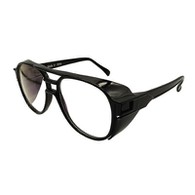


The Importance of Eye Lens Protection in Interventional Fluoroscopy Procedures
Clinicians performing fluoroscopy-guided interventional procedures typically stay in close proximity to patients and X-ray sources for long operational cycles. While the primary X-ray beam is strictly controlled during clinical operations, medical staff are still at risk of continuous exposure to scatter radiation. This secondary radiation is generated when X-rays penetrate and interact with the patient's body, examination tables and surrounding medical equipment.
For frontline practitioners engaged in interventional work on a regular basis, ocular protection for the eye lens - a highly radiation-sensitive tissue - is an indispensable part of a standardized interventional radiation protection strategy.
Eye Lens: A Key Priority for Occupational Radiation Protection
Among all human tissues exposed to occupational radiation, the eye lens is extremely vulnerable and requires targeted shielding protection. Conventional protective equipment such as lead aprons mainly shield the torso and core organs, which cannot cover the ocular area. In this case, radiation protective glasses serve as specialized personal protective gear to block scattered rays and protect the eye lens.
In common high-intensity interventional scenarios including interventional cardiology, vascular intervention, electrophysiology procedures, angiography and various catheter-based treatments, medical personnel need to stand near the operating area for a long time to observe real-time imaging guidance and complete precise operations. In these working environments, eye lens radiation protection effectively compensates for the protection loopholes of traditional lead aprons, thyroid collars and fixed radiation shields, forming a full-range radiation protection system.
Hazards of Scatter Radiation in Interventional Clinical Work
In routine fluoroscopy operations, operators rarely face direct primary X-ray beam exposure. The main source of occupational radiation hazard comes from scatter radiation reflected and diffused by patients and on-site equipment.
The intensity of scattered radiation exposure received by medical staff is affected by multiple practical factors: distance from the patient, single operation duration, total imaging time, fixed working position, equipment parameter configuration and operator's standing area.
Interventional teams usually adopt fixed working postures for repeated operations, resulting in continuous accumulation of radiation dose. Therefore, matching professional fluoroscopy radiation protection equipment is critical to avoid chronic occupational radiation damage.
Protection Advantages of Interventional Radiation Protective Glasses
Interventional lead radiation protective glasses adopt high-standard lead-equivalent lens materials, which can effectively attenuate scattered X-rays and build an independent safety barrier for the operator's eyes.
The product integrates core practical protection features to meet clinical long-term use needs:
High-purity lead glass lenses with stable shielding performance
Standardized Pb equivalent shielding parameters
High light transmittance to ensure clear surgical vision
Lightweight frame design to reduce long-wearing fatigue
Optional side protection structure for full-angle shielding
Equipped with0.5mmPb and 0.75mmPb lead glass lenses two mainstream specifications, the protective glasses can be flexibly selected by medical institutions according to different procedural radiation intensity, clinical scenarios and staff usage habits.
Professional Design for Interventional Medical Practitioners
Different from ordinary safety goggles, lead glass radiation glasses for interventional procedures are tailor-made for medical staff who work around fluoroscopy equipment for a long time. The core applicable groups cover interventional radiologists, cardiologists, vascular surgeons, cath lab staff, electrophysiology teams and professional medical imaging personnel.
Aiming at the characteristics of long-hour, high-frequency clinical operations, the product balances professional radiation shielding performance, wearing comfort and high-definition optical visibility, fully adapting to the intensive working rhythm of interventional operating rooms.
Ocular Protection: An Essential Part of Standard Radiation Safety Management
Radiation protection eyewear is not an independent protective tool, but a key terminal link of systematic occupational radiation protection. A complete interventional radiology radiation safety program covers standardized equipment placement, optimized imaging working protocols, reasonable distance control, fixed protective barriers, lead aprons & thyroid protective equipment, real-time radiation monitoring and full set of personalized protective supplies.
As dedicated auxiliary protective equipment, interventional radiation protective glasses focus on making up for the blind spot of eye lens protection against scatter radiation. With reliable lead glass lenses and ergonomic wearable design, they effectively reduce cumulative occupational radiation exposure, help medical institutions build a more rigorous fluoroscopy interventional radiation safety system, and support safer and more efficient clinical work.
How Lead Glass Lenses Reduce Scatter Radiation Exposure
During fluoroscopy-guided procedures, the main occupational radiation exposure to medical staff usually comes from scatter radiation rather than direct exposure to the primary X-ray beam. When X-rays interact with the patient and surrounding equipment, part of that radiation is scattered in different directions around the procedure room.
For clinicians working close to the patient, lead glass lenses provide an additional shielding layer in front of the eyes and help reduce the amount of scattered X-ray radiation reaching the eye lens area.
Lead Glass Provides Transparent Radiation Attenuation
The key advantage of lead glass is that it combines optical transparency with radiation attenuation.
Unlike an opaque lead barrier, a lead glass lens allows the wearer to maintain a clear view of the patient, monitors, instruments, and working field while adding a defined level of X-ray shielding.
This makes lead glass particularly suitable for radiation protective glasses used during interventional radiology, cardiology, angiography, and other fluoroscopy-guided procedures.
Pb Equivalency Defines the Shielding Level
The radiation attenuation of protective eyewear is commonly expressed as a lead equivalency, or mmPb.
For example:
- 0.5mmPb lead glasses provide a specified level of attenuation corresponding to approximately 0.5mm of lead under defined test conditions.
- 0.75mmPb radiation glasses provide a higher specified Pb-equivalent shielding level.
The Pb value describes shielding performance rather than the physical thickness of the lens.
When comparing X-ray protective eyewear, buyers should therefore consider the stated Pb equivalency together with the relevant test conditions and product documentation.
Protection Depends on More Than the Front Lens
Although the front lens is the primary shielding component, scatter radiation may reach the eyes from different directions.
The actual protection provided by interventional radiation glasses can also depend on:
- lens size
- frame fit
- distance between the lens and the face
- side protection
- head position
- operator position relative to the patient
- direction of scattered X-rays
For this reason, a well-designed pair of interventional radiation protective glasses should consider both frontal shielding and the overall coverage around the eyes.
Why Side Coverage Can Improve Scatter Radiation Protection
In an interventional room, scattered X-rays do not always arrive directly from the front.
Depending on equipment geometry and operator position, part of the scatter field may approach from the side or below.
Radiation glasses with side shielding or a more wraparound frame design can help reduce these additional exposure pathways around the eye area.
This is particularly relevant for fluoroscopy radiation protection, where clinicians frequently change head position while maintaining visual contact with the patient, monitor, and instruments.
Clear Vision Must Be Maintained During Clinical Work
Radiation protection eyewear must provide shielding without creating unnecessary visual interference during a procedure.
For this reason, lead glass lenses should be evaluated not only for Pb equivalency but also for:
- optical clarity
- lens size
- field of view
- distortion
- frame positioning
- wearing comfort
For long interventional procedures, this balance between scatter radiation protection and visual performance is important because protective eyewear must remain practical enough to be worn consistently.
Part of a Layered Radiation Protection Strategy
Lead glass lenses are not intended to replace other radiation protection measures.
Instead, lead radiation protective glasses work as one part of a broader protection strategy that may also include lead aprons, thyroid collars, ceiling-suspended shields, table-side barriers, optimized fluoroscopy settings, distance, and personal dosimetry.
By adding a transparent Pb-equivalent barrier directly in front of the eyes, lead glass radiation glasses can help reduce occupational scatter radiation exposure to the eye lens area while allowing clinicians to continue working normally during fluoroscopy-guided procedures.

Product Highlights
Lead Glass Lenses
Manufactured with lead glass lenses that provide dependable radiation protection together with clear, accurate vision for everyday clinical work.
Two Protection Levels
Available in 0.5mmPb and 0.75mmPb lead equivalency to accommodate different medical imaging applications.
Classic Full-Frame Design
A simple, professional frame suitable for routine use in hospitals, imaging centers, and surgical departments.
Clear Optical Performance
Designed to provide excellent visibility for observing patients, medical equipment, and diagnostic monitors.
Reusable Construction
Suitable for repeated professional use with proper cleaning, inspection, and storage.
Choosing 0.5mmPb vs 0.75mmPb Radiation Glasses
When selecting radiation protective glasses for interventional procedures, one of the most important specifications is the lead equivalency of the lenses.
Our interventional radiation glasses are available with 0.5mmPb and 0.75mmPb lead glass lenses, allowing hospitals, cath labs, and medical distributors to choose the shielding level that better matches the intended workflow.
The higher Pb value does not automatically make one option suitable for every user. The selection should balance radiation protection requirements with eyewear weight, comfort, procedure duration, and frequency of use.
When 0.5mmPb Lead Glasses May Be Appropriate
0.5mmPb radiation protective glasses provide a commonly specified level of transparent X-ray shielding for clinicians working in fluoroscopy and interventional imaging environments.
This option may be suitable where:
- routine fluoroscopy-guided procedures are performed
- the user wears radiation glasses for long periods
- lower eyewear weight is preferred
- comfort and balance are important for daily use
- the facility specifies 0.5mmPb eye protection
For interventional radiologists, cardiologists, and cath lab staff who require regular scatter radiation protection, 0.5mmPb lead glasses can provide a practical balance between shielding performance and wearability.
When 0.75mmPb Radiation Glasses May Be Preferred
0.75mmPb radiation glasses provide a higher specified lead equivalency and may be selected where the radiation protection program requires increased eye shielding.
They may be considered for:
- longer fluoroscopy-guided procedures
- high-use interventional environments
- users working frequently close to the patient
- cath labs with repeated daily procedures
- facilities specifying a higher Pb-equivalent lens
Because additional shielding material can also affect overall eyewear weight, users should consider comfort and frame fit when selecting 0.75mmPb lead glass radiation glasses for extended wear.
Compare 0.5mmPb and 0.75mmPb Lead Glass Lenses
| Selection Factor | 0.5mmPb Lead Glasses | 0.75mmPb Radiation Glasses |
|---|---|---|
| Lead Equivalency | 0.5mmPb | 0.75mmPb |
| Shielding Specification | Standard option | Higher Pb option |
| Relative Lens Weight | Lower | Higher |
| Long-Duration Wear | Often easier to balance | Comfort depends more on frame design |
| Typical Selection Basis | Routine interventional use | Higher shielding requirement |
| Best Fit | Daily fluoroscopy workflows | More demanding radiation protection specifications |
Higher Pb Equivalency Is Only One Part of the Selection
The Pb value alone does not determine how effective a pair of interventional radiation protective glasses will be in actual use.
Other important factors include:
- lens coverage
- side shielding
- frame fit
- distance between the lens and face
- eyewear weight
- nose bridge comfort
- temple pressure
- operator position
- procedure frequency
A well-fitting pair of 0.5mmPb lead glasses may be more practical for daily wear than a heavier option that is uncomfortable and frequently removed.
Likewise, a 0.75mmPb X-ray protective eyewear configuration may be appropriate where the facility places greater priority on higher lead equivalency.
Consider Side Protection Together With Lens Pb
For interventional radiology and cath lab applications, scatter radiation may approach the eye area from oblique or lateral directions.
For this reason, buyers should evaluate:
- front lens Pb equivalency
- side-shield design
- wraparound coverage
- frame geometry
rather than comparing only the Pb value printed on the product specification.
A 0.75mmPb front lens does not automatically compensate for inadequate coverage around the sides of the eyes.
Select Radiation Glasses According to the Clinical Workflow
For hospital procurement and radiation safety teams, the choice between 0.5mmPb and 0.75mmPb radiation glasses should consider how the eyewear will actually be used.
Useful questions include:
- How frequently does the clinician perform fluoroscopy-guided procedures?
- How long is the eyewear typically worn?
- Is side protection required?
- What Pb equivalency does the facility specify?
- Is eyewear weight a concern for long procedures?
Will the glasses be used in interventional radiology, cardiology, or cath lab environments?
By reviewing shielding requirements together with fit and wearing comfort, facilities can select lead glass radiation protective eyewear that is better matched to the user's actual interventional workflow.
Custom Radiation Protective Eyewear Solutions with Manufacturing and Quality Control
Interventional radiation protective eyewear is not a one-size-fits-all product. Different hospitals, cath labs, distributors, and clinical teams may require different lens shielding levels, frame styles, side protection, fit, packaging, and order quantities.
For this reason, we support custom radiation protective eyewear solutions based on the intended clinical use and procurement requirements rather than supplying only one standard configuration.
Configure the Eyewear Around the Clinical Workflow
A pair of interventional radiation protective glasses should match how and where the user works.
Depending on the project or purchasing requirement, customization can include:
- 0.5mmPb or 0.75mmPb lead glass lenses
- different frame styles
- side-shield configuration
- lens size and coverage
- frame color options
- logo or private-label requirements
- individual or bulk packaging
- distributor and hospital order quantities
For interventional radiology and cath lab use, the goal is to balance eye lens radiation protection, coverage, weight, and wearing comfort within one practical eyewear configuration.
Lead Glass Lens Selection and Inspection
The lead glass lens is the core shielding component of the eyewear.
During production, attention is given to the confirmed Pb-equivalent specification and to the visual quality of the finished lenses.
Inspection points can include:
- correct lens type
- 0.5mmPb or 0.75mmPb configuration
- lens surface condition
- visible defects
- edge condition
- lens fit inside the frame
- optical appearance
For B2B orders, the lens specification should remain consistent across the full production batch.
Frame Assembly and Fit Control
The frame does more than hold the lenses. Its geometry affects how the eyewear sits on the face and how much coverage is provided around the eye area.
During assembly, key points can include:
- lens-to-frame fit
- temple alignment
- nose bridge position
- side-shield installation
- frame balance
- hinge movement
- overall wearing stability
These details are especially important for radiation glasses used during long fluoroscopy procedures, where poor fit can reduce wearing comfort and make consistent use less practical.
Side Protection as Part of the Custom Configuration
For interventional applications, frontal lens protection alone may not address every scatter radiation direction.
Where side protection is required, the eyewear configuration can be selected to provide additional lateral coverage around the eye area.
This is particularly relevant for:
- interventional radiology
- cardiology
- cath labs
- angiography
- vascular procedures
- electrophysiology workflows
The required side-shield design should be considered together with front-lens Pb equivalency and frame geometry.
Batch Consistency for Hospital and Distributor Orders
For larger hospital, distributor, or OEM orders, consistency between units is an important purchasing consideration.
Quality control can include checks on:
- Pb-equivalent lens specification
- frame model
- lens installation
- side-protection configuration
- visible surface condition
- hinge function
- overall product appearance
- packaging and labeling
This helps ensure that each pair of lead glass radiation protective glasses matches the confirmed order specification.
Final Inspection Before Shipment
Before packing, finished eyewear can be reviewed against the approved product configuration.
Final checks may include:
- lens specification
- frame assembly
- side-shield placement
- lens and frame condition
- product quantity
- labeling
- accessories
- packaging requirements
Where available, relevant technical or radiation shielding documentation can also be prepared for B2B customer review.
From Standard Lead Glasses to Project-Based Eyewear Supply
For hospitals, interventional departments, medical distributors, and OEM buyers, radiation protective eyewear procurement often involves more than choosing between 0.5mmPb and 0.75mmPb.
The final product may also need to match user comfort preferences, side-protection requirements, branding, packaging, and batch consistency.
By combining custom radiation protective eyewear configuration, lead glass lens selection, frame assembly, and quality control, we can support both standard orders and project-based supply of interventional radiation protection glasses for fluoroscopy and cath lab environments.
Frequently Asked Questions
1. What is the difference between interventional radiation protective glasses and ordinary X-ray safety glasses?
There are clear differences in design and application scenarios.Interventional radiation protective glasses are specially developed for clinical staff who work close to X-ray equipment and patients during fluoroscopy-guided operations. These practitioners face long-term, repeated scatter radiation exposure, which poses obvious occupational radiation risks.
Compared with ordinary X-ray safety glasses, interventional models focus more on practical clinical performance, including full lead-equivalent lens coverage, reliable side shielding, ergonomic frame fitting, balanced weight distribution, and all-day wearing comfort for long-duration surgeries.
2. Is 0.75mmPb always better than 0.5mmPb for interventional use?
Not exactly. While 0.75mmPb radiation glasses deliver higher radiation shielding capacity, higher lead equivalence does not mean they are the best fit for all scenarios.
Many factors need to be considered, such as eyewear weight, frame structure, daily procedure frequency, single operation duration, and the hospital's standard radiation protection requirements. For clinicians who wear protective glasses throughout lengthy interventional procedures, 0.5mmPb lead glasses offer a more balanced solution with qualified shielding performance and lighter weight to reduce fatigue. The final selection should comply with hospital radiation management rules and actual clinical working conditions.
3. Why do we need side protection if the front lenses are already lead glass?
In actual interventional rooms, scatter radiation does not only come from the front. Radiation can reflect and diffuse from multiple angles, including the surgical table, X-ray tube, patient's body and surrounding equipment, reaching the eyes from the side and oblique directions.
Although the front lead glass lenses block frontal radiation effectively, side shields and wraparound frame designs can fill the protection gaps on both sides of the eyes, achieving all-round radiation shielding. Therefore, when selecting fluoroscopy radiation protection equipment, both front Pb equivalence and side coverage performance should be checked.
4. Can lead radiation glasses completely block scatter radiation?
No radiation protective eyewear can achieve 100% radiation elimination. The core function of lead radiation protective glasses is to effectively reduce cumulative scatter radiation exposure for medical staff.
The actual shielding effect is determined by lens Pb standard, side coverage area, frame fitting degree, operator's standing position, radiation scattering angle, and other matched protective measures on site. It should be regarded as an essential part of the complete interventional radiation protection strategy, rather than independent protective equipment.
5. Why is frame fit critical for radiation protection eyewear?
Frame fitting directly affects both wearing comfort and actual shielding effect. Loose-fitting glasses are easy to slide during surgery, creating gaps between the frame and the face. Scattered radiation can penetrate through these gaps and reduce the actual protective efficiency.
For long-term and high-frequency interventional work, users need to comprehensively evaluate lens-to-eye distance, nose bridge fit, temple tightness, side wrapping coverage, frame stability and overall weight. Well-fitted X-ray protective eyewear ensures stable and consistent shielding performance in daily clinical use.
6. Are these radiation glasses applicable for cath lab staff?
Yes, they are perfectly suitable for cath lab scenarios. The glasses are designed for cardiologists and other on-site clinical personnel who are exposed to scatter radiation during fluoroscopy-guided interventional operations.
When purchasingcath lab radiation glasses, hospitals can select appropriate Pb equivalence (0.5mmPb / 0.75mmPb), side protection configuration according to local radiation protection standards, daily fluoroscopy frequency and long-time wearing demands of the staff.
Hot Tags: interventional lead radiation protective glasses | lead glass lenses | 0.5mmpb & 0.75mmpb available, China, manufacturers, suppliers, factory, customized, wholesale, best, cheap, professional, for sale, near me