



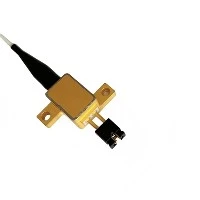
Pulse Lasers play a key role in the ionization of matter. They can accurately act on matter in the form of high-energy, extremely short pulses, causing the matter to absorb a large amount of energy in a short period of time and quickly realize the ionization process.

Characteristics and Advantages of Pulsed Lasers
Characteristics
1. High power and energy density:
Pulsed lasers can output high peak power and have extremely high power density. This makes the laser energy highly concentrated in a very short time, which can achieve high-precision processing and treatment of materials. The highest power (peak power) that a single pulse can achieve is one of the important indicators of pulsed lasers, usually measured in watts (W).

2. Short pulse width:
Pulse width refers to the duration of a single pulse and is an important property of pulsed lasers. Pulse width is usually measured in nanoseconds, picoseconds or even femtoseconds.
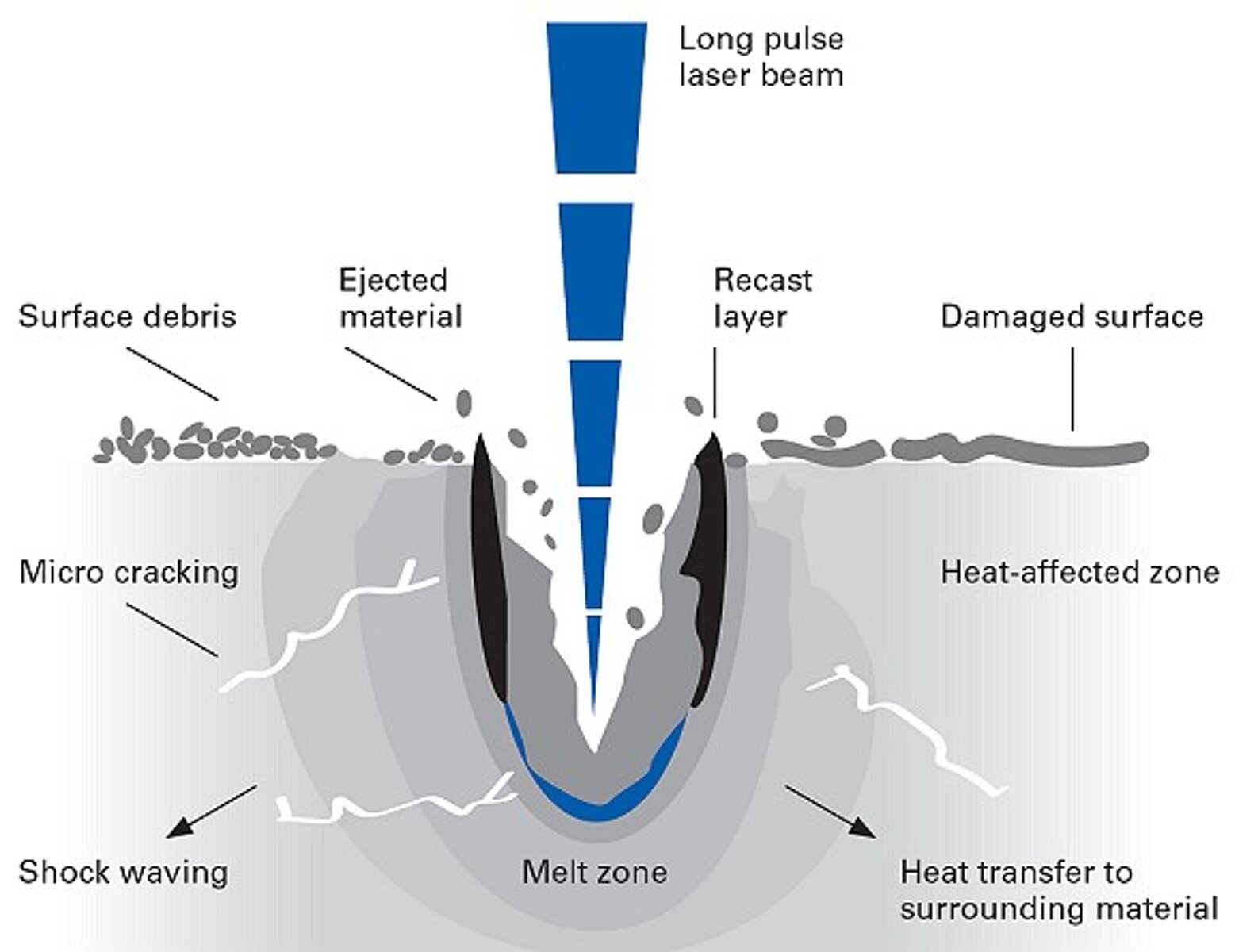
Narrower pulse width helps reduce the heat-affected zone, giving pulsed lasers unique advantages in fields such as precision machining and medical surgery.
3. Adjustable repetition rate:
The repetition rate or pulse repetition rate of a pulsed laser describes the number of pulses emitted per second or the reverse time pulse interval.
The repetition rate can be adjusted according to specific application requirements to meet different processing and experimental conditions.
4. Accurate time control:
Pulsed lasers can achieve precise control of pulse emission time, which is particularly important for applications that require high-precision synchronization.
Advantages
1. High-precision processing:
Due to the high power and energy density and short pulse width of the pulse laser, it can achieve precise processing and treatment of materials on a microscopic scale.
This high-precision processing capability makes pulse lasers have broad application prospects in microelectronics, optoelectronics and other fields.
2. Low heat-affected zone:
The narrower pulse width helps to reduce the heat-affected zone and avoid adverse reactions such as deformation and melting caused by excessive heating of the material.
This gives pulse lasers significant advantages in fields such as precision processing and medical surgery.
3. High repetition rate:
Pulse lasers with high repetition rates can emit more pulses per unit time, thereby improving processing efficiency and experimental data acquisition speed.
This is especially important for scenarios that require a large number of pulses for processing or experiments.
4. Wide range of application fields:
Pulse lasers are widely used in many fields due to their unique performance characteristics. For example, in the medical field, they can be used for ophthalmic treatment, skin treatment, etc.; in the industrial field, they can be used for metal cutting, welding, drilling and other processes; in the scientific research field, they can be used for research on ultrafast processes and ultra-precision processing, etc.
The application principle of pulsed laser in material ionization:
1. Single-photon and multi-photon ionization process:
Before the emergence of strong laser technology, the ionization of matter under light irradiation can be understood as the process in which the electrons in the atoms absorb a single photon and transition from the bound state to the continuous state. However, in many cases, especially when the ionization potential of the constituent molecules such as air is much greater than the single photon energy of the visible band laser used, a multi-photon ionization process is required. That is, atoms or molecules absorb multiple photons and transition to higher energy levels in a single interaction between light and matter, and finally achieve a transition from a bound state to a free state.
2. Tunnel ionization and avalanche ionization mechanism:
Tunnel ionization: It is a phenomenon in quantum mechanics, which refers to the process in which bound electrons, under the action of an external ultra-strong electric field, pass through their potential barriers and enter the free state through the quantum tunneling effect. Under the action of the strong electric field generated by the femtosecond laser, the total potential barrier felt by the electrons is depressed or even thinned, allowing the bound electrons to pass through the potential barriers through the quantum tunneling effect, from the bound state to the free state, forming free electrons.
Avalanche ionization: It is a chain reaction process. When the initial free electrons gain energy in a strong electric field and collide with atoms or molecules in the material, more free electrons will be further released, thus forming an ionized avalanche effect. Specifically, the initial free electrons can be generated by multi-photon absorption or tunneling ionization, and then gain kinetic energy under the action of the laser field, collide with atoms and excite more free electrons. The newly generated electrons repeat the above process, resulting in an exponential increase in the number of electrons.
3. The relationship between pulse width and ionization efficiency:
The pulse width determines the time scale of the laser's action on the material. A shorter pulse width means that the laser has a shorter time to act on the material, but the energy density is higher, which can induce a stronger physical effect. For example, the pulse width of a femtosecond pulse laser is extremely short, which can concentrate extremely high energy in a small area in a very short time, thereby achieving efficient ionization and processing. In contrast, the pulse width of a nanosecond pulse laser is longer, the energy is dispersed over a relatively long time, and the ionization efficiency is relatively low.
Some practical application cases of pulsed lasers in material ionization:
1. Research on ultrafast ionization spectra of atoms and molecules:
Professor He Feng from the School of Physics and Astronomy of Shanghai Jiao Tong University and Professor Wu Jian from the State Key Laboratory of Precision Spectroscopy of East China Normal University have collaborated to study ultrafast physical processes such as ionization and molecular dissociation of atoms and molecules driven by femtosecond strong laser pulses. For example, they discovered phenomena such as Rabi oscillation in the process of molecular dissociation and ionization suppression of atoms under the action of a two-color laser field, which provided an important basis for understanding the time-dependent evolution process of microscopic quantum systems.

2. Application of laser induced breakdown spectroscopy (LIBS) in elemental analysis:
LIBS technology generates transient plasma through the interaction of high-power density pulsed lasers with matter, and analyzes the plasma emission spectrum to determine the material composition and content of the sample. This technology has the characteristics of non-contact, low destructiveness, rapid in-situ remote analysis, and simultaneous online monitoring of multiple elements. It can be applied to metallurgy, cultural relic identification, archaeology, biomedicine and other fields.

3. Material processing and micro-nano manufacturing:
Femtosecond laser can efficiently realize micron-level size, special shape, and extreme precision processing. The material surface has no melting marks, smooth and clean edges, and no splashes. For example, it is widely used in the precision cutting of lithium-ion battery electrode materials, the precision cutting of vascular stents, and the precision cutting of mobile phone screens. In addition, ultrafast laser micro-nano processing can also prepare a rich micron-nano hierarchical structure on the material surface, improve the photoelectric and photothermal conversion rate of the material, and be applied to antibacterial and antibacterial surfaces.
In general, pulsed lasers play a vital role in the ionization process of materials with their unique high power, short pulse width and precise time control characteristics. These properties not only improve the ionization efficiency, but also make the ionization process more precise and controllable, providing a powerful tool for scientific research and industrial applications.
Contact information:
If you have any ideas, feel free to talk to us. No matter where our customers are and what our requirements are, we will follow our goal to provide our customers with high quality, low prices, and the best service.
 Email:info@loshield.com
 Tel:0086-18092277517
 Fax: 86-29-81323155
 Wechat:0086-18092277517


