



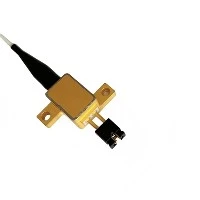
Fiber lasers are core components in modern science and technology and industry. They have significant advantages such as compact structure, high photoelectric conversion efficiency, excellent beam quality, and easy maintenance. They are widely used in many key fields such as material processing, communication, and medical treatment. Among them, beam quality plays a decisive role in the application effect of fiber lasers. It is directly related to the performance indicators such as the laser's focused spot size, power density, and processing accuracy. Therefore, improving beam quality is not only the key to improving the application effect of fiber lasers, but also an inevitable requirement for promoting technological progress and industrial upgrading in related industries.

Factors affecting the beam quality of fiber lasers:
1. Fiber characteristics
Core diameter: A smaller core diameter helps to obtain better beam quality because light is more restricted during transmission and the energy is more concentrated. However, a too small core diameter will limit the output power, so it needs to be weighed according to actual application requirements. For example, in some high-precision laser processing applications, a smaller core diameter is required to ensure beam quality in order to achieve fine processing; in situations where high power output is required, such as laser cutting of thicker metal materials, a slightly larger core diameter may be selected to ensure sufficient power output.
Numerical aperture: It affects the incident angle of light and the transmission mode in the optical fiber. A suitable numerical aperture can make light transmit better in the optical fiber, reduce mode dispersion, and thus optimize the beam quality. If the numerical aperture is too large or too small, it may lead to reduced coupling efficiency of the optical signal and reduced beam quality.
Fiber length and bending radius: Fiber that is too long or too curved will cause increased light loss and mode distortion, which will affect the beam quality. When the fiber length exceeds a certain limit, the attenuation of light during transmission will gradually increase; and if the fiber bending radius is too small, it will cause light leakage and mode conversion, making the beam quality worse.
2. Laser diode characteristics
Light-emitting area: A smaller light-emitting area can make the beam parameter product smaller, which is beneficial to improving the beam quality, but a small light-emitting area will cause heat dissipation problems, which will affect the performance and life of the laser diode. Therefore, it is necessary to comprehensively consider the balance between the light-emitting area and heat dissipation.
Extinction ratio: A higher extinction ratio means better beam quality and higher coupling efficiency. The extinction ratio of the laser diode can be improved by optimizing the packaging and design, thereby improving the beam quality.
3. Pump source characteristics
Pumping mode: Different pumping modes will affect the threshold pump power, slope efficiency and beam quality of the fiber laser. For example, the direct pumping mode is relatively simple, but the slope efficiency is low; while the cladding pumping mode can improve the slope efficiency and improve the beam quality, but the structure is more complicated.
Pumping stability: The stability of the pump source is crucial to the beam quality. If the output power of the pump source is unstable, it will cause fluctuations in the laser output, thereby affecting the beam quality. Therefore, measures need to be taken to ensure the stability of the output power of the pump source.
Methods to improve the beam quality of fiber lasers:
1. Optimize the fiber structure design
Using special fiber structures: such as photonic crystal fiber, step-index distribution fiber, etc., can effectively control the transmission mode of light, reduce mode dispersion, and thus improve beam quality. For example, photonic crystal fiber can adjust the refractive index distribution of the fiber through its special periodic air hole structure to achieve precise control of the light propagation characteristics.
Optimize the refractive index distribution of the core and cladding: Reasonable design of the refractive index difference between the core and cladding can reduce light leakage and mode coupling, reduce the beam divergence angle, and thus improve the beam quality. By precisely controlling the manufacturing process of the optical fiber, the refractive index distribution can be made more uniform and accurate in the radial and axial directions of the optical fiber, which is conducive to the stable transmission of light in the core.
2. Improve pumping conditions
Choose appropriate pump wavelength and power: According to the characteristics of the laser medium, select a wavelength and power that can fully absorb the pump light, increase the degree of population inversion, and thus obtain better beam quality. At the same time, avoid excessive pump power that causes overheating of the laser medium or other nonlinear effects. For example, for some specific fiber lasers, using a semiconductor laser of a specific wavelength as a pump source can greatly improve the pumping efficiency and thus improve the beam quality.
Use bidirectional pumping or multi-stage pumping and other methods: These pumping methods can reduce the thermal effect in the gain medium, make the laser output more stable, and have higher beam quality. Bidirectional pumping can make the pump light more evenly distributed in the gain medium and reduce local overheating; multi-stage pumping can gradually increase the power and brightness of the laser while reducing the heat load of each stage.
3. Accurate temperature control
Optimize the cooling system: Keep the temperature of the laser rod or laser diode stable, reduce the refractive index change and thermal lens effect caused by temperature change, and thus improve the beam quality. Efficient water cooling system, air cooling system or semiconductor refrigerator can be used to ensure that the laser works in a stable temperature environment. For example, in some high-power fiber lasers, a special water cooling device is used to cool the laser module, which can effectively control the temperature within a very small fluctuation range.
Real-time monitoring and feedback adjustment: The temperature of the laser is monitored in real time through a temperature sensor, and the temperature information is fed back to the control system so that the parameters of the cooling system can be adjusted in time to ensure the stability of the temperature. This closed-loop temperature control method can further improve the stability of the beam quality.
4. Optimize the optical resonant cavity
Select a suitable resonant cavity mirror: For example, using a high-reflectivity full-reflection mirror and a partial-transmittance output mirror can improve the quality factor of the resonant cavity and improve the beam quality. At the same time, attention should be paid to the coating quality and damage threshold of the mirror to ensure its stability under high-power laser.
Optimize the length and structure of the resonant cavity: make the resonant cavity meet the stable resonance conditions, suppress the oscillation of high-order modes, and improve the monochromaticity and directionality of the beam. For example, the use of a short cavity structure can reduce intracavity loss and mode competition, which is conducive to obtaining better beam quality; while certain specific folded cavity structures can achieve greater beam divergence angle compression while maintaining a smaller cavity length.
5. Laser diode fast axis collimation technology
Use technologies such as micro-electromechanical systems or quantum well hybrid materials: collimate the fast axis of the laser diode so that it is consistent with the divergence angle of the slow axis to improve the beam quality. This technology can effectively improve the ellipticity of the laser diode output beam, making it more suitable for fiber coupling and subsequent laser transmission.

Precautions for using fiber lasers
1. Environmental requirements
Temperature and humidity control: Avoid placing the equipment in an environment with excessive humidity or too high or too low temperature to avoid affecting the performance and life of the laser. In hot and humid weather, after turning on the main power, let the air conditioner attached to the machine run for more than 30 minutes before emitting light to remove moisture from the chassis and control the temperature.
Stable placement: Place the fiber laser in a stable and solid position to prevent the equipment from shaking and causing damage or safety accidents.
Dust and dirt prevention: Keep the environment around the laser clean to prevent dust, oil and other pollutants from entering the laser and affecting its normal operation.
2. Installation and connection
Correct installation: Strictly follow the installation instructions provided by the manufacturer to ensure that the optical path is normal and the light will not scatter. Connect the optical cable correctly to ensure the stability of the transmission signal.
Fiber connection: When pulling out or inserting the fiber output end into the processing head, avoid dust and other dirt from contaminating the lens. It is recommended to place the processing head horizontally and return the processing head to its normal position after connecting it to the optical fiber. Once the fiber output end is exposed to the outside air, before reinserting the processing head, use a special microscope and cleaning tools to clean the fiber output end face according to standard steps, and confirm that the cleanliness meets the standard before connecting.
3. Operation specification
Strict operation process: Operators must undergo professional training, be familiar with the operation process and performance characteristics of the equipment, and operate strictly in accordance with standard operating procedures. They must not blindly try or perform abnormal operations.
Power-on inspection: Before starting up, carefully check whether the equipment is normal, including whether the laser body is damaged, deformed, discolored, etc., whether the optical fiber connection is firm, without looseness or breakage, whether the cooling method is operating normally and the cooling water is full, and whether the LCD screen, controller, keyboard, mouse and other equipment are operating normally.
Parameter setting: According to actual processing needs, reasonably set the working parameters of the laser, such as power, frequency, pulse width, etc. It is advisable to minimize the energy of the fiber laser so as to avoid excessive reaction during use. For special working environments, the parameters can also be appropriately adjusted to increase the reaction speed.
Avoid looking directly at the beam: Do not observe the laser beam directly with your eyes to avoid discomfort such as partial vision, dizziness, and even damage to the eyes.
4. Daily maintenance
Regular cleaning: Regularly clean the dust and debris inside the laser, especially optical lenses, reflectors and other parts, which can be cleaned with special blowing balloons, lens paper and other tools. Check the cleanliness of the protective sheet regularly. If it is seriously contaminated, it should be replaced in time.
Check components: Check the various components of the fiber laser regularly to see if they are normal, such as whether the fiber is damaged or aged, whether the joint is loose, etc.
Monitor the operating status: During the operation of the equipment, pay close attention to its working status, and pay attention to whether there are abnormal sounds, odors, smoke, etc. If there are any abnormalities, stop the machine immediately for inspection.
5. Safety protection
Wear protective equipment: Operators must wear protective glasses and protective gloves to prevent the laser beam from directly irradiating the eyes and skin.
Set warning signs: Set obvious warning signs in the laser working area to remind people around to pay attention to safety and prevent unrelated people from entering the dangerous area.
Prevent the risk of electric shock: Ensure that the laser is reliably grounded to avoid electric shock accidents caused by equipment leakage.
In summary, improving the quality of fiber laser beams requires multiple aspects, including optimizing laser design, selecting high-quality materials, strengthening environmental control, applying advanced beam shaping technology and precision control systems. These methods and technical means are interrelated and mutually influential. Only by comprehensively considering and continuously optimizing various factors can the effective improvement of fiber laser beam quality be achieved.
Contact information:
If you have any ideas, feel free to talk to us. No matter where our customers are and what our requirements are, we will follow our goal to provide our customers with high quality, low prices, and the best service.
 Email:info@loshield.com
 Tel:0086-18092277517
 Fax: 86-29-81323155
 Wechat:0086-18092277517


