



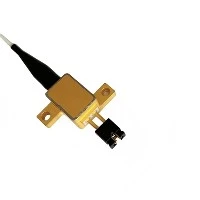
Fiber lasers occupy an important position in modern science and technology and industry. With its unique working principle and excellent performance advantages, it has shown broad application prospects in many fields. With the continuous advancement of technology and the continuous expansion of the market, a deep understanding of fiber lasers has become increasingly necessary.
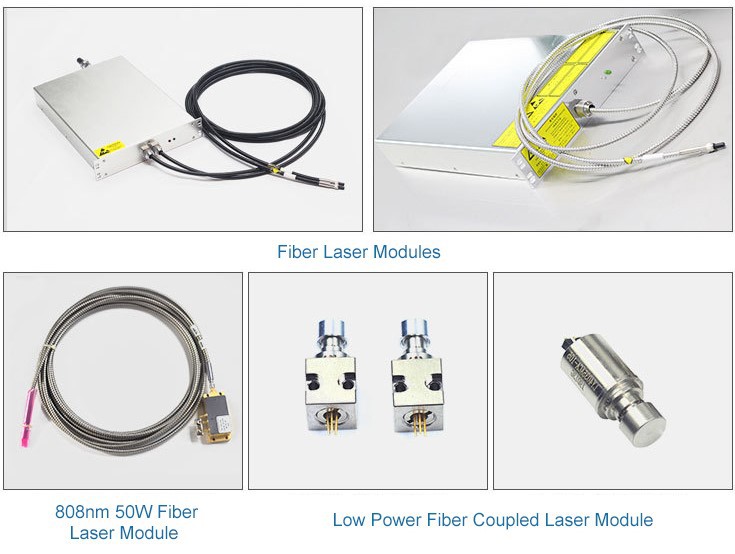
The application fields of fiber lasers are very wide, covering communications, industry, medical and other fields. In the field of communications, fiber lasers are widely used as light sources in fiber communication systems and optical networks, realizing long-distance and high-speed signal transmission; in the industrial field, fiber lasers are used in material processing, precision manufacturing, automobile manufacturing and other aspects, improving production efficiency and product quality; in the medical field, fiber lasers are used in medical operations such as laser surgery and treatment, providing patients with safer and more effective treatment options.
With the continuous development of fiber laser technology and the increasing demand for applications, it is particularly important to have a deep understanding of its working principle, performance characteristics and application fields. Only by having a deep understanding of fiber lasers can we better play its advantages and promote technological innovation and development in related fields. At the same time, for scientific researchers and engineers, a deep understanding of fiber lasers is also the key to improving professional skills and competitiveness.
Fiber lasers are widely used in many fields:
Marking applications: With excellent beam quality, pulse width and repetition frequency, pulse fiber lasers have become the only choice for high-speed and high-precision laser marking, and are widely used in precision processing such as integrated circuit chips, computer accessories, industrial bearings, clocks and watches, and electronic components.
Material processing: As the power of fiber lasers continues to rise, its application in industrial cutting has been scaled up. In addition, it can also be used for micro-processing such as laser forming or bending metal plates, laser changing the curvature or hardness of hard ceramics.
Medical applications: used in surgery, diagnosis, treatment, etc., such as laser scalpels, laser therapeutic devices, etc.
Communication field: plays an important role in long-distance communication, high-speed data transmission, etc.
Military defense security: used in military equipment, weapons manufacturing, defense security and other fields.
Other applications: such as laser space long-distance communication, automobile manufacturing, medical equipment and other fields.

Advantages of fiber lasers:
1. Beam quality
Single transverse mode output: The waveguide structure of the optical fiber determines that the fiber laser is easy to obtain single transverse mode output. The laser beam of this mode has a small divergence angle, good spot quality, and high energy concentration, which has significant advantages in long-distance transmission and focusing applications. For example, in the field of fine processing such as laser cutting and marking, more precise operations can be achieved.
Less affected by external factors: The beam quality of the fiber laser is less affected by external environmental factors such as temperature, humidity, dust, etc., and has high stability. This enables it to maintain excellent performance in complex industrial environments and harsh working conditions, reduces the fluctuation of beam quality caused by environmental changes, and ensures the reliability and consistency of applications such as processing or communication.
2. Conversion efficiency
High electro-optical conversion efficiency: Fiber lasers can achieve very high light-to-electric conversion efficiency, and the electro-optical efficiency of commercial products is as high as 25% or even higher. This means that under the same electrical energy input, the fiber laser can output more laser power, effectively reducing energy consumption and operating costs, and meeting the requirements of energy conservation and environmental protection.
Matching pump source: By selecting a semiconductor laser that matches the absorption characteristics of the doped rare earth element as the pump source, the conversion efficiency can be further improved. For example, for high-power fiber lasers doped with ytterbium (Yb), 915nm or 975nm semiconductor lasers are often used for pumping. They have a long fluorescence lifetime and can effectively store energy to achieve high-power operation.
3. Heat dissipation characteristics
Large surface area to volume ratio: Fiber lasers use slender rare earth element-doped optical fibers as laser gain media, which have a large surface area to volume ratio. This gives fiber lasers a natural advantage in heat dissipation, which can quickly dissipate heat and avoid performance degradation or damage caused by heat accumulation. Even in high-power operation, good heat dissipation can be maintained without a complex cooling system.
Low heat dissipation requirements: In low and medium power conditions, fiber lasers do not require special cooling of the optical fiber; in high power conditions, simple water cooling can meet the requirements. In contrast, traditional solid-state lasers usually require complex refrigeration systems to maintain their normal operation, increasing the cost and complexity of the equipment.
4. Structure and reliability
Compact structure: Fiber lasers use small and soft optical fibers as laser gain media, making the structure of the laser more compact. At the same time, the pump source can also use small and easily modularized semiconductor lasers, which further reduces the size of the overall equipment, facilitates integration into various miniaturized equipment or systems, and improves the portability and flexibility of the equipment.
High reliability: The structure of fiber lasers is relatively simple, without complex mechanical moving parts and optical lenses and other vulnerable parts, so it has high reliability and stability. Its all-fiber design makes the optical path enclosed in the optical fiber waveguide, which is well isolated from the external environment, reduces the influence of dust, pollution and other factors on the optical path, reduces the probability of failure, and extends the service life of the equipment.
5. Tunability
Wide wavelength tunable range: Due to the wide energy level of rare earth ions and the wide fluorescence spectrum of the glass matrix, the output laser wavelength of the fiber laser can be continuously adjusted within a certain range, covering a wide band from near ultraviolet to near infrared. This wavelength tunable feature enables fiber lasers to adapt to different application requirements. For example, in the fields of spectral analysis, biomedicine, material processing, etc., the wavelength can be adjusted to meet specific experimental or application requirements.
Flexible tuning methods: Fiber lasers can achieve wavelength tuning by changing their internal structure or control parameters, such as using external cavity feedback technology, current control technology, nonlinear effects, etc. These tuning methods have the characteristics of fast response speed and high tuning accuracy, and can meet the precise wavelength control requirements in different scenarios.
6. Other aspects
Competent in harsh environments: Fiber lasers have a high tolerance for harsh working environments such as dust, vibration, impact, humidity, and temperature, and can work stably under relatively harsh conditions without thermoelectric cooling and water cooling, only simple air cooling is required. This feature gives it unique advantages in some special environments, such as field operations, industrial production workshops, etc.
Multiple output wavelengths: Due to the rich energy levels of rare earth ions and their diverse types, fiber lasers can produce laser outputs of various wavelengths, providing more options for different applications. For example, in the field of optical communications, appropriate wavelengths can be selected according to different channel requirements; in the medical field, lasers of specific wavelengths can be used for diagnosis and treatment of diseases.
Wide range of applicable materials: The diversity of output laser wavelengths makes fiber lasers suitable for a wider range of material processing, including metals, plastics, ceramics and other materials. Different materials have different absorption characteristics for lasers of different wavelengths. Fiber lasers can optimize processing effects and improve processing quality and efficiency by adjusting the wavelength.
Flexible structure: The optical path of the all-fiber laser is composed entirely of optical fibers and optical fiber components. The optical fibers and optical fiber components are connected by optical fiber fusion technology, and the entire optical path is completely enclosed in the optical fiber waveguide. Once this natural fully enclosed optical path is formed, it can form a self-contained system without additional isolation measures to achieve isolation from the external environment. Because the optical fiber is small and has good flexibility, the optical path can be coiled and travel along small pipes, so the all-fiber laser can work in relatively harsh environments, and the output light can pass through narrow gaps or be transmitted over long distances along small pipes. These characteristics have great advantages in industrial applications. The laser can not only adapt to relatively harsh working environments, but also keep the laser away from the light-emitting point, introduce the laser to places that were previously difficult to reach, and can easily move and change the light-emitting point, so that multiple processing points can share one laser, which can make the design of laser processing equipment more flexible, etc.
Maintenance-free: The optical path of the all-fiber laser is composed entirely of optical fibers and optical fiber components. The optical fibers and optical fiber components are connected by optical fiber fusion technology. Therefore, once the optical path is formed, it forms a whole. Practice has proved that the connection structure and connection parameters formed in this way will remain stable for a long time. If the optical fiber and optical fiber components themselves can have long-term stability, the entire optical path will be stable for a long time and no maintenance is required. It should be pointed out that this maintenance-free feature does not mean that it cannot be maintained and repaired. If necessary, the maintenance and repair of the entire optical path can also be carried out. Therefore, compared with gas and solid lasers that require frequent maintenance and repair, the maintenance-free feature of the optical path of the all-fiber laser is exceptionally excellent.
|
|
|
|
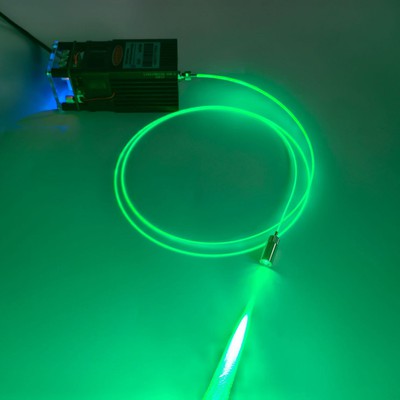
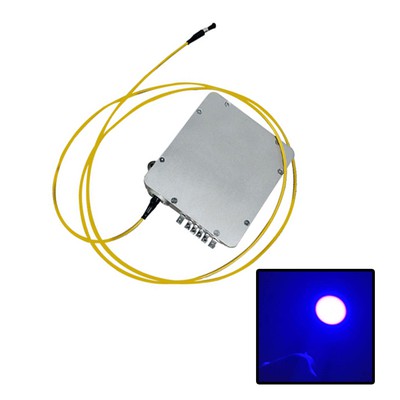
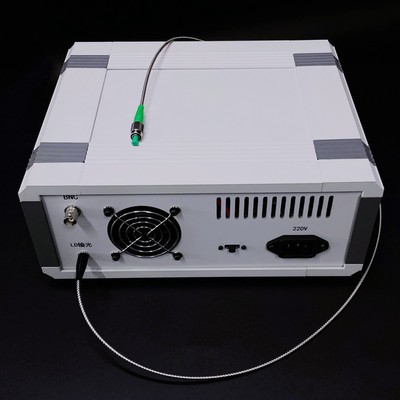
In summary, fiber lasers, with their unique advantages and wide application fields, will occupy a more important position in the future development of science and technology. With the continuous advancement and innovation of technology, the performance of fiber lasers will continue to improve, making greater contributions to the development of human society.
Contact information:
If you have any ideas, feel free to talk to us. No matter where our customers are and what our requirements are, we will follow our goal to provide our customers with high quality, low prices, and the best service.
 Email:info@loshield.com
 Tel:0086-18092277517
 Fax: 86-29-81323155
 Wechat:0086-18092277517


