



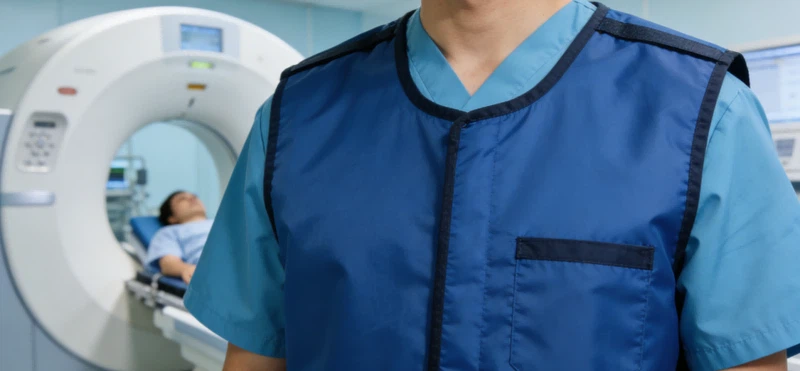
In the field of medical radiation protection, traditional lead aprons, while reliable in protective effectiveness, are heavy (0.5 mmPb aprons typically weigh 6-8 kg). Long-term wear can cause healthcare workers to experience lower back pain, shoulder and neck strain, muscle fatigue, and other occupational health issues. Lightweight radiation protection aprons have emerged as an important development direction in modern radiation protection equipment.
I. Core Characteristics of Lightweight Radiation Protection Aprons
1. Material Innovation: Lead-Free or Low-Lead Composite Materials
Main Components: Composite materials using heavy metal elements such as Bismuth (Bi), Tin (Sn), Antimony (Sb), Tungsten (W), Barium (Ba)
Technical Principle: These elements have atomic numbers close to lead (82) and possess excellent X-ray absorption capabilities
Environmental Benefits: Lead-free or extremely low lead content, compliant with EU RoHS and other environmental directives
2. Significant Weight Reduction
| Lead Equivalent | Traditional Lead Apron Weight | Lightweight Apron Weight | Weight Reduction |
|---|---|---|---|
| 0.25 mmPb | 3-4 kg | 2-3 kg | 25-30% |
| 0.35 mmPb | 4-6 kg | 3-4 kg | 25-30% |
| 0.50 mmPb | 6-8 kg | 4-5.5 kg | 25-35% |
3. Equivalent Protective Performance
Radiation shielding effectiveness is identical to traditional lead aprons at the same lead equivalent (e.g., 0.5 mmPb)
Certified according to international standards such as IEC 61331-3 and ASTM F2547
Some high-end products perform even better at low-energy X-rays (<80 kV)
4. Human-Centered Design
Improved Softness: Material is softer with better foldability, significantly enhancing wearing comfort
Enhanced Breathability: Some products use breathable fabrics or ventilation designs to reduce stuffiness
Diverse Styles: Available in vest-style, skirt-style, double-sided, and other configurations
II. Core Advantages of Lightweight Radiation Protection Aprons
1. Enhanced Occupational Health
Reduced Musculoskeletal Injuries: 25-35% weight reduction significantly lowers lumbar and cervical burden
Extended Career Longevity: Healthcare workers can engage in radiation-related work longer without physical damage
Reduced Workplace Injury Risk: Minimizes operational errors and accidental injuries caused by fatigue
2. Improved Compliance and Usage Rates
Increased Willingness to Wear: Lightweight and comfortable design encourages healthcare workers to wear them throughout procedures
Reduced "Corner-Cutting": Traditional heavy aprons lead some personnel to wear only front panels or leave them unfastened; lightweight aprons effectively prevent such issues
All-Day Usability: Suitable for long-duration surgeries or consecutive multiple examinations
3. Environmental Sustainability
Lead-Free Pollution: No lead pollution risk throughout production, use, and disposal
Recyclable: Some composite materials are recyclable, aligning with green healthcare concepts
Regulatory Compliance: Meets increasingly stringent global environmental regulations
4. Durability and Maintenance Convenience
Anti-Aging Performance: Less prone to "lead poisoning" phenomenon (lead powder leakage) common in traditional lead aprons
Anti-Crease Capability: Material resists permanent creasing, avoiding protective weak spots
Easy to Clean: Smooth surface facilitates disinfection and daily maintenance
5. Cost-Effectiveness Optimization
Higher Initial Cost (typically 20-40% more expensive than traditional lead aprons), but:
Longer Service Life (up to 5-7 years)
Reduced Medical and Compensation Costs from occupational diseases
Improved Work Efficiency and Staff Retention

III. Application Scenarios for Lightweight Radiation Protection Aprons
| Scenario | Recommendation Rationale |
|---|---|
| Interventional Radiology | Long-duration standing surgeries; weight reduction crucial for lumbar protection |
| Cardiac Catheterization Lab | High-frequency, high-intensity operations; comfort directly impacts surgical quality |
| Pediatrics/Obstetrics | Higher proportion of female healthcare workers; greater demand for lightweight solutions |
| Mobile C-Arm Surgery | Requires frequent movement and posture adjustments; lightweight equipment more flexible |
| Dental/Oral Medicine | Although doses are lower, operations are precise; lightweight equipment enhances accuracy |
IV. Key Considerations for Selecting Lightweight Radiation Protection Aprons
1. Certification Marks
Confirm product certification through IEC 61331-3, ASTM F2547, and other international certifications
Check if lead equivalent labeling is clear (e.g., "0.5 mmPb @ 100 kV")
2. Lead Equivalent Matching
Select appropriate lead equivalent based on work scenarios (0.25/0.35/0.5 mmPb)
Ensure actual lead equivalent ≥ 90% of nominal value
3. Style Selection
Vest + Skirt Style: Weight distributed to shoulders and waist, most comfortable
Full-Body Style: More comprehensive protection, suitable for high-dose scenarios
Adjustable Style: Adapts to different body types, improves fit
4. Brand and After-Sales Service
Choose well-known brands to ensure quality stability
Understand warranty policies and regular inspection services

V. Comparison Summary: Lightweight vs. Traditional Lead Aprons
| Comparison Dimension | Traditional Lead Apron | Lightweight Apron |
|---|---|---|
| Weight | Heavy (6-8 kg @ 0.5 mmPb) | Light (4-5.5 kg @ 0.5 mmPb) |
| Comfort | Poor, prone to fatigue | Excellent, comfortable for extended wear |
| Environmental Impact | Contains lead, pollution risk | Lead-free/low-lead, environmentally safe |
| Protective Performance | Excellent | Equivalent, superior in some scenarios |
| Price | Lower | Higher (+20-40%) |
| Service Life | 3-5 years | 5-7 years |
| Maintenance Difficulty | Prone to damage, requires careful storage | Durable, crease-resistant |
VI. Development Trends and Future Outlook
Continuous Material Innovation: Nanocomposites, smart materials, and other new technologies will further reduce weight
Personalized Customization: 3D scanning customization for perfect fit
Intelligent Integration: Embedded dose monitoring sensors for real-time radiation exposure feedback
Cost Reduction: Scale production will gradually lower price barriers
Conclusion: Lightweight Design is the Inevitable Trend
Lightweight radiation protection aprons represent not only technological advancement but also deep concern for healthcare workers' occupational health. By achieving "weight reduction without compromising protection" through material innovation, radiation protection transforms from a "burden" to "comfortable assurance," representing an important component of modern healthcare safety system construction.
Choosing lightweight radiation protection aprons means choosing a healthier, more sustainable professional future.