



Introduction
1.1 Research Background and Significance
As robot technology moves towards precision, miniaturization and intelligence, laser line modules have become key sensing components. The 650nm 5mw laser line module stands out for its low power consumption, high visibility and cost-effectiveness, making it suitable for industrial, service and special robots. It improves robot accuracy and efficiency while reducing system costs, promoting the popularization of robot technology.
1.2 Research and Application Status at Home and Abroad
Internationally, laser line modules are maturely used in industrial and service robots for assembly, positioning and obstacle avoidance. Domestically, the 650nm 5mw module is increasingly applied in civilian and industrial fields. However, challenges remain, such as reduced visibility in strong light, poor integration compatibility and unstable long-term operation.
1.3 Research Content and Framework
This article focuses on the 650nm 5mw laser line module's application in robots, covering its characteristics, application scenarios, advantages, existing problems, optimization schemes and future trends, providing a comprehensive reference for its in-depth application.

Chapter 1 Core Characteristics and Working Principle
1.1 Core Parameter Analysis
The 650nm 5mw laser line module has excellent performance:
650nm red light (high visibility, suitable for indoor/outdoor short-medium distance);
5mw low power (Class IIIa safety, long robot battery life);
Adjustable focus, Gaussian laser line and high stability;
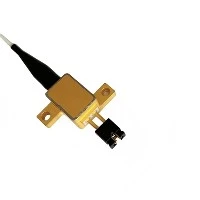
Compact size (e.g., φ16mm×70mm), metal shell (efficient heat dissipation, strong anti-interference).
1.2 Working Principle
The module emits laser via a semiconductor diode, shaped into a uniform line by a Gaussian lens.
A constant current drive circuit ensures stable output, and a metal heat dissipation structure guarantees continuous operation.
For robots, it provides a reference for positioning, detection and navigation, cooperating with algorithms to realize precise operation.
1.3 Comparison with Other Laser Modules
Compared with high-power modules: lower power, higher safety, lower cost, suitable for civilian/light industrial robots.
Compared with other wavelengths: better visibility, lower cost, no special receiving equipment.
Compared with point laser modules: wider coverage, suitable for large-area positioning.
Chapter 2 Core Application Scenarios
2.1 Industrial Robots (Core Scenario)
It is widely used in precision assembly (reducing positioning errors), AGV/handling robot path guidance (avoiding collisions) and workpiece detection/sorting (improving accuracy), effectively enhancing production efficiency.
2.2 Service Robots
For household sweeping robots: assists environment scanning, obstacle avoidance and path planning.
For commercial robots (shopping guide, food delivery): supports indoor positioning with SLAM algorithm.
For elderly care/medical robots: detects obstacles to ensure movement safety.
2.3 Special Robots
For inspection robots (power, chemical): locates equipment defects, improving inspection efficiency and safety.
For educational/maker robots: realizes visual teaching of positioning and path planning principles.
2.4 Typical Cases
Case 1: AGV robots – 68% lower failure rate, 40%+ lower maintenance cost.
Case 2: Sweeping robots – 30% higher obstacle recognition accuracy.
Case 3: Industrial assembly robots – improved precision, reduced production line shutdown.
Chapter 3 Core Advantages
3.1 Adaptability: Meeting Robot Design
Low power consumption (≥8000 hours continuous operation, extending robot battery life);
Compact size (easy integration); wide temperature adaptation (-10℃~50℃, some up to 60℃).
3.2 Performance: Ensuring Precision
High visibility (clear in complex light);
High stability (low light attenuation, anti-impact/interference);
Adjustable focus (adapting to different scenarios).
3.3 Cost and Practicality
Cost-effective (suitable for large-scale application);
Easy integration (DC 3V~5V, compatible with Arduino);
Low maintenance (simple structure, 6-month warranty).
Chapter 4 Existing Problems and Optimization
4.1 Core Problems
1. Poor visibility in strong light;
2. Incompatible with some robot interfaces;
3. Accelerated light attenuation in extreme environments (high temperature, vibration).
4.2 Optimization Schemes
1. Add filter and optimize lens to resist ambient light;
2. Standardize interface and provide customized drive schemes;
3. Upgrade heat dissipation and optimize drive circuit.
4.3 Industry Standards
Strictly follow Class IIIa laser safety standard; adapt to robot interface and power supply specifications to improve versatility.
Chapter 5 Development Prospect
5.1 Technology Trend
Better stability and low light attenuation;
Deep integration with robot vision and SLAM algorithm;
Smaller size, integrated distance measurement and positioning.
Application Scenario Expansion
Industrial robots: high-precision assembly and complex inspection;
Service robots: popularization in household/commercial scenarios;
Special robots: extreme environments (deep sea, high altitude).
Industry Prospect
Growing market demand driven by robot industry expansion;
Domestic modules replacing imports;
Integration with AI and IoT to promote robot intelligence.
Conclusion
6.1 Core Summary
The 650nm 5mw laser line module, with low power consumption, high visibility and cost-effectiveness, is widely used in robots. It has obvious advantages but faces environmental adaptability, integration and stability challenges, which can be solved by targeted optimization.
6.2 Research Prospect
Future efforts will focus on optimizing module performance and integration, expanding application scenarios, and promoting its in-depth integration with robot and AI technology to boost the robot industry.
Contact information:
If you have any ideas, feel free to talk to us. No matter where our customers are and what our requirements are, we will follow our goal to provide our customers with high quality, low prices, and the best service.
 Email:info@loshield.com; laser@loshield.com
 Tel:0086-18092277517; 0086-17392801246
 Fax: 86-29-81323155
 Wechat:0086-18092277517; 0086-17392801246


