



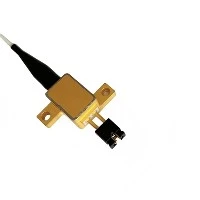
Semiconductor Lasers are an indispensable component in modern technology, penetrating into every aspect of our lives with their importance and universal applications. They use semiconductor materials as gain media to generate laser light. Compared with traditional solid-state lasers, they have the advantages of small size, high efficiency, long life, and low cost. Due to these properties, semiconductor lasers play a key role in various fields such as communications, medical, industrial processing, military, and consumer electronics.
Semiconductor laser modules further integrate multiple components, including laser emitters, drive circuits and cooling systems, to provide more stable and efficient laser output. The design of these modules allows them to be easily integrated into more complex systems, such as fiber optic communication networks, medical equipment or high-precision measurement tools.
In modern technology, the role of semiconductor laser modules is particularly important. They are the core of high-speed internet infrastructure, transmitting large amounts of data over optical fiber. In the medical field, they are used in a variety of treatments and procedures, including laser vision correction and tumor treatment. Industrially, they are used in precision cutting, welding and marking processes, improving production efficiency and product quality. In addition, with the development of technology, semiconductor laser modules are expanding their application scope, such as in laser radar (LiDAR) systems for autonomous vehicles and advanced 3D printing technology.

Main characteristics of semiconductor laser modules
A. Wavelength selectivity:
Tunable wavelength range:
Semiconductor lasers can cover a wide range of wavelengths from ultraviolet to far-infrared depending on design criteria and material selection. This makes them adaptable to many different application requirements.
Application-specific wavelength requirements:
Different applications may require specific wavelengths of laser, for example fiber optic communications often use near-infrared wavelengths, while certain medical procedures may require specific wavelengths to maximize treatment effectiveness.
B. High efficiency and low energy consumption
Electro-optical conversion efficiency:
Semiconductor laser modules can efficiently convert input electrical energy into light energy, which means they consume less energy during operation. This is particularly important to reduce overall energy consumption and operating costs.
With the advancement of technology, researchers control the light field through microstructures and enhance the beam quality and focusing ability of semiconductor lasers, thus improving their electro-optical conversion efficiency.
Energy saving advantages:
The low power consumption of semiconductor laser modules makes them excellent in applications that require large-area detection, such as multi-line LiDAR in areas such as automated guided vehicles (AGVs), service robots for obstacle avoidance, time-of-flight (ToF) sensors, and automotive radars.
The development of high-power semiconductor lasers, such as two- or three-dimensional arrays, aims to increase output power while maintaining low energy consumption to meet power demands in areas such as industrial processing.
C. Miniaturization and Integration
Advantages of size and design:
The miniaturization technology of semiconductor lasers has been developed to achieve extremely compact sizes. For example, the size of vertical cavity surface-emitting lasers (VCSELs) has been reduced to the order of tens of microns. This miniaturization not only saves space, but also provides great convenience for the laser's portability and flexibility.
Miniaturized semiconductor lasers have advantages in design and can be easily integrated into various devices, such as communication equipment, consumer electronics, etc., without taking up too much space, which is very beneficial to the design and function integration of the device.
Integration capabilities with other electronic components:
Semiconductor lasers can not only achieve their own miniaturization, but can also be integrated with other electronic components such as drive controllers. For example, some new semiconductor lasers have achieved integration and miniaturization with drive controllers. This integration capability greatly improves system compactness and overall performance.
With the development of technology, semiconductor lasers have also made significant progress in improving energy efficiency, which is of great significance for improving power efficiency and reducing energy consumption.
D. Long life and reliability
Mean time between failures (MTBF):
The mean time between failures (MTBF) of a semiconductor laser is an indicator of its average operating time under normal operating conditions. A higher MTBF value usually means that the equipment has a longer operating cycle and a lower failure rate.
Factors affecting service life:
The life of semiconductor lasers is affected by many factors, including quality control during the manufacturing process, usage conditions, environmental factors, etc. For example, high-temperature burn-in screening is a common process used to screen out devices that may have unacceptably short lifetimes.
Temperature and current are the two main factors that affect the life of semiconductor lasers. Proper temperature control and current management can significantly extend the life of the laser. Research shows that laser life testing can be carried out through the aging methods of temperature stress acceleration and current step stress.
The structure and heat generation mechanism of high-power semiconductor lasers are also important factors affecting their lifespan. Effective thermal design and material selection can reduce heat-induced degradation, thereby extending laser life.

E. High-speed response and modulation capability
Applications in data communications:
In the field of data communications, semiconductor lasers must be able to respond quickly to changes in electrical signals in order to transmit data in the form of light. This high-speed responsiveness enables fiber optic communication systems to handle large amounts of data streams and support high-speed Internet and data center operations.
Directly modulated semiconductor lasers can be used to generate light pulses at different rates, which are then transmitted through optical fibers, enabling rapid transfer of information.
High frequency operation:
The high-frequency operation capability of semiconductor lasers is critical for certain applications, such as in radar systems, high-precision measurement and remote sensing technology. High-frequency modulation allows the laser to switch on and off in short bursts, enabling the capture of rapidly changing signals or events.
High-frequency directly modulated semiconductor lasers are also used in optical communication systems, where they can support higher data transmission rates and more complex modulation formats, such as phase shift keying (PSK) and orthogonal frequency division multiplexing (OFDM).
F. Cost-effectiveness
Manufacturing cost reduction trend:
With the advancement of manufacturing technology and the expansion of production scale, the manufacturing cost of semiconductor lasers has been significantly reduced. This cost reduction trend has made semiconductor lasers more popular, providing economically viable light source solutions for a variety of commercial and industrial applications.
Automation and standardization in manufacturing processes also help reduce costs. For example, by using automated assembly lines and testing equipment, production efficiency can be improved and labor costs reduced, thereby reducing overall manufacturing costs.
Maintenance costs and economic benefits:
Semiconductor lasers are relatively low maintenance because they generally have a long life and high reliability, which means fewer repairs and replacements are required. Low maintenance costs further increase the cost-effectiveness of semiconductor lasers.
In addition to direct cost savings, the use of semiconductor lasers can also bring indirect economic benefits. For example, in fiber optic communication systems, due to the high-speed response and high data transmission capabilities of semiconductor lasers, higher data throughput and faster network speeds can be achieved, thereby improving overall business efficiency and revenue.
Semiconductor laser modules have a wide range of applications, covering multiple industries and fields.
Communications industry:
Optical fiber communication: Semiconductor lasers are the core components of optical fiber communication systems, used to convert electrical signals into optical signals and perform high-speed data transmission through optical fibers.
Wireless communications: In wireless communications base stations, semiconductor lasers are used to provide high-speed data connections and signal processing.
Medical industry:
Laser vision correction: Semiconductor lasers are used in laser vision correction surgeries such as LASIK to change the shape of the cornea, thereby improving vision.
Laser treatment: In various medical treatments, such as tumor treatment, skin lesion treatment and dental surgery, semiconductor lasers are widely used due to their precise beam control.
Industrial processing:
Precision cutting: Semiconductor lasers are used in manufacturing to precisely cut materials such as metals, plastics, and ceramics.
Welding and Marking: In industrial production lines, semiconductor lasers are used to weld parts and permanently mark products.
Consumer Electronics:
Optical disc reading: In CD and DVD players, semiconductor lasers are used to read the data stored on the optical disc.
Barcode scanning: In the retail and logistics industries, semiconductor lasers are used to scan barcodes to quickly identify product information.
Military and Aerospace:
Target designation and lighting: In military applications, semiconductor lasers are used for target designation, night illumination, and long-range communications.
Navigation and positioning: In the aerospace field, semiconductor lasers are used in satellite positioning systems and ground navigation equipment.
Semiconductor laser modules are used in a wide range of applications, ranging from daily electronic equipment to high-end communications and medical systems, to military and aerospace fields. As technology continues to advance, the applications of semiconductor lasers will continue to expand, bringing more innovation and convenience to all walks of life.
Contact information:
If you have any ideas, feel free to talk to us. No matter where our customers are and what our requirements are, we will follow our goal to provide our customers with high quality, low prices, and the best service.
 Email:info@loshield.com
 Tel:0086-18092277517
 Fax: 86-29-81323155
 Wechat:0086-18092277517


