



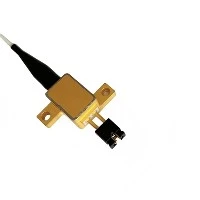
The development of the construction industry has put forward higher requirements for precise ceramic tile cutting. However, traditional ceramic tile cutting machines have many challenges in terms of accuracy, efficiency, complex graphics processing, and safety. The introduction of Laser Positioning Modules can effectively solve these problems and bring revolutionary changes to the construction industry.
Current demand for precise tile cutting in the construction industry:
1. Increased aesthetics and design complexity: Modern architectural design pays more and more attention to details and aesthetics, which requires ceramic tiles to accurately fit the design drawings, especially in the decoration of high-end residences, commercial spaces and public places.
2. Customization trend: With the rise of consumers' personalized needs, customized decoration has become a trend, which requires ceramic tile cutting to adapt to changing sizes and patterns.
3. Precision engineering standards: In precision engineering, such as luxury home construction or special structural design, the requirements for cutting accuracy are extremely strict and the error tolerance is extremely small.
4. Energy conservation and emission reduction policies: Environmental protection policies promote the economical use of building materials. Precise cutting can reduce waste and improve material utilization.
Challenges faced by traditional tile cutting machines:
1. Manual operation limitations: Traditional cutting machines rely on manual marking and positioning. The operator's skill level directly affects the cutting accuracy, and it is difficult to maintain consistency in long-term work.
2. Mechanical wear: Long-term use will cause wear of the cutting machine, thereby affecting cutting accuracy and machine performance.
3. Low efficiency: The traditional cutting process is slow, and replacement of consumables such as blades also requires downtime, which affects the overall work efficiency.
4. Difficulty in processing complex graphics: When faced with cutting requirements for complex or non-standard graphics, traditional cutting machines often cannot meet the designer's requirements.
5. Safety risks: Due to contact operations, operators face higher safety risks.
With its high precision, high efficiency and ease of use, laser line modules provide significant advantages in industrial applications such as ceramic tile cutting, and are an important tool in the modern construction industry to improve process levels.
Principles and advantages of laser line modules:
A. Introduction to the working principle of laser line module
- The laser line module emits a laser beam and shapes it using an optical system such as a Powell prism to generate a linear laser.
- This linear laser is produced by focusing the beam to a point through reflection and refraction of the laser beam.
B. Application of laser line module in ceramic tile cutting
- In ceramic tile cutting, the laser line module can provide precise marking guidance to help the operator accurately cut ceramic tiles along a straight line.
- Due to the high visibility of the laser line, it clearly marks the cutting path, thereby increasing cutting accuracy.
C. Compare traditional methods and analyze the accuracy advantages of laser marking
- Laser line modules provide greater accuracy and consistency compared to traditional hand scribing or mechanical scribing.
- The uniformity of the laser line can reach more than 95%, and even reach the 99% uniformity index in some cases.
D. Discussion on laser line module to improve cutting efficiency
- Using a laser line module can increase the efficiency of ceramic tile cutting because it reduces repeated work and material waste caused by inaccurate marking lines.
- The use of laser line modules can also reduce the operator's labor intensity and improve overall work efficiency.
In addition to its application in the field of ceramic tile cutting, laser marking modules also have the potential to be widely used in the cutting process of other materials.
Sheet metal cutting: In industries such as automobile manufacturing, laser cutting technology has been widely adopted to improve safety and processing efficiency. Fiber lasers have demonstrated significant efficiency and quality advantages in sheet metal cutting.
Additive manufacturing: With the development of Industry 4.0, laser technology is increasingly used in additive manufacturing (3D printing). Lasers can be used to create fine features that are difficult or impossible to create with traditional processing equipment, and the process is clean and does not pollute the surrounding environment.
Precision Engineering and Design: Laser technology's ability to create more complex features in product designs that require tight tolerances is an important advancement for the field of precision engineering and design.
Material processing: Laser cutting technology can be applied to the processing of a variety of materials, including but not limited to plastics, wood, ceramics, etc. These materials can achieve precise and high-quality cutting under the action of laser.
Process database establishment: Based on a large number of cutting process tests, a laser cutting process database can be established to improve the standardization and optimization level of laser cutting. This helps improve the performance and efficiency of laser cutting systems.
Surface modification: Laser technology can also be used to modify the surface of materials to change the properties of the material surface, such as hardness, wear resistance, etc., which is of great significance for extending product life and improving product performance.
Welding: Laser technology is also widely used in the field of welding, especially in precision welding and connection of difficult-to-weld materials. Laser welding provides high-precision and high-quality solutions.
Textile and clothing industry: Laser cutting can also be used in the textile and clothing industry to achieve precise cutting of complex patterns and improve production efficiency and product quality.
Electronics industry: In the electronics industry, laser technology is used for cutting and engraving circuit boards, as well as for fine processing in the field of microelectronics.
Medical device manufacturing: In medical device manufacturing, laser cutting can be used to manufacture high-precision medical tools and equipment to ensure the quality and safety of the devices.
Aerospace: In the aerospace industry, laser technology is used to manufacture and repair high-value aerospace components, ensuring component reliability and performance.
To sum up, the application of laser marking module is not limited to ceramic tile cutting. Its high precision, high efficiency and wide application range make it have broad application prospects in multiple material cutting fields. With the continuous advancement and innovation of laser technology, it is expected that more fields will explore and apply laser marking module technology in the future.
The revolutionary changes brought by laser marking module to ceramic tile cutting:
Improved accuracy: Laser marking provides extremely high marking accuracy, eliminating possible errors in manual or traditional mechanical marking, ensuring that tiles are accurately cut along the predetermined line.
Improve efficiency: Laser marking significantly reduces the time for adjustment and correction, allowing operators to complete cutting tasks quickly and continuously, thereby significantly improving work efficiency.
Reduce costs: Reducing material waste and reducing secondary processing caused by incorrect cutting helps reduce production costs.
Enhanced flexibility: The laser marking module can easily adapt to various sizes and shapes of ceramic tiles, making customization and special design requirements easy to achieve.
Improved safety: Non-contact laser marking reduces the risk of operators coming into direct contact with mechanical hardware, providing a safer working environment.
Expanded application scope: In addition to ceramic tiles, the laser marking module can also be used for precise cutting of other hard materials, such as stone, metal, wood, etc.
The application of laser marking modules has promoted the improvement of standards in the entire construction industry and promoted the overall progress of quality and efficiency in the industry. As the market demand for high-quality building decoration increases, innovative technologies can meet consumers' higher requirements for beauty, personalization and environmental protection. Innovative technologies are helping to drive the construction industry in a more environmentally friendly and sustainable direction by increasing the efficiency of material use and reducing waste. Technological progress in the construction industry can drive the development and integration of related fields such as technology, material science, and automation control.
The introduction of laser marking modules is not only a technological advancement, but also an important force in promoting the overall development of the construction industry. The application of innovative technology not only improves the level of technology, but also brings economic and social benefits, which is a key factor in promoting the continuous progress of the construction industry.
Contact information:
If you have any ideas, feel free to talk to us. No matter where our customers are and what our requirements are, we will follow our goal to provide our customers with high quality, low prices, and the best service.
 Email:info@loshield.com
 Tel:0086-18092277517
 Fax: 86-29-81323155
 Wechat:0086-18092277517


