




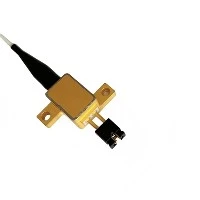
Laser rangefinder modules are widely used in many fields, including industrial measurement (such as size detection, position positioning), robot navigation (such as obstacle avoidance, path planning), security monitoring (such as intrusion detection, perimeter protection), intelligent transportation (such as vehicle distance measurement, flow monitoring), drones (such as height measurement, terrain mapping) and consumer electronics (such as smartphone focus, AR/VR interaction), etc. Its high precision and fast response make it an indispensable measurement tool in modern technology.

Overview of laser rangefinder module communication interface
1. Definition of communication interface:
The communication interface is a bridge for data exchange between the laser rangefinder module and external devices (such as controllers, computers or other terminal devices), responsible for transmitting measurement data, control instructions and status information. It is a key component for realizing the functions of the laser rangefinder module, which directly affects the data transmission efficiency, system integration complexity and adaptability of application scenarios.
2. Classification of communication interfaces:
① Classification by transmission mode:
Serial interface: Data is transmitted bit by bit, occupies less cables, and is suitable for long-distance communication, such as TTL, RS232, RS485, etc.
Parallel interface: Data is transmitted simultaneously in multiple bits, with fast speed, but the cables are complex, suitable for short-distance and high-speed communication.
② Classification by transmission protocol:
TTL interface: It adopts transistor-transistor logic level, which is suitable for short-distance and low-cost applications.
USB interface: It supports high-speed data transmission and plug-and-play, suitable for connection with PC or portable devices.
RS232 interface: It adopts single-ended signal transmission, suitable for medium and short-distance communication, and has general anti-interference ability.
RS485 interface: It adopts differential signal transmission, has strong anti-interference ability, and supports long-distance and multi-device communication.
Other protocols: Such as I2C, SPI, CAN, etc., which are suitable for specific scenarios or embedded systems.
3. Basis for selecting communication interface:
Transmission distance: For long-distance communication, you need to choose an interface with strong anti-interference ability such as RS485, and for short distances, you can choose TTL or USB.
Transmission rate: For high-speed data transmission, you need to choose USB or high-speed serial interface, and for low-speed scenarios, you can choose RS232 or TTL.
Anti-interference ability: Differential signal interfaces such as RS485 need to be selected for industrial environments or complex electromagnetic interference scenarios.
Cost budget: TTL interface has low cost and is suitable for projects with limited budgets; USB and RS485 have higher costs, but better performance.
System compatibility: Select a matching communication interface according to the interface type of the target device, such as USB is commonly used on PCs and RS485 is commonly used on industrial equipment.
By comprehensively considering the above factors, the most suitable communication interface can be selected for the laser rangefinder module to meet the needs of different application scenarios.
Detailed explanation of common communication interface types
1. TTL interface
Definition and characteristics:
TTL (Transistor-Transistor Logic) interface adopts transistor-transistor logic level standard, usually 0V represents low level (logic 0), 3.3V or 5V represents high level (logic 1). Its advantages are low cost, simple circuit, and easy implementation; its disadvantages are short transmission distance (usually less than 1 meter), weak anti-interference ability, and unsuitable for complex electromagnetic environment.
Application scenarios:
TTL interface is often used for short-distance data transmission, communication between microcontroller and sensor, and internal module connection of embedded system.
2. USB interface
Definition and characteristics:
USB (Universal Serial Bus) interface is a universal serial bus standard that supports high-speed data transmission (such as USB 3.0 up to 5Gbps), plug-and-play, and convenient power supply (can be powered by USB cable). Its advantages are fast transmission rate, strong compatibility, and convenient use; its disadvantages are limited transmission distance (usually less than 5 meters) and relatively high cost.
Application scenarios:
The USB interface is widely used in PC data acquisition, equipment debugging, consumer electronics product connection and other scenarios.
3. RS232 interface
Definition and characteristics:
RS232 is a serial communication standard that uses single-ended signal transmission and supports full-duplex communication. Its advantages are long transmission distance (usually up to 15 meters) and strong anti-interference ability; its disadvantages are low transmission rate (usually less than 115.2kbps), high cost, and thicker cables.
Application scenarios:
RS232 interface is commonly used in industrial control, instrumentation, medical equipment and other scenarios.
4. RS485 interface
Definition and characteristics:
RS485 is a serial communication standard for differential signal transmission, supporting long-distance transmission (up to 1200 meters) and multi-point communication (up to 128 devices can be connected). Its advantages are long transmission distance, strong anti-interference ability, and suitable for complex environments; its disadvantages are high cost and complex configuration.
Application scenarios:
RS485 interface is widely used in industrial automation, building automation, intelligent transportation and other scenarios.
5. Other interface types
Bluetooth interface:
Features: Wireless communication, short transmission distance (usually within 10 meters), low power consumption, suitable for mobile devices.
Application scenarios: Portable laser rangefinder, smartphone connection, drone ranging, etc.
Analog interface:
Features: Data is transmitted through analog signals (such as 0-5V or 4-20mA), suitable for simple control systems.
Application scenarios: Simple ranging, position feedback, etc. in industrial automation.

Communication interface selection guide
1. Select the interface type according to the application scenario
①Industrial automation:
Recommended interface: RS485, RS232
Reason: Industrial environment has many interferences and the transmission distance is long. RS485 and RS232 have strong anti-interference ability and are suitable for long-distance communication.
②Consumer electronics:
Recommended interface: USB, Bluetooth
Reason: Consumer electronics products require high-speed transmission and convenient connection. USB and Bluetooth interfaces meet the needs.
③Robot navigation:
Recommended interface: TTL, RS485
Reason: Robot internal module communication is suitable for TTL, and external communication is suitable for RS485.
④Security monitoring:
Recommended interface: RS485, wireless interface (such as Wi-Fi)
Reason: Security systems require long-distance and multi-point communication. RS485 and wireless interfaces are ideal choices.
⑤Laboratory measurement:
Recommended interface: USB, RS232
Reason: Laboratory environment has little interference. USB and RS232 can meet the needs of high-precision data transmission.
2. Select the interface type according to performance indicators
Transmission distance:
Short distance (<1 meter): TTL, USB
Medium distance (<15 meters): RS232
Long distance (>15 meters): RS485
Transmission rate:
Low speed (<115.2kbps): TTL, RS232
Medium and high speed (>1Mbps): USB, RS485
Anti-interference ability:
Strong anti-interference: RS485 (differential signal)
General anti-interference: RS232
Weak anti-interference: TTL, USB
Multi-point communication support:
Support multi-point communication: RS485
Single-point communication: TTL, USB, RS232
Selection suggestion:
If long-distance and strong anti-interference communication are required, choose RS485.
If high-speed transmission and convenient connection are required, choose USB.
If the cost budget is limited and the transmission distance is short, choose TTL.
3. Choose the interface type according to the cost budget
Low cost:
TTL interface: Simple circuit, lowest cost, suitable for projects with limited budget.
Medium cost:
RS232 interface: Moderate cost, suitable for medium and short distance communication.
USB interface: Slightly higher cost, but superior performance, suitable for high-speed data transmission.
Higher cost:
RS485 interface: Higher cost, but supports long-distance and multi-point communication, suitable for complex scenarios.
Wireless interface (such as Bluetooth, Wi-Fi): Higher cost, but provides the convenience of wireless connection.
Selection suggestion:
If the budget is limited and the transmission requirements are simple, choose TTL interface.
If the budget is moderate and higher performance is required, choose USB or RS232 interface.
If the budget is sufficient and long-distance and multi-point communication is required, choose RS485 or wireless interface.

The communication interface types of laser rangefinder modules are diverse, each with its own characteristics: TTL interface is low-cost, suitable for short-distance communication, and is often used for embedded systems and single-chip microcomputer connections; USB interface has a fast transmission rate and plug-and-play, suitable for PC-side data acquisition and equipment debugging; RS232 interface has strong anti-interference ability and is suitable for medium and short-distance industrial control and instrumentation; RS485 interface supports long-distance, multi-point communication, has strong anti-interference ability, and is an ideal choice for industrial automation and building automation; Bluetooth interface provides wireless connection, suitable for portable devices and mobile applications; analog interface is used for simple control systems. According to the transmission distance, rate, anti-interference requirements and cost budget, choosing the right interface type can significantly improve the performance and applicability of the laser rangefinder module. By comprehensively considering the application scenario, performance indicators and cost budget, the most suitable communication interface can be selected for the laser rangefinder module to ensure the optimal balance between system performance and cost.
Contact information:
If you have any ideas, feel free to talk to us. No matter where our customers are and what our requirements are, we will follow our goal to provide our customers with high quality, low prices, and the best service.
 Email:info@loshield.com
 Tel:0086-18092277517
 Fax: 86-29-81323155
 Wechat:0086-18092277517


