



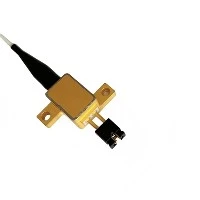
980nm 30W laser diode operating at a "golden" wavelength and delivering substantial power, it represents a perfect synergy of optical physics and engineering prowess. This article delves into the core technology of this remarkable device and explores its pivotal role in driving innovation across multiple industries.

Chapter 1: Demystifying the 980nm 30W Laser Diode – A Technical Core
1.1 Fundamental Principles
At its heart, a laser diode (LD) is a semiconductor device that converts electrical current directly into coherent laser light via a process called stimulated emission. This differs from an LED, which produces incoherent light through spontaneous emission. The "980nm" specifies the wavelength of the emitted light, placing it in the near-infrared (NIR) spectrum, invisible to the human eye. This wavelength was not chosen arbitrarily; it coincides precisely with a major absorption peak of Ytterbium (Yb) ions, a property that is fundamental to its most important application. The "30W" rating signifies its high continuous-wave (CW) optical output power, a level that presents significant engineering challenges in heat dissipation, electrical efficiency, and long-term reliability.
1.2 Key Technology and Structure
A 30W output at 980nm is typically achieved from a single-emitter laser diode, a single, high-performance junction, as opposed to a bar (which combines many emitters for even higher power). These diodes are fabricated from a Gallium Arsenide (GaAs) material system using strained quantum well structures, which enhance their efficiency and power output.
Achieving this performance requires two critical technologies:
Facet Coatings: The mirrored ends (facets) of the laser cavity are coated with sophisticated dielectric layers. The front facet has a partially reflective coating to allow laser light to escape, while the rear facet is highly reflective. These coatings are crucial for preventing Catastrophic Optical Damage (COD), a sudden failure mode where the intense light at the facet causes overheating and melting.
Advanced Packaging: The tiny semiconductor chip is mounted onto a robust submount (often diamond or aluminum nitride for its superb thermal conductivity) and then into a package like a C-Mount or Channel-Cooled Package. This sophisticated packaging is designed for one primary purpose: to efficiently extract the immense waste heat generated during operation, keeping the semiconductor junction at a stable, cool temperature.
1.3 Performance Metrics
The value of a 980nm 30W diode is defined by several key parameters:
Slope Efficiency: Measured in W/A, this indicates how efficiently additional electrical current is converted into light. A higher value is better.
Wall-Plug Efficiency (WPE): This is the most critical metric, representing the total ratio of optical output power to electrical input power. Modern 980nm diodes can achieve WPEs exceeding 60%, meaning they are vastly more efficient than traditional light sources like lamp-pumped lasers. This high efficiency directly translates to lower electricity costs and simpler cooling systems.
Spectral Characteristics: The width of the wavelength spectrum and how it shifts with temperature (nm/°C) are vital for applications requiring precise wavelength matching.
Beam Quality: The raw output beam is highly asymmetric and divergent (a "fast axis" and a "slow axis"). This poor beam quality is the device's main limitation, necessitating external optics for most applications.
Chapter 2: Core Applications – Powering Industrial and Scientific Innovation
2.1 The Heart of Fiber Lasers (The Primary Application)
This is the undisputed champion application. Here, the 980nm diode acts as a pump source. Its light is injected into a double-clad optical fiber doped with Ytterbium ions. The Yb ions efficiently absorb the 980nm photons, elevating them to a higher energy state and creating a population inversion. This stored energy is then released as stimulated emission, generating a high-power, high-quality laser beam typically at 1060-1080nm.
Why it's ideal: The near-perfect match between the 980nm pump light and the Yb absorption peak ensures maximum efficiency and minimal wasted heat within the fiber itself.
End-Use: These ytterbium-doped fiber lasers are the workhorses of modern manufacturing, used for cutting, welding, and cleaning metals, as well as in aerospace and automotive applications.
2.2 Direct Materials Processing
The laser can also be used directly for processing, often with beam-shaping optics to create a uniform spot.
Plastic Welding: 980nm light can transmit through many colored plastics (e.g., black automotive components) while being absorbed by a specific absorbing layer or at the interface. This allows for precise, strong, and aesthetically perfect welds with no particulates, ideal for medical devices and sensors.
Soldering and Brazing: The laser provides a clean, localized heat source perfect for soldering temperature-sensitive components in electronics or brazing small metal parts.
2.3 Medical and Aesthetic Applications
The 980nm wavelength has a strong affinity for water and hemoglobin, making it effective in medicine.
Medical: Used as a precise scalpel for soft tissue surgery, offering simultaneous cutting and coagulation (hemostasis), which minimizes bleeding. It is widely used in minimally invasive procedures.
Aesthetic: In dermatology, the light is absorbed by the water in skin tissue and the melanin in hair follicles. This thermal energy is used to damage hair follicles for permanent hair reduction, stimulate collagen for skin rejuvenation, and disrupt fat cells for non-invasive body contouring.
2.4 Scientific Research and Sensing
Research: 980nm diodes are used to pump other, more complex laser systems like Ti:Sapphire lasers, which are the tunable engines of advanced spectroscopy and quantum optics experiments.
Sensing: Their wavelength can be tuned to match absorption lines of specific gases or used as a bright source in LIDAR systems for remote sensing and 3D mapping.
Chapter 3: Advantages and Inherent Challenges
3.1 Core Advantages
Unmatched Efficiency: With WPE >60%, they drastically reduce operational energy costs compared to older laser technologies.
Exceptional Reliability and Lifetime: When operated within specifications, lifetimes of tens of thousands of hours are standard, reducing downtime and maintenance costs.
Compactness and Ruggedness: Their solid-state nature and small size enable integration into portable and automated systems.
Direct Modulation: The output power can be controlled at high speeds simply by modulating the drive current, enabling precise process control.
3.2 Challenges and Mitigations
Poor Beam Quality: The highly astigmatic and divergent raw beam is its greatest weakness. This is solved by sophisticated beam-shaping optics, including micro-lens arrays for collimation and complex systems to symmetrize the beam for direct application.
Thermal Management: Dissipating ~10-15W of waste heat from a chip mere millimeters in size is a monumental task. It is addressed through advanced packaging, thermoelectric coolers (TECs), and liquid-cooled heat sinks.
Cost: High-performance single-emitter diodes represent a significant investment, though the total cost-of-ownership is favorable due to their efficiency and longevity.
Chapter 4: Market Outlook and Future Trends
The market for high-power laser diodes is fueled by the relentless growth in industrial automation, electric vehicle manufacturing, and medical technology.
Technical evolution is focused on:
Higher Power from a Single Emitter: Research continues to push the limits, with commercial devices now reaching 40W, 50W, and beyond from a single aperture.
Increased Brightness: The goal is not just more power, but more power in a high-quality beam. This involves improving beam quality (reducing divergence) through novel waveguide designs.
Wavelength Stabilization: Developing integrated optics (like Volume Bragg Gratings) to lock the wavelength precisely, making pump sources even more efficient and enabling new direct applications.
Intelligent Integration: Incorporating monitoring photodiodes and thermistors directly into the package for closed-loop feedback control, enhancing performance and preventing accidental damage.
Conclusion
The 980nm, 30W laser diode is far more than a simple component; it is a foundational technology. Its role as the efficient, reliable heart of the fiber laser industry and its expanding direct-use applications make it a critical enabler of the "photonic manufacturing" era. As development pushes the boundaries of power, brightness, and intelligence, this unassuming device will continue to be a brilliant light driving innovation deep into the future.
Contact information:
If you have any ideas, feel free to talk to us. No matter where our customers are and what our requirements are, we will follow our goal to provide our customers with high quality, low prices, and the best service.
 Email:info@loshield.com
 Tel:0086-18092277517
 Fax: 86-29-81323155
 Wechat:0086-18092277517


