



Hair loss is a common concern affecting millions worldwide, driving a constant search for effective, non-invasive solutions. Among the array of options, Low-Level Light Therapy (LLLT) has emerged as a scientifically-backed approach to combat thinning hair. However, consumers exploring LLLT devices are immediately met with a key distinction: LED vs. Laser Diode. Marketing claims often cloud the reality, leaving many to wonder: what is the true difference, and which one is more effective?
This article cuts through the confusion. We will delve into the science behind both technologies, compare their mechanisms, efficacy, and safety, and provide a clear framework to help you select the right light therapy for your hair growth journey.
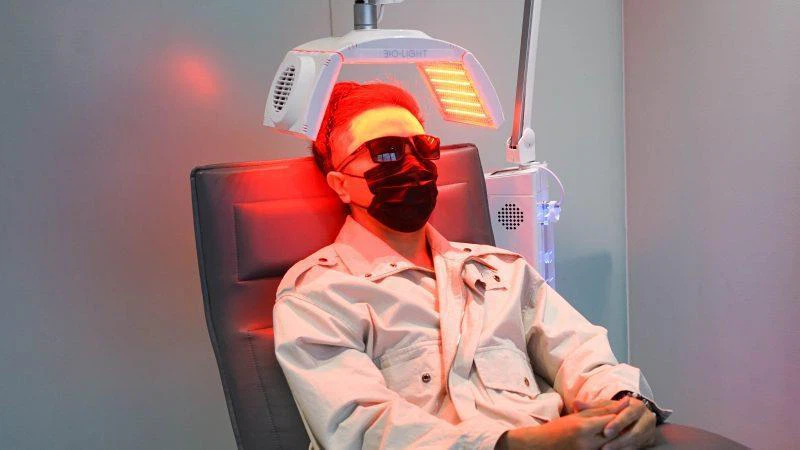
Low-Level Light Therapy (LLLT)
At its core, LLLT, also known as photobiomodulation (PBM), works by exposing cells to low-energy light. It is not a thermal process that burns or cuts; instead, it's a photochemical reaction. The key lies in specific wavelengths of light, primarily red light (630-670 nanometers) and near-infrared light (800-850 nanometers).
When these specific wavelengths are absorbed by a photoreceptor within the mitochondria (the powerhouse of the cell) called cytochrome c oxidase, it triggers a cascade of beneficial effects:
Increased ATP Production: The primary effect is a boost in adenosine triphosphate (ATP) production, the fundamental energy currency of the cell. Energized hair follicles have a better chance of transitioning from a resting phase to an active growth phase.
Improved Blood Circulation: LLLT stimulates the release of nitric oxide and promotes the formation of new capillaries, enhancing blood flow to the scalp. This delivers more oxygen and vital nutrients to the follicles.
Reduced Inflammation & Oxidative Stress: Chronic inflammation and oxidative stress are known contributors to hair loss. LLLT helps reduce inflammatory markers and oxidative damage, creating a healthier environment for hair growth.

Deep Dive: LED vs. Laser Diode - The Technical Differences
While both LEDs and Laser Diodes emit light in the effective wavelengths, their physical properties are fundamentally different, which fuels the debate over their efficacy.
1. Light Properties and Mechanism
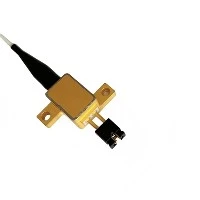
Laser Diode (Light Amplification by Stimulated Emission of Radiation):
Coherent: All light waves are in phase, meaning they travel in a synchronized, orderly fashion.
Monochromatic: The light consists of a single, pure wavelength.
Collimated (Directional): The light beams are parallel, resulting in a highly focused, concentrated beam with minimal divergence.
Implication for Hair Growth: Due to coherence and collimation, laser light can penetrate deeper into the scalp tissue with less energy loss. Proponents argue this allows for more precise and efficient energy delivery to the target-the hair follicle bulb.
LED (Light Emitting Diode):
Incoherent: The light waves are out of phase and scatter in multiple directions.
Monochromatic: Like lasers, high-quality LEDs emit a very narrow band of a specific wavelength.
Divergent: The light spreads out over a wider area.
Implication for Hair Growth: The divergent nature of LED light allows it to treat a larger surface area of the scalp simultaneously. While individual photons may not penetrate as deeply as a coherent laser beam, the sheer volume of light and broad coverage can effectively stimulate a wide field of follicles.
2. Efficacy and Efficiency: The Core Debate
The central question is: Is coherence necessary for hair growth?
The Laser Argument: Supporters of laser technology posit that coherence is critical. The organized, focused nature of laser light allows it to travel deeper and deliver a higher concentration of energy to the follicle, making it potentially more potent per unit of light. Many clinical studies demonstrating hair regrowth have used laser diode devices.
The LED Argument: Advocates for LED technology cite numerous studies showing that non-coherent light is equally effective. They argue that the photobiological response is triggered primarily by the absorption of photons of a specific wavelength, regardless of whether those photons are coherent or not. The key factors are total energy dose (measured in Joules per square centimeter), wavelength accuracy, and treatment protocol. The broader coverage of LEDs can also mean shorter treatment times for the whole scalp.
Conclusion on Efficacy: The scientific consensus is evolving. Both technologies have been proven effective in clinical trials. The ultimate success of a device likely depends less on the light source alone and more on the overall engineering: correct wavelength, sufficient power density, appropriate treatment dosage, and consistent use.
3. Safety, Side Effects, and Comfort
Shared Safety Profile: Both LED and Laser Diode LLLT devices are considered very safe for home use. They are non-invasive and non-thermal, meaning they do not burn the skin.
Side Effects: Side effects are rare and typically mild, such as temporary scalp dryness or itching. There is no downtime associated with either treatment.
Comfort: LED devices are often described as feeling like a gentle, warm light-or feeling like nothing at all. Some users of high-powered laser diode caps may report a very slight, harmless tingling or warmth on the scalp due to the more concentrated energy.
4. Cost and Accessibility
Laser Diode Devices: Generally command a higher price point. The technology is more complex and expensive to manufacture. This is why most clinical-grade in-office systems and high-end, FDA-cleared home-use helmets (e.g., Capillus, Theradome) utilize laser diodes.
LED Devices: Are less expensive to produce. Consequently, the market is flooded with more affordable home-use devices, such as caps, helmets, and combs (e.g., iRestore). This makes LED technology more accessible to a wider audience.

Comparison of luminous spectra of LED and laser light sources
Comparison Table: LED vs. Laser Diode at a Glance
| Feature | Laser Diode | LED |
|---|---|---|
| Light Properties | Coherent, Monochromatic, Collimated | Incoherent, Monochromatic, Divergent |
| Penetration | Theoretically deeper due to coherence | Broader surface coverage, shallower penetration |
| Treatment Approach | Focused, high-intensity energy | Widespread, diffuse energy |
| Common Device Types | Professional clinical devices, high-end home helmets | Home-use caps, helmets, combs |
| Cost | Typically higher ($$$) | Typically more affordable ($$) |
| Comfort | Usually minimal; possible slight warmth/tingling | Often completely imperceptible, highly comfortable |
| Core Debate | Is coherence essential for superior efficacy? | Is wavelength and dose the only critical factor? |
How to Choose: A Consumer's Guide
Rather than getting caught in the "LED vs. Laser" debate, focus on these evidence-based factors:
1. Prioritize Clinical Evidence: Look for devices that have been tested in published, peer-reviewed clinical studies that specifically demonstrate hair growth. Check for FDA 510(k) clearance for hair growth, which indicates the device is recognized as safe and effective based on substantial equivalence to a legally marketed predicate device.
2. Evaluate Key Specifications:
Wavelength: Ensure the device emits light in the proven ranges (630-670nm for red, 800-850nm for near-infrared).
Energy Density (Fluence): This is measured in Joules per square centimeter (J/cm²). The device should deliver a fluence that matches what was used in successful clinical trials (typically between 4-6 J/cm² per treatment).
Treatment Protocol: The recommended session frequency and duration should be realistic and sustainable for you to follow long-term. Consistency is paramount.
3. Align with Your Needs and Budget:
If you prefer a device with extensive clinical backing using laser technology and budget is less of a concern, a high-quality laser diode helmet may be your choice.
If you are seeking a more affordable, yet still clinically-proven option with excellent comfort, a reputable LED cap could be the ideal solution.
4. Manage Your Expectations: LLLT is not a quick fix. It requires patience and dedication, with visible results typically taking 4 to 6 months of consistent use. It is most effective for slowing or stopping hair loss and thickening existing hair, particularly in cases of androgenetic alopecia (male and female pattern baldness). It is not a cure for complete baldness.
The debate between LED and Laser Diode technology for hair growth is rooted in real scientific differences. Laser light is coherent and focused, while LED light is incoherent and broad. However, for the end-user, the distinction may be less critical than the overall quality and clinical validation of the device itself.
Both LED and Laser Diode LLLT devices have demonstrated the ability to stimulate hair growth when properly designed and used. The best choice is not simply "laser" or "LED," but the device that offers the right wavelength, sufficient energy density, a convenient treatment protocol, and, most importantly, solid clinical proof of efficacy. Before starting any new treatment, consulting a dermatologist or hair loss specialist is always the wisest first step to diagnose the cause of your hair loss and determine if LLLT is an appropriate solution for you.
Contact information:
If you have any ideas, feel free to talk to us. No matter where our customers are and what our requirements are, we will follow our goal to provide our customers with high quality, low prices, and the best service.
 Email:info@loshield.com
 Tel:0086-18092277517
 Fax: 86-29-81323155
 Wechat:0086-18092277517


