



The evolution of laser technology has been inextricably linked to the critical framework of safety classification. Laser products are globally categorized into four classes (Class 1 to Class 4) based on their potential to cause biological damage, particularly to the eyes and skin. Within this hierarchy, Class 1 laser modules stand apart as the pinnacle of inherent safety. Defined as laser products that are safe under all conditions of normal use, they emit laser radiation at levels that do not exceed the Maximum Permissible Exposure (MPE) limits for the eye. This intrinsic safety eliminates the need for personal protective equipment or engineered controls during operation.
1. Core Advantages of Class 1 Laser Modules
1.1 Uncompromising Safety Assurance
The paramount advantage is absolute user and bystander safety. Unlike higher-class lasers, Class 1 modules are designed to be completely harmless during normal operation, including situations involving accidental exposure to the beam. This is achieved by ensuring the accessible emission limit (AEL) is never exceeded, typically through the use of very low-power laser diodes (e.g., ≤0.39 mW for visible wavelengths in continuous wave mode) or by enclosing a higher-power source within an interlocked, fail-safe enclosure that prevents exposure. This fundamental characteristic allows their deployment in uncontrolled environments-offices, homes, public spaces-without requiring warning labels, safety training, or dedicated laser safety officers.
1.2 Inherent Reliability and Robust Design
Achieving Class 1 status often necessitates superior engineering. For enclosed systems, this involves multi-layered safety mechanisms such as redundant interlock switches, tamper-proof housings, and monitoring circuits that instantly disable the laser if the enclosure is breached. This results in products with exceptional reliability, stable long-term output, and high mean time between failures (MTBF). The focus on fail-safe design translates directly into low total cost of ownership, characterized by minimal maintenance, reduced downtime, and high durability in demanding applications.
1.3 Global Regulatory and Market Compliance
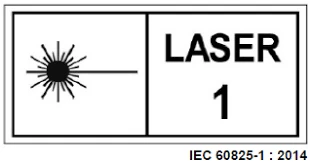
Class 1 is the most universally accepted laser safety classification. Compliance with the international standard IEC 60825-1 (and its regional equivalents like FDA 21 CFR 1040.10 in the U.S.) is significantly streamlined for Class 1 devices. This simplifies the product certification and approval process, accelerating time-to-market. For manufacturers, it drastically reduces liability risks associated with laser injury and avoids the complex regulatory hurdles faced by Class 3B or Class 4 products, making them ideal for integration into mass-market consumer goods.
1.4 Optimized User Experience and Integration
By eliminating safety concerns, Class 1 laser modules democratize laser technology. They can be seamlessly and safely integrated into products intended for use by non-specialists. There is no need for procedural controls or safety peripherals, simplifying the end-user experience. This "plug-and-play" safety enhances product appeal, broadens the potential user base, and allows designers to focus on functionality and ergonomics rather than laser hazard mitigation.
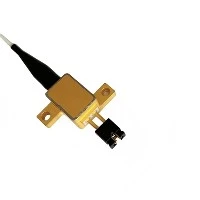
We have this 635nm 1mw laser module with IEC60825-1 Certification


2. Application Fields
2.1 Consumer Electronics and Smart Devices
This is one of the fastest-growing segments. Class 1 laser modules are integral to:
Smartphones & Tablets: Enabling secure facial recognition systems (e.g., dot projectors for 3D sensing) and autofocus assistance in camera modules.
Smart Home Devices: Providing navigation and obstacle detection for autonomous vacuum cleaners and creating virtual interfaces like projection keyboards.
Wearables: Facilitating gesture recognition for control and precise motion tracking in advanced fitness and AR/VR equipment.
2.2 Industrial Metrology and Machine Vision
Here, safety enables proximity to human operators without interrupting workflow.
Precision Alignment & Measurement: Used in non-contact gauging, part positioning, and leveling systems on factory floors.
Automated Identification: Serving as the core scanning engine in fixed-mount barcode and QR code readers for logistics, warehousing, and retail checkout.
Quality Control: Employed in surface defect inspection, weld seam tracking, and dimensional verification systems.
2.3 Medical and Life Sciences
Class 1 status is often a prerequisite for clinical and diagnostic devices.
In-Vitro Diagnostics: Found in flow cytometers, DNA sequencers, and hematology analyzers for cell counting and analysis.
Therapeutic Assistance: Used for patient positioning and guidance in radiotherapy or surgical navigation systems, and in certain low-level laser therapy (LLLT) devices.
Laboratory Instruments: Essential for sample illumination and autofocus in confocal microscopes and spectroscopy equipment.
2.4 Automotive and Transportation Systems
The push towards autonomy and advanced driver assistance systems (ADAS) relies on safe sensor technology.
In-Vehicle Sensors: Used in short-range LIDAR, blind-spot detection, and adaptive cruise control systems at close ranges.
Intelligent Transportation: Applied in automatic license plate recognition (ALPR) cameras and traffic monitoring sensors.
Driver Monitoring: Enabling eye-tracking and drowsiness detection systems inside the cabin.

3. Selection and Integration Guide
3.1 Key Selection Parameters
When specifying a Class 1 laser module, consider:
Optical Specs: Wavelength, output power stability, beam divergence, and spot quality.
Form Factor: Dimensions, mounting style, and connector type.
Electrical Requirements: Operating voltage, current draw, and modulation capability.
Environmental Ratings: Operating temperature range and ingress protection (IP) rating.
Compliance Documentation: Ensure full technical file and Declarations of Conformity for relevant standards (IEC, FDA, CE, RoHS) are provided.
3.2 Integration Best Practices
Successful integration requires attention to:
Thermal Management: Even low-power modules need proper heat dissipation for longevity.
Electrical Compatibility: Protecting against voltage spikes and ensuring clean power supply.
Optical Integration: Precise mechanical alignment and consideration of window materials if the module is behind a cover.
Software Interface: Utilizing appropriate drivers and APIs for digital control and diagnostics.

4. Conclusion
Class 1 laser modules represent the successful harmonization of technological innovation with rigorous safety protocols. They have transformed lasers from specialized, hazardous tools into safe, enabling components that can be embedded into the fabric of everyday life and work. By providing a "safe-by-design" solution, they remove a significant barrier to adoption, allowing engineers and designers to leverage the precision of laser technology where it was previously impractical or prohibited. As technology continues to advance towards greater human-machine interaction and ubiquitous sensing, the Class 1 laser module is poised to become the default and indispensable choice, powering the next generation of smart, safe, and innovative products across the globe.
Contact information:
If you have any ideas, feel free to talk to us. No matter where our customers are and what our requirements are, we will follow our goal to provide our customers with high quality, low prices, and the best service.
 Email:info@loshield.com; laser@loshield.com
 Tel:0086-18092277517; 0086-17392801246
 Fax: 86-29-81323155
 Wechat:0086-18092277517; 0086-17392801246


