




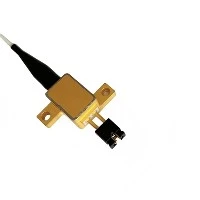
Parkinson's disease (PD), a progressive neurodegenerative disorder characterized by tremors, bradykinesia, rigidity, and postural instability, presents a formidable therapeutic challenge. Advanced laser modules are emerging as critical components in a new generation of diagnostic, therapeutic, and assistive devices for PD. The convergence of photonics and neurology promises not only enhanced precision in existing interventions but also entirely new, minimally-invasive treatment modalities.

I. Core Application Areas of Laser Modules in PD Management
1. Laser Modules Related to Deep Brain Stimulation (DBS)
Principle: In some studies on novel DBS techniques, lasers are attempted to modulate neuronal activity. For example, implantable optical fibers can transmit specific wavelengths of laser light to target areas in the brain, influencing neuronal function through methods such as optogenetics or thermal stimulation, thereby aiming to alleviate symptoms of Parkinson's disease.
Application Cases: Although not yet widely applied clinically, some experimental treatments under research explore the use of lasers with wavelengths like 473nm for operations related to neural regulation, offering new ideas and potential methods for treating Parkinson's disease.

473nm 50mw Lasers
2. Relevant Modules Combining Transcranial Magnetic Stimulation (TMS) with Laser
Principle: TMS itself is a non-invasive neural stimulation technique, and combining it with laser technology is a relatively new research direction. For instance, low-intensity laser irradiation is applied to specific head regions while simultaneously utilizing the magnetic field generated by TMS, jointly acting on cortical and deep neural structures to more precisely regulate neural circuit activities, thus attempting to relieve motor disorders and other symptoms in Parkinson's patients.
Application Status: This combined therapeutic approach is still being continuously improved and developed in clinical trials and basic research stages. Some early research results show certain potential, and it is expected to become an effective adjunct therapy applied in the clinical treatment of Parkinson's disease in the future.
3. Optical Coherence Tomography (OCT) Laser Modules
Principle: In terms of brain imaging examinations for Parkinson's patients, OCT technology can provide high-resolution microscopic images of the brain. It employs near-infrared band laser sources (such as semiconductor lasers around 850nm) to emit short-pulse width laser beams into human tissues. Then, reflected light signals are received and analyzed to construct cross-sectional images of brain tissue, helping doctors observe changes in subtle structures like cerebral blood vessels and nerve fiber bundles.
Practical Significance: It contributes to the early detection of possible pathological features in the brains of Parkinson's patients, such as the reduction of dopaminergic neurons in the substantia nigra compacta, playing crucial roles in early diagnosis, disease monitoring, and evaluation of treatment effects.
4. Low-Power Laser Modules (For PBM)
Specs: Wavelengths (808nm, 980nm, 1064nm common for deeper penetration); Low power output (10-500mW); Continuous or pulsed wave modes.
Devices: Portable/wearable helmets or probes for transcranial or intranasal PBM; investigational implantable micro-light sources for targeted, chronic PBM.

808nm 980nm 1064nm laser module
5. Therapeutic Surgical Laser Modules
High-Precision Laser Ablation: Thulium or diode laser modules (e.g., 1940nm, 1470nm) are used in laser interstitial thermal therapy (LITT) as a minimally invasive alternative for creating precise therapeutic lesions in the brain, such as in pallidotomy or thalamotomy for PD.
6. Sensing and Measurement Laser Modules
Laser Doppler Flowmetry Modules: Monitor cerebral blood flow changes during surgery or in response to therapies.
Interferometric & LiDAR Modules: Detect micromovements or map patient kinematics for advanced motion analysis systems.

1470nm Lasers
7. Imaging and Navigation Laser Modules
OCT Laser Sources: Broadband, near-infrared super-luminescent diodes (SLDs) or swept-source lasers provide micron-scale, cross-sectional imaging of brain tissue layers.
Confocal Laser Scanning Modules: Enable cellular-level imaging for research and potential real-time histopathology during surgery.
Laser Guidance & Profilometry: Low-power visible laser diodes (e.g., 635nm red) for projection and alignment in surgical navigation systems.

635nm Laser Diode
Laser modules are transitioning from ancillary tools to central enabling technologies in the fight against Parkinson's disease. They offer a unique combination of precision, programmability, and minimal invasiveness across the entire care continuum-from advanced imaging and surgical guidance to novel neuromodulation therapies and continuous symptom monitoring. The ongoing integration of sophisticated photonics with neurology, robotics, and artificial intelligence heralds a paradigm shift towards more precise, personalized, and proactive PD management. By illuminating the path forward-literally and figuratively-laser technology holds significant potential to improve the quality of life for millions living with Parkinson's disease.
Contact information:
If you have any ideas, feel free to talk to us. No matter where our customers are and what our requirements are, we will follow our goal to provide our customers with high quality, low prices, and the best service.
 Email:info@loshield.com; laser@loshield.com
 Tel:0086-18092277517; 0086-17392801246
 Fax: 86-29-81323155
 Wechat:0086-18092277517; 0086-17392801246


