



With the continuous advancement of science and technology, semiconductor lasers are increasingly used in communications, medical treatment, industry and other fields. Among them, FP (Fabry-Perot) lasers and DFB (distributed feedback) lasers are two common light sources, each with unique characteristics and advantages.
1. FP laser
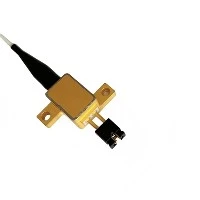
FP laser, full name Fabry-Perot laser, is a semiconductor laser based on the principle of multi-beam interference. It is mainly composed of a resonant cavity (usually composed of two mirrors) and a gain medium (such as semiconductor material). When the current passes through the gain medium, the generated photons are reflected back and forth in the resonant cavity many times to form an interference pattern, thereby outputting laser light. FP lasers are mainly used for low-speed short-distance transmission, such as transmission distances generally within 20 kilometers, and rates generally within 1.25G. FP has two wavelengths, 1310nm/1550nm.
1. Features
Multi-longitudinal mode output: FP lasers usually output multiple longitudinal modes, that is, multiple light waves with similar wavelengths oscillate simultaneously.
Wide spectral width: Due to the existence of multiple longitudinal modes, the spectral width of FP lasers is relatively wide.
High modulation rate: Suitable for application scenarios that require high-speed modulation, such as short-distance communication.
Temperature sensitivity: FP lasers are sensitive to temperature changes and may require additional temperature control measures.
2. Application areas
Short-distance communication: Such as internal connections in data centers, local area networks, etc.
Light source for fiber-optic communication systems: In some cost-sensitive applications, FP lasers can be used as light sources.
Optical sensing and measurement: Use its multi-longitudinal mode characteristics for certain specific sensing and measurement applications.
Typical parameters are shown in the table below:
| Parameter | Symbol | Unit | Test Conditions | Min | Typ | Max |
| Working wavelength | hp | nm | IW=Ith+20mA | 1290 | 1310 | 1330 |
| 1530 | 1550 | 1570 | ||||
| Spectral width | △λ | nm | IW=Ith+20mA | 3 | 5 | |
| Threshold current | Ith | mA | 5 | 20 | ||
| Output optical power of pigtail | Po | mW | IW,1310nm | 0.3 | 2.5 | |
| IW,1550nm | 0.3 | 2 | ||||
| Forward voltage | Vf | V | IW=Ith+20mA | 1.1 | 1.5 |
2.DFB laser
DFB laser, full name distributed feedback laser, is a semiconductor laser that uses Bragg grating to achieve single longitudinal mode output. It integrates a Bragg grating inside the laser so that only light of a specific wavelength can form a standing wave and be amplified, thereby achieving single longitudinal mode output. DFB (Distributed Feedback Laser) generally uses two wavelengths, 1310nm and 1550nm, and is divided into refrigerated and unrefrigerated. It is mainly used for high-speed medium and long-distance transmission, and the transmission distance is generally more than 40 kilometers.
1. Features
Single longitudinal mode output: DFB laser only outputs one longitudinal mode, that is, a single wavelength light wave.
Narrow spectrum width: Due to the characteristics of single longitudinal mode, the spectrum width of DFB laser is very narrow, usually less than 1MHz.
High side mode suppression ratio (SMSR): The SMSR of DFB laser can be as high as 40-50dB, which means that the power difference between the main mode and the side mode is large.
Good stability: DFB laser is relatively stable to changes in temperature and current, and is suitable for long-distance transmission.
Low chirp effect: Under direct modulation, the chirp effect of DFB laser is small, which is conducive to high-speed data transmission.
2. Application fields
Long-distance communication: such as backbone network and metropolitan area network in telecommunication network.
Analog signal transmission: such as RF signal transmission in cable television (CATV) system.
Precision measurement and sensing: using its narrow line width and high stability for precision measurement and sensing applications.
Scientific research and military fields: such as high-end applications such as spectral analysis and space optical communication.
Typical parameters are shown in the table below:
| Parameter | Symbol | Unit | Test Conditions | Min | Typ | Max |
| Working wavelength | hp | nm | IW=Ith+20mA | 1310 | ||
| 1550 | ||||||
| Spectral width | △λ | nm | IW=Ith+20mA | 0.3 | 0.55 | |
| Threshold current | Ith | mA | 15 | 20 | ||
| Output optical power of pigtail | Po | mW | IW,1310nm | 0.3 | 2.5 | |
| IW,1550nm | 0.3 | 2 | ||||
| Forward voltage | Vf | V | IW=Ith+20mA |
As can be seen from the table above, the main difference between FP and DFB lasers is the different spectral width. The spectral width of DFB lasers is generally narrow and is a single longitudinal mode of distributed negative feedback. The FP laser has a relatively wide spectrum width and is a multi-longitudinal mode laser. Their operating wavelengths, threshold currents, and forward voltages also differ.
There are significant differences between FP lasers and DFB lasers in structure, working principle, performance characteristics and application fields. FP lasers are suitable for short-distance communications and certain specific applications with their multi-longitudinal mode output, high modulation rate and low cost; while DFB lasers are suitable for single longitudinal mode output, narrow linewidth, high side mode suppression ratio and good stability. It has become the first choice light source in the fields of long-distance communication, analog signal transmission and precision measurement. When choosing a laser, the advantages and disadvantages of both should be weighed based on the needs of the specific application scenario. If you are interested, please feel free to contact us for more product details.
Contact information:
If you have any ideas, feel free to talk to us. No matter where our customers are and what our requirements are, we will follow our goal to provide our customers with high quality, low prices, and the best service.
 Email:info@loshield.com
 Tel:0086-18092277517
 Fax: 86-29-81323155
 Wechat:0086-18092277517


