



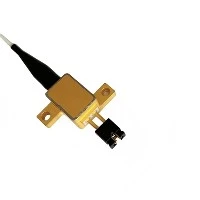
The same laser diodes have prices ranging from a few cents to hundreds of dollars, which is staggering. This makes people wonder what causes such a huge price difference?

First of all, laser diodes are not all the same. They differ in core materials, manufacturing processes, performance parameters, etc., and these differences directly affect their costs and application areas, which are ultimately reflected in prices.
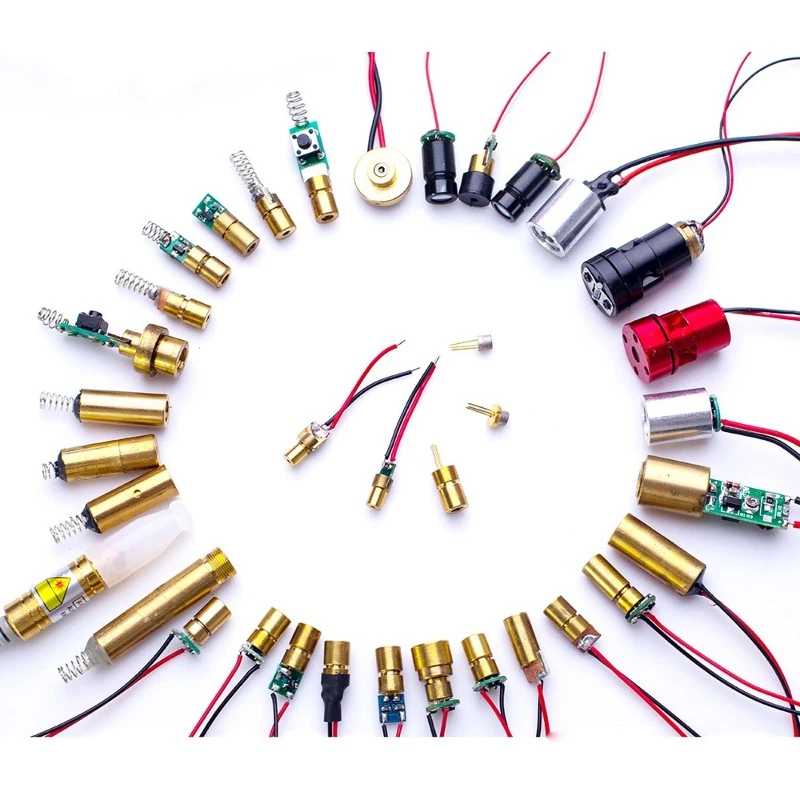
Laser diodes that cost a few cents are usually used in laser pens, toys, and other occasions that do not require high power and precision. They have a simple structure, are made of ordinary materials, have mature production processes, and have huge output, so they are inexpensive.
Laser diodes that cost hundreds of dollars may be used in high-end fields such as medical equipment, scientific research instruments, and industrial processing. These fields have extremely strict requirements on laser power, wavelength, stability, beam quality and other parameters. In order to meet these requirements, special materials, precision processing techniques, and even customized production are required, which undoubtedly greatly increases costs.
In addition to performance and use, factors such as brand, channel, and supply and demand relationships will also affect the price of laser diodes. Products from well-known brands are often more expensive, and some scarce models or customized products will also rise in price due to supply and demand.
The price difference of laser diodes is related to their core technology and performance parameters, and is also affected by many factors such as packaging methods, product specifications, and market supply and demand.
1. Core technology
Chip materials and structures: The band structure, electron mobility and other characteristics of different materials determine the performance and cost of laser diodes. Common materials such as gallium arsenide (GaAs) and indium phosphide (InP), as well as the application of advanced structures such as quantum wells and quantum wires, will affect the price. Laser diodes with new structures or high-performance materials are difficult to develop and manufacture, and the price is high.
Manufacturing process: Advanced manufacturing processes can improve the performance and reliability of laser diodes, but they will also increase costs. For example, laser diodes made using high-precision processes such as lithography and etching are relatively expensive.
2. Performance parameters
Output power: Laser diodes with high output power can be used in applications that require high energy output, but they have higher requirements for their materials, structures, and heat dissipation, and the cost is also higher. Low-power laser diodes are relatively cheap and are suitable for scenarios with low power requirements.
Wavelength: Laser diodes of specific wavelengths may have price differences due to market demand, technical difficulty and other factors. Some laser diodes with special wavelengths may have higher prices due to their unique application fields and technical requirements.
Threshold current: Laser diodes with low threshold current are easier to start and work, and have relatively low requirements for power supply and drive circuits, so the price may be higher.
Electro-optical conversion efficiency: Laser diodes with high electro-optical conversion efficiency can more effectively convert electrical energy into light energy, reduce energy consumption and heat generation, and improve the overall performance and stability of the system, but the R&D and production costs are also relatively high.
3. Packaging method
TO packaging: It is a common packaging form with advantages such as simple structure and low cost, and is suitable for some cost-sensitive applications.
C-Mount packaging: It is usually used in occasions that require better optical coupling and heat dissipation performance, and the packaging cost is relatively high.
Other packages: Such as butterfly packages, etc., have higher integration and performance, but the price is also more expensive.

4. Brand and market supply and demand relationship
Brand: Laser diodes of well-known brands are usually more guaranteed in terms of quality, performance and reliability, but the price is also relatively high. These brands have a high degree of popularity and reputation in the market, and their products are often subject to strict quality control and testing.
Market supply and demand: When the market demand for laser diodes is greater than the supply, the price may rise; conversely, when there is an oversupply, the price may fall. In addition, the degree of market competition will also affect the price. In the case of fierce competition, manufacturers may lower prices to compete for market share.
The price of laser diodes varies greatly, from low-end products costing a few cents to high-end products costing hundreds of dollars. This difference has a significant impact on different users when choosing products. The following is an analysis of the main application areas of laser diodes and the impact of price differences on user choices:
Wide application areas of laser diodes
1. Consumer electronics
Applications: laser pointers, DVD/Blu-ray players, laser printers, smartphones (facial recognition, AR applications).
Features: Usually use low-power, low-cost red or infrared laser diodes, which are cheap (a few cents to a few yuan).
User needs: Not demanding performance, but more focused on cost control.
2. Industrial manufacturing
Applications: laser cutting, welding, marking, 3D printing, precision measurement.
Features: Require high-power, high-stability laser diodes with a wide wavelength range (such as infrared, ultraviolet).
User needs: High requirements for power, precision and reliability, and relatively low price sensitivity.
3. Medical and beauty
Applications: laser surgery, skin treatment, dental equipment, ophthalmic surgery.
Features: Use specific wavelengths (such as green light, ultraviolet light) and high-precision laser diodes to ensure safety and treatment effects.
User needs: Extremely high requirements for performance and safety, price is not the main consideration.
4. Communication and data transmission
Applications: fiber-optic communication, LiDAR, data transmission.
Features: requires high-speed modulation, narrow linewidth laser diodes, and the wavelength is usually in the infrared band.
User needs: high requirements for speed, stability and wavelength accuracy, and high prices.
5. Scientific research and defense
Applications: spectral analysis, quantum experiments, laser weapons, target indication.
Features: use ultra-high precision, special wavelength or high-power laser diodes, usually customized.
User needs: extremely high performance requirements, price is usually not a limiting factor.

6. Entertainment and display
Applications: laser light shows, stage effects, projection displays.
Features: requires high-brightness, multi-color laser diodes, usually a combination of green, blue and red light.
User needs: high requirements for brightness and color effects, and moderate prices.
The impact of price differences on user choices
1. Consumer electronics users
Influence: Price is the most important consideration. Users tend to choose low-cost products that can meet basic functions.
Example: Laser pen manufacturers will choose red laser diodes that cost a few cents instead of more expensive green laser diodes.
2. Industrial users
Impact: Seek a balance between performance and price. Users are willing to pay a higher price for high-power, high-stability laser diodes, but will also consider cost-effectiveness.
Example: Laser marking machine manufacturers will choose medium-priced infrared laser diodes to ensure long-term stable operation.
3. Medical users
Impact: Performance and safety are the primary considerations, and price has little impact. Users tend to choose high-quality, high-reliability laser diodes.
Example: Ophthalmic surgical equipment manufacturers will not choose low-quality laser diodes to reduce costs.
4. Communication and scientific research users
Impact: The performance requirements are extremely high, and price is usually not the main limiting factor. Users are more concerned about the accuracy, stability and customization capabilities of laser diodes.
Example: Fiber optic communication equipment manufacturers will choose high-speed modulation, narrow linewidth laser diodes, even if the price is higher.
5. Entertainment users
Impact: Trade-off between effect and cost. Users will choose cost-effective laser diodes to meet brightness and color requirements.
Example: Stage lighting designers will choose mid-priced multi-color laser diodes to achieve dazzling visual effects.
The price differences of laser diodes reflect the different needs of their performance, application scenarios and target users. For consumer electronics users, low cost is the key; for industrial and entertainment users, cost performance is the focus; and for medical, communication and scientific research users, high performance and reliability are the core. Therefore, when choosing a laser diode, users need to find the best balance between price and performance according to their own needs.
JTBYShield can provides different application fields of laser equipment parts, specialize in manufacturing laser diodes, laser modules, infrared lasers, point/line/cross lasers, fiber lasers and more.
We accept OEM/ODM any type of laser module, we can design and manufacture any type of laser module according to your needs.
We have many models, if you are interested, please contact us in time and we will send you more product details and specific quotation.
Thank you for your time and attention, and I look forward to your response.

Contact information:
If you have any ideas, feel free to talk to us. No matter where our customers are and what our requirements are, we will follow our goal to provide our customers with high quality, low prices, and the best service.
 Email:info@loshield.com
 Tel:0086-18092277517
 Fax: 86-29-81323155
 Wechat:0086-18092277517


