



The helium-neon (He-Ne) lasers, as a representative of classic gas lasers, occupies an indispensable position in many fields due to its unique performance and widespread application. Especially the He-Ne laser operating at a wavelength of 632.8nm, which is in the visible red light band, is more in line with human visual perception habits. Moreover, it has excellent monochromaticity, coherence, and directivity, making it a commonly used light source in scientific research and industrial applications. In-depth research on the principle, characteristics, and applications of the 632.8nm He-Ne laser not only helps promote the development of related technologies but also provides strong support for innovative practices in various fields.

I. Basic Principles
(I) Working Substance and Energy Level Transition Mechanism
The working substance of the He-Ne laser is a mixture of helium and neon gases in a certain proportion, usually with a ratio of about 5:1 to 20:1, and operates under low-pressure conditions. Under such specific conditions, when an electric field is applied, electrons gain energy and accelerate, first colliding with helium atoms and ionizing them to a metastable state. Since the energy of the metastable state of helium atoms is slightly higher than some excited state energy levels of neon atoms, helium atoms in this state transfer their energy to neon atoms, thereby pumping neon atoms to higher energy levels. As a large number of neon atoms are excited to high energy levels, a population inversion distribution is achieved, which is a necessary condition for generating stimulated emission. When neon atoms at high energy levels transition to lower ones, they release light of a specific wavelength, among which 632.8nm corresponds exactly to the wavelength of a particular transition line of neon atoms. This process involves complex atomic physical phenomena and interactions between microscopic particles. Accurately controlling factors such as gas composition, pressure, and discharge conditions is crucial for ensuring stable laser output.
(II) Design of Optical Resonator Cavity
The optical resonator cavity is one of the core components of the He-Ne laser. It consists of two mirrors with different reflectivities. One end is a high-reflection mirror (HR>99.99%), which almost completely reflects light; the other end is an output coupler (OC transmittance rate ~1%), allowing a small amount of light to pass through as laser output. By carefully designing the length and shape of the resonator cavity, longitudinal modes can be effectively selected, meaning only light waves satisfying certain phase conditions can form stable oscillations within the cavity and be continuously amplified. This mode selection mechanism ensures the high monochromaticity and frequency stability of the laser. Additionally, an appropriate cavity length guarantees a relatively long coherence length (generally up to about 30cm), enabling the output laser to have good interference characteristics suitable for various precision measurements and experimental needs. For example, in interferometer experiments, a laser with a long coherence length can produce clear and bright fringe patterns, facilitating accurate measurement of tiny displacements or thickness changes.

(III) Polarization Characteristics Analysis
Light emitted by the He-Ne laser usually has certain polarization characteristics. In some cases, the output light may be randomly polarized, but under other designs and operating conditions, linearly polarized output can be achieved. The polarization state has an important impact on many application scenarios. For instance, when using a Wollaston prism for beam splitting, the polarization direction of incident light must be considered to ensure correct splitting effects. Studies show that there are differences in the time-spectral dynamics between s/p polarization components. Understanding these characteristics helps optimize optical path design and improve system performance. By employing appropriate polarization elements and techniques, such as Brewster windows, the polarization state of the laser can be effectively controlled and adjusted to meet specific application requirements.
(IV) Power Stability Factors
Maintaining stable output power is a key indicator of the He-Ne laser. However, during actual operation, it is affected by various factors such as temperature fluctuations and current changes. To achieve a stability index of ±0.5%/hour, several measures have been taken. On one hand, temperature drift compensation technology is introduced, where environmental temperature is monitored and working parameters are adjusted in real-time to counteract the effects of temperature variations; on the other hand, precise control of current magnitude ensures the stability and consistency of the discharge process. These technologies and methods significantly enhance the reliability and stability of the laser under different working environments, enabling it to maintain stable performance during long periods of continuous operation.
II. Key Technical Parameters and Product Types
(I) Typical Specification Comparison
There are different models of 632.8nm He-Ne lasers available on the market, mainly differing in terms of power range, beam diameter, and divergence angle. Generally speaking, the power can range from a lower value of 0.3mW to a higher one of 5mW, with a beam diameter approximately between Φ0.6mm and Φ1.5mm, and the divergence angle varies depending on specific designs. Lower power lasers are suitable for occasions with low demands on light intensity, such as teaching demonstrations or simple detection tasks; while high-power lasers are more appropriate for applications requiring intense light sources, like long-distance transmission or large-area irradiation. Furthermore, there are also specially designed lasers, such as those with split miniature power supply designs, which offer advantages like compact structure and long lifespan, making them convenient for installation and use in different devices and environments.
(II) Special Function Variants
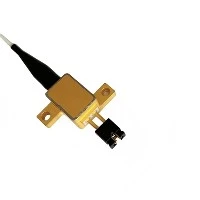
In addition to standard continuous wave output type He-Ne lasers, there are also some variants with special functions. For example, iodine frequency-stabilized lasers utilize the narrow linewidth characteristic of iodine molecular absorption lines to achieve high-precision frequency stabilization, often used for calibrating other instruments and equipment; acetylene frequency-locked lasers can lock the frequency at a specific value, serving as standard devices in optical communication bands; additionally, lasers equipped with fiber coupling interfaces can better adapt to complex optical path systems, facilitating integration into various experimental setups and production equipment. These special function variants further expand the application scope and flexibility of He-Ne lasers.

III. Detailed Application Areas
(I) Basic Scientific Research
Interferometer Light Source: Thanks to its high coherence, the 632.8nm He-Ne laser is an ideal light source for interferometers. In physics research, it is commonly used to measure tiny displacements, strains, and material deformations. For example, in material mechanics performance tests, changes in interference fringes can be observed to accurately calculate the deformation amount of materials under stress; in quality inspection of optical components, interference phenomena can be used to detect whether the surface flatness and radius of curvature meet requirements.
Physics Laboratory Teaching: As a classic experimental tool, the He-Ne laser is widely used in university physics laboratory teaching. It can intuitively demonstrate important optical phenomena such as grating diffraction and double-slit interference, helping students understand and master basic concepts and principles of wave optics. At the same time, due to its relatively simple operation and high safety level, it is also very suitable for beginners to practice hands-on skills and cultivate scientific literacy.
(II) Industrial Inspection and Manufacturing
Precision Optical Element Alignment: During the assembly and commissioning of optical systems, precise alignment of various optical elements' positions is required. At this time, the thin straight beam emitted by the He-Ne laser can serve as an ideal reference baseline, assisting technicians in quickly and accurately adjusting the positions of lenses, mirrors, and other elements to ensure the correctness of the entire system's optical path.
Scattered Light Energy Field Quantitative Analysis in Flow Cytometry: In the biomedical field, flow cytometry is an important technique for cell analysis and sorting. The stable light source provided by the He-Ne laser can excite fluorescent markers in cell suspensions, and by detecting the energy distribution of scattered light, information about cell size, morphology, etc., can be obtained. This is of great significance for studying cellular biological characteristics, disease diagnosis, and treatment.
Opacity Monitoring and Food Sorting System: By utilizing the attenuation of light intensity after passing through samples, real-time monitoring of sample opacity can be realized. This principle is applied in the food processing industry to distinguish products of different grades, such as screening for fruit ripeness or evaluating meat quality. Through automated control systems combined with laser detection results, efficient production line sorting operations can be achieved.

(III) Medical Device Innovation
Intravascular Irradiation Therapy for Cardiovascular Diseases: In recent years, studies have found that irradiation with lasers of appropriate wavelengths can promote blood circulation and improve tissue metabolic functions. Based on this principle, intravascular irradiation therapy has gradually been applied in clinical practice as an adjunct treatment for some cardiovascular diseases. The 632.8nm He-Ne laser becomes one of the preferred light sources due to its good penetration ability and biocompatibility.
Potential Development of Non-Invasive Laser Therapy Equipment: Besides traditional surgical treatment methods, non-invasive laser therapies are receiving increasing attention. The He-Ne laser is expected to play an important role in this area, for example, in treating skin diseases or promoting wound healing. Currently, relevant research is actively underway, and more innovative medical devices may emerge in the future.
(IV) Frontier Interdisciplinary Applications
Excitation Source Selection in Raman Spectroscopy: Raman scattering is a special phenomenon observed after roughening treatment on specific metal surfaces. Selecting an appropriate excitation source is crucial for obtaining high-quality Raman spectra. The 632.8nm He-Ne laser, owing to its single wavelength and high intensity, is often used as an ideal excitation source for Raman spectrometers, contributing to improved detection sensitivity and resolution.
Phase Modulation Optimization Strategies in Holographic Imaging Technology: Holographic imaging is a technique that records all information about an object, including amplitude and phase. When using the He-Ne laser for holography, adjusting laser parameters can realize effective phase modulation, thereby improving imaging quality and contrast. This is of great importance for three-dimensional reconstruction, micro-nano fabrication, and other fields.
Anti-Jamming Design Case of Maritime Visual Navigation System: In marine environments, traditional visual navigation methods are easily affected by adverse weather conditions. A maritime visual navigation system designed with the He-Ne laser as the signal source has strong anti-interference capabilities, providing reliable guidance even in low visibility conditions such as foggy or rainy days. The successful application of this system demonstrates the unique advantages of the He-Ne laser under special circumstances.
In summary, the 632.8nm helium-neon (He-Ne) laser has become an integral part of optical technology due to its unique working principle, excellent performance characteristics, and widespread applications across various fields. It combines advantages such as low cost, ease of operation, and high reliability, playing vital roles not only in basic scientific research but also in industrial production, medical health, and other domains. Looking ahead, with the continuous development of miniaturized packaging technologies, portable He-Ne lasers will become more popular; meanwhile, breakthroughs in new frequency stabilization technologies are expected to expand its application boundaries in high-end areas like quantum metrology. It can be foreseen that for quite some time to come, the 632.8nm He-Ne laser will remain an indispensable tool for researchers and engineers alike.
Contact information:
If you have any ideas, feel free to talk to us. No matter where our customers are and what our requirements are, we will follow our goal to provide our customers with high quality, low prices, and the best service.
 Email:info@loshield.com
 Tel:0086-18092277517
 Fax: 86-29-81323155
 Wechat:0086-18092277517


