



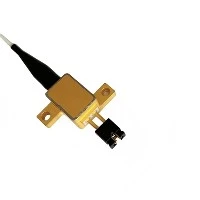
He-Ne Laser is one of the earliest gas lasers to achieve continuous output. It produces stable red laser output at a wavelength of 632.8 nanometers through discharge excitation of a mixture of helium (He) and neon (Ne) gases.
Early helium-neon lasers had a power of only milliwatts, but with advantages such as high beam quality, good coherence, and long life, they quickly became the standard light source for scientific research and industrial measurement. With technological advances, high-power helium-neon lasers (such as hundreds of milliwatts) have been gradually realized through optimization of discharge structure, resonant cavity design, and gas ratio, and have been expanded to applications in precision machining, interferometry, and other fields. It is still one of the classic representatives of gas lasers.

High-power helium-neon lasers (He-Ne lasers) have irreplaceable value in scientific research, industry, and medical fields due to their high stability, excellent beam quality, and long life. Compared with other lasers, such as CO₂ lasers (high power but poor beam quality) and semiconductor lasers (small size but low coherence), helium-neon lasers excel in monochromaticity, directionality, and frequency stability, making them ideal light sources for precision measurement, holographic imaging, and optical experiments. In addition, they have a simple structure, low maintenance cost, and do not require a complex cooling system, making them suitable for long-term stable operation. Although it is difficult to compete with solid or fiber lasers in terms of power, helium-neon lasers still have unique advantages in low to medium power applications that require high beam quality.
Comparison with other lasers
| Features | He-Ne lasers | CO₂ lasers | Semiconductor lasers |
| Wavelength | 632.8 nm (red light) | 10.6 μm (infrared) | Visible to near-infrared |
| Power range | milliwatts to hundreds of milliwatts | Watt to kilowatt class | Milliwatts to hundreds of watts |
| Beam quality | Excellent (M²≈1) | Medium (needs optimization) | Poor (collimation required) |
| Stability | Very high | High | General (easy to drift) |
| Lifetime | >20,000 hours | 5,000-10,000 hours | 10,000-50,000 hours |
| Cooling method | Natural or air-cooled | Water cooling/air cooling | Air cooling/thermoelectric cooling |
Principle of high-power He-Ne laser
1. Working medium:
A mixed gas of helium (He) and helium (Ne) (typical ratio 5:1~10:1) is used and sealed in a glass or quartz discharge tube. Helium atoms are excited to a metastable state (2¹S₀, 2³S₁ energy level) by electron collision, and then neon atoms are excited to a high energy level (3s₂, 2s₂) by resonant energy transfer, forming a population inversion.
2. Stimulated radiation and laser output:
When neon atoms transition from the 3s₂ energy level to the 2p₄ energy level, 632.8 nm (red light) photons are released, which are amplified by feedback through the optical resonant cavity (Brewster window + high reflective mirror) to form a stable laser output.
3. Power boost mechanism:
Increasing the discharge current, optimizing the gas pressure (1~10 Torr) and extending the resonant cavity length (>1 m) can increase the output power, but the thermal effect and mode stability need to be balanced.
Key technologies of high-power He-Ne lasers
1. Power enhancement methods
(1) Optimization of discharge tube structure
Increase the length (more than 1 meter) and diameter (8-10mm) of the discharge tube to effectively extend the effective distance of the gain medium
Adopt segmented discharge tube design to achieve multi-stage amplification
Optimize the electrode shape (such as hollow cathode) to improve discharge uniformity
(2) Gas parameter optimization
Precisely control the He:Ne mixing ratio (5:1 to 10:1)
Optimize the working gas pressure (1-10Torr) to balance the gain and quenching effects
Add trace amounts of argon (Ar) to improve discharge efficiency
(3) Improvement of excitation method
Use RF excitation (13.56MHz) instead of traditional DC discharge
Achieve electrodeless discharge to avoid electrode sputtering contamination
Improve energy coupling efficiency and increase power density by more than 30%
2. Heat dissipation and stability control
(1) Thermal management system
Graded temperature control design: discharge tube constant temperature (±0.1℃) + Resonant cavity thermal compensation
Efficient heat dissipation solution:
Water cooling (>100W/cm² heat dissipation capacity)
Microchannel air cooling (compact design)
Application of low thermal expansion materials (such as microcrystalline glass)
(2) Frequency stabilization technology
Active frequency stabilization solution:
Zeeman frequency stabilization (stability up to 10⁻⁹)
Saturation absorption frequency stabilization (iodine molecule reference)
Passive frequency stabilization:
Ultra-low expansion cavity design
Temperature-pressure dual parameter compensation
(3) Vibration suppression
Active vibration isolation platform (6 degrees of freedom control)
Resonant cavity rigid support structure
Real-time vibration compensation system
Application fields of high-power He-Ne lasers
1. Application in industrial fields
①High-precision manufacturing and processing
Semiconductor wafer cutting and micromachining (using the high positioning accuracy of 632.8nm wavelength)
Precision marking system (non-destructive marking of heat-sensitive materials)
Thin film measurement and thickness control (interference measurement accuracy reaches nanometer level)
②Engineering measurement and detection
Large-scale building alignment measurement (straightness monitoring of bridge and tunnel construction)
High-precision displacement sensor (resolution better than 0.1μm)
Three-dimensional morphology measurement (combined with holographic technology to achieve micron-level detection)
③Quality control and automation
Online detection of assembly line product dimensions
Precision mechanical assembly positioning system
Optical component surface detection (such as lens curvature radius measurement)
2. Scientific research and medical applications
①Scientific research
Laser interferometer (gravitational wave detection, optical platform vibration analysis)
Holographic imaging system (dynamic holographic recording and reproduction)
Spectroscopy standard light source (atomic and molecular energy level research)
②Biomedicine
Cell manipulation and imaging (low-power laser tweezers technology)
Photodynamic therapy (exploring targeted tumor therapy)
Ophthalmic surgery assistance (retinal welding and diagnosis)
③Medical equipment
Flow cytometer light source
Confocal microscope illumination system
Laser acupuncture and physiotherapy equipment
3. National defense and communication applications
①Detection and guidance
LiDAR core light source (atmospheric detection distance>10km)
Missile guidance simulation training system
Underwater laser communication (blue-green light conversion research)
②Space technology
Inter-satellite communication beacon light source
Space target ranging and tracking
Gravitational redshift experimental benchmark light source
③Special applications
Quantum communication experimental light source
Nuclear fusion experimental plasma diagnosis
High-energy physics experimental precision timing
4. Emerging application areas
①Quantum technology
Cold atom experimental laser cooling light source
Quantum entangled state generation system
②New energy
Photovoltaic material characteristics research
Fuel cell electrode process observation
③Environmental monitoring
Atmospheric pollutant laser spectrum detection
Ocean temperature field remote sensing measurement
In summary, helium-neon lasers show irreplaceable unique value in high-power scenarios. Compared with other lasers, helium-neon lasers can provide unparalleled coherence and stability in applications such as interferometry and holographic imaging, which is difficult for semiconductor lasers and solid-state lasers to achieve.
With the continuous breakthroughs in key technologies such as RF excitation and thermal management, high-power helium-neon lasers will play a greater role in cutting-edge fields such as EUV lithography detection and space quantum communication. Its integration with fiber optic technology may give birth to a new generation of highly stable transmission systems, and in the field of biomedicine, surgical applications after power enhancement are also worth looking forward to. Despite the competition from new lasers, helium-neon lasers will continue to maintain an irreplaceable position in special scenarios that "require extreme optical performance" and continue to promote the innovative development of precision science and high-end manufacturing.
Contact information:
If you have any ideas, feel free to talk to us. No matter where our customers are and what our requirements are, we will follow our goal to provide our customers with high quality, low prices, and the best service.
 Email:info@loshield.com
 Tel:0086-18092277517
 Fax: 86-29-81323155
 Wechat:0086-18092277517


