



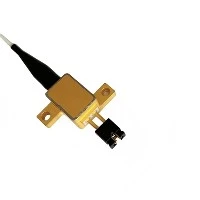
Solid-state Lasers are devices that use solid-state gain media (such as crystals or glasses such as Nd:YAG and Yb:YAG) as their core and generate high-energy lasers through optical pumping. They have the characteristics of compact structure, high power, and good stability. They are widely used in industrial processing (such as metal cutting and welding), medical treatment (laser surgery, beauty), communication (space optical communication), military (laser guidance, directed energy weapons), and other fields.
The beam divergence angle refers to the angle at which the laser beam gradually expands during propagation. Its size directly reflects the collimation and energy concentration of the beam, and is a key parameter for measuring the laser beam quality (M² factor). A smaller divergence angle means that the laser can maintain high energy density over a long distance, which is crucial for scenes such as precision processing, remote communications, and weapon effectiveness. Otherwise, it will lead to energy dispersion and reduced efficiency. Therefore, controlling the divergence angle is one of the core issues for optimizing laser performance.

Basic principles of beam divergence
1. Physical definition of beam divergence
The beam divergence (θ) is a parameter that measures the degree of lateral expansion of a laser beam during propagation, usually expressed in half angle (in radians or milliradians). The divergence of an ideal Gaussian beam is determined by the wavelength (λ) and the beam waist radius (ω₀) of the beam, and its mathematical expression is:

This formula shows that the shorter the wavelength or the larger the beam waist radius, the smaller the divergence angle and the better the collimation of the beam.
2. Relationship with beam quality factor (M²)
The actual laser beam is not an ideal Gaussian beam, and its divergence angle will increase due to factors such as high-order modes and aberrations. The beam quality factor (M²) is used to quantify the degree of deviation of the actual beam from the ideal Gaussian beam:

M² = 1: ideal Gaussian beam (TEM₀₀ mode), with minimum divergence angle.
M² > 1: there are higher-order modes or aberrations, the beam quality decreases, and the divergence angle increases.
M² is an important indicator for evaluating laser performance, which directly affects the focusing ability and far-field energy distribution of the laser.
Importance of beam divergence angle to solid-state laser performance
1. Direct correlation between beam quality and energy density
Far-field energy concentration: The smaller the divergence angle, the slower the energy decay of the laser beam when it propagates over long distances, and the higher the energy density. For example, in laser cutting/welding, low divergence angle can improve processing depth and efficiency and reduce heat-affected zone.
The significance of high beam quality (low M²): Precision processing (such as microelectronic drilling, OLED cutting) requires extremely small focused spot, and low divergence angle (M²≈1) can ensure high energy concentration, improve processing accuracy and edge quality.
2. The decisive role of transmission distance and focusing ability
Long-distance transmission loss: In laser radar or space communication, a large divergence angle will cause the beam to diffuse rapidly, reduce the signal-to-noise ratio or increase power consumption. For example, satellite laser communication requires an extremely low divergence angle (<0.1 mrad) to achieve long-distance stable transmission.
Focused spot size: The divergence angle directly affects the size of the focused spot (d∝θ⋅f, f is the focal length), which in turn determines the processing resolution. For example, semiconductor wafer cutting requires submicron-level spots, requiring the divergence angle to be strictly controllable.
3. Challenges of thermal effect and system stability
Thermal lens effect is aggravated: excessive divergence angle will lead to uneven laser energy distribution, local overheating of gain medium, thermal lens effect, further deterioration of beam quality, and a vicious cycle.
Long-term output stability: thermal distortion (such as thermally induced birefringence of Nd:YAG rods) will dynamically change the divergence angle, and active cooling or adaptive optical compensation is required to maintain stable output.
4. Differentiated requirements of application scenarios
Industrial cutting/welding: extremely low divergence angle (<1 mrad) is required to achieve high power density (>10⁶ W/cm²) to ensure cutting speed and cross-section quality.
Medical lasers (such as ophthalmic surgery, skin treatment): the divergence angle needs to be precisely controlled (such as 0.5–2 mrad for excimer lasers) to limit the action area and avoid damaging healthy tissues.
Military weapons (such as laser directed energy weapons): the divergence angle directly affects the energy density of the target surface and needs to be compressed to below 0.05 mrad to achieve effective damage at the kilometer level.
Key factors affecting the beam divergence angle
1. Optimization of resonant cavity design
The structural design of the resonant cavity directly affects the laser mode characteristics, and thus determines the beam divergence angle.
2. Thermal management of working materials
Thermal effect is the main factor leading to beam quality degradation and directly affects the divergence angle.
3. Pumping method and beam shaping
Different pumping schemes and beam processing technologies significantly affect the output beam characteristics.
Optimization and control methods of beam divergence angle
1. Optimization of resonant cavity parameters
(1) Matching of cavity length and reflector curvature
Short cavity design: Reducing the cavity length can reduce the probability of high-order mode oscillation, but it is necessary to balance the power output requirements.
Optimization of reflector curvature: Use a confocal cavity (R1=R2=L) or a near-confocal design to enhance fundamental mode selectivity.
Dynamic tuning technology: Use piezoelectric ceramics to adjust the cavity mirror position and compensate for thermally induced cavity length changes in real time.
(2) Insert aperture diaphragms to suppress high-order modes
Hard diaphragms: Set a small hole diaphragm in the cavity to physically block high-order modes, but it will introduce diffraction losses.
Soft diaphragms: Use the non-pumped area at the edge of the gain medium as a natural diaphragm to reduce additional losses.
Variable diaphragm system: Dynamically adjust the diaphragm size according to power requirements to balance beam quality and efficiency.
2. Thermal effect suppression technology
(1) Active cooling and passive heat sink design
Microchannel cooling: Integrate microchannels around the gain medium to achieve efficient heat exchange (suitable for kilowatt-class lasers).
Phase change cooling: Use evaporative cooling or heat pipe technology, suitable for compact systems.
Heat sink material optimization: Use diamond or high thermal conductivity composite materials (such as AlSiC) to improve heat dissipation efficiency.
(2) Thermally insensitive crystal materials
Nd:YVO₄: Has lower thermal lens effect than Nd:YAG, but narrower gain bandwidth.
Yb:CALGO: Wide emission bandwidth and high thermal conductivity, suitable for ultrafast laser systems.
Doping concentration gradient design: Reduce wavefront distortion caused by thermal stress through gradient doping.
3. Adaptive optics technology
(1) Real-time wavefront correction
Deformable mirror: Dynamically adjust the mirror shape through piezoelectric actuators to compensate for low-order aberrations (such as defocus and astigmatism).
Liquid crystal spatial light modulator (LC-SLM): Programmable correction of high-order aberrations with a resolution of hundreds of control units.
Shack-Hartmann sensor closed-loop system: Real-time detection of wavefront distortion and feedback control to achieve λ/10 level correction accuracy.
(2) Intelligent control algorithm
PID control: Stable adjustment for slowly changing thermal aberrations.
Machine learning prediction: Train the model through historical data to compensate for known thermal distortion patterns in advance.
4. External collimation system design
(1) Optimization of beam expansion lens group
Galilean beam expansion: compact structure, suitable for medium and small power lasers (such as 5-10 times beam expansion).
Kepler beam expansion: spatial filter can be inserted, suitable for high power system, but attention should be paid to the power density at the focus.
Application of aspheric lens: eliminate spherical aberration and improve the far field quality of the beam after beam expansion.
(2) Fiber coupling output control
Multimode fiber mode purification: suppress high-order modes through bending filtering or long fiber transmission.
Photonic crystal fiber: use hollow core structure to reduce nonlinear effects and maintain single-mode transmission characteristics.
Fiber end face processing: optimize bevel polishing (8°-10°) to reduce the interference of return light.
In summary, the beam divergence angle, as a core indicator for evaluating the performance of solid-state lasers, directly determines the far-field energy density, transmission efficiency and focusing ability of the laser. Through multi-dimensional coordinated optimization of resonant cavity design optimization, thermal effect suppression, adaptive optical correction and external collimation system, the divergence angle can be significantly reduced (close to the diffraction limit), thereby improving the processing accuracy, communication distance and energy utilization of the laser, and greatly expanding its application in high-end fields such as precision manufacturing, space communications, medical cosmetology and national defense. In the future, with the breakthrough of intelligent control algorithms and new thermal management materials, the precise control of beam divergence angle will become a key direction to promote the technological innovation of solid-state lasers.
JTBYShield Laser Technology Co., Ltd is a professional manufacturer of core components for laser equipment, dedicated to providing high-precision, high-reliability laser optical components and subsystem solutions for the global industrial laser, medical beauty, scientific research and national defense fields.
Contact information:
If you have any ideas, feel free to talk to us. No matter where our customers are and what our requirements are, we will follow our goal to provide our customers with high quality, low prices, and the best service.
 Email:info@loshield.com
 Tel:0086-18092277517
 Fax: 86-29-81323155
 Wechat:0086-18092277517


