


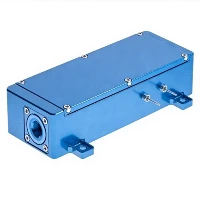

Laser diode modules are ubiquitous in modern technology, enabling applications from consumer electronics (barcode scanners, laser pointers) to advanced industrial (marking, cutting), automotive (LiDAR), and medical systems. The selection of lens material is a critical design decision in laser diode modules, significantly impacting performance, cost, and application suitability.

1. Fundamental Material & Manufacturing Comparison
1.1 Plastic (Polymer) Lenses
Materials: Primarily Polymethyl Methacrylate (PMMA/Acrylic) and Polycarbonate (PC). Advanced resins like COC (Cyclic Olefin Copolymer) and COP (Cyclic Olefin Polymer) offer superior properties.
Manufacturing: High-volume injection molding. This process allows for:
Extreme Scalability: Millions of identical parts at very low unit cost.
Design Freedom: Complex aspheric, diffractive, or micro-structured surfaces are economically feasible. Multi-element lens arrays can be molded as a single piece.
Rapid Prototyping: Lower initial tooling investment and faster cycle times.
1.2 Glass Lenses
Materials: Optical glasses like BK7 (standard crown) and B270 (soda-lime), and fused silica for high-power or UV applications.
Manufacturing: Primarily grinding and polishing for spherical/aspherical lenses, or precision glass molding (PGM) for high-volume aspheres.
Traditional Grinding: Labor-intensive, suited for prototypes and low-to-medium volumes. High per-part cost but flexible for custom specifications.
Precision Glass Molding: Involves heating glass preforms and pressing them in ultra-precise molds. High initial cost but excellent for mass-producing complex, high-quality lenses.
2. Critical Performance Parameter Analysis
| Parameter | Plastic Lenses | Glass Lenses | Implications |
|---|---|---|---|
| Optical Performance | |||
| Transmission & Spectrum | Good in visible range (~92% for PMMA). Can yellow with UV exposure. Absorption bands in NIR. | Excellent broadband (VIS to NIR/UV for fused silica). >99% with AR coatings. Stable. | Glass wins for broad-spectrum, high-power, or UV/IR applications. |
| Refractive Index & Dispersion | Lower index (~1.49 for PMMA, ~1.58 for PC). Higher Abbe number (lower dispersion). | Higher index range (1.5-1.9+). Varies with glass type; can be chosen for achromatization. | Glass offers more optical design flexibility, especially for color correction. |
| Surface Quality & Consistency | High consistency in mass production. Molding can introduce minor birefringence. | Excellent homogeneity. Polished surfaces can achieve near-perfect finish. | Glass superior for diffraction-limited performance. |
| Mechanical & Thermal | |||
| Hardness & Scratch Resistance | Low (easily scratched by abrasives). Requires hard coatings. | Very high (Mohs 5-7). Intrinsically durable. | Glass is far more robust in harsh environments. |
| Thermal Expansion | High (~70 x 10⁻⁶/K for PMMA). | Very low (~7 x 10⁻⁶/K for BK7). | Glass maintains focus and integrity under thermal load. Critical for high-power lasers. |
| Density & Weight | Low (~1.2 g/cm³). | High (~2.5 g/cm³ for BK7). | Plastic advantageous for weight-sensitive (e.g., portable, automotive) applications. |
| Environmental Stability | |||
| Chemical & Moisture | Susceptible to solvents, some acids/bases. Can absorb moisture, affecting dimensions. | Highly inert to most chemicals. Non-hygroscopic. | Glass is essential for chemically harsh environments. |
| UV & Long-Term Aging | Can photodegrade, cloud, or become brittle under prolonged UV exposure. | Highly UV resistant (especially fused silica). No aging under normal conditions. | Glass ensures long-term reliability for outdoor/UV-exposed use. |
3. Cost and Production Economics
Unit Cost at Scale: Plastic lenses have a decisive advantage. Once the mold is fabricated, per-part cost is cents, enabling ultra-low-cost consumer devices.
Capital Investment: Plastic injection molding requires high-precision steel molds (high upfront cost). Glass grinding requires skilled labor and equipment; PGM requires even more expensive mold sets (often carbide).
Economies of Scale: Plastic is unparalleled for volumes >100k units. Glass, especially custom-ground, is more economical for lower volumes or highly specialized one-off designs.
4. Application-Specific Recommendations
Plastic Lenses are Ideal for:
High-Volume Consumer Electronics: Laser pointers, DVD/blu-ray pickups, simple barcode scanners.
Cost-Driven Industrial Sensors: Short-range proximity sensors, basic line generators.
Lightweight & Compact Systems: Wearables, miniature modules where weight is critical.
Applications Requiring Complex Optics: Integrated lens-housing combinations, diffractive elements for structured light.
Glass Lenses are Non-Negotiable for:
High-Power Laser Systems: Industrial cutting/welding (>1W), where thermal damage is a risk.
Precision Measurement & Instrumentation: Interferometry, metrology, where wavefront error must be minimized.
Harsh Environments: Automotive LiDAR (subject to temperature swings, vibration, abrasion), military/aerospace, chemical processing.
Broad-Spectrum or Special Wavelengths: UV curing, medical diagnostics, telecommunications.
5. Emerging Trends and Hybrid Solutions
Material Advancements: New nano-composite polymers with improved hardness and thermal stability are bridging the gap.
Hybrid Lens Systems: Combining a glass front element (for durability and thermal performance) with molded plastic rear elements (for cost-effective complexity). This is common in smartphone camera lenses and is emerging in LiDAR.
Wafer-Level Optics (WLO): Primarily using glass, this technology enables mass-production of extremely small, precise lenses for compact modules.
6. Conclusion and Selection Guidelines
The choice between plastic and glass is not a question of which is universally better, but which is optimal for a given set of constraints.
Choose Plastic Lenses When: The primary drivers are low unit cost, lightweight design, high-volume production, or complex optical shapes in a benign, low-to-medium power environment.
Choose Glass Lenses When: The application demands high optical precision, thermal/chemical/mechanical durability, high laser power handling, or operation over broad/extreme wavelengths.
The landscape is evolving. Precision glass molding brings glass closer to the economies of scale of plastic, while advanced polymers continue to push the boundaries of what plastic optics can achieve. The most innovative future designs may strategically employ both, leveraging the unique advantages of each material to create laser modules that are simultaneously high-performing, reliable, and cost-effective.
Contact information:
If you have any ideas, feel free to talk to us. No matter where our customers are and what our requirements are, we will follow our goal to provide our customers with high quality, low prices, and the best service.
 Email:info@loshield.com; laser@loshield.com
 Tel:0086-18092277517; 0086-17392801246
 Fax: 86-29-81323155
 Wechat:0086-18092277517; 0086-17392801246


