



Fundamental Principles of Forensic Laser Analysis
Forensic laser analysis primarily relies on the interaction between laser light and materials. When specific wavelengths of laser radiation strike a surface or substance, several phenomena can occur, including fluorescence, phosphorescence, absorption, and scattering. Many biological and chemical materials of forensic interest exhibit natural or dye-enhanced fluorescence when exposed to particular wavelengths. This photoluminescence allows for the visualization of latent fingerprints, bodily fluids, fibers, and other evidence that is invisible under normal light.
Additionally, techniques such as Laser-Induced Breakdown Spectroscopy (LIBS) and Raman Spectroscopy utilize lasers to generate atomic or molecular signatures, enabling the identification of elements and compounds in materials like gunshot residue, paint, glass, and illicit drugs.

Types of Laser Modules and Their Forensic Applications
Laser modules used in forensics are categorized based on their wavelength, operational mode, and technical specifications. The choice of laser depends on the type of evidence, the substrate material, and the desired analytical outcome.
1. Classification by Wavelength
a) Ultraviolet (UV) Laser Modules (200–400 nm)
Common Types: Quadrupled Nd:YAG lasers (266 nm), diode-pumped solid-state UV lasers.
Applications: UV lasers are highly effective in detecting biological stains (e.g., semen, saliva, sweat) due to the natural fluorescence of proteins and other constituents. They are also invaluable in document examination for revealing alterations, erasures, or indented writing, and in analyzing certain fibers and coatings.
Safety: Require stringent safety protocols due to high-energy radiation that can damage eyes and skin and potentially degrade DNA evidence.
b) Visible Light Laser Modules
Blue-Green Lasers (450–532 nm): The workhorse of forensic light sources.
Types: Frequency-doubled Nd:YAG (532 nm, "green lasers"), Argon-ion (488 nm, 514.5 nm), and modern blue diode lasers.
Applications: Extremely effective for detecting latent fingerprints treated with fluorescent powders or cyanoacrylate (superglue) fuming followed by a fluorescent dye. Also used for blood detection (often in combination with chemical reagents like luminol) and bite mark analysis. The 532 nm wavelength is particularly popular for its strong output and good eye safety relative to UV.
Red Lasers (630–680 nm):
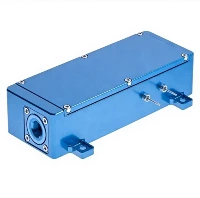
Types: 632.8nm 2mw Red He-Ne Laser Dot Laser Helium-Neon (HeNe, 632.8 nm), red laser diodes.
Applications: Primarily used with long-wavelength fluorescent dyes (e.g., Rhodamine 6G, Basic Red 28) for fingerprint and trace evidence enhancement on challenging, multi-colored backgrounds.

c) Near-Infrared (NIR) Laser Modules (700–1100 nm)
Common Types: Fundamental Nd:YAG (1064 nm), infrared diode lasers.
Applications: Ideal for evidence detection on dark or highly patterned surfaces where visible fluorescence would be masked. Used to visualize latent fingerprints, gunshot residue (which exhibits IR luminescence), and for layer differentiation in paints and inks. NIR radiation typically induces minimal background fluorescence from substrates.
2. Classification by Operational Mode
Continuous Wave (CW) Lasers: Provide a steady, constant output. Best suited for systematic scanning of large crime scenes or evidence items.
Pulsed Lasers: Emit light in short, high-peak-power bursts. Essential for techniques like LIBS, time-resolved fluorescence (which can separate evidence fluorescence from background based on decay time), and some forms of Raman spectroscopy.
3. Classification by Technical Features
Portable, Low-Power Modules: Battery-operated, handheld devices designed for rapid screening at crime scenes.
High-Power, Stable Laboratory Systems: Bench-top units used for detailed, high-sensitivity analysis in controlled lab environments.
Core Forensic Applications and Laser Selection
The selection of an appropriate laser module is dictated by the specific forensic task.
Latent Fingerprint Development: This is the most common application. The process often involves applying a treatment (e.g., cyanoacrylate fuming, fluorescent powder) and then illuminating with a wavelength that optimally excites the treatment material. A tunable or multi-wavelength system provides the greatest flexibility.
Biological Fluid Detection: Semen, saliva, and sweat often fluoresce naturally under UV or blue-green light. Lasers provide a non-destructive method for locating these stains prior to collection and confirmatory DNA testing.
Trace Evidence Analysis: Fibers, hairs, and gunshot residue particles can be located and characterized using their fluorescent properties or via analytical techniques like Raman spectroscopy coupled with a laser source.
Questioned Document Examination: Lasers can reveal ink differences, indentations, and chemical alterations that are invisible to the naked eye.
Chemical Identification: Raman Spectroscopy uses a laser (often in the visible or NIR range) to produce a molecular "fingerprint" of substances like drugs, explosives, and pigments. LIBS uses a powerful pulsed laser to ablate a micro-sample and create a plasma; the emitted light is analyzed to determine elemental composition.
Key Parameters for Selecting Laser Modules
Forensic scientists must balance several factors when choosing a laser system:
Wavelength: Must match the absorption/fluorescence profile of the target evidence.
Power Output: Sufficient to induce fluorescence without damaging the evidence.
Beam Quality & Uniformity: Critical for even illumination and high-quality imaging.
Portability vs. Stability: Scene investigation demands portability, while laboratory analysis prioritizes stability and power.
Cost and Maintenance: Includes initial investment, operational costs, and durability.
Safety and Evidence Preservation
Laser safety is paramount. Appropriate laser safety goggles specific to the operating wavelength must be worn. Furthermore, the potential for laser radiation to degrade biological evidence (particularly DNA) is a consideration, especially with high-power UV sources. Protocols often recommend photographing fluorescence immediately and using lower-power settings or longer wavelengths when DNA analysis is anticipated.
Emerging Trends and Future Directions
The field is advancing rapidly with several key trends:
Integrated Multi-Wavelength Systems: Portable units that combine several laser diodes (e.g., 455 nm, 532 nm, 808 nm) in one device, offering versatility without changing equipment.
Hyperspectral and Multispectral Imaging: Combining lasers with advanced cameras that capture spatial and spectral data simultaneously, allowing for superior evidence separation and analysis.
Ultrafast Lasers: Femtosecond-pulsed lasers are opening new possibilities in nonlinear optical imaging and minimally destructive analysis.
Miniaturization and Smart Integration: The development of smartphone-compatible laser accessories and AI-powered software for real-time evidence detection and analysis is on the horizon.
Conclusion
Laser modules have become a cornerstone of modern forensic analysis, transforming the ability to detect, visualize, and identify crucial evidence. From the ubiquitous 532 nm green laser for fingerprint work to sophisticated tunable systems for spectroscopic analysis, the appropriate application of laser technology significantly enhances the efficiency and effectiveness of forensic investigations. Future progress lies in the integration of lasers with advanced imaging, spectroscopy, and data analytics, promising even greater sensitivity, specificity, and operational efficiency for forensic practitioners worldwide.
Contact information:
If you have any ideas, feel free to talk to us. No matter where our customers are and what our requirements are, we will follow our goal to provide our customers with high quality, low prices, and the best service.
 Email:info@loshield.com; laser@loshield.com
 Tel:0086-18092277517; 0086-17392801246
 Fax: 86-29-81323155
 Wechat:0086-18092277517; 0086-17392801246


