


The integration of laser technology in the field of dentistry has revolutionized therapeutic approaches, enhancing precision and patient care. As we harness these advanced tools, ocular safety emerges as a paramount concern. This discussion will elucidate the various applications of lasers in dental treatments, detail specific treatment modalities, outline necessary ocular protection measures including laser protective eyewear and shields, and summarize best practices to ensure the safety of both patients and practitioners.
1. Application of Lasers in Dental Treatment
Lasers serve as versatile tools in dentistry, utilized in soft tissue surgeries, tooth whitening, periodontal therapy, and more. Each application necessitates a different wavelength to target specific tissues effectively.
2. Overview of Laser Treatment Modalities
This section provides a detailed overview of laser-based treatment modalities, highlighting the types of lasers used, common wavelengths, power settings, and ocular protection needs.
Below is a comprehensive table outlining these modalities:
| Treatment Modality | Laser Type | Common Wavelength(s) | Typical Power Settings | Ocular Protection Needed |
|---|---|---|---|---|
| Soft Tissue Surgery | CO2 | 10600 nm | 1-20 W | Yes |
| Periodontal Therapy | Nd:YAG | 1064 nm | 0.5-5 W | Yes |
| Dental Bleaching | Diode Lasers | 810-980 nm | 0.1-3 W | No |
| Hard Tissue Surgery | Er:YAG | 2940 nm | 0.5-10 W | Yes |
| Tongue/Mucosal Lesions | Nd:YAG or Diode | 810-1064 nm | 0.5-5 W | Yes |
| Caries Removal | Er,Cr:YSGG | 2780 nm | 0.5-6 W | Yes |
| Photobiomodulation (PBMT) | Low-Level Laser | Varied | <100 mW | No |
3. Laser Protective Eyewear and Shields
Given the intensity of laser light, specialized eyewear and protective shields are mandatory for both patients and operators during high-power laser procedures such as soft tissue surgery, periodontal therapy, and hard tissue procedures. Laser protective eyewear is designed to absorb or reflect specific laser wavelengths, effectively blocking harmful radiation while allowing clear visibility for precise work.

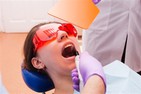
For patients, protective eyewear is typically worn during procedures involving high-power lasers to prevent any potential eye damage from accidental exposure. Practitioners, on the other hand, must not only wear protective eyewear but also utilize additional shielding when working close to the patient or in situations where the laser beam may reflect off surfaces.

In cases of low-power laser applications, like dental bleaching, although ocular protection may not be required for the patient, practitioners should still adhere to safety protocols by wearing appropriate personal protective equipment to avoid any risk of exposure.
4. Summary
The advancement of laser technology in dentistry offers numerous benefits but also mandates strict adherence to safety protocols. The importance of ocular protection cannot be overstated, as the high-intensity light emitted by lasers can cause severe damage to the eyes if proper precautions are not taken.
Laser protective eyewear and shields play a crucial role in safeguarding both patients and dental professionals against potential ocular hazards. High-power laser procedures necessitate the use of specialized eye protection to block specific wavelengths of laser light. In contrast, low-power laser applications, while generally not requiring patient eye protection, still demand that practitioners use appropriate personal protective equipment to prevent accidental exposure.
As we continue to harness the potential of lasers in dental practice, knowledge and implementation of appropriate ocular protection measures are paramount. Dental professionals must remain vigilant in their approach to laser safety, ensuring that both they and their patients are adequately protected during laser-based dental treatments. By doing so, they can continue to harness the full potential of lasers while maintaining the highest standards of safety in their practice.