



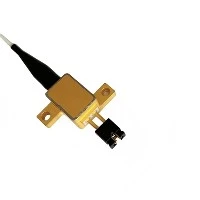
Laser Modules have been widely used in industry, consumption and scientific research, forming diversified market demands. Machine vision laser modules serve high-precision imaging and detection scenarios (such as industrial automation and autonomous driving), emphasizing wavelength stability, spot uniformity and synchronous control; ordinary laser modules are oriented to basic functional requirements (such as indication, ranging, and security), with cost-effectiveness and versatility as the core. The essential difference between the two lies in functional positioning (imaging enhancement vs basic emission) and performance requirements (precision optical indicators vs general parameters). Users need to make choices based on the technical complexity and precision requirements of actual applications.

Definition and core function comparison
1. Machine vision laser module
Definition: A precision laser light source optimized for image processing, which enhances the recognition, positioning and measurement capabilities of the machine vision system through specific optical design.
Core functions:
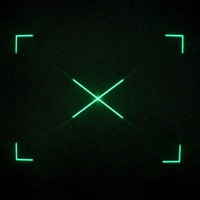
▶ Structured light projection: Generates coded patterns for 3D contour reconstruction (such as face recognition)
▶ Line laser scanning: Achieve high-precision contour measurement (such as industrial parts detection)
▶ Dot projection: Provides feature points for SLAM (such as sweeping robot navigation)
▶ Uniform illumination: Ensures that the image has no spot distortion (such as AOI detection)

2. Ordinary laser module
Definition: A general-purpose laser device that completes basic optical tasks, emphasizing reliability and economy.
Core functions:
▶ Continuous/pulse output: Supports simple switch control (such as laser pen)
▶ Power regulation: Adapts to different distance requirements (such as rangefinder)
▶ Optional wavelength: Matches basic sensing (such as red light/infrared alarm beam)

Comparison of key technical parameters
| Parameters | Machine vision laser module | Ordinary laser module |
| Wavelength stability | Within ±1nm (avoid image interference) | ±5nm (fluctuation allowed) |
| Light spot uniformity | >90% (need to match camera sampling) | No strict requirements (60%~80%) |
| Modulation frequency | High frequency (kHz~MHz level, synchronized with camera frame rate) | Low frequency (Hz~kHz level) |
| Heat dissipation design | Active heat dissipation (TEC temperature control) | Passive heat dissipation (natural convection) |
| Interface protocol | Support RS-485/CAN bus (interact with industrial computer) | Analog/PWM signal control |
Application scenario analysis
1. Advantageous scenarios of machine vision laser modules
① Industrial inspection
PCB solder joint 3D scanning: Line laser module is used for micron-level height measurement to ensure welding quality.
Semiconductor wafer inspection: Blue laser enhances surface defect recognition and improves yield control.
② Autonomous driving
LiDAR point cloud generation: VCSEL array module achieves 120° wide-angle scanning and supports real-time obstacle modeling.
Night vision fill light: 940nm infrared laser avoids human eye visibility and meets automotive safety standards.
③ AR/VR
Depth perception: Infrared structured light projection (such as iPhone Face ID) with an accuracy of 0.1mm.
Gesture interaction: Diffractive optical element (DOE) generates speckle pattern to track finger movement trajectory.
|
|
|
|
|
|


2. Applicable scenarios of ordinary laser modules
① Consumer electronics
Laser pen: 650nm red light module, <5mW power meets the needs of meeting instructions.
Barcode scanner: 650nm line laser covers the barcode area, decoding speed ≤0.3 seconds.
② Security
Laser beam alarm: Class 1 infrared laser (850nm), 50-meter warning distance, anti-ambient light interference.
Perimeter protection: multi-beam fence design to prevent pets from triggering by mistake.
③ Education/scientific research
Physical experiment: 532nm green light module demonstrates light path refraction, power ≤1mW to ensure classroom safety.
Biostimulation: 405nm purple light is used for fluorescent labeling observation (precise power control is required).

Cost and supply chain differences
1. Price range comparison
- Machine vision laser module ($50~$600)
Core cost composition
✓ High-precision optical components (40%): such as DOE diffraction elements, aspheric lenses
✓ Temperature control system (20%): TEC semiconductor cooling chip + PID control circuit
✓ Certification cost (15%): industrial-grade EMC/anti-vibration certification
- Ordinary laser module ($1~$20)
Cost reduction key
✓ Plastic optical parts (replacing glass): 60% cost reduction
✓ Standardized driver IC: such as PT4115 solution <$0.3
✓ Mold costs are shared by tens of millions of shipments
2. Supply chain response differences
- Machine vision module supply chain
Delivery time 4-8 weeksKey bottlenecks:
✓ Customized optical coating (2-3 weeks)
✓ Import of high-precision motion components from Germany/Japan
✓ Small batch aging test (72 hours of continuous verification)
- Ordinary module supply chain
1-week delivery guarantee measures:
✓ Spot warehouse (SKU>200)
✓ Automated SMT production line (daily capacity 50k+)
✓ Modular design (plug and play)
Machine vision laser module is the "precision eye" of intelligent system, which is specially designed for high-precision imaging, three-dimensional reconstruction and complex detection. Its core value lies in optical coordination capability (such as structured light projection and sub-millimeter positioning); Ordinary laser module is "photoelectric basic tool", which meets the general requirements (such as indication and ranging) with economy and reliability. The choice between the two is essentially a game of precision and cost-the former pays for performance (high-end scenarios such as industrial and autonomous driving) and the latter pays for economies of scale (mass markets such as consumer electronics and security).
Contact information:
If you have any ideas, feel free to talk to us. No matter where our customers are and what our requirements are, we will follow our goal to provide our customers with high quality, low prices, and the best service.
 Email:info@loshield.com
 Tel:0086-18092277517
 Fax: 86-29-81323155
 Wechat:0086-18092277517


